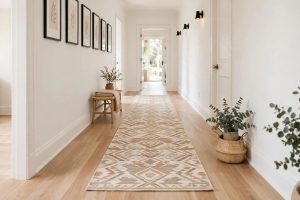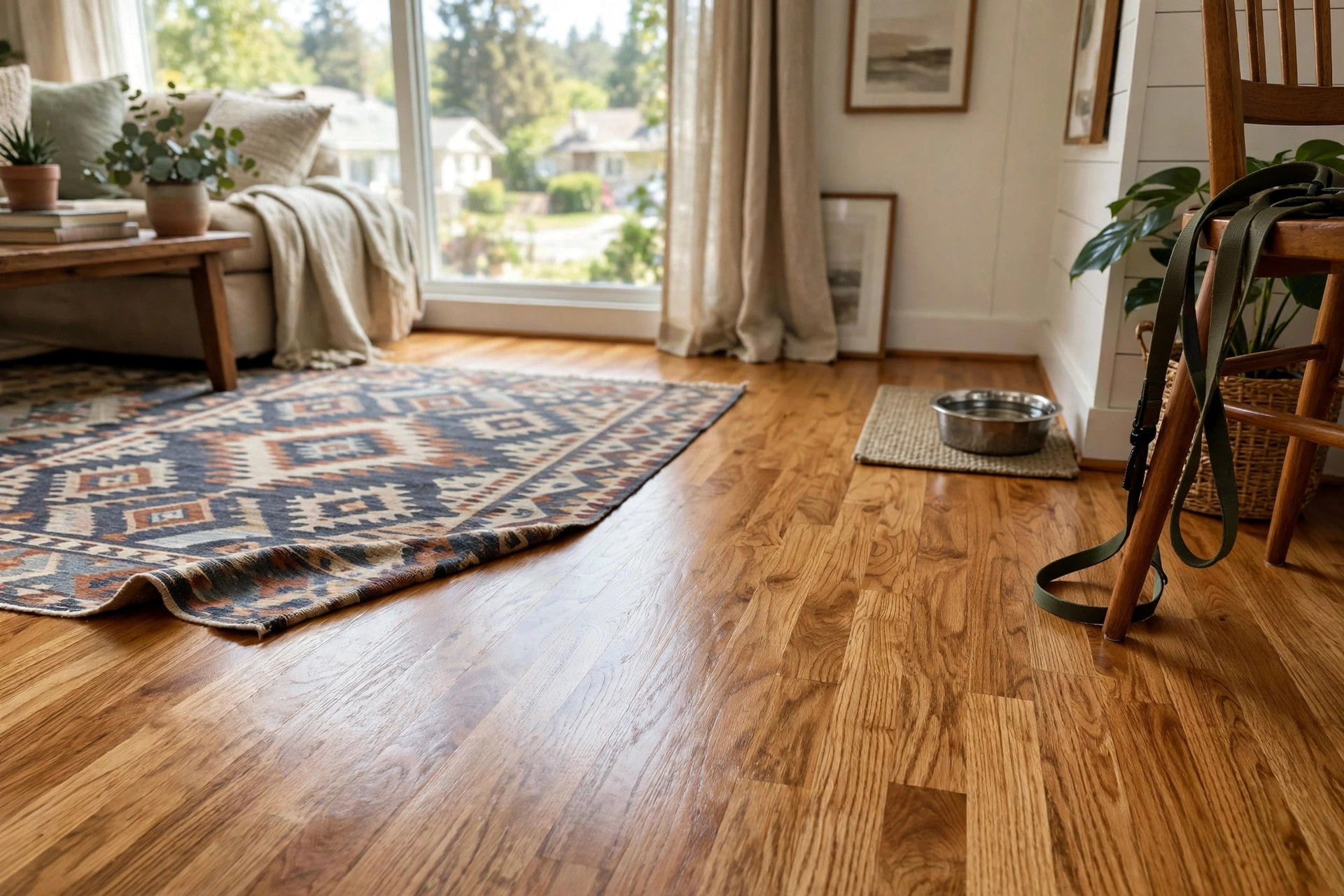

If you live with a dog, your wood floors live with the dog too. Nails click on the boards. Muddy paws print trails after rain. Drool, water bowls, and the daily slide across the living room all take their toll. The best hardwood floor finish for dogs usa homes rely on is not the one that looks the prettiest in the store. It is the one that stands up to claws, water, and wear year after year. This guide walks through the choices in plain terms so you can pick a finish that keeps your floors good looking and your dog welcome.
Why Dogs Are Hard on Wood Floors
A dog’s nails are the main enemy of a wood floor. A large dog can weigh 80 pounds or more, and all of that weight rides on small nail tips when the animal runs, stops, or turns. Each step acts like a tiny gouge. Puppies chew baseboards and drag toys. Older dogs slip and scrabble for grip. Water adds more trouble. A spilled water bowl or wet paws can soak into an unprotected board and raise the grain or darken the wood.
The finish is the clear coat that sits on top of the wood. It is the shield between the dog and the timber. A thin or soft finish wears through in months. A thick, hard finish can last for years under the same paws. That is why the finish matters more than the wood species for most dog owners.
What to Look for in a Dog Friendly Hardwood Floor Finish: Best Hardwood Floor Finish for Dogs Usa
A dog friendly hardwood floor finish must do five things well.
First, it must be hard. Hardness is what resists nail scratches. Harder finishes score better in wear tests and show fewer marks.
Second, it must resist water. Dogs bring in rain and snow. They drool. Bowls spill. A finish that beads water and gives you time to wipe it up will save the wood below.
Third, it should hide wear. A satin or matte sheen shows scratches far less than a glossy one. This matters more than many people think. Two floors can take the same damage, but the satin one looks twice as good.
Fourth, it should be easy to recoat. Some finishes let you add a fresh coat in the worst worn areas without sanding the whole floor. For dog owners, this is gold.
Fifth, it should be safe and low odor while it dries. You will need to keep pets out of the room during the job, but finishes with low fumes make the wait easier on everyone.
Main Types of Hardwood Floor Finishes
There are four common finishes for wood floors in American homes. Each has strengths and limits when dogs are in the picture.
Oil-Based Polyurethane
Oil-based polyurethane has been the standard for decades. It is thick, amber in color, and very tough once cured. Many floor pros still call it the hardest wearing site-applied finish you can get. It holds up to heavy dog traffic well and brings out a warm glow in the wood.
The drawbacks are real. It takes eight to twelve hours between coats and up to a month to fully harden. During that time the floor marks easily. The smell is strong, and pets must stay out of the house for days. The amber tone deepens over time, which some owners dislike. The Spruce notes that sheen choice matters as much as the product when hiding daily wear.
Water-Based Polyurethane
Water-based polyurethane is now the most popular choice for homes with dogs. It dries in two to four hours between coats. It has much less odor than the oil kind. It stays clear and does not yellow the wood. Modern water-based formulas are far tougher than the early versions from years past. Many carry a high scratch rating in tests.
The trade is price. Water-based polyurethane costs more per gallon, and it can take one extra coat to build the same film thickness. When applied well, though, it gives an excellent balance of hardness, clarity, and fast return to the home. It is a strong answer to the search for a hardwood floor finish that resists dog scratches.
Hard-Wax Oil (Penetrating Oil)
Hard-wax oil soaks into the wood instead of forming a thick plastic layer on top. It gives a soft, natural matte look that many people love. The big advantage for dog owners is repair. A scratched area can be spot-sanded and re-oiled in an afternoon. You do not need to coat the whole room.
The limit is that oil is less of a water shield than polyurethane. Standing water can stain an oiled floor if left too long. It also needs re-oiling every year or two in heavy traffic lanes. For owners who value easy spot repair over maximum armor, hard-wax oil is a fair pick.
Aluminum Oxide Factory Finish
Aluminum oxide is baked into the finish of prefinished hardwood boards at the factory. It is the hardest finish available. It outlasts any site-applied product against scratches and wear. If you are installing new floors and dogs are a fact of life, prefinished boards with aluminum oxide are worth a hard look. LL Flooring lists many prefinished options made for pet-heavy homes.
The limit is that you cannot buy it as a can. It only comes on new factory-finished boards. If your current floors are already down, you must choose a site-applied finish instead.
How Each Finish Stands Up to Dog Scratches
No finish is fully scratch-proof. Dog nails are harder than most clear coats. The honest question is how much damage shows and how easy the fix is.
Water-based polyurethane in a satin sheen is the best all-round site-applied choice. It hides marks well, dries fast, and resists water. Oil-based polyurethane offers a slightly tougher film but a longer, smellier cure. Hard-wax oil scratches more easily but repairs the fastest. Aluminum oxide on new boards wins on raw hardness but only applies to new installations.
One more trick helps every finish: keep nails trimmed. A dog with short nails does half the damage of a dog with long ones. Rugs and runners in hallways and play zones also take the load off the floor. This Old House recommends area rugs in high-traffic paths to extend floor life, dogs or not.
If you already have damaged floors, read up on scratch resistant flooring for large dogs usa before you decide between a recoat and a full refinish.
Cost and Price
Cost depends on whether you hire a pro or do it yourself.
A professional refinish with two or three coats of water-based polyurethane runs about $3 to $8 per square foot in most USA markets. Oil-based costs a little less in product but takes longer in labor. For a 1,000 square foot area, expect roughly $3,000 to $8,000 professionally done.
A do-it-yourself job costs far less. A gallon of good water-based polyurethane covers about 500 square feet per coat and sells for $60 to $120. Sanding paper, rollers, and supplies add a few hundred more. Big box stores like Home Depot and Lowe’s stock full floor-finishing kits for the job.
Recoating, rather than full sanding, costs less still. If the old finish is sound and only worn, a screen-and-recoat job runs about $1 to $2 per square foot professionally. This is a smart move for dog owners every three to five years. Use a refinishing hardwood floors cost calculator to plan the budget before you call a contractor.
Hard-wax oil costs about $80 to $150 per liter, with a liter covering 250 to 400 square feet. Remember the yearly upkeep cost in your planning.
Care and Upkeep With Dogs in the House
The right finish is only half the story. Daily habits decide how long it lasts.
Sweep or dust-mop often. Grit under paws acts like sandpaper. Place a mat under the water bowl and wipe spills at once. Use a damp mop, never a soaking wet one. Most makers of wood floors advise against steam mops, which can force moisture past the finish.
Clean with a product made for wood floors. Harsh cleaners strip finish over time. A pet friendly floor cleaner keeps both the floor and the dog safe. Shaw Floors publishes care guides that spell out which cleaners suit each finish type.
Trim nails every two to four weeks. Put felt pads on chair legs, since sliding furniture adds to pet damage. Keep a runner where the dog sleeps, plays, and turns corners. These small steps add years to any finish.
Safety: Fumes, Pets, and Drying Time
Floor finishes give off fumes as they dry. Dogs are more sensitive to these fumes than people because they breathe closer to the floor and process chemicals differently. Keep all pets out of the work area and out of the home if possible during application.
Oil-based polyurethane needs the most care. Keep pets away for at least three to four days after the last coat, and let the floor cure for two to four weeks before heavy dog traffic. Water-based products are gentler. Most allow light foot traffic in 24 hours, though full hardness takes about a week. Hard-wax oils vary by brand, so follow the label.
Ventilation helps. Open windows, run fans, and keep the room warm but not hot. Low-VOC products are worth the extra cost in homes with pets. The EPA explains how indoor air quality is affected by coatings and why low-emission choices matter for families and pets.
Never let a dog walk on a tacky floor. Paws pick up finish and track it through the house, and the prints can ruin the coat. Plan pet care ahead of the job so there is no rush.
Frequently Asked Questions
What is the best hardwood floor finish for dogs usa homes can buy? For most homes, water-based polyurethane in a satin sheen is the best pick. It resists scratches well, dries fast, has low odor, and stays clear. For new floors, prefinished boards with aluminum oxide are even tougher. Mohawk Flooring offers pet-rated prefinished lines worth comparing.
Does any finish stop dog scratches completely? No. Dog nails are harder than any clear coat. The goal is to reduce visible damage and make repairs easy. Satin sheens hide marks best, and hard-wax oil allows the fastest spot repairs.
How long should dogs stay off freshly finished floors? Keep dogs off the floor for at least 24 hours with water-based products and three to four days with oil-based ones. Wait two to four weeks before heavy traffic on oil-based floors so the coat can fully harden. Ask your finisher for the exact schedule for the product used.
Is water-based or oil-based polyurethane better for dogs? Water-based wins for most dog owners. It dries faster, smells less, keeps pets displaced for a shorter time, and does not yellow. Oil-based is slightly tougher but the long cure and strong fumes are a real burden in a home with animals.
Can I just recoat instead of sanding everything? Yes, if the old finish is still bonded and only worn. A screen-and-recoat adds a fresh layer of protection without the dust and cost of full sanding. Deep scratches that reach bare wood need sanding first. Consumer Reports tests floor finishes for wear, and their ratings show that a fresh top coat restores much of the original protection.
Are matte finishes really better for dog homes? Yes. Matte and satin finishes scatter light, which makes small scratches far less visible. Glossy floors show every mark. Daltile and other makers note that lower sheens are the practical choice for busy households.
Final Word
Dogs and wood floors can live together well. The secret is a finish picked for hard duty: water-based polyurethane in satin for most existing floors, aluminum oxide prefinished boards for new installs, and hard-wax oil for owners who want the easiest repairs. Keep nails short, clean spills fast, and recoat before the finish wears through. Do that, and your floors will stay handsome for years while your dog enjoys every inch of them.
References
Consumer Reports. (n.d.). Product reviews and ratings. https://www.consumerreports.org Daltile. (n.d.). Ceramic and porcelain tile. https://www.daltile.com LL Flooring. (n.d.). Hardwood, vinyl, and tile flooring. https://www.llflooring.com Lowe’s. (n.d.). Home improvement products. https://www.lowes.com Mohawk Flooring. (n.d.). Flooring products. https://www.mohawkflooring.com Shaw Floors. (n.d.). Flooring products. https://www.shawfloors.com The Home Depot. (n.d.). Home improvement products. https://www.homedepot.com The Spruce. (n.d.). Home and garden advice. https://www.thespruce.com This Old House. (n.d.). Home renovation guidance. https://www.thisoldhouse.com U.S. Environmental Protection Agency. (n.d.). Protecting human health and the environment. https://www.epa.gov
Was this guide helpful?

About Jennifer Lee
The My Garden US editorial team writes practical, in-depth home and garden guides for American homeowners — tested advice, no fluff.
You May Also Like
Best Wood Look Tile Brands USA 2026: A Buyer’s Guide to Realistic Wood-Look Tile
February 17, 2026 0 views
Installing Vinyl Plank Over Tile: A Complete USA Guide
January 4, 2026 0 views
Slate Tile Flooring for Entryway Spaces: A Practical Guide for American Homes
March 10, 2026 0 views