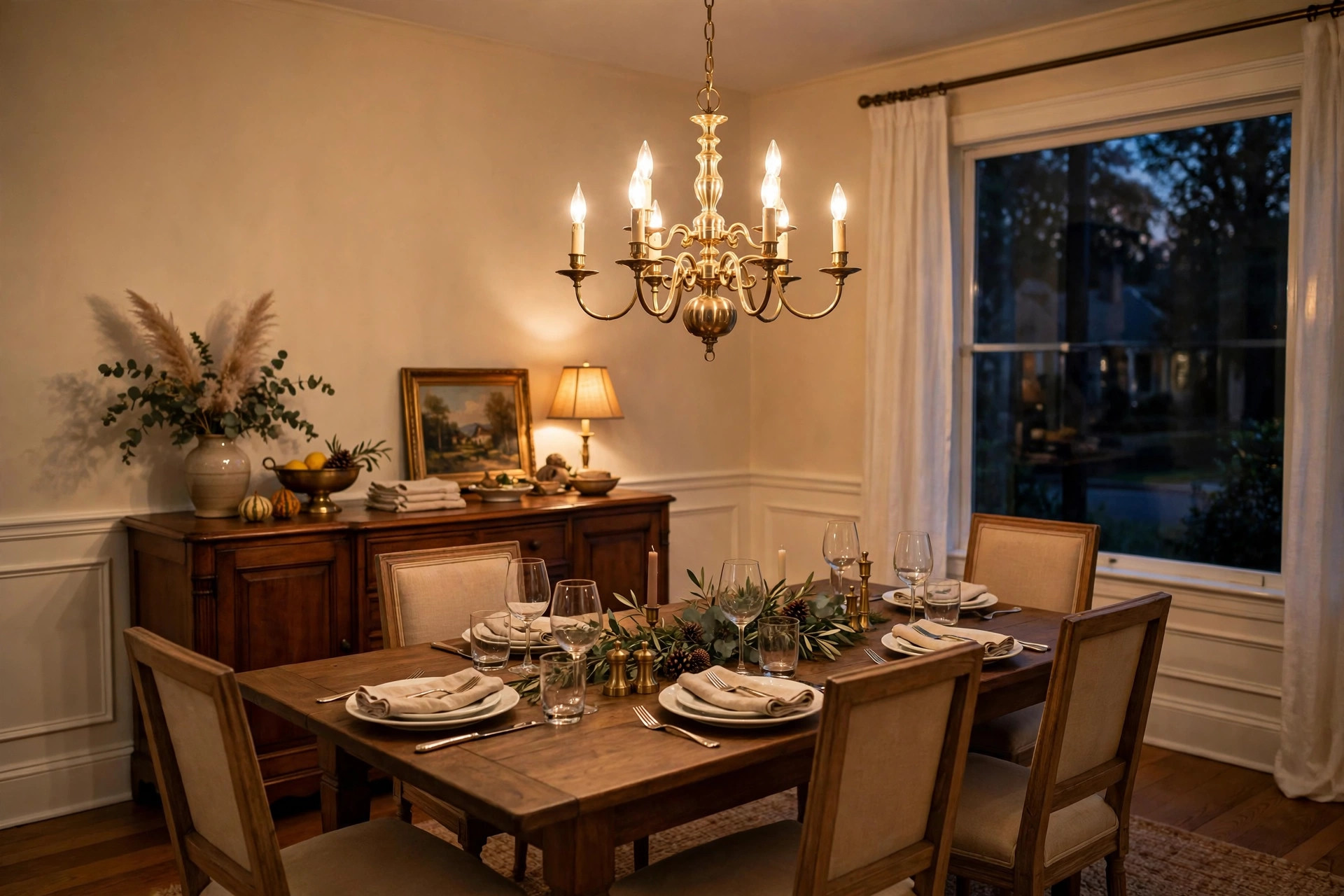
The search for dining room chandeliers for sale usa starts with a simple idea. A family wants a warm light over the table. They want the room to feel right when guests sit down to eat. A chandelier can do that job better than almost any other fixture. It hangs in the center of the room. It throws light down on the table. It also sets the tone for the whole space.
But the market is large. Hundreds of styles are on the shelves. Prices run from under one hundred dollars to many thousands. Sizes vary a great deal. Bulb types vary too. A wise buyer learns a few basic facts before spending any money. This guide lays out those facts in plain terms. It covers why a chandelier matters, what to look for, the main types, what they cost, how to care for them, and how to stay safe. It ends with answers to common questions.
Why a Chandelier Matters in the Dining Room
The dining room is a special space in an American home. The light in this room shapes how people feel. Harsh light makes the room feel cold. Dim, warm light makes it feel kind and calm.
A chandelier gives focused light where it is needed most: over the table. At the same time it gives soft light to the rest of the room. No other fixture does both jobs so well. A flush mount spreads light flat and dull. A floor lamp lights only one corner. A chandelier fills the room with a center of interest.
Style matters as well. The chandelier is often the first thing a guest sees when they walk into the dining room. It tells them what the room is about. A crystal fixture says formality. A wood beam fixture says comfort. A simple black metal ring says a modern taste. The choice should match the furniture and the mood the family wants.
What to Look For When You Shop: Dining Room Chandeliers for Sale Usa
Smart shoppers compare several points before they buy. The points below cover the ones that count most.
Size and Scale
Size is the first thing to get right. A chandelier that is too small looks lost in the room. One that is too large hangs over the table like a weight. A common rule is to add the length and width of the room in feet. The sum gives a good diameter in inches. A room that is 12 feet by 14 feet sums to 26. A chandelier about 26 inches wide will suit it.
Height matters too. The bottom of the fixture should hang about 30 to 34 inches above the table top. That gives clear light without blocking the view across the table. For very tall ceilings, add a few inches for each extra foot of ceiling height.
Light Output and Bulbs
Think about how much light the room needs. Most dining rooms do well with about 3,000 to 5,000 lumens from the main fixture. Dimmers help a great deal. They let the family raise the light for homework and lower it for a quiet dinner.
Bulb type counts for running cost. Many buyers now choose LED bulbs. They use far less power than old incandescent bulbs. They also last many years. Some chandeliers come with built-in LED panels. Others take standard bulbs. A standard socket gives more freedom to change bulbs later. Guidance on efficient bulbs is available from ENERGY STAR, which lists lighting products that meet strict standards.
Finish and Material
Common finishes include brushed nickel, oil-rubbed bronze, matte black, polished brass, and chrome. The finish should match or blend with other hardware in the room. Cabinet pulls, faucet finishes, and curtain rods all sit in the same view. One or two finishes in a room is plenty. More than that can look scattered.
Materials set the price. Steel and aluminum cost less. Solid brass and crystal cost more. Wood brings a warm look at a middle price.
Wiring and Hanging Parts
Check what comes in the box. A good kit should include the chain or rod, the canopy that covers the ceiling box, wire nuts, and clear instructions. Many fixtures allow the chain to be shortened. That helps when the ceiling height is low. Make sure the weight rating of the box matches the fixture. Heavy chandeliers may need a fan-rated box.
Types and Styles of Dining Room Chandeliers
The styles below cover most of what buyers will find on the market.
Crystal and Tiered Chandeliers
These are the classic formal fixtures. Rows of cut glass or crystal hang in tiers. They throw small spots of light across the room. They suit rooms with formal furniture and high ceilings. They need regular dusting to keep their shine.
Drum and Shade Chandeliers
A fabric drum around the bulbs gives a soft, even light. These fixtures suit modern and casual rooms. The shade keeps the glare out of the eyes of people at the table. Linens and cottons are common shade materials.
Linear and Island Chandeliers
Long rooms with long tables suit a linear fixture. The bar shape spreads light along the full length of the table. This style works well in open plans where the dining area joins the kitchen. Buyers looking at kitchen fixtures may also read our kitchen island pendants buying guide usa for a related choice.
Rustic and Farmhouse Chandeliers
Wood beams, wagon wheels, and dark iron mark this style. It fits country and farmhouse dining rooms. Bulbs are often exposed. They give a warm and easy feel. Our dining room chandeliers buying guide usa covers more styles in detail.
Modern and Minimalist Chandeliers
Thin rings, bare frames, and simple globes mark the modern style. The look is clean. The light is often bright and even. These fixtures suit rooms with simple furniture and plain walls.
Candle Style Chandeliers
Small sleeves shaped like candles hold the bulbs. This style recalls old manor houses. It suits traditional rooms. Many now use LED bulbs shaped like flames for the same look with low power use.
Cost and Price Ranges
Prices for dining room chandeliers for sale usa cover a wide range. A buyer should know what each price band buys.
Small fixtures from mass retailers often cost between 80 and 200 dollars. They use simple materials. They suit first homes and tight budgets. Many of these fixtures still look fine and give good light. Large home improvement stores carry a wide stock in this band. Shoppers can compare rows of models in person at The Home Depot and Lowe’s.
The middle band runs from about 200 to 700 dollars. Here the buyer finds better finishes, sturdier metal, and nicer shades. Many of the most popular models sit in this range. Design-focused shops such as Lumens and Lamps Plus carry many models at this level, along with help on sizing and style.
The high band runs from 700 dollars up. Here the buyer finds solid brass, hand-cut crystal, and designer names. These fixtures often come with long warranties. They suit large rooms and formal homes.
Two extra costs often surprise buyers. The first is installation. A licensed electrician may charge 150 to 400 dollars to hang a fixture, more for high ceilings. The second is bulbs. A fixture that takes twelve bulbs will cost more to fill than one that takes four. LED bulbs cost more at first but save money over time. Advice on bulb efficiency from the federal side is kept by the U.S. Department of Energy.
Installation Basics
Many homeowners hang a chandelier on their own. The job is not hard, but it must be done with care. Turn off the power at the breaker before any work starts. Test the wires with a tester to be sure the power is off.
Most boxes hold the fixture with a mounting strap. The strap screws to the box. The fixture screws to the strap. Black wire joins black. White wire joins white. The bare or green wire is the ground. It joins the ground screw or wire from the box.
After the wires join, tuck them up into the box. Raise the canopy. Tighten the screws. Hang the fixture at the right height. Then restore power and test.
If the ceiling box is old or weak, call an electrician. A chandelier that pulls free of the ceiling is a danger to people below. The weight of the fixture should never hang on the wires alone.
Care and Upkeep
A chandelier needs little care, but a small habit keeps it bright for years. Dust the fixture every month or two. A soft cloth or a feather duster is enough for most styles. For crystal, wipe each piece with a damp cloth and dry it at once. Never spray cleaner straight onto the fixture. Spray the cloth instead.
Check the bulbs twice a year. Replace any that are dim or burned out.
If the fixture has a dimmer, use it. Running bulbs at lower levels makes them last longer. It also saves power. Make sure the dimmer matches the bulb type. Some LED bulbs need a special dimmer to work without flicker. Philips publishes lists of bulbs that work well with common dimmers.
Shade materials need care too. Fabric shades can yellow with age. Turn the fixture off and let it cool before cleaning a shade. Vacuum a fabric shade with a soft brush tool. Wipe glass shades with a damp cloth.
Safety Points
Safety comes first with any wired fixture. Keep these points in mind.
Buy fixtures that carry a recognized safety mark. In the United States, a UL or ETL mark shows the fixture passed safety tests.
Do not exceed the rated wattage. Each socket lists a maximum wattage. Going past it can melt parts and start a fire. LED bulbs draw less power than the rating, so they are a safe way to get bright light from a low-watt socket.
Keep the fixture clear of curtains and tall plants. Bulbs give off heat. Fabric too close to a hot bulb is a risk. Battery-free LED bulbs run cooler and lower this risk.
When the fixture hangs low over the table, watch for tall guests and tall centerpieces. A bump can swing the fixture. A swinging fixture can crack a shade or pull a chain loose.
For rooms with small children, mount the fixture high enough that little hands cannot reach it. A chandelier is not a toy. Its chain and crystals can pull down with surprising force.
Lighting design ideas and room-by-room advice are gathered in plain terms at The Spruce, which covers many fixture types for American homes.
Where to Buy
American shoppers have many ways to buy. Each has its own strengths.
Big box stores let the buyer see the fixture in person. The size, finish, and weight can be judged by hand. Staff can answer basic questions. Returns are easy.
Online specialty shops show a wider range of styles. Photos from buyers show how the fixture looks in real rooms.
Lighting showrooms serve buyers who want advice. The staff handle sizing, dimmers, and custom orders. Prices run higher, but the service is personal.
Secondhand shops and estate sales sometimes hold fine old fixtures. Old wiring should be replaced, and a licensed electrician should inspect any used fixture before it is hung.
For buyers who want to study more fixture types before they decide, our bedroom table lamps buying guide usa covers a smaller-scale light in the same plain style.
Frequently Asked Questions
What size chandelier fits a standard dining table?
A six-foot table pairs well with a fixture about 30 to 36 inches wide. The fixture should be about one half to two thirds the width of the table. For a round table, choose a fixture about two thirds the table diameter.
How high should a chandelier hang over the dining table?
Hang it so the bottom sits 30 to 34 inches above the table top. In rooms with ceilings above nine feet, raise the fixture about three inches for each extra foot of ceiling.
Can one chandelier light a large dining room?
In a large room, one fixture may leave the corners dark. Many families add wall sconces or a second small fixture. A dimmer helps balance the light. For very long rooms, a linear chandelier spreads light better than a round one.
Are LED chandeliers a good choice?
Yes. LED fixtures use less power and last far longer than old bulbs. Many give warm light that suits a dining room. Check the color temperature. A value near 2700 Kelvin gives the warm look most families prefer.
Is it hard to install a chandelier on my own?
The basic steps are simple for a homeowner with care and the right tools. The main risks are working with live wires and hanging a heavy fixture from a weak box. When in doubt, hire a licensed electrician. The cost is small next to the safety it buys.
How do I clean a crystal chandelier without taking it apart?
Turn the power off and let the bulbs cool. Wipe each crystal with a cloth dampened with plain water and a drop of mild soap. Dry at once with a soft dry cloth. Work from the top down so drips do not mark cleaned pieces.
A Short Final Word
The search for dining room chandeliers for sale usa ends best with a clear plan. Measure the room. Measure the table. Fix a budget. Choose a style that suits the furniture. Check the size rules and the safety marks. Then buy from a seller with a fair return policy.
A good chandelier will hang in that room for twenty years or more. It will light a thousand meals. The time spent choosing it well is time well spent. Pick the fixture that fits the room, the table, and the family. The right one makes every dinner a little brighter.
References
ENERGY STAR. (n.d.). Energy efficient products. https://www.energystar.gov Lamps Plus. (n.d.). Lighting and home decor. https://www.lampsplus.com Lowe’s. (n.d.). Home improvement products. https://www.lowes.com Lumens. (n.d.). Lighting and ceiling fans. https://www.lumens.com Philips. (n.d.). Lighting products. https://www.philips.com The Home Depot. (n.d.). Home improvement products. https://www.homedepot.com The Spruce. (n.d.). Home and garden advice. https://www.thespruce.com U.S. Department of Energy. (n.d.). Energy efficiency and renewable energy. https://www.energy.gov
Was this guide helpful?

About James Carter
The My Garden US editorial team writes practical, in-depth home and garden guides for American homeowners — tested advice, no fluff.