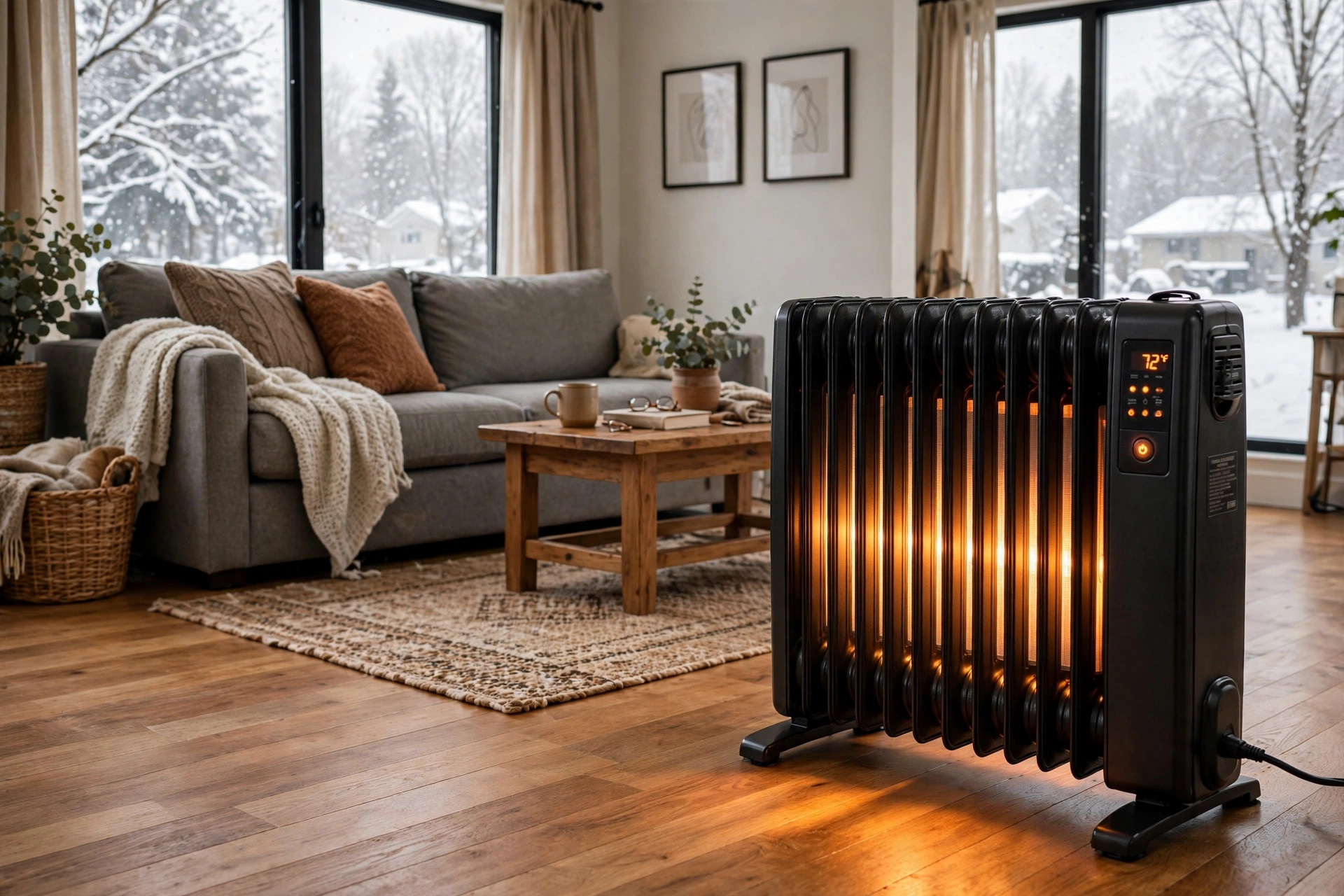

Why the Best Space Heater for Large Room USA Buyers Must Think About Size First
When you shop for the best space heater for large room usa use, the room itself is the first thing to think about. A large room is not the same as a small bedroom. A heater that works well in a small study may do almost nothing in a big open living room. That is why so many buyers end up cold and unhappy. They bought a fine heater, but the wrong size.
A large room in an American home is often 300 to 600 square feet. High ceilings add to the problem, since heat rises and gathers near the ceiling while people sit in cold air below. A weak heater will run all day and still leave the far corners cold.
The right heater changes the feel of the whole room. It does not have to heat the entire house. It only has to make the space where you live comfortable. When you choose well, you can turn the main furnace down and let the heater do the work in the room you use most. Many families save money this way during the winter months.
But size alone is not the answer. The way a heater spreads heat matters as much as its power. Some heaters throw warm air in a strong stream. Others give off a slow, steady warmth that fills the room over time. Knowing the difference is the key to buying the best space heater for large room usa homes, and this guide will walk you through it.
What to Look For When You Choose a Heater: Best Space Heater for Large Room Usa
Heating power and room size
Space heaters in the USA almost always top out at 1,500 watts on a standard household outlet. That is the most a normal plug can give. A 1,500-watt heater makes about 5,120 BTUs of heat per hour. Plan on one 1,500-watt unit for rooms up to about 300 square feet, and two units for rooms larger than that, placed at opposite ends. Spreading two heaters out works better than running one heater at full blast in a corner.
Thermostat and controls
A built-in thermostat is worth paying for. Without one, the heater runs until you switch it off by hand. With one, the heater turns itself off when the room reaches the set temperature and turns back on when it falls. This keeps the room steady and cuts the electric bill. Some models offer timers so the room is warm when you come home.
Safety features
Every space heater should have three things. First, an automatic shut-off if the unit tips over. Second, protection against overheating, so the heater shuts down if its own parts get too hot. Third, a cool-touch outer case, so a child or a pet that brushes against it does not get burned. Check for a listing from a testing lab such as UL or ETL. That mark means the design passed independent safety tests. You can read the safety rules for portable heaters on the Consumer Product Safety Commission site, which keeps a record of recalls and burns.
Noise and comfort
Many heaters use a fan to push warm air. A noisy fan can spoil a living room or a home office. If you plan to watch television or read in the room, look for a heater with a quiet or silent setting. Oil-filled radiators make no fan noise at all, which is one reason so many people like them in bedrooms and living rooms.
Types of Space Heaters for Large Rooms
Ceramic fan heaters
Ceramic heaters use a heated plate made of ceramic material. A fan blows air across the plate and into the room. They heat up fast, often within a minute. They are small, light, and easy to carry from room to room. The heat stops the moment the fan stops, and they can be noisy on high.
Oil-filled radiators
An oil-filled radiator holds a sealed oil that the electric element heats. The metal body of the radiator gets warm and gives heat to the room in slow waves. It is silent, since there is no fan. The warmth lingers after you switch it off. These are a strong pick for the best space heater for large room usa buyers who want steady, quiet heat all evening. If you want a closer look at the trade-offs, read our comparison of an oil-filled radiator vs ceramic heater before you decide.
Infrared and quartz heaters
Infrared heaters do not heat the air much at all. They send out invisible rays that warm the things they strike: floors, walls, furniture, and people. Stand in front of one and you feel the warmth at once. They are good for a large room where you sit in one spot, such as a reading chair or a work desk. They do not stir up dust, which matters to people with allergies. But they do not spread warmth into far corners.
Micathermic panel heaters
These thin, flat panels mix both methods. They give off radiant warmth and stir the air a little. They are slim enough to hang on a wall or slip behind a sofa. For a large room, a big panel near the seating area can work well, though it will not carry heat to the far end of an open plan.
Propane and gas heaters
Some large rooms, such as workshops and garages, use propane or natural gas heaters. They give more heat per dollar than electric models. But they need fresh air, because burning fuel makes carbon monoxide. Never use an unvented fuel heater in a bedroom or a closed living room. For indoor living space, electric heaters are the safer choice. More on efficiency ratings can be found at Energy Star, the federal program that sets marks for home heating gear.
Cost and Price: What You Will Pay
A good electric space heater for a large room usually costs between 60 and 180 dollars in the USA. Basic fan models sit at the low end. Tall ceramic towers and large oil-filled radiators sit in the middle. Fancy infrared panels and models with smart controls reach the top of the range. Anything below 30 dollars is almost surely too small or too loud for a large room.
The bigger cost is the electric bill. A 1,500-watt heater running for one hour uses 1.5 kilowatt-hours of power. At the average American rate of about 17 cents per kilowatt-hour, that hour costs roughly 25 cents. Run the heater eight hours a day and you add about 60 dollars to the monthly bill. Two heaters for a very large room can double that. Still, that is often less than heating the whole house to the same level. Zone heating, where you warm the rooms you use and keep the rest cool, is a habit the U.S. Department of Energy points to as a plain way to cut winter heating costs.
Maintenance costs are tiny. Electric heaters have no filters to buy and no fuel tanks to fill. You wipe the dust off once a month and check the cord once a year. Expect a well-made unit to last five to ten years. If you want to compare heating options for a bigger space, our guide to the most energy efficient space heater choices for 2026 covers running costs in more detail.
Retailers like Home Depot carry a wide range of heaters in stores and online, so you can see the size of a unit before you buy. Reviews from Consumer Reports also test heaters for safety and performance. Makers such as Lennox, Trane, and Goodman are known for whole-home heating, but for one large room a portable electric heater is often the simpler buy.
Care and Upkeep
A space heater asks little of its owner, but it does ask for some care. Dust is the enemy. It settles on the heating parts and can cause a smell, or worse, a hot spot. Once a month during the heating season, unplug the heater, let it cool fully, and wipe it with a dry cloth. Use a vacuum brush on the vents. Never use water on the inside parts.
Check the cord and the plug twice a year. The plug should fit tight in the outlet. A loose outlet makes the plug get hot, and that is a fire risk. If the cord feels warm, or the plug is loose, stop using the heater and have the outlet checked. Plug the heater straight into the wall. Do not use an extension cord or a power strip. A heater pulls a lot of current, and cheap cords can overheat.
Store the heater in a dry place in the summer. Wrap the cord loosely and keep the manual with it. When winter comes, run it for a few minutes and check that the thermostat and tip-over switch still work. The home repair guides at Family Handyman offer upkeep advice for heaters and other home gear, and This Old House covers seasonal maintenance in plain terms.
Safety: The Rules That Keep Your Home Safe
Space heaters are safe when used with care, and they are the cause of many house fires when used with none. The rules are simple, and every one of them matters.
First, give the heater space. Keep at least three feet of clear air on every side. Nothing that can burn should be near it: no curtains, no papers, no clothes, no furniture pushed close. Second, put it on a flat, hard floor. A heater on a rug or a soft carpet can tip or sit crooked. Third, never leave it running when you leave the house or go to sleep unless the heater is made for that and has a thermostat and a timer. Turning it off is always the safer choice.
Fourth, keep children and pets away. The metal of an oil radiator stays hot for a long time after it is switched off. A guard or a gate helps in homes with small children. Fifth, use the heater for its one job. Do not dry clothes on it, do not warm food with it, and do not use it to heat the whole house when the main furnace has failed. For a plain overview of heater safety habits, our article on space heater safety tips lists the checks to run before winter.
Watch for warning signs. A burning smell that does not fade after a few minutes of first use, a cord that feels hot, sparks at the outlet, or a heater that turns itself on and off are all reasons to stop using the unit and replace it. Safety standards for portable heaters are strict in the USA, and sticking to listed, well-reviewed models is the best defense.
Frequently Asked Questions
How big a heater do I need for a large room?
For a room of 300 to 400 square feet, start with a full 1,500-watt heater. For 400 to 600 square feet, consider two 1,500-watt units at opposite ends of the room. One small heater will not do the job, no matter what the box says. If the ceiling is high or the room opens into other rooms, lean toward the stronger setup.
What type of space heater is best for a large living room?
For steady, quiet warmth all evening, an oil-filled radiator is hard to beat. For fast heat when you sit down to watch television, a tall ceramic tower fan heater works well. For a reading chair or desk in a big room, an infrared heater gives warm rays at once. Many buyers of the best space heater for large room usa homes end up with a mix: a radiator for background warmth and a fan heater for quick boosts.
Do space heaters raise the electric bill a lot?
Yes, if you run them all day. A 1,500-watt unit costs roughly 25 cents per hour at average rates. Eight hours a day adds about 60 dollars a month. The saving comes from turning the main furnace down. If the furnace uses less fuel while one room stays warm on electric heat, the total bill can still fall. That is the whole idea of zone heating.
Is it safe to leave a space heater on overnight?
It is safer to switch it off. If you must run one overnight, use a heater with a thermostat, a timer, an automatic shut-off, and a cool-touch case, and keep it three feet from anything that can burn. Never sleep with a heater that lacks these features. The safest choice is to warm the room before bed and switch the heater off when you turn in.
Can one space heater heat an open floor plan?
Not well. Warm air spreads and thins out over a wide space. One heater will make its own corner comfortable and leave the rest cold. Two heaters, or a heater paired with a ceiling fan running slow in reverse to push warm air down, works better. For truly large open spaces, a ductless mini split or a second heating zone may be the better answer.
Are oil-filled radiators or ceramic heaters cheaper to run?
They cost about the same to run. Both use the same watts for the same heat output, because electric resistance heat is electric resistance heat. The difference is in comfort. A radiator gives slow, even warmth and runs silent. A ceramic fan heater gives fast warmth and can be loud. Pick by comfort, not by the power bill, since the bill will be nearly the same.
A Short Final Word
Buying the best space heater for large room usa use comes down to three facts. Match the power to the room. Choose the type that fits how you use the space. Follow the safety rules every time. Do that, and a cold large room becomes the warmest seat in the house, without heating rooms you never sit in.
References
Consumer Reports. (n.d.). Product reviews and ratings. https://www.consumerreports.org ENERGY STAR. (n.d.). Energy efficient products. https://www.energystar.gov Family Handyman. (n.d.). DIY home repair and maintenance. https://www.familyhandyman.com Goodman. (n.d.). Heating and cooling equipment. https://www.goodmanmfg.com Lennox. (n.d.). Heating and cooling systems. https://www.lennox.com The Home Depot. (n.d.). Home improvement products. https://www.homedepot.com This Old House. (n.d.). Home renovation guidance. https://www.thisoldhouse.com Trane. (n.d.). Heating and air conditioning. https://www.trane.com U.S. Consumer Product Safety Commission. (n.d.). Product safety information. https://www.cpsc.gov U.S. Department of Energy. (n.d.). Energy efficiency and renewable energy. https://www.energy.gov
Was this guide helpful?

About Sarah Mitchell
The My Garden US editorial team writes practical, in-depth home and garden guides for American homeowners — tested advice, no fluff.
You May Also Like
Radiant Barrier Installation Cost Near Me: A Plain Guide for Homeowners
October 5, 2026 3 views
Rigid Foam Insulation for Basement Walls USA: A Plain Guide
September 15, 2026 0 views
Two Stage Furnace vs Single Stage Comparison: A Full Guide for Homeowners
March 8, 2026 0 views