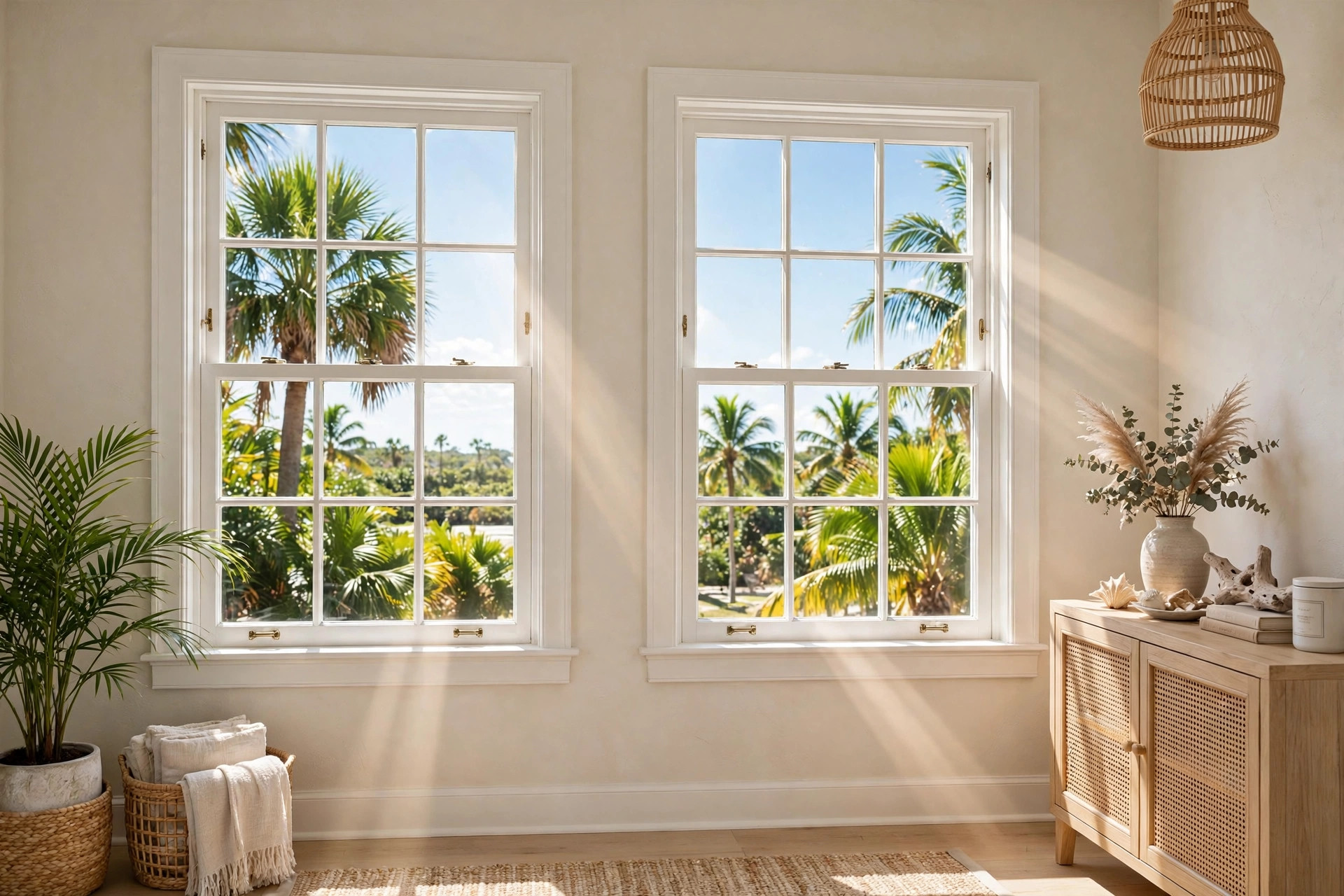

Choosing top rated double hung windows for Florida homes is one of the smartest moves a homeowner can make. Florida is hot for much of the year. Afternoon storms roll in fast. Hurricanes are a real threat along the coast. Windows must stand up to all of this, and double hung windows are a classic answer. They open from the top and the bottom. They let air flow while keeping rain out. When built for Florida, they cut heat gain and lower cooling bills.
The right windows keep a home cool, quiet, and safe. The wrong ones leak air, fade furniture, and fail in a storm. This guide explains what makes a double hung window worth the money in Florida, how to compare brands and frames, what to expect on price, and how to keep them working for years.
Why Double Hung Windows Suit Florida Homes
Double hung windows have two sashes that slide up and down. The upper sash and the lower sash both move. This gives homeowners a way to vent hot air from the top while drawing cooler air from the bottom. In Florida, where heat builds up fast indoors, this kind of air flow matters.
The style also fits Florida architecture. It works in older ranch houses, coastal cottages, and new suburban homes. Many homeowners in Florida ask about where to buy double hung windows in Florida when they start a replacement project, because local dealers know the code rules for each county.
Florida building codes are strict. After major hurricanes, the state set hard rules for wind resistance. Many counties require impact glass or rated shutters. Top rated double hung windows for Florida homes meet these rules. They carry design pressure ratings that show how much wind force they can take. They often use laminated impact glass that stays in the frame even when struck by debris.
What to Look for When You Choose: Top Rated Double Hung Windows for Florida Homes
Frame Material
Vinyl frames are the most common choice in Florida. Vinyl does not rust in salt air. It does not rot in damp weather. It needs almost no upkeep. High quality vinyl frames have welded corners that stay tight in the heat. For shoppers on a budget, a budget friendly vinyl replacement windows buying guide can help sort through the many vinyl options on the market.
Aluminum frames are strong and slim. They give a clean modern look. But plain aluminum transfers heat into the house. In Florida, only thermally broken aluminum makes sense. A thermal break is a layer inside the frame that blocks heat transfer. Without it, the window acts like a radiator.
Fiberglass frames are tough and stable. They expand and contract very little in heat. They can be painted. They cost more than vinyl but last a long time. Wood frames look rich and classic. Yet wood needs paint and sealant to survive Florida dampness. Most Florida homeowners skip wood for daily use windows.
Glass and Coatings
Glass choice makes or breaks performance. Double pane glass is the standard. The two panes trap a layer of air or gas between them. Argon gas fills are common. They slow heat transfer better than plain air.
Low-E coating is a must in Florida. Low-E is a thin layer on the glass that reflects heat. It lets light in while blocking much of the sun’s heat. It also cuts the ultraviolet rays that fade floors and furniture. Homes with Low-E glass stay cooler and use less air conditioning. The U.S. Department of Energy explains how energy efficient windows can cut heating and cooling loads, and the same logic applies in reverse in a hot climate.
Impact glass is two panes bonded with a plastic layer. It does not shatter into loose pieces. In a hurricane, it may crack but stays whole in the frame. Many Florida insurers offer discounts for homes with impact windows. Check the product label for a Miami-Dade or Florida Building Code approval number.
Ratings That Matter
Three numbers appear on every window label. The U-factor measures heat transfer. Lower is better. The solar heat gain coefficient measures how much sun heat passes through. In Florida, a low number is best. The air leakage rating measures how much air slips past the sash. Lower is better again.
Look for the ENERGY STAR label for the southern zone. The ENERGY STAR program sets performance targets by climate. Windows rated for the south block more sun heat. Home improvement experts at This Old House also stress that the right rating for the local climate matters more than the brand name alone.
Types and Options
Double hung windows come in several styles. Full double hung windows let both sashes move. This makes cleaning easy. The sashes tilt inward, so the outside glass can be washed from inside the room.
Single hung windows look the same but only the lower sash moves. They cost less. They seal a bit tighter because fewer parts move. Some Florida buyers mix the two, using double hung on the ground floor and single hung upstairs.
Replacement windows fit into the old frame without tearing out the whole opening. They suit homes where the existing wood frame is sound. New construction windows need the wall opened up. They allow full flashing and sealing. Full frame replacement is the better choice when old frames are rotted or out of square.
Grille patterns add style. Grilles can sit between the glass panes, where they never need dusting, or on the surface for a classic look. Between-glass grilles are the low upkeep pick. Color options are wide now. White and beige are standard. Dark bronze and black frames have grown popular for a modern coastal look.
Retailers like The Home Depot and Lowe’s carry many double hung lines in stock sizes. Their sites let buyers filter by impact rating and glass type. For step by step install photos and tips, The Spruce and Family Handyman publish useful how-to articles on window projects.
Cost and Price
Price depends on size, frame, glass, and labor. A basic vinyl double hung window in a stock size may run a few hundred dollars per unit. Impact-rated vinyl double hungs cost more, often in the mid to upper hundreds per window. Fiberglass and premium lines can pass one thousand dollars per window before labor.
Labor adds to the bill. A simple replacement install may cost a few hundred dollars per window. Full frame replacement with new flashing and trim costs more. Larger openings, second story work, and stucco repair all raise the price.
Florida prices run higher than the national average. Impact glass, code permits, and wind load rules add cost. But the trade is real. Impact windows cut insurance premiums in many cases. They also serve as storm protection, which saves the cost of shutters or panels. Get at least three written bids. Make sure each bid lists the exact window model, glass type, ratings, and warranty terms.
Financing is common. Many dealers offer payment plans. Some utilities and state programs once offered rebates for efficient windows. Check current offers before you sign. A well-built top rated vinyl replacement windows for usa homes guide can also help set price expectations across the country.
Care and Upkeep
Double hung windows need little care, but they do need some. Wash the glass twice a year with mild soap and water. Avoid harsh cleaners on Low-E coatings. Check the weep holes at the bottom of the frame. These small drains let water out. Keep them clear of dirt and paint.
Lubricate the sash tracks once a year with a silicone spray. Do not use oil, which attracts grit. Check the weather stripping around each sash. If it is cracked or flat, replace it. Good weather stripping keeps cooled air inside and hot air outside.
Tilt the sashes in and clean the balance system. Modern windows use block and tackle or constant force balances. If a sash will not stay up, the balance may be worn. Many parts are cheap and easy to swap with a screwdriver.
For exterior trim, caulk gaps where the frame meets the wall. Florida sun breaks down caulk in a few years. Fresh caulk keeps water out of the wall. Building product makers like James Hardie and CertainTeed note that proper flashing and sealing around openings is what keeps moisture out of walls over time.
Safety
Impact glass is the top safety feature in Florida. It resists break-ins as well as storms. Laminated glass is hard to smash through. It buys time and often stops an intruder.
Window locks matter too. Double hung windows should have locks that pull both sashes tight together. This cuts drafts and makes forced entry harder. Keep locks engaged when windows are closed.
Egress rules apply to bedrooms. Building codes set a minimum open size for escape in a fire. Double hung windows meet these rules in most sizes, but check the clear opening before you buy. Second story rooms need a way out or a nearby ladder.
Cordless operation is now the standard for safety. Old corded blinds are a hazard to small children. If you add blinds or shades to new windows, choose cordless or motorized options. Project advice sites like Bob Vila remind homeowners to match window treatments to the window type for safe daily use.
Never leave ground floor windows open and unattended for long. Use the top sash for venting when you want air with more privacy. A window sensor tied to a home alarm adds a layer of security on easily reached windows.
Frequently Asked Questions
Are double hung windows good for hurricanes?
Yes, when they are impact rated. Impact rated double hung windows use laminated glass and strong frames. They meet Florida Building Code wind rules. Standard non-impact double hungs are not enough in storm zones. Always check the approval label.
How long do double hung windows last in Florida?
Good vinyl or fiberglass double hung windows often last twenty years or more. Salt air, sun, and storms wear seals and hardware. Regular cleaning and caulk upkeep stretch the life. Cheap windows with thin frames may fail much sooner.
Do double hung windows lower cooling bills?
They can. Low-E glass and tight seals cut heat gain. Many homeowners see lower summer electric bills after replacing old single pane windows. The savings depend on the old windows, the new ratings, and how the home is used.
Can I install double hung windows myself?
A skilled homeowner can install a replacement window. But Florida code rules, permits, and wind ratings make professional install the safer choice. Poor install voids warranties and can fail inspection. Most buyers hire a licensed contractor.
What is the difference between double hung and single hung?
Both sashes move in a double hung window. Only the bottom sash moves in a single hung window. Double hung windows clean easier and vent better. Single hung windows cost less and seal slightly tighter.
Do I need permits to replace windows in Florida?
In most Florida counties, yes. Window replacement usually needs a permit and an inspection. The work must meet the Florida Building Code for wind and water resistance. Your contractor should pull the permit.
A Final Word
Top rated double hung windows for Florida homes are worth careful study. The climate is tough on windows. Heat, salt, rain, and wind test every seal and frame. Vinyl and fiberglass frames with Low-E impact glass give the best mix of comfort, safety, and value for most Florida houses.
Compare ratings, not just prices. Check the U-factor, the solar heat gain number, and the wind rating. Get firm bids in writing. Hire a licensed installer who knows local code. With the right windows in place, a Florida home stays cooler, quieter, and safer for many years.
References
Bob Vila. (n.d.). Home improvement advice. https://www.bobvila.com CertainTeed. (n.d.). Building materials and exterior products. https://www.certainteed.com ENERGY STAR. (n.d.). Energy efficient products. https://www.energystar.gov Family Handyman. (n.d.). DIY home repair and maintenance. https://www.familyhandyman.com James Hardie. (n.d.). Fiber cement siding and exterior products. https://www.jameshardie.com Lowe’s. (n.d.). Home improvement products. https://www.lowes.com The Home Depot. (n.d.). Home improvement products. https://www.homedepot.com The Spruce. (n.d.). Home and garden advice. https://www.thespruce.com This Old House. (n.d.). Home renovation guidance. https://www.thisoldhouse.com U.S. Department of Energy. (n.d.). Energy efficiency and renewable energy. https://www.energy.gov
Was this guide helpful?

About David Wilson
The My Garden US editorial team writes practical, in-depth home and garden guides for American homeowners — tested advice, no fluff.
You May Also Like
Seamless Gutter Guards Price Comparison USA: A Homeowner’s Plain Guide
March 29, 2026 0 views
Energy Efficient Cedar Shake Siding Buying Guide
August 22, 2026 0 views
Energy Efficient Exterior Lighting Fixtures Buying Guide: Light Your Home for Less
May 14, 2026 0 views