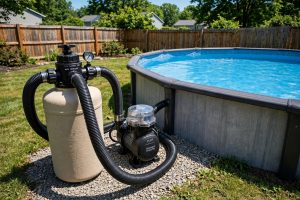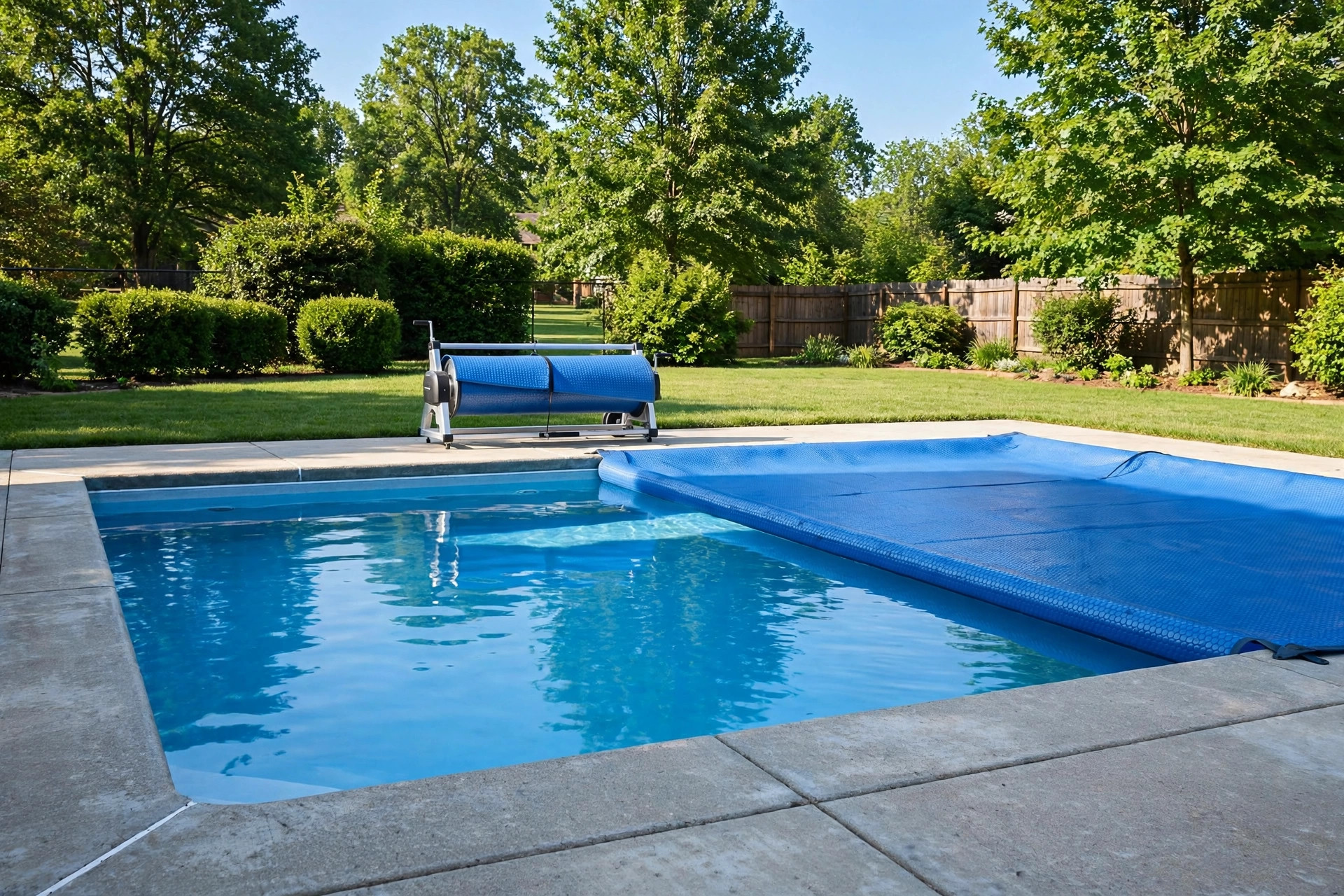

A solar cover warms a pool, cuts heat loss at night, and slows water loss to the air. But a solar cover is heavy and awkward when it is wet. Dragging it on and off the water by hand soon becomes a chore that many pool owners skip. The best pool cover reel for solar use solves this problem. It rolls the cover up in a few minutes and rolls it back out again with little effort. This guide explains what a reel is, how to choose one, what it costs, and how to keep it in good shape.
Why a Reel Matters
The Real Work of Covering a Pool
A solar cover for a large pool can weigh more than fifty pounds when wet. One person cannot fold it neatly without help. The cover gets stepped on, dragged across concrete, and stored in a heap. That shortens its life. A reel holds the cover flat and turns it into a tight roll. Two people can do the job in minutes. One person can often manage it alone.
Heat and Water Savings
Solar covers work by trapping heat from the sun during the day and holding it in the pool after dark. Studies from pool industry groups suggest that a cover can cut heat loss by as much as seventy percent. It also cuts evaporation, which saves water and the chemicals that leave with it. A reel makes it easy to use the cover every day, so these savings are real rather than lost to laziness. The best pool cover for winter reviews cover a different need, but the lesson is the same: a cover that is easy to handle gets used more.
Longer Cover Life
A cover that lies flat on a reel dries between uses. A cover that is bunched on the deck stays damp and grows mildew. The reel also keeps the cover off rough concrete that can scratch the bubbles. Buyers who spend a hundred dollars or more on a solar cover protect that purchase with a reel that costs less.
What to Look for in a Solar Cover Reel: Best Pool Cover Reel for Solar
Size and Fit
Measure the width of the pool where the reel will sit. Most reels adjust across a range, such as from twelve feet to twenty-one feet. The reel tube should span the full width of the cover. Check the tube diameter too. A thicker tube rolls the cover with fewer turns and puts less strain on the crank. For large pools, a commercial-grade reel with a wider tube is worth the extra cost.
Material of the Frame
Most home reels use aluminum or steel. Aluminum resists rust and is light enough to move. Steel is stronger but can corrode near a chlorinated pool unless it is coated. Look for stainless steel hardware at the joints. Cheap reels often fail at the crank handle or the wheel bearings first, so check those parts before you buy.
Type of Reel
There are three common types. Stationary reels sit on the deck behind the pool and stay put. Portable reels roll on wheels so the whole unit can be moved aside for swimming. Above-ground pool reels clamp to the top rail of the pool and work well on round or oval pools. Choose the type that matches your pool shape and how much deck space you have. Portable units are popular because they can be stored under a cover or in a shed.
Tube Quality
The tube is the heart of the reel. Thin tubes can bow under the weight of a large wet cover. A tube that bows is hard to turn and hard to pull the cover off. Look for a tube with thick walls or a multi-section design that adds strength. Some reels sell replacement tubes separately, which can extend the life of the unit.
Wheel and Crank Design
Wheels matter if you plan to move the reel. Large rubber wheels roll over grass and uneven concrete better than small plastic ones. The crank should have a comfortable grip and a smooth gear. A locking pin or brake keeps the reel from turning when you do not want it to.
Types of Solar Cover Reels
Stationary Reels
A stationary reel mounts to the deck or to posts set in concrete. It does not move, so it is sturdy. This type suits pools where one end of the deck has room for the reel to sit during swim time. Prices run from about eighty to two hundred dollars for home models. Installation takes an hour or two with basic tools.
Portable Reels
A portable reel stands on a frame with wheels. You roll it behind the pool to cover the water, then roll it aside to swim. This flexibility is the main selling point. Prices run from about one hundred to three hundred dollars. The frames are often lighter, so they can tip in strong wind if the cover is partly unrolled. Store the reel in a sheltered spot when storms come.
Above-Ground Reels
Above-ground reels attach to the pool wall or top rail. They are shorter and lighter than in-ground reels. Many cost between fifty and one hundred fifty dollars. They work best on pools up to twenty-four feet across. For very large above-ground pools, a portable reel set on the deck may be easier to turn.
Commercial-Grade Reels
Commercial reels use thicker tubes, steel frames, and strong wheels. They suit large pools, rental properties, and places where the reel sees daily use by many people. Prices start near three hundred dollars and can reach six hundred. A commercial reel is overkill for a small backyard pool, but it lasts many years longer than a budget unit.
Cost and Price
What Reels Cost
A basic reel for a small above-ground pool costs fifty to one hundred dollars. Mid-range portable reels cost one hundred to two hundred dollars. High-end reels with wide tubes and steel frames cost two hundred to four hundred dollars. Commercial units cost more. Prices shift with the season, and sales in late summer often bring the best deals at retailers like Home Depot.
What Drives the Price
Width is the main driver. A reel for a twenty-foot-wide pool costs more than one for a twelve-foot pool. Tube thickness, frame material, and wheel quality add to the cost. Brand names like the makers found at Leslie’s Pool Supplies or Pool Warehouse charge more, but they often back the product with longer warranties and easier access to spare parts.
Total Cost of Ownership
Add the cost of the solar cover itself, which runs from fifty to one hundred fifty dollars for most home pools. Add straps or clips that connect the cover to the tube, about fifteen to thirty dollars. A mid-range reel plus a new cover and straps usually totals under four hundred dollars. That investment pays back through lower heating bills and less water and chemical use.
Care and Upkeep
Cleaning the Reel
Rinse the frame and tube with a garden hose every few weeks. Chlorine and salt from pool water build up on metal parts and speed rust. Wipe the crank and bearings with a dry cloth. A light spray of silicone lubricant on moving parts keeps the turn smooth. Avoid oil-based sprays near the pool, since they can stain the water.
Storing the Cover
When the swim season ends, take the cover off the reel, let it dry fully, and fold it loosely. Store it in a bag or box out of direct sun. Ultra-violet light breaks down the plastic bubbles over time. Many owners leave the reel outside all winter, but the frame lasts longer if it is stored under a roof. If you plan to close the pool, read about how to close a pool for the winter season before the cold sets in.
Common Repairs
Loose straps are the most common problem. Replace them before they tear the cover. A bent tube can sometimes be straightened, but a kinked tube should be replaced. Check the crank gear each spring. If it skips, tighten the bolts or replace the gear. Spare parts for major brands are sold by pool supply shops such as Swim University partners and Hot Spring dealers, among others.
Safety
Keep the Area Clear
A reel is a low, heavy object on the deck. Children and guests can trip over it. Place the reel where foot traffic is light, and mark it if it sits near a walkway. When the reel is parked, set the brake or locking pin so it cannot roll into the pool.
Covers Are Not Safety Devices
This point matters. A solar cover on a reel is not a safety barrier. It cannot hold the weight of a child or pet. Families with small children should add a real safety layer, such as a fence or a pool alarm for child safety. The U.S. Consumer Product Safety Commission offers guidance on pool barriers and alarms that every owner should read.
Chemical and Sun Exposure
Solar covers sit on chlorinated water. High chemical levels break down the cover faster. Keep chlorine and pH in balance, which also makes swimming safer and more pleasant. In strong sun, a cover left rolled on the reel can overheat. Cover the rolled cover with a light shade cloth during the hottest months to slow damage.
Electrical Safety
If your pool has a pump timer or heater nearby, keep cords away from the reel path. A rolling reel can snag a loose cord. Keep all pool electrical work in line with local codes.
How to Install a Reel
Step One: Measure
Measure the width of the pool at the end where the reel will sit. Measure the width of the solar cover too. The tube must be at least as wide as the cover. Write down both numbers before you shop.
Step Two: Assemble
Most reels ship in a box with a tube, two end frames, wheels, a crank, and straps. Assembly takes thirty to sixty minutes. Follow the manual. Do not over-tighten plastic parts, which can crack.
Step Three: Position
Set the reel behind one end of the pool. The tube should sit a few inches above the water line so the cover feeds smoothly. For portable reels, test the rolling path for bumps or cracks in the concrete.
Step Four: Attach the Cover
Lay the solar cover on the water with the bubble side down. Clip the straps to the cover and wind the crank until the cover rolls up evenly. If the cover winds crooked, stop and straighten it. A crooked roll pulls unevenly and wears one side of the tube.
Frequently Asked Questions
Can one person operate a solar cover reel?
Yes, in most cases. Portable reels are designed for one-person use. Large commercial reels and very wide covers are easier with two people, but one strong adult can manage most home setups.
Will a reel work on a freeform pool?
It can, but the fit matters. Reels work best across the narrowest straight section of a freeform pool. Measure that section and choose a reel that fits it. Some owners of odd-shaped pools use two smaller reels side by side.
How long does a solar cover reel last?
A well-kept aluminum reel lasts five to ten years. Steel reels last longer if rust is kept off. The tube and straps wear out first. Replacing the straps every two or three years is normal.
Does a reel damage the solar cover?
A good reel protects the cover better than hand folding does. The main risk is a thin tube that creases the cover or straps that pull too hard on one spot. Wide tubes and wide straps spread the load and avoid damage.
Can I leave the reel outside all year?
You can, but its life will be shorter. Sun and rain wear the frame and fade the parts. If you must leave it out, use a grill-style cover over the whole unit. Review sites like The Spruce and Bob Vila often note storage tips for pool gear.
Should I buy the reel and cover together?
Bundles can save money and ensure the parts fit. But buying separately lets you pick a stronger reel and a better cover. Compare both options before you decide. Spa owners may also compare gear at Bullfrog Spas for related outdoor water products.
A Short Final Word
The best pool cover reel for solar use is the one that fits your pool, turns smoothly, and gets used every day. Size it right, keep it clean, and pair it with balanced water chemistry. Do that, and the cover will warm your pool, cut your bills, and last for many seasons.
References
Bob Vila. (n.d.). Home improvement advice. https://www.bobvila.com Bullfrog Spas. (n.d.). Hot tubs and spas. https://www.bullfrogspas.com Hot Spring Spas. (n.d.). Hot tubs and spas. https://www.hotspring.com Leslie’s Pool Supplies. (n.d.). Pool supplies and equipment. https://www.lesliespool.com Pool Warehouse. (n.d.). Pool equipment and supplies. https://www.poolwarehouse.com Swim University. (n.d.). Pool and hot tub care guides. https://www.swimuniversity.com The Home Depot. (n.d.). Home improvement products. https://www.homedepot.com The Spruce. (n.d.). Home and garden advice. https://www.thespruce.com U.S. Consumer Product Safety Commission. (n.d.). Product safety information. https://www.cpsc.gov
Was this guide helpful?

About Emily Rodriguez
The My Garden US editorial team writes practical, in-depth home and garden guides for American homeowners — tested advice, no fluff.
You May Also Like
The Best Pool for Parties With Friends
February 20, 2026 0 views
Best Pool Net for Cleaning Leaves: A Complete Guide
August 28, 2026 0 views
Best Pool Thermometer Floating Reviews: A Plain Buyer’s Guide
February 8, 2026 0 views