
The best smart garage door opener reviews usa homeowners read in 2026 all point to one clear fact. The garage door has become part of the connected home. It no longer opens and closes only by a remote clipped to the car visor. It now answers to a phone, a voice command, and a schedule. A good opener lets a homeowner check the door from work. It sends an alert if the door is left open at night. It can even let the neighbor in when packages arrive. This guide walks through what reviewers praise, what they warn against, and how to pick the right unit for a typical American home.
Why a Smart Opener Matters
A garage door is the largest moving part in most houses. It is also the most used. Many families open and close it four or more times a day. An old opener does one job. It lifts the door. A smart opener does that job and adds a layer of control and safety.
The first gain is simple: awareness. Reviewers keep coming back to this word. With a smart opener, the homeowner always knows the state of the door. The phone app shows “open” or “closed” in plain text. If the door sits open for thirty minutes, the app sends a warning. This matters because burglars often enter through a forgotten open garage. Studies on home break-ins show the garage as a common entry point. Home security firms like ADT have long told owners to treat the garage as a front door. A smart opener makes that advice easy to follow.
The second gain is convenience. A voice command opens the door when hands are full of groceries. A geofence can trigger the door as the car turns onto the street. Delivery drivers can place packages inside the garage instead of on the porch, which cuts porch piracy. These small gains add up over a year of daily use.
The third gain is history. Most apps keep a log of openings and closings. Parents see when the kids got home. Homeowners see whether the cleaner came at the agreed time. It is a quiet record that costs nothing extra.
How to Choose: What Reviewers Check: Best Smart Garage Door Opener Reviews Usa
Reading the best smart garage door opener reviews usa sites publish, a pattern appears. Testers judge every unit on the same points. A shopper can use the same list.
Drive type. The motor drives the door by chain, belt, or screw. Chain drives are loud and cheap. Belt drives are quiet and cost more. Screw drives sit in the middle. For a garage under a bedroom, reviewers always recommend the belt. The price gap is small enough that quiet wins.
Motor power. Most American doors need a half-horsepower motor. Heavy wooden or double-wide doors need three-quarter horsepower. A motor that strains will fail early. Check the door weight and size before buying.
Connectivity. Every smart opener needs Wi-Fi. Most use 2.4 GHz. The garage often sits far from the router, so a weak signal is the top complaint in reviews. Before buying, stand in the garage with a phone and check the Wi-Fi bars. If the signal is weak, a range extender may be needed.
App quality. Reviewers spend real time in the apps. They test setup speed, alert speed, and the remote open command. The best apps set up in under fifteen minutes. They send alerts within seconds. Tech reviewers at PCMag and CNET score apps hard on these points. A good motor with a bad app is a bad buy.
Voice control. Most units work with Alexa and Google Assistant. HomeKit support is less common and worth checking for Apple households. A look at a voice assistant comparison can help a buyer decide which platform to build around.
Battery backup. Power cuts happen. A battery backup opens and closes the door a few times without grid power. In storm country, reviewers call this a must-have, not a luxury.
Safety sensors. Federal rules require photo-eye sensors that stop the door if a child or pet crosses the beam. Every unit sold in the USA must have them. The CPSC tracks garage door injuries and pushes owners to test sensors monthly.
Warranty. Motors often carry lifetime warranties. Belts and chains carry shorter ones. Electronics carry one to three years. Read the fine print before the box leaves the store.
Types and Options on the Market
The market splits into two groups: full smart openers and smart add-on controllers.
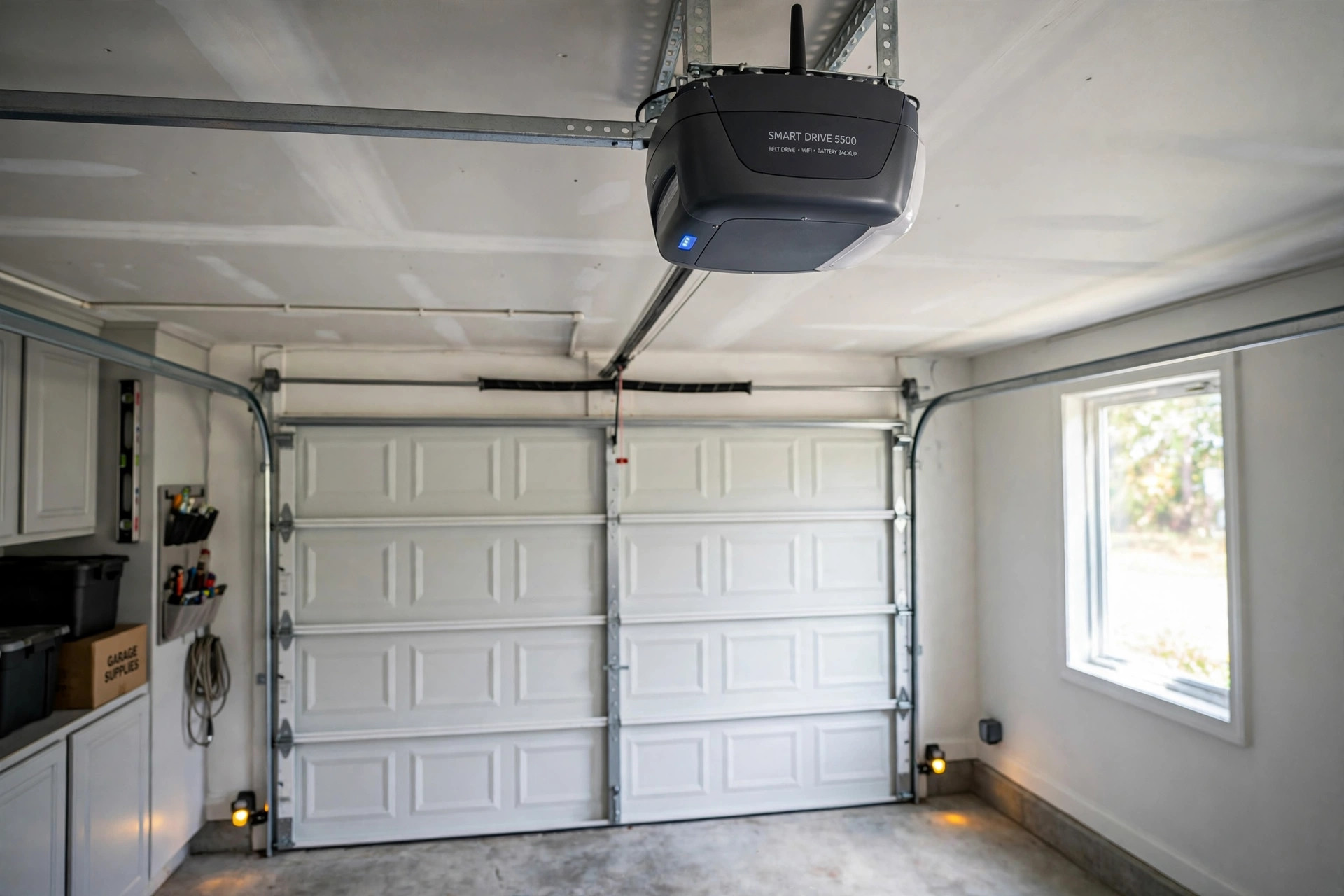
Full smart openers replace the whole motor unit. Brands in this space build the Wi-Fi, the app, and the motor as one system. Setup takes a few hours for a handy homeowner. A professional install adds about one to two hundred dollars. These units usually cost between two hundred and four hundred dollars. They include the newest features: built-in cameras, two-way talk, and quiet belt drives. Reviews tend to favor this group for reliability, since all parts come from one maker.
Smart add-on controllers attach to an existing opener. They wire into the same terminals as the wall button. They cost far less, often fifty to one hundred dollars. They add app control, alerts, and voice commands to a dumb opener that still runs fine. Reviewers like them as an upgrade path. The catch is fit. The controller must speak the opener’s language. Old units from the 1990s may not work. Check the maker’s compatibility list first.
A third option is the garage door opener with a built-in camera. The camera watches the garage interior. Owners see who enters and can talk through the unit. It suits people who store tools or bikes in the garage. The camera adds to the price and needs a strong Wi-Fi signal to stream video.
For voice control, most buyers pick a smart garage door opener with voice control that ties into the home system they already use. Google households lean to units that work with Google Home, which can be managed through the Google Store ecosystem. Amazon households lean to Alexa units. Mixing platforms causes headaches, so reviewers advise picking one and staying with it.
Another popular pick is the quiet belt drive smart garage door opener. Belt drives use a rubber-like belt instead of a metal chain. The noise drop is large. A bedroom above the garage stays quiet at 6 a.m. Reviews rate belt drives highest for attached garages.
Cost and Price: What to Expect
Prices in the USA fall into clear bands. Add-on controllers run fifty to one hundred dollars. Basic full smart openers run one hundred fifty to two hundred fifty dollars. Premium units with cameras and battery backup run two hundred fifty to four hundred dollars. Professional installation adds one hundred to two hundred dollars if the buyer does not want to do the work.
Reviewers stress the total cost, not just the box price. A cheap unit that needs a service call in year two costs more than a solid unit that runs for ten years. Belt drive parts last longer than chain parts. Motors with lifetime warranties protect the biggest cost.
There are no monthly fees for most brands. The app, the alerts, and the voice control are free. A few camera models offer optional cloud video storage for a small monthly fee. The basic features work without it.
Shoppers on a budget should watch holiday sales. Garage door openers drop in price around major sale weekends. Consumer testing groups like Consumer Reports publish ratings that help buyers spot real value versus marketing noise.
Care and Upkeep
A garage door opener needs little care, but it needs some. Reviewers and makers agree on a simple yearly routine.
First, test the safety sensors. Wave a broom handle through the beam while the door closes. The door must reverse. If it does not, clean the sensor lenses and check the wiring. The CPSC lists sensor failure as a factor in child injuries, so this test matters most.
Second, check the door balance. Pull the emergency release and lift the door by hand. It should move smoothly and stay halfway open. A door that falls is out of balance. An unbalanced door strains the motor and shortens its life. Springs are under high tension. Only a trained technician should adjust them.
Third, oil the moving metal parts. Use a light garage door lubricant on rollers, hinges, and the chain or screw. Do not use heavy grease. Wipe the belt clean on belt drive units. Oil never goes on the belt.
Fourth, check the backup battery. Unplug the opener and run the door on battery. If it fails, replace the battery. Most last two to three years.
Fifth, keep the app updated. Makers push firmware fixes for security holes. An old firmware version can leave the Wi-Fi link exposed. Turn on auto-update in the app if the option exists.
These five steps take about thirty minutes a year. They keep the opener quiet, safe, and long-lived.
Safety: The Rules That Matter
Garage doors are heavy. A standard double door weighs over one hundred fifty pounds. The opener moves that weight many times a day. Safety is not a side topic. It is the topic.
The federal rules are clear. Every opener sold in the USA since 1993 must reverse on contact and must have photo-eye sensors. When buying used or old stock, check the date. An opener from before 1993 is not just outdated. It is unsafe and should be replaced.
Keep remotes away from children. Kids treat the wall button like a toy. Mount the wall control at least five feet off the floor. Teach children that the door is not a game.
Never stand under a moving door. Never race it. The auto-reverse is a backup, not a plan.
Smart features add their own safety notes. Share app access only with trusted people. Use a strong, unique password for the opener account. If the phone is lost, remove it from the account at once. Some owners pair the opener with a full home security setup from firms like SimpliSafe or Ring for one-screen control of doors, cameras, and alarms. That is fine, but each added link is another account to protect.
For renters, note that most leases bar opener replacement. An add-on controller is usually allowed since it removes cleanly. Ask the landlord first.
Frequently Asked Questions
Do smart garage door openers work during a power cut? Only models with a battery backup work during a cut. The battery gives a limited number of open and close cycles. Without a battery, use the red emergency release cord to lift the door by hand. Reviewers in storm zones treat the backup as essential.
Can I add smart features to my old opener? Often, yes. A smart add-on controller wires into most openers made after 1993. Check the controller maker’s compatibility list and enter the opener brand and model. Very old units with simple remotes may not work.
Is my garage door opener a security risk on Wi-Fi? Any connected device carries some risk. Lower it with a strong unique password, current firmware, and a guest network for smart home gear if the router supports one. Buy from known brands that issue security updates. Tech press like The Verge covers opener security flaws when they appear, which keeps makers honest.
How long does a garage door opener last? Ten to fifteen years is normal for a quality unit. Chain drives may need chain tightening over that span. Belt drives need less. The electronics usually fail before the motor. A lifetime motor warranty helps, but check what it excludes.
Can two phones control one opener? Yes. Most apps allow shared access for family members. The owner sends an invite from the app. Each person gets their own login. The activity log shows who opened the door and when.
Do I need a hub for a smart garage door opener? Most modern units connect straight to Wi-Fi and need no hub. Some older or budget models need a small bridge plugged into the router. Check the box before buying so there are no surprises at setup.
A Short Final Word
The best smart garage door opener reviews usa buyers can trust keep saying the same thing in different words. Buy the quietest drive that fits the budget. Make sure the app is fast and simple. Test the Wi-Fi signal in the garage before the box is opened. Keep the safety sensors clean and tested. A smart opener is a small machine that guards a big door. Pick it with care, and it will serve the house well for a decade or more. Pair it with the rest of the home’s safety gear, from a good bedside safe indoors to a connected smart pool pump outside, and the whole property runs smarter.
References
ADT. (n.d.). Home security and automation. https://www.adt.com CNET. (n.d.). Technology news and reviews. https://www.cnet.com Consumer Reports. (n.d.). Product reviews and ratings. https://www.consumerreports.org Google Store. (n.d.). Smart home devices. https://store.google.com PCMag. (n.d.). Technology product reviews. https://www.pcmag.com Ring. (n.d.). Smart home security devices. https://www.ring.com SimpliSafe. (n.d.). Home security systems. https://www.simplisafe.com The Verge. (n.d.). Technology news and reviews. https://www.theverge.com U.S. Consumer Product Safety Commission. (n.d.). Product safety information. https://www.cpsc.gov
Was this guide helpful?

About David Wilson
The My Garden US editorial team writes practical, in-depth home and garden guides for American homeowners — tested advice, no fluff.
You May Also Like
The Best Portable Generator for Home Backup USA: A Complete Guide
July 5, 2026 0 views
Smart Air Purifier With App Reviews 2026 USA: A Practical Guide for American Homes
February 20, 2026 0 views
WiFi 7 Router for Smart Home Reviews USA: A Practical Guide for Buyers
April 24, 2026 0 views