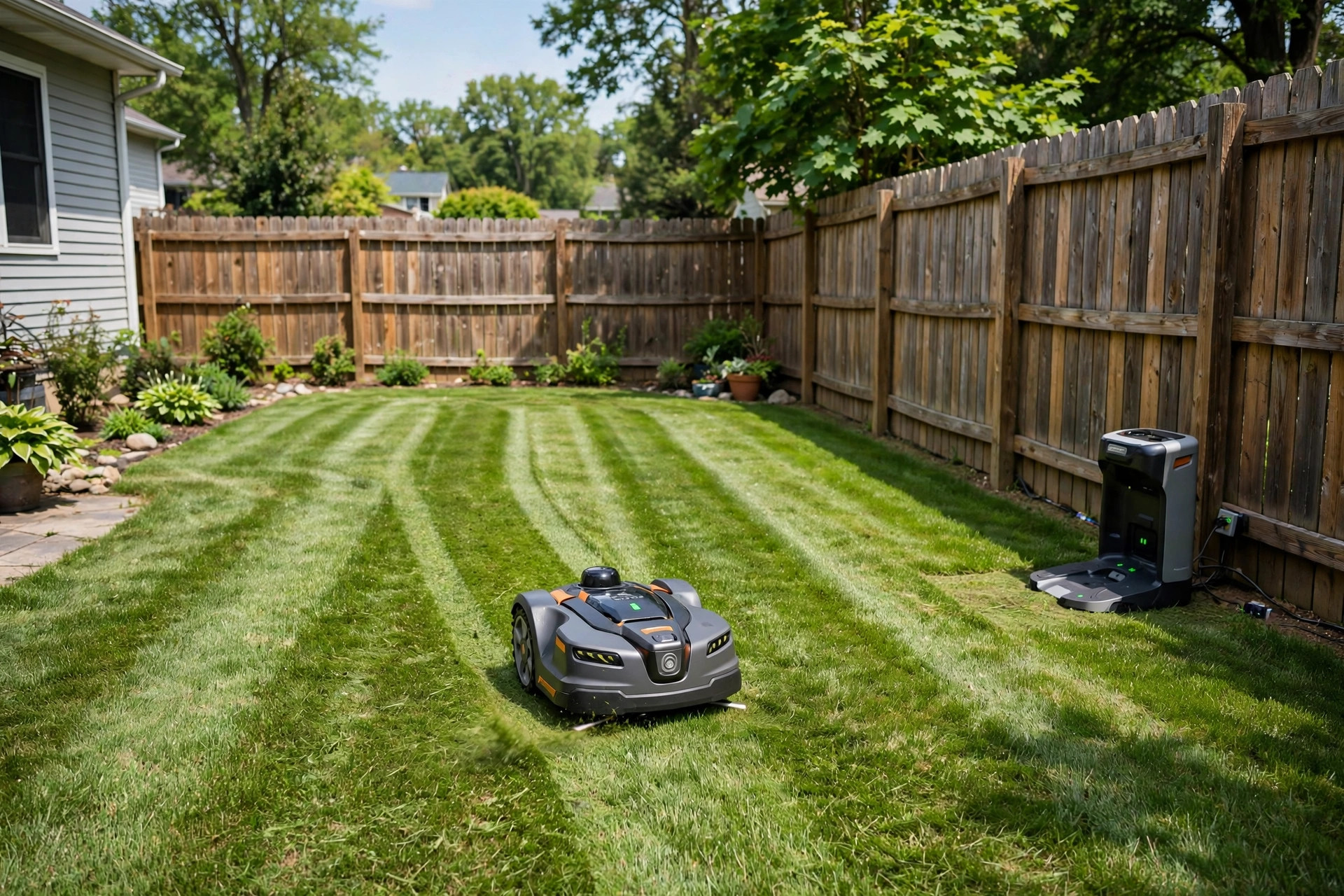
Every week, new models roll into stores, and the search for the best robot mower for half acre reviews usa grows louder. A half acre is the classic American suburban lot. It is large enough that mowing by hand eats up a Saturday morning, yet small enough that a riding mower feels like overkill. A robot mower promises to solve this problem. It cuts a little grass each day and returns to its dock to charge. The lawn stays neat without the weekend chore.
But not every robot mower suits a half-acre yard. Many small models top out at a quarter acre. Others claim a large range but take three days to cover it. This guide walks through what matters, what to look for, and how to read reviews with a sharp eye. It covers types, prices, setup, safety, and care. By the end, you will know exactly which specs deserve your attention and which claims to ignore.
Why a Half Acre Changes the Math
A half acre sounds simple, but it hides some math. One acre equals 43,560 square feet. A half acre is 21,780 square feet. No one mows the whole lot. The house, driveway, garage, patio, flower beds, and paths eat up space. Most half-acre lots leave between 10,000 and 15,000 square feet of actual grass.
That number matters more than any other. A robot mower rated for a quarter acre will not finish a 12,000-square-foot lawn. It will run, recharge, and run again, day after day, and still fall behind in the spring when grass grows fast. For a half acre of grass, look for models rated for at least three quarters of an acre. The extra capacity gives the machine room to keep up during peak growing season.
Slope matters too. Many half-acre lots roll and dip. Check the slope rating on any model you consider. Most handle 20 to 25 percent slopes. Steep banks may need a mower with all-wheel drive or a hand trimmer to finish the edges.
What to Look for Before You Buy: Best Robot Mower for Half Acre Reviews Usa
Cutting Capacity and Battery
Capacity is the first spec to check. It tells you how much lawn the mower can handle in one season of regular work. For a half acre of grass, choose a rating of 0.75 acres or more. Some strong models reach one full acre.
Battery life decides how much gets cut in each run. Most robot mowers run for 60 to 120 minutes, then charge for 60 to 90 minutes. A larger battery means fewer charge breaks and faster coverage. Look at cutting width as well. A nine-inch deck cuts a strip half again as wide as a six-inch deck. Wider decks finish sooner.
Boundary Wire or Wire-Free
Older robot mowers use a boundary wire. You bury or stake a thin wire around the lawn, and the mower stays inside the loop. The wire works well and costs little, but installation takes an afternoon. Repairs after a wire break take patience.
Newer models drop the wire. They use GPS, RTK positioning, or onboard cameras to map the yard. Setup is faster, and you can change zones in an app. Wire-free models cost more, often by several hundred dollars. They also need a clear view of the sky for GPS models, so heavy tree cover can weaken the signal. Our notes on wire free robot mower reviews 2026 usa walk through the newest GPS models in detail.
Slope, Obstacles, and Noise
Check how the mower handles hills, roots, and garden beds. Strong motors and big wheels climb better. Bump sensors or camera vision help the mower steer around toys, trees, and flower beds instead of banging into them.
Noise is a real plus. Most robot mowers run at 55 to 65 decibels, about the level of normal conversation. You can run one at night or early morning without bothering the neighbors. A gas mower, by contrast, can top 90 decibels.
Types of Robot Mowers on the Market
Boundary-Wire Models
These are the oldest and most proven type. A wire marks the mowing area. The mower bounces in a random or guided pattern inside the loop. Prices start low, often under one thousand dollars. They suit simple, open lawns. Complex yards with many islands and narrow passages take more wire and more time to set up.
GPS and RTK-Guided Models
Wire-free mowers map the yard with GPS or with RTK, a precise form of GPS. Some add cameras for obstacle vision. You draw zones in a phone app. The mower then cuts in straight, tidy lines. These models shine on half-acre lots because they cover ground in an orderly pattern. They cost more, often from fifteen hundred to three thousand dollars, but they save hours of setup.
All-Wheel-Drive Models
A few heavy-duty models add all-wheel drive for steep or rough ground. They cost the most but keep traction where two-wheel models slip. If your lot has sharp banks or a bumpy back field, this type deserves a look. For most flat suburban lots, two-wheel drive is enough.
How to Read Reviews Like a Pro
Reviews help, but only if you read them well. Start with the yard size of the reviewer. A glowing review from someone with a small city lot tells you little about half-acre performance. Look for reviewers with yards like yours.
Watch for patterns across many reviews, not single complaints. If twenty owners report the same stuck wheel or the same app bug, believe them. If one owner complains about rain while others praise all-weather cutting, treat it as an outlier.
Check the date. Robot mower software improves fast. A review from two years ago may describe bugs that a firmware update fixed. Fresh reviews reflect the current app and the current hardware. Independent lab testing from Consumer Reports and hands-on write-ups from CNET, The Verge, and PCMag are useful anchors because they test more than one model side by side. Shoppers often compare specs across categories the same way, just as readers of the best robot vacuum for pet hair 2026 usa compare suction and bin size before they buy.
Be wary of reviews that read like ads. Overly polished language, no mention of flaws, and links that push one store are warning signs. Honest reviews name at least one weakness.
Cost and Price
Prices for robot mowers span a wide range. Basic boundary-wire models start around seven hundred dollars. Mid-range models with larger batteries and better navigation run from twelve hundred to two thousand dollars. Top wire-free GPS models with cameras and all-wheel drive can pass three thousand dollars.
Add the extras to your budget. Boundary wire kits, extra blades, a garage or shelter for the dock, and an anti-theft GPS tracker add a few hundred dollars. Replacement blades are cheap, often a few dollars for a set, and you will change them two or three times a season.
Compare the cost against a mowing service. A weekly service on a half acre often costs forty to sixty dollars per visit. Over a six-month season, that is one thousand to fifteen hundred dollars. A robot mower often pays for itself in two seasons. Electricity costs stay small, usually a few dollars a month, because the mowers sip power.
Setup and Day-to-Day Care
Setup takes longer than the ads suggest. For a wire model, plan half a day to lay the boundary wire, place the dock, and test the loop. For a GPS model, plan an hour or two to walk the boundary with your phone and draw the map. In both cases, clear the lawn first. Pick up sticks, toys, hoses, and dog waste. Small objects can jam the blades.
Daily care is light. The mower does the work. Once a week, wipe the deck and check the blades. Dull blades tear grass instead of cutting it, which leaves brown tips. Flip the mower over and clear packed clippings from the wheels and the underside. In fall, rake heavy leaves before mowing, since thick leaf mats can choke the blades.
Winter storage matters in cold states. Bring the mower and the dock indoors. Charge the battery to about half before storage, and top it up once mid-winter. A battery left dead all winter may not wake up in spring. Our roundup of robot lawn mower reviews for usa yards includes winter care notes for northern climates.
Smart Home Integration and Yard Security
Most new robot mowers connect to a phone app. From the app you can start a cut, set a schedule, and draw no-go zones. Many also work with voice assistants, so you can schedule cuts through the Google Home app or a similar smart home hub. This matters because a half-acre cut takes planning. You want the mower to run when the kids are at school and the dog is inside.
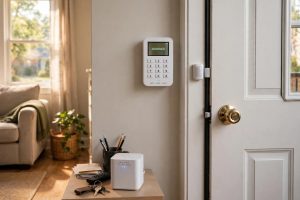
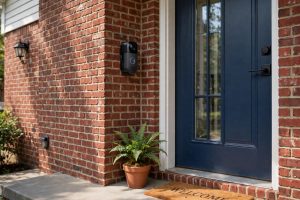
Security deserves thought too. A robot mower sits outside all day. It is an easy target for theft. Most models carry a PIN lock, so a stolen mower will not run for a thief. Some add GPS tracking, which helps you find the machine. An outdoor camera aimed at the dock adds another layer. Many owners pair their mower with a Ring outdoor camera or a full SimpliSafe smart home security system so the yard stays watched day and night.
Safety on a Half Acre
Robot mowers are far safer than gas mowers, but they are not toys. The blades sit low and spin fast. Keep children and pets off the lawn while the mower runs. Most models stop the blades within seconds if lifted or tilted. This safety feature is worth testing when the mower is new.
Read the safety guidance from the U.S. Consumer Product Safety Commission before your first season. It covers outdoor power equipment basics that apply to robot mowers too. Store spare blades where children cannot reach them. Unplug the dock before you flip the mower for cleaning. Teach older kids that the mower is a machine, not a ride.
Frequently Asked Questions
How long does a robot mower take to cut a half acre?
Most models need two to three full days of run-and-charge cycles to cover a half acre the first time. After that, daily short runs keep the grass at the same height, so the lawn always looks fresh. This is the main idea behind robot mowing: little and often beats one big weekly cut.
Can a robot mower handle rain?
Many models can mow in light rain, and most have rain sensors that send them back to the dock in heavy storms. Wet grass clumps and can clog the deck, so many owners set the mower to skip rainy days. Check the rain settings in the app.
Will it stripe the lawn like a pro service?
Wire-free models that cut in straight lines leave visible stripes, much like a pro service. Random-pattern wire models leave a more natural, even look without clear stripes. Both look neat. If stripes matter to you, choose a GPS model with systematic mowing.
Do robot mowers work on bumpy or rough lawns?
They handle mild bumps and gentle dips well. Deep ruts, large holes, and sharp rocks cause problems. Fill holes and remove rocks before the first mow. On very rough ground, a model with bigger wheels and stronger motors will serve you better.
What happens if the mower gets stolen?
Most models lock with a PIN. A thief cannot use a locked mower. GPS models can show their location in the app, which helps police recover them. Register the serial number with the maker when you buy it, and keep the receipt in a safe place.
Is a robot mower worth it for a half acre?
For most owners, yes. A half acre is the sweet spot where push mowing eats too much time and a riding mower costs too much. A robot mower frees up two to four hours a week during the growing season. The math works even better if you were paying for a mowing service.
A Final Word
The best robot mower for half acre reviews usa all point to the same lesson. Match the machine to your yard, not to the marketing. Measure your grass, note your slopes, and decide whether you want wire or wire-free navigation. Read reviews from owners with lots like yours. Spend a little more for capacity you will need in May, not just in September. Do that, and the mower will quietly do the dull work while you enjoy the yard.
References
CNET. (n.d.). Technology news and reviews. https://www.cnet.com Consumer Reports. (n.d.). Product reviews and ratings. https://www.consumerreports.org Google Store. (n.d.). Smart home devices. https://store.google.com PCMag. (n.d.). Technology product reviews. https://www.pcmag.com Ring. (n.d.). Smart home security devices. https://www.ring.com SimpliSafe. (n.d.). Home security systems. https://www.simplisafe.com The Verge. (n.d.). Technology news and reviews. https://www.theverge.com U.S. Consumer Product Safety Commission. (n.d.). Product safety information. https://www.cpsc.gov
Was this guide helpful?

About Sarah Mitchell
The My Garden US editorial team writes practical, in-depth home and garden guides for American homeowners — tested advice, no fluff.