
Florida homes ask more of outdoor lighting than homes in most states. The air is warm and wet all year. Salt rides in on the ocean breeze. Afternoon storms soak everything in summer, and the ground near the coast sits flat and low. A set of landscape spot lights that works fine in Ohio can fail in Florida in a single season. Homeowners searching for landscape spot lights florida homes usa need advice built for the Sunshine State.
The good news is that landscape spot lights suit Florida yards better than almost any other outdoor light. Palms, ficus hedges, stucco walls, pool decks, and lanais all take a spot light well. The warm night air keeps people outside after dark, so good lighting gets used every day of the year. A small set of well-placed fixtures can make a house safer to walk around, harder to approach unnoticed, and far better looking from the street. This guide explains what to buy, how to place it, what it costs, and how to keep it working in the Florida climate.
Why Landscape Spot Lights Matter in Florida
A Florida yard lives at night. In winter the sun sets early, and in summer the heat keeps most families indoors until the air cools after sunset. Walkways, pool decks, and driveways that sit dark are easy places to trip. Landscape spot lights solve that problem without the harsh glare of a flood light nailed over the garage. A spot light throws a narrow beam upward or across a small area. It lights what you point it at: a palm trunk, a front door, a garden wall, a walkway edge.
Security is a second reason. Homes with lit yards are less inviting to intruders. Spot lights aimed at the corners of the house and the side gates leave fewer dark pockets. Many homeowners combine them with sensor porch lights by the front and back doors.
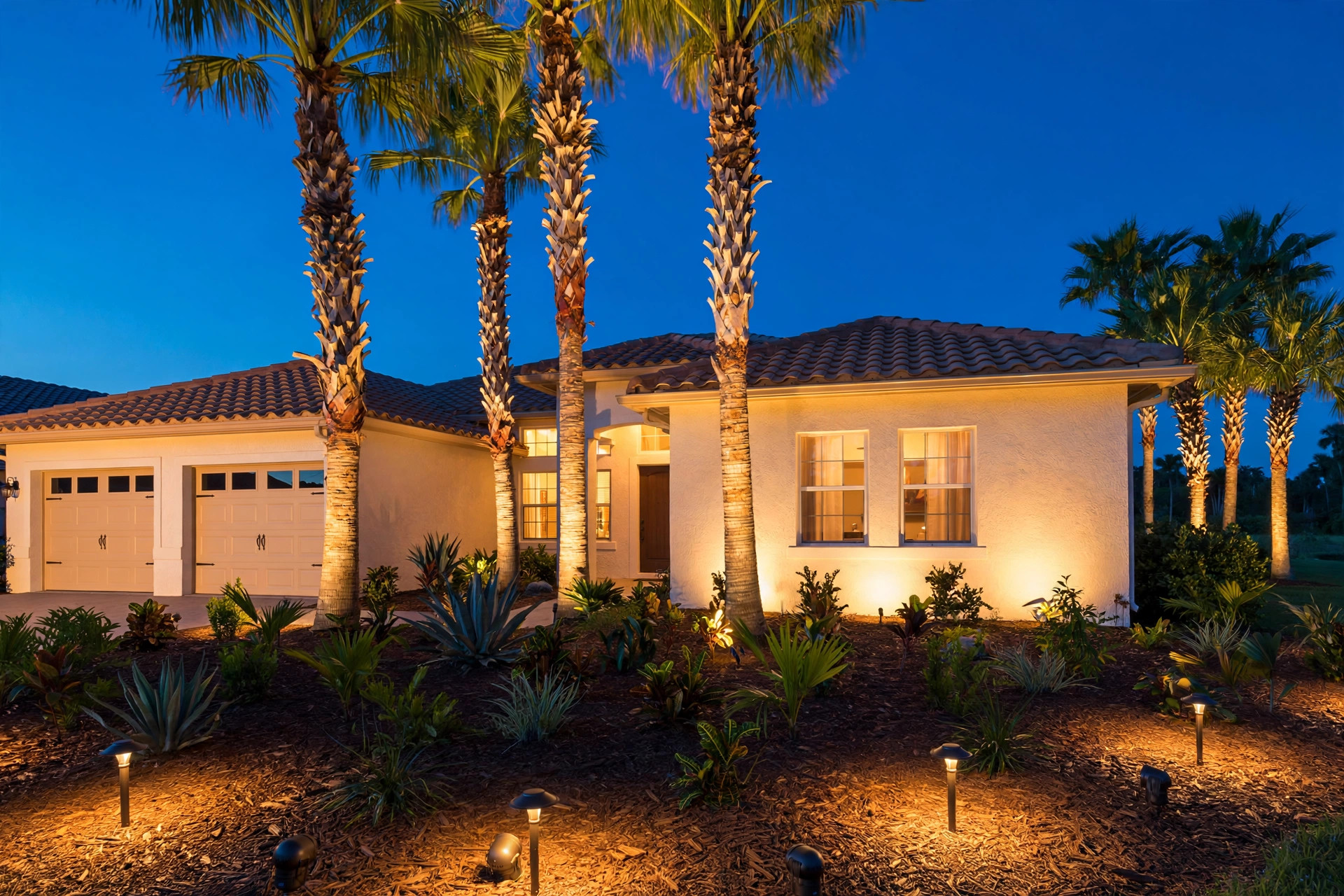
Curb appeal matters too. Florida real estate moves on first impressions. A house that glows warm and even after dark reads as cared for. Landscape lighting is one of the cheapest ways to lift the look of a home. Stucco walls take light especially well. A spot light set a few feet out from a stucco facade washes it in a soft, even glow that hides small flaws and gives the house depth.
What to Look for When You Buy: Landscape Spot Lights Florida Homes Usa
Brightness and Beam Angle
Spot lights are measured in lumens. For most Florida yard jobs, 100 to 300 lumens per fixture is enough. Uplighting a tall palm may need 400 to 600 lumens. More is not always better. Too much light flattens the scene and bothers neighbors. A beam angle between 35 and 60 degrees suits most tasks. Narrow beams suit tall narrow trees. Wide beams suit walls and hedges.
Color temperature matters as much as brightness. Warm white at 2700K to 3000K suits homes. It flatters stucco, tile roofs, and wood decks. Cool white above 4000K looks harsh and gives the yard a commercial feel.
Voltage and Wiring
Most landscape spot lights in the USA run on low-voltage 12-volt systems. A transformer plugs into an outdoor outlet and steps the house current down. You run a cable through the mulch to each fixture. The system is safe to install without an electrician in most counties, and a 12-volt shock is harmless. Line-voltage fixtures exist, but they need burial-rated cable and often a licensed electrician. Low voltage suits a typical Florida yard.
Solar spot lights are a second option. They need no wiring at all. Each fixture carries its own panel and battery. They work well in Florida because the sun is strong. Their weakness is winter. Short days and cloudy weeks cut run time. They also dim as the night wears on. Use solar where wiring is hard to reach, and use wired low voltage where you want light that stays bright all night.
Weather and Rust Resistance
This is the section Florida buyers must read twice. The combination of heat, humidity, salt air, and hard rain destroys cheap fixtures. Look for housings made of solid brass or marine-grade aluminum. Plastic housings crack under the Florida sun. Steel rusts fast unless it is stainless. Check the IP rating on the box. IP65 or higher means the fixture handles dust and driving rain. The best fixtures carry a rating for saltwater environments.
Gaskets and lens seals deserve a look. A spot light aimed upward fills with water when it rains if the seal is poor. Quality fixtures use silicone gaskets and threaded lenses that stay tight for years. Guidance from Consumer Reports on outdoor lighting can point you toward brands that hold up in wet climates.
Types of Landscape Spot Lights
Bullet spot lights are the classic choice. They look like small metal bullets on a stake or base. You aim them up into trees or across walls. They come in wired and solar versions and suit almost every Florida yard task.
Well lights sit flush in the ground. They shine straight up. They are a fine pick for driveways and paver patios because mowers and feet pass right over them. In Florida, choose well lights with strong drainage and sealed lenses, since the flat ground ponds water after storms.
Accent and mini spot lights are smaller and gentler. They suit low beds, small palms, and pots by the front door. A row of mini spots along a garden bed gives a layered look without much cost.
Color-changing spot lights use RGB LEDs controlled by a phone or remote. They suit pool areas and holidays, but many Florida cities and HOAs limit bright colored light.
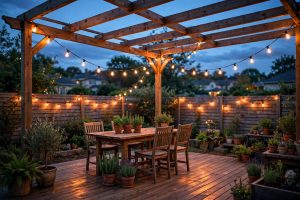
String and ambient lights play a different role. They spread soft light over a wide area instead of a focused beam. For a patio or lanai, patio string lights strung overhead give the gathering space a warm glow, while spot lights handle the plants and walls around the edges.
How to Place Spot Lights Around a Florida Home
Placement is more art than science, but a few rules keep you out of trouble. Start with the front. Two spot lights aimed up into the tallest palms frame the house. One or two fixtures washed across the stucco facade near the front door pull the eye to the entry. Keep fixtures out of the lawn where mower blades hit them. Set them in the mulch beds a foot or two from the plant or wall they light.
Aim fixtures from the side, not straight on. Light that strikes a palm trunk at a slight angle shows the texture of the bark. Light aimed dead center looks flat. For hedges, space fixtures six to eight feet apart and overlap the beams. That spacing avoids the scalloped look of bright dots with dark gaps between them.
Watch for light trespass. Florida lots in suburbs sit close together. A beam that spills into a neighbor’s bedroom window starts a dispute fast. Aim beams down or into your own yard, never across the property line. Many HOAs in Florida have written rules on outdoor lighting. Read them before you buy. Some limit the number of fixtures, the brightness, and the hours of operation.
Coastal homes face one more rule. On the Atlantic and Gulf coasts, sea turtles nest from spring through fall, and light that reaches the beach can disorient hatchlings. Many beach counties require turtle-safe lighting: shielded fixtures, amber bulbs, and lights aimed away from the water. Check your county code before lighting the ocean side of the property. The U.S. Consumer Product Safety Commission publishes safety notes on outdoor electrical products worth a read.
Around pools, keep spot lights well back from the water and never aim them at swimmers’ eyes. Path lights serve walkways better than spot lights. Solar path lights along the edge of a pool deck or garden path mark the walking line without the glare a spot light would throw.
Cost and Price in the USA
A basic low-voltage LED spot light fixture costs about 15 to 40 dollars at large retailers such as The Home Depot or Lowe’s. Solid brass fixtures from lighting specialists run 60 to 150 dollars each. They last far longer in Florida weather, so the higher price often pays for itself.
A transformer for a 12-volt system costs 60 to 200 dollars depending on wattage. A 100-foot roll of direct-burial cable costs about 30 to 50 dollars. A starter kit with a transformer, cable, and six fixtures sells for 150 to 300 dollars and suits a small yard.
A typical Florida front yard needs 8 to 14 fixtures. That puts a do-it-yourself job at 250 to 800 dollars in materials. A professional installer charges 1,500 to 4,000 dollars for a full design and install, depending on the size of the lot. Prices run higher in South Florida than in the Panhandle.
Running costs are small. LED spot lights draw 3 to 8 watts each. Ten fixtures running six hours a night cost only a few dollars a month in electricity. The U.S. Department of Energy notes that outdoor LEDs use far less power than the old halogen spots they replaced. Look for the ENERGY STAR label on fixtures for the best efficiency.
Care and Upkeep
Florida yards punish outdoor fixtures, but a little care keeps them working for years. Twice a year, in spring and fall, walk the yard and check every fixture. Wipe the lenses clean. Salt film and dust cut light output in half before most owners notice. Trim grass and mulch away from the fixture so the beam is not blocked.
Check the aim. Storms, lawn crews, and settling soil shift fixtures. A spot light that once lit a palm may now light the sky. Re-aim takes a minute per fixture and should be done after hurricane season.
Inspect wiring once a year. Low-voltage cable lies just under the mulch. Weed trimmers cut it more often than any other cause of failure. If a fixture goes dark, check the bulb, then the connector, then the cable. Most connectors are simple pierce-type clips that anyone can replace.
After a hurricane or tropical storm, check fixtures for standing water. Even sealed housings can take on water in a flood. Remove the lens, dry the inside, and replace any corroded bulbs. Brass fixtures survive these events better than aluminum or plastic. Specialty lighting shops such as Lumens and Lamps Plus carry replacement parts and higher-grade fixtures built for harsh weather.
Safety
Low-voltage systems are safe, but they still need respect. Plug the transformer into a GFCI-protected outlet. Keep the transformer off the ground where storm water pools. Do not run cable under driveways without conduit. Do not bury splices that are not rated for direct burial.
Before storms, unplug the transformer if flooding is expected. After a flood, let everything dry before you power the system back up.
Buy fixtures with a UL or ETL listing. The mark shows the product passed independent safety tests. Unlisted fixtures from discount importers sometimes skimp on seals and wiring. Philips and other major lighting makers list their outdoor products, and project guides from The Spruce explain how to spot the safety marks on the box.
Frequently Asked Questions
How many spot lights does a Florida home need? Most front yards need 8 to 14 fixtures. Start with the front of the house: two on the palms, two on the facade, and a few on beds and trees. Add side and back yard fixtures for walkways and the pool area. Buy a few extra fixtures. They are cheaper in kits, and you will find uses for them.
Do landscape spot lights survive Florida hurricanes? Well-made brass or aluminum fixtures survive most storms. The weak points are aim and wiring, not the housing. After a storm, stand fixtures back up, dry the connections, and re-aim.
Are solar spot lights good enough for Florida? They work well for accent lighting in sunny spots. Florida sun charges them fast. They fall short where you need steady all-night light, such as entry paths and dark corners. Wired low-voltage fixtures stay bright until the timer turns them off.
What color temperature looks best on Florida homes? Warm white at 2700K to 3000K. It suits stucco, tile, wood, and green plants. Cooler light above 4000K looks clinical and draws complaints from neighbors. Stick with warm white for the whole yard.
Do I need a permit to install low-voltage landscape lighting in Florida? In most Florida counties, low-voltage lighting needs no permit and no electrician. Line-voltage 120-volt work usually needs both. Check your county building department before you dig. Call 811 before you dig to mark underground utilities. It is free and required by law.
How do I keep spot lights from bothering sea turtles? If your home sits near a nesting beach, use shielded fixtures and amber bulbs, aim light away from the water, and turn beach-side lights off during nesting season. Your county code likely spells out the exact rules. Follow them. Fines for turtle lighting violations run high in Florida.
A Short Final Word
Landscape spot lights are a natural fit for Florida homes. The climate is hard on cheap fixtures, so spend the money on brass housings, sealed lenses, and a listed 12-volt system. Aim with care, respect your neighbors and the local wildlife rules, and give the fixtures a cleaning twice a year. Do that, and your yard will look warm and welcoming long after the sun sets over the Gulf.
References
Consumer Reports. (n.d.). Product reviews and ratings. https://www.consumerreports.org ENERGY STAR. (n.d.). Energy efficient products. https://www.energystar.gov Lamps Plus. (n.d.). Lighting and home decor. https://www.lampsplus.com Lowe’s. (n.d.). Home improvement products. https://www.lowes.com Lumens. (n.d.). Lighting and ceiling fans. https://www.lumens.com Philips. (n.d.). Lighting products. https://www.philips.com The Home Depot. (n.d.). Home improvement products. https://www.homedepot.com The Spruce. (n.d.). Home and garden advice. https://www.thespruce.com U.S. Consumer Product Safety Commission. (n.d.). Product safety information. https://www.cpsc.gov U.S. Department of Energy. (n.d.). Energy efficiency and renewable energy. https://www.energy.gov
Was this guide helpful?

About Sarah Mitchell
The My Garden US editorial team writes practical, in-depth home and garden guides for American homeowners — tested advice, no fluff.
You May Also Like
Sensor Porch Lights Florida Homes USA: A Practical Buying Guide
March 5, 2026 0 views
Indoor Grow Lights American Homes Guide
April 27, 2026 0 views
WiFi Smart Bulbs Buying Guide USA: How to Choose the Right Bulb
January 27, 2026 0 views