---
Table of Contents
Table of Contents
- Collect Sunflower Seeds for Replanting: Know Your Sunflower Type First
- When Are the Seeds Ready?
- Beating the Birds to the Harvest
- Cutting and Drying the Heads
- Removing and Cleaning the Seeds
- Storing Seeds So They Stay Alive
- Testing Before You Sow
- Sowing Your Saved Seeds
- Saving Seed from Cut Flowers
- Common Problems
- Sharing and Trading
- The Bottom Line
- References
One sunflower head can hold hundreds of seeds. Each one is a free plant for next season. Saving your own sunflower seed is one of the easiest wins in gardening. It costs nothing, takes little time, and connects you to an old tradition of seed keeping. The rest of this guide covers collect sunflower seeds for replanting in plain language.
But timing matters. Collect too early and the seeds will not sprout. Store them damp and they will mold. Save seed from the wrong variety and the flowers will surprise you. This guide shows how to collect sunflower seeds for replanting the right way, from watching the head ripen to sowing next season.
Collect Sunflower Seeds for Replanting: Know Your Sunflower Type First
When it comes to collect sunflower seeds for replanting, getting the details right makes all the difference.

Many homeowners find that collect sunflower seeds for replanting is easier than they expected once they know the basics.
Before you save a single seed, find out what kind of sunflower you grew. This decides whether your saved seed will grow true.
Open-pollinated and heirloom varieties grow true from seed. Save seed from a 'Russian Mammoth' or 'Lemon Queen' and the children will look like the parents. These are the best choices for seed saving.
Hybrid (F1) varieties do not grow true. Their seed was created by crossing two parent lines. Seeds from a hybrid will sprout, but the plants may differ in height, color, and bloom size. They are often still pretty. They are just not predictable. Many modern cut-flower sunflowers, including pollenless types, are hybrids.
Check the seed packet or plant tag. It will say "F1" or "hybrid" if it is one. If you grew sunflowers from a seed pack and still have the packet, look now.
Also know that sunflowers cross-pollinate freely. Bees carry pollen from plant to plant. If you grew several varieties close together, the seed may be a mix. For the purest seed, save from a planting of one variety, or accept some happy surprises.
When Are the Seeds Ready?
Many homeowners find that collect sunflower seeds for replanting is easier than they expected once they know the basics.
The key to collect sunflower seeds for replanting is choosing the right approach for your space and budget.
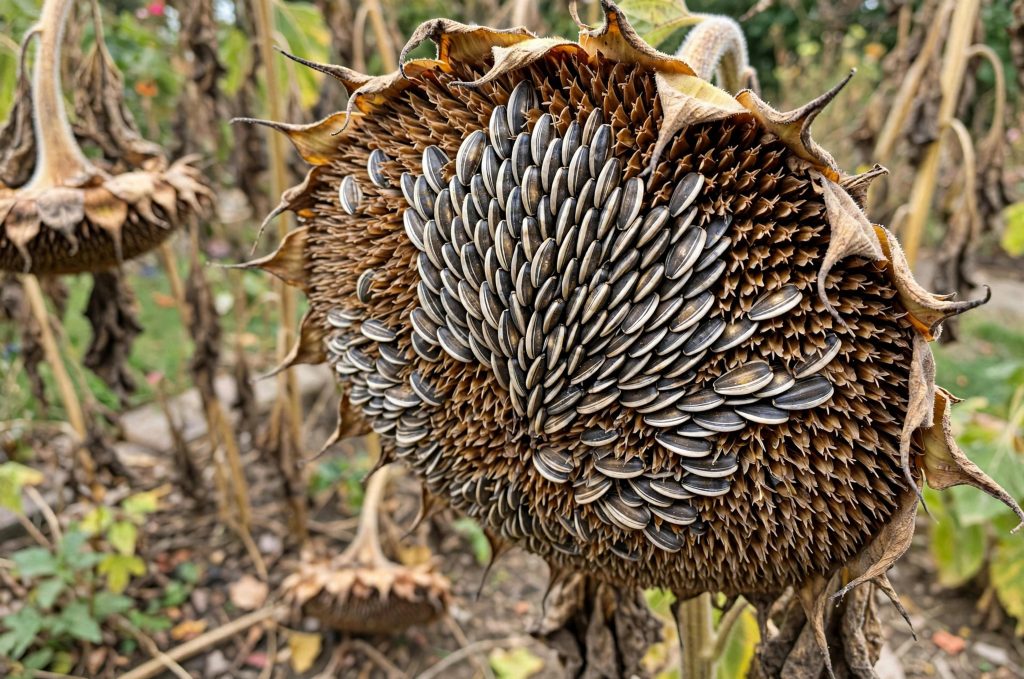
The flower head tells you when it is ready. Watch for these signs:
- The petals fade, dry, and fall away.
- The back of the head turns from green to yellow, then to brown.
- The head droops under its own weight.
- The seeds look plump and feel firm. Their stripes darken.
- Seeds start to loosen. A gentle rub frees a few.
Do not rush. Seeds need time to finish maturing on the plant. Cutting while the back is still green gives you immature seed with poor germination. Patience now pays off in spring. Woman & Home's seed harvesting guide advises waiting until the back of the head turns brown and the seeds look plump before cutting.
As the American Meadows experts explain, you should watch the flower rather than the calendar, and avoid harvesting while the back of the head is still green, since seeds need that time to mature fully (source).
Beating the Birds to the Harvest
The key to collect sunflower seeds for replanting is choosing the right approach for your space and budget.
With a little planning, collect sunflower seeds for replanting can fit even a busy schedule.
Birds love sunflower seeds as much as you do. Goldfinches and chickadees will strip a ripening head in days. You have two options.
Cover the head. When the back starts turning yellow, slip a paper bag or a piece of cheesecloth over the head. Tie it loosely around the stem. Paper breathes, so moisture escapes. Never use plastic. It traps damp air and invites mold. This trick also catches seeds that loosen and fall.
Cut early and finish indoors. If birds are relentless, cut the head when the back is yellow-brown and the seeds are mostly formed, then dry it inside. You may lose a little viability compared to full on-plant ripening, but you will keep the harvest.
The California Local garden column describes this bag method well: slip a paper bag over the head, tie it at the stem, and let seeds fall into the bag as they dry (source).
Cutting and Drying the Heads
With a little planning, collect sunflower seeds for replanting can fit even a busy schedule.
Before you start, it helps to understand how collect sunflower seeds for replanting works in real homes.
Cut the head with about a foot of stem attached. Sharp pruners make a clean cut. Bring it somewhere warm, dry, and airy: a garage, a shed, or a spare room.
Hang the head upside down or lay it flat on newspaper. If you hang it, the seeds keep maturing and some will drop. Put a tray or bag underneath to catch them.
Drying takes one to three weeks depending on humidity. The head should feel dry and papery. The seeds should rattle slightly when you shake it. Do not store anything until it is fully dry. Damp seed molds in storage, and mold kills germination. Homes & Gardens recommends hanging cut heads in loose bundles indoors until the seeds are completely dry.
Removing and Cleaning the Seeds
Before you start, it helps to understand how collect sunflower seeds for replanting works in real homes.
A good plan for collect sunflower seeds for replanting saves time, money, and frustration.
Once the head is dry, rub your hands across it. The seeds pop out easily. Work over a large bowl or a sheet. You can also rub two heads together face to face.
Now clean the harvest:
1. Pick out the big pieces of dried flower and stem by hand. 2. Winnow the rest. Pour the seeds slowly from one bowl to another in front of a gentle fan or breeze. The light chaff blows away. The heavy seeds fall straight. 3. Spread the seeds in a single layer on a tray for a few more days. This final drying step is cheap insurance against mold.
Sort as you go. Keep the biggest, plumpest, darkest seeds. Toss anything small, shriveled, cracked, or hollow. A handful of excellent seed beats a jar of poor seed every time. The Garden Fixes' seed saving walkthrough suggests winnowing to separate the heaviest, most viable seed from the chaff before storage.
Gardening Know How recommends drying seeds completely, then storing them in a sealed container in a cool, dark place, with the refrigerator as an ideal spot (source).
Storing Seeds So They Stay Alive
A good plan for collect sunflower seeds for replanting saves time, money, and frustration.
For most people, collect sunflower seeds for replanting comes down to a few smart choices.
Seeds are alive, just sleeping. Heat, moisture, and light wake them up or kill them. Good storage is cool, dry, and dark.
- Containers: Paper envelopes inside a sealed jar work well. The paper absorbs small amounts of moisture. Glass jars with tight lids keep pests out. A small packet of silica gel in the jar helps in humid climates.
- Temperature: A refrigerator is ideal. A cool basement or closet works too. Avoid the garage if it bakes in summer.
- Label everything. Write the variety and the season on every envelope. You will not remember in spring. Trust every gardener who has ever said "I will remember" and did not.
- How long do they last? Sunflower seeds stay viable for two to three seasons in good storage. Germination slowly drops after that.
The Spruce notes that fully dry seeds, rubbed free from the head, store best in labeled paper envelopes kept until spring (source).
Testing Before You Sow
For most people, collect sunflower seeds for replanting comes down to a few smart choices.
If you are new to collect sunflower seeds for replanting, start with the simplest option and build from there.
Before planting day, run a quick germination test. Dampen a paper towel, place ten seeds on it, fold it over, and seal it in a plastic bag. Keep it warm. After a week, count the sprouts.
Eight or more sprouts means excellent seed. Sow normally. Five to seven means fair seed. Sow thicker to compensate. Fewer than five means the seed is tired. It is time for a fresh packet. This simple test saves you from a patch of bare soil and a wasted month.
Sowing Your Saved Seeds
If you are new to collect sunflower seeds for replanting, start with the simplest option and build from there.
Sunflowers are direct-sow champions. They dislike transplanting because their taproot resents disturbance. Sow straight into the garden after the soil warms and frost danger passes.
- Plant seeds one inch deep.
- Space them 6 to 12 inches apart depending on the variety. Giants need more room.
- Water well at sowing, then water during dry spells.
- Thin to the strongest seedling if several sprout in one spot.
Seedlings appear in a week or two in warm soil. If you started your original plants from our sunflower growing guide, the routine will feel familiar.
One caution: do not plant saved sunflower seed where sunflowers grew the season before if you had disease problems. Rotate to a fresh spot. Sunflowers are also heavy feeders, so work compost into the bed before sowing.
Saving Seed from Cut Flowers
When it comes to collect sunflower seeds for replanting, getting the details right makes all the difference.
Sometimes the best seed heads come from a bouquet. If you cut sunflowers for arrangements, the heads on those stems were picked young and the seed will not be mature. Only save seed from heads that ripened on the plant.
That said, sunflowers make wonderful cut flowers, and a cut flower garden plan can include a row grown just for seed. Let a few of your best plants stand while you cut the rest. Mark them with a ribbon so you do not accidentally harvest them for the vase.
Common Problems
Many homeowners find that collect sunflower seeds for replanting is easier than they expected once they know the basics.
Moldy seeds in storage. The seed was not dry enough. Next time, dry longer and add silica gel to the jar. Discard moldy seed. Do not plant it.
Empty shells. Poor pollination causes hollow seeds. This happens in rainy weather when bees stay home, or when only one lonely plant bloomed. Plant sunflowers in groups for better pollination.
Seeds sprout poorly. Old seed, damp storage, or hybrid parentage. Test germination and adjust.
Volunteers everywhere. Sunflowers self-sow with enthusiasm. If you do not want a forest of seedlings next spring, harvest heads promptly and pull spent plants before seeds scatter. Or embrace it. Many gardeners love the surprise volunteers.
Sharing and Trading
The key to collect sunflower seeds for replanting is choosing the right approach for your space and budget.
Saved sunflower seed makes a wonderful gift. A small envelope of 'Velvet Queen' or 'Autumn Beauty' seed, labeled by hand, is a gift any gardener appreciates. The Cooldown profiles a gardener who grew a whole sunflower hedge from a single season of saved seed. Seed swaps and local garden clubs are always hungry for fresh, locally grown seed. Just label honestly: variety name, whether it was grown near other varieties, and any notes on performance.
Home Dining Kitchen's seed-saving walkthrough adds a useful reminder to label containers with both the variety and the harvest date so you always know what you are planting (source).
The Bottom Line
Collecting sunflower seeds for replanting is simple: wait for the head to brown, cut and dry it thoroughly, rub out the plumpest seeds, and store them cool and dry in labeled envelopes. Test a few before sowing. Plant the winners.
Do this once and you will never buy sunflower seed again unless you want a new variety. There is something deeply satisfying about a garden that plants itself from your own harvest. Start with one head this season. By next year, you will be the neighbor handing out envelopes of seed. For a refresher on avoiding beginner errors in the seed-starting season, see seed starting mistakes to avoid. Keep this guide handy the next time collect sunflower seeds for replanting comes up.
References
- The Spruce. (n.d.). This is the easiest way to harvest sunflower seeds for snacking, saving, or replanting. https://www.thespruce.com/how-to-harvest-sunflower-seeds-12037347
- Woman & Home. (n.d.). Experts reveal how to harvest sunflower seeds to grow next year. https://www.womanandhome.com/homes/how-to-harvest-sunflower-seeds/
- Homes & Gardens. (n.d.). How to harvest sunflower seeds: for planting or eating. https://www.homesandgardens.com/gardens/how-to-harvest-sunflower-seeds
- Gardening Know How. (n.d.). How to harvest sunflower seeds to eat or grow next year. https://www.gardeningknowhow.com/ornamental/flowers/sunflower/harvesting-sunflowers.htm&
- California Local. (n.d.). Time to put sunflowers in the bag. https://californialocal.com/localnews/sacramento/ca/article/show/11576-time-to-put-sunflowers-in-the-bag/
- The Garden Fixes. (n.d.). How to save sunflower seeds for replanting. https://thegardenfixes.com/how-to-save-sunflower-seeds-for-replanting/
- The Cooldown. (n.d.). Gardener shares simple hack to grow seemingly endless amounts of popular flower. https://www.thecooldown.com/green-home/regrow-sunflowers-seeds-hack-save-money/
- Home Dining Kitchen. (n.d.). Seed-saving secrets: Unlocking the magic of sunflower seed extraction. https://homediningkitchen.com/how-do-you-get-the-seeds-from-a-sunflower/
Was this guide helpful?

About My Garden US
The My Garden US editorial team writes practical, in-depth home and garden guides for American homeowners — tested advice, no fluff.
You May Also Like
How to Grow Bee Balm: Pollinator USA Guide
October 9, 2026 29 views
Wildflower Seed Mixes Buying Guide USA: How to Choose the Right Mix for Your Yard
April 27, 2026 24 views
Lavender Seed Packets Florida Homes USA: A Plain Guide to Growing Lavender from Seed in the Sunshine State
February 11, 2026 18 views