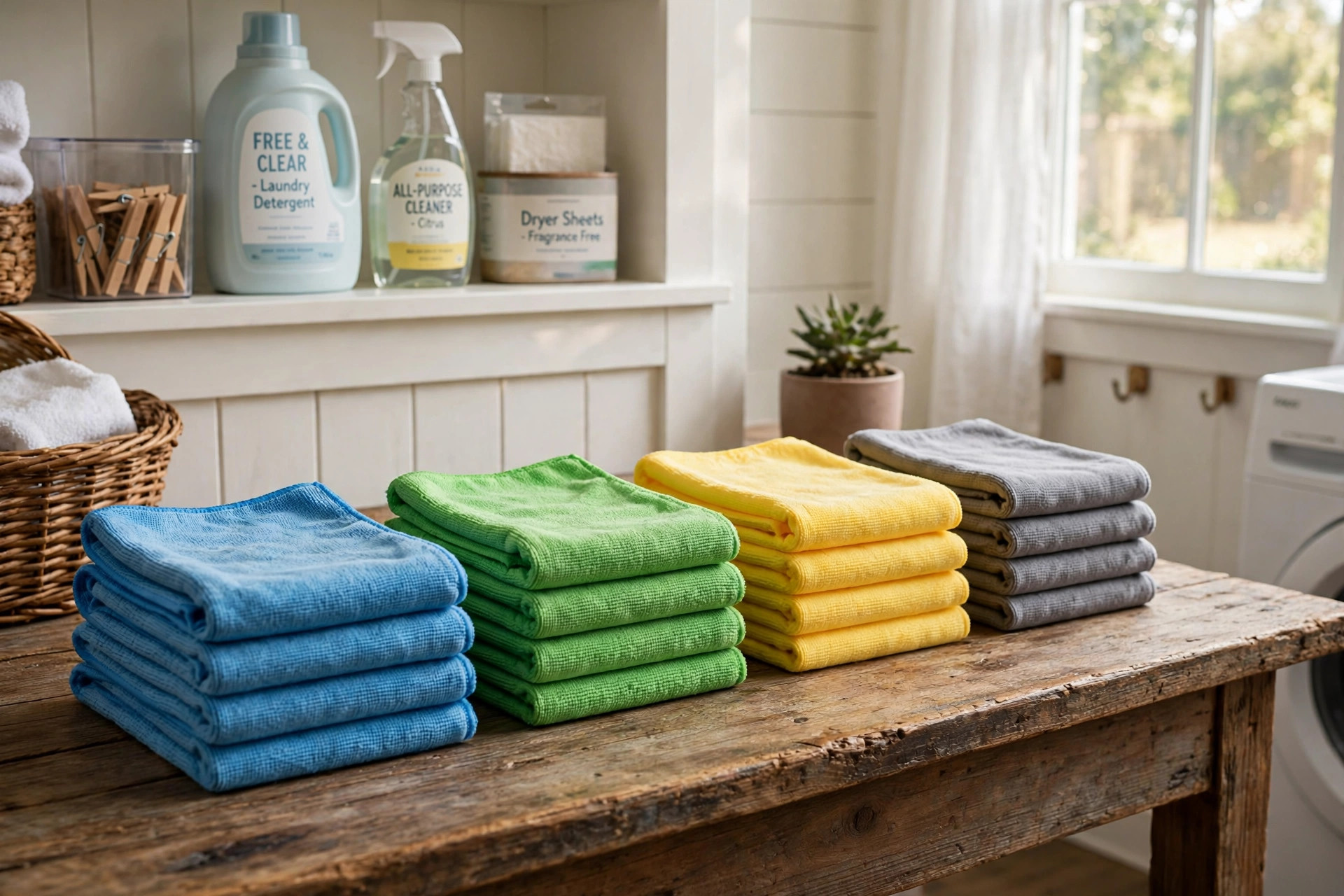

Many Colorado shoppers now buy microfiber cleaning cloth sets online in Colorado instead of driving to a store. The choice is wide, the prices are fair, and delivery is fast. But not all cloths are made the same. A good set can last for years. A poor set falls apart after a few washes. This guide will help you shop with care. You will learn what to look for, how to compare sets, and how to keep your cloths in fine shape.
Why Microfiber Cloth Sets Matter
A microfiber cloth is made from tiny split fibers, far finer than a human hair. These fibers lift dust, grease, and spills instead of pushing them around. A single set can replace many rolls of paper towels. That saves money over time and keeps waste out of the trash.
In Colorado homes, dust is a daily fact of life. The air is dry. The wind brings fine soil in through every small gap. A damp microfiber cloth picks up this dust in one pass. It works on counters, glass, wood, and steel with little soap or none at all. For people who clean often, a full set in many colors is a sound buy.
People who buy microfiber cleaning cloth sets online in Colorado often do so for one plain reason. They can read the cloth weight, the blend, and the pack size before they pay. In a store, the label is small and the sales staff is busy. Online, you can take your time.
What to Look For When You Shop: Buy Microfiber Cleaning Cloth Sets Online in Colorado
Fabric weight and blend
Cloth quality is tied to two facts: the blend and the weight. The blend is the mix of polyester and polyamide. A common mix is eighty percent polyester and twenty percent polyamide. A higher polyamide share often means more softness and more soak-up power.
Weight is given in grams per square meter, written as GSM. A cloth of 200 to 300 GSM is light and fine for glass and screens. A cloth of 300 to 400 GSM is thick and suits kitchens and baths. Sets above 400 GSM feel plush and hold much water. When you buy microfiber cleaning cloth sets online in Colorado, check that the GSM figure is printed in the listing. If it is missing, that is a warning sign.
Size and pack count
Most sets hold twelve, twenty-four, or thirty-six cloths. Each cloth is often twelve by twelve inches or sixteen by sixteen inches. Small cloths suit windows and mirrors. Large cloths suit floors and car hoods. Think about your home before you pick a count. A one-bedroom home may need only a dozen cloths. A large house with kids and pets may need three dozen.
Color coding is worth the small extra cost. Use blue for glass, green for kitchens, yellow for baths, and pink or gray for dusting. This habit stops germs from moving from the bath to the kitchen.
Reading the listing with care
Listings hide weak points behind bright photos. Read the full text before you click buy. A strong listing states the blend ratio, the GSM, the cloth size, the pack count, and the edge type. A weak listing says only “soft, high quality, many colors.” Soft is not a fact. Numbers are facts.
Check the seller record as well. Look for a history of selling cleaning goods rather than a new shop with no reviews. Read three or four reviews that are two to four stars. These middle reviews are the most honest. They often note thin spots, dye bleed, or short counts. If several buyers report the same flaw, believe them.
Edge stitching
Good cloths have tight, overlocked edges. Cheap cloths have loose edges that fray. Frayed edges scratch fine surfaces. Read the reviews and look for words like “serged edge” or “stitched border.”
Types and Options
All-purpose sets. These are the workhorses. They handle dust, spills, and daily wipe-downs. Most families start here. You can pair a good cloth set with solid blind cleaning tools for small apartments and cover nearly every surface in the home.
Glass and mirror cloths. These are woven tighter and leave no lint. They shine windows, mirrors, and television screens with just water. Keep a few in a drawer of their own so they never touch grease.
Heavy-duty scrubbing sets. These have one rough side and one soft side. They cut through baked-on grime on stoves and grills. They are not for delicate wood or polished steel.
High-pile polishing cloths. Thick and soft, these are made for buffing. They work well on wood tables, leather chairs, and car bodies.
Shoppers in Colorado also mix their orders. Some buy a large all-purpose set and add a small glass pack. Others who plan bigger jobs order cloths along with professional house cleaning services for homeowners so the whole home is covered in one plan.
Cost and Price
Prices are modest. A twelve-pack of plain cloths often costs between five and twelve dollars. A twenty-four-pack runs from eight to twenty dollars. Premium sets with high GSM and tight stitching can reach twenty-five to forty dollars for a full box.
Set the price per cloth in your mind as you shop. A twenty-dollar box of thirty-six cloths is about fifty-six cents a cloth. That is a fair deal for cloths of 320 GSM. A fifteen-dollar box of twelve thin cloths is a poor deal by the same math.
Watch for bulk value packs. Sellers often cut the unit price when you buy fifty or a hundred cloths at once. This suits cleaning businesses and large families. Many stores in Colorado ship free above a set order value, so one large order can cost less than three small ones. For steel surfaces in the kitchen, you may also want to buy stainless steel appliance cleaners online to pair with your cloths.
Shipping to Colorado is quick from most warehouses in the western states. Orders placed early in the week often arrive in two to four days. Read the shipping terms before you pay, and check that the seller covers returns for packs that arrive short or damaged.
Care and Upkeep
Good care makes cloths last three to five years. Bad care ruins them in months.
Wash warm, never hot. Use warm water and a small amount of plain liquid detergent. Hot water melts the fine fibers and kills their grip.
Skip fabric softener. Softener coats the fibers with wax. The cloths will feel smooth but will stop picking up dust. This is the most common mistake buyers make.
Wash colors apart at first. New cloths can bleed dye. Wash dark colors alone for the first two rounds. After that, group by use: kitchen cloths together, bath cloths together.
Dry low or hang dry. High heat warps the fibers. Low heat in the dryer is safe. Air drying on a line is safest of all and saves power.
Do not use bleach. Bleach eats the polyamide and turns the cloths stiff. For stains, soak the cloths in warm water with a spoon of baking soda.
Fold clean cloths by color and store them dry. A damp cloth left in a pile will grow mildew. If a cloth smells sour, wash it again with a cup of white vinegar in the rinse. That usually lifts the odor.
Safety
Microfiber cloths are safe for most homes, but a few rules apply.
New cloths shed loose fibers. Wash new sets once before use, and keep them away from small children who might chew on them. The fine fibers are not food safe in loose form.
On stoves and near open flame, never leave a cloth lying on a hot surface. Microfiber is plastic-based and will melt. Let ovens and pans cool before you wipe them.
For homes with chemical cleaners, keep the cloth colors apart as noted. Do not use the kitchen cloth in the bath. This simple habit guards against cross-contact with germs. The EPA offers plain facts about safe cleaning practice in the home, which you can read at EPA before you change your routine.
If you have breathing trouble, dust with a slightly damp cloth rather than a dry one. A dry cloth can stir fine dust into the air. A damp cloth traps it. Test groups like Consumer Reports review cleaning products for safety and value, and their notes are a fair starting point for any buyer.
Frequently Asked Questions
How many cloths should I buy for a normal home? A dozen cloths cover daily work in a small home. Two dozen suit a family of four. Three dozen or more suit large homes, pets, or a home business. Many shoppers in Colorado start with twenty-four and add more later.
Are thick cloths always better than thin ones? No. Thick cloths hold more water and suit baths and kitchens. Thin cloths glide on glass and leave no streaks. A mixed home needs both types. When you buy microfiber cleaning cloth sets online in Colorado, look for sellers who list both weights.
Can I use microfiber on wood floors and furniture? Yes, with care. Use a damp cloth, not a wet one. Wring it well first. On oiled or waxed wood, test a hidden spot. Never use the scrubbing side of a heavy-duty cloth on fine wood.
Do microfiber cloths need soap? Often not. For dust and light soil, water alone is enough. For grease, add a drop of dish soap to the cloth. For germs on bath surfaces, follow the steps on your chosen cleaner and let it sit as long as the label says.
How long do the cloths last? With warm washes and no softener, good cloths last three to five years. Cheap cloths may last only six months. Stitching, blend, and wash care all shape the life span.
Is it cheaper to buy in a store or online? Online prices are often lower per cloth, and the range of GSM ratings is wider. Stores let you feel the cloth first. If you buy online, read the full listing and a few reviews before you commit.
A Short Final Word
To buy microfiber cleaning cloth sets online in Colorado is a simple errand when you know the basics. Check the blend and the GSM. Count the cloths and the colors. Read the edge stitching in the reviews. Compare the price per cloth. Then care for the set with warm washes and no softener, and it will serve your home for years.
Practical cleaning wisdom from The Spruce and Bob Vila can sharpen your routine further. For step-by-step repair and home care ideas, This Old House and Family Handyman are steady sources. Home-style guidance from Good Housekeeping rounds out the shelf. Large retailers like The Home Depot, Lowe’s, and Wayfair also carry wide cloth selections with clear listings.
References
Bob Vila. (n.d.). Home improvement advice. https://www.bobvila.com Consumer Reports. (n.d.). Product reviews and ratings. https://www.consumerreports.org Family Handyman. (n.d.). DIY home repair and maintenance. https://www.familyhandyman.com Good Housekeeping. (n.d.). Product reviews and home advice. https://www.goodhousekeeping.com Lowe’s. (n.d.). Home improvement products. https://www.lowes.com The Home Depot. (n.d.). Home improvement products. https://www.homedepot.com The Spruce. (n.d.). Home and garden advice. https://www.thespruce.com This Old House. (n.d.). Home renovation guidance. https://www.thisoldhouse.com U.S. Environmental Protection Agency. (n.d.). Protecting human health and the environment. https://www.epa.gov Wayfair. (n.d.). Furniture and home goods. https://www.wayfair.com
Was this guide helpful?

About Jennifer Lee
The My Garden US editorial team writes practical, in-depth home and garden guides for American homeowners — tested advice, no fluff.
You May Also Like

Top Rated Robot Vacuum Cleaners for Southern States
April 22, 2026 0 views
Cordless Handyman Services for Homeowners Near Me: A Practical Guide
June 21, 2026 0 views
How to Find the Best Post Construction Cleaning Services Near Me
June 11, 2026 0 views