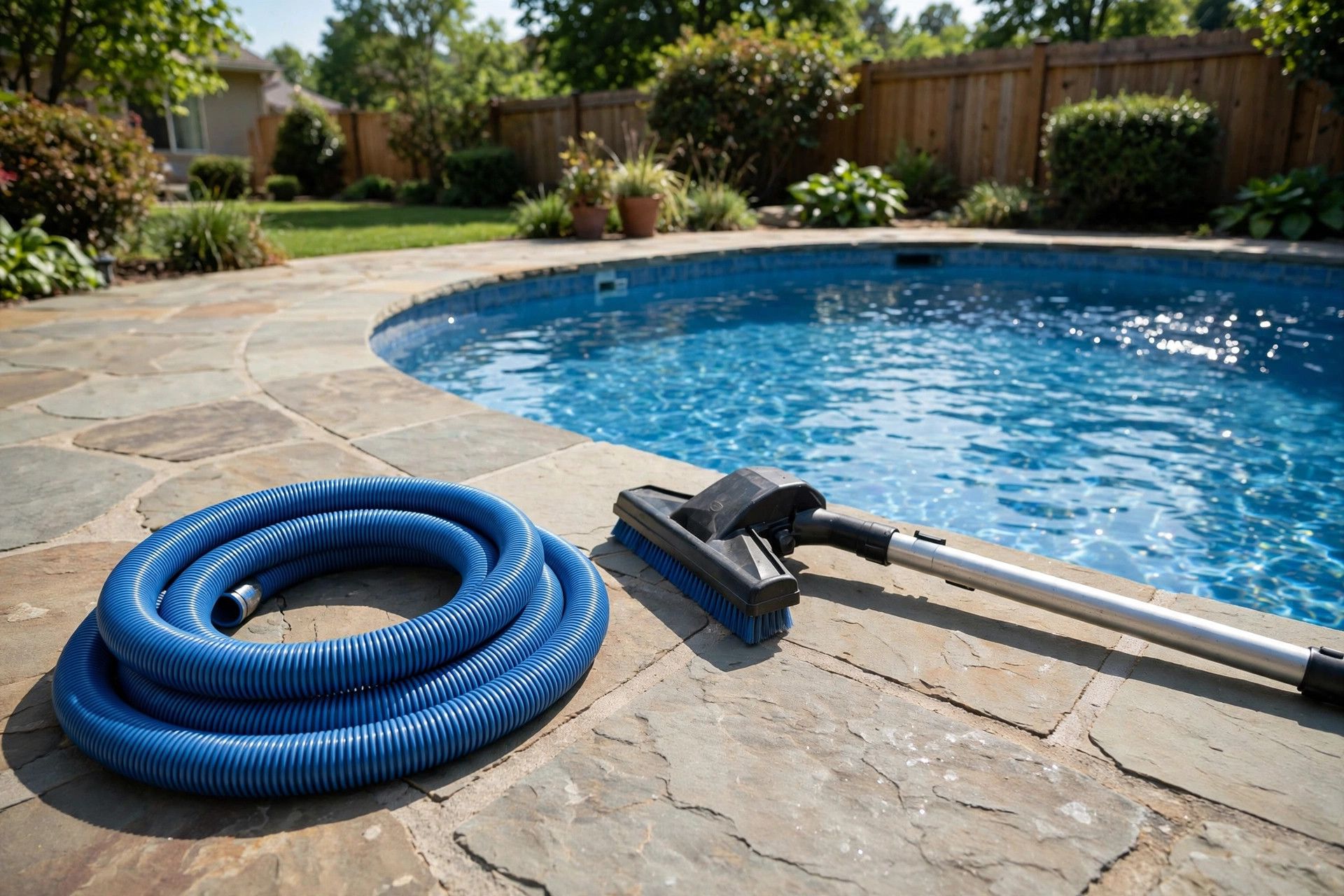

A pool that stays clean does not happen by chance. It happens because the owner has the right tools and uses them each week. The best pool vacuum hose for inground use is one of those tools. It is simple. It is often overlooked. Yet it decides how well your manual vacuum works and how long each cleaning session takes.
Many pool owners spend money on pumps and filters. Then they connect a cheap hose and wonder why the vacuum head moves so slowly. The hose is the link between the vacuum head and the skimmer. When it is wrong, suction drops. When it is right, dirt and leaves move into the filter with ease.
This guide walks through the topic in plain terms. It explains why the hose matters, how to size it, what materials to trust, what it should cost, and how to make it last.
Why the Hose Matters More Than Most Owners Think
A vacuum hose carries water and debris from the pool floor to the skimmer line. It must stay open under suction. It must bend around steps and curves. It must seal tight at both ends. If it collapses, kinks, or leaks air, the vacuum head loses power at once.
A poor hose can also shorten the life of other parts. The pump works harder when air enters the line. The filter clogs faster when dirt slips past a loose cuff. A good hose protects the whole cleaning setup.
Owners of inground pools face a special demand. These pools are deep and long. They often hold 15,000 to 30,000 gallons. A hose that is too short leaves far corners out of reach. One that is too long lies in loops that catch on ladders and drains. Getting the fit right is the single most useful step in this purchase.
Regular vacuuming also protects the pool surface. Sand and grit settle on plaster, vinyl, and fiberglass. Left alone, they stain and scratch. A weekly pass with a sound vacuum setup lifts that grit away before it marks the finish. For homes with trees near the pool, that weekly habit keeps the water clear after every windy night. A solid pool vacuum for leaves review page can help owners see how the hose works as part of the full cleaning kit.
How to Choose the Right Hose Length: Best Pool Vacuum Hose for Inground
Length is the first choice to make. Measure the distance from your skimmer to the farthest point in the pool. Add two or three feet so the hose reaches with slack. That total is the length to buy.
Hoses are sold in set sizes, often 30, 35, 40, and 50 feet. A 16 by 32 foot pool usually needs a 35 or 40 foot hose. A larger free-form pool may need 50 feet. Buying longer than needed is not helpful. Extra hose coils on the deck, kinks, and catches on everything.
If your pool has more than one skimmer, measure from the skimmer you will use for vacuuming. Some owners switch skimmers by season. In that case, pick a length that reaches from either point.
Write the number down before you shop. It keeps the choice simple at the store.
Hose Diameter: One and a Quarter or One and a Half Inches
Most residential pool vacuum hoses come in two inside diameters. The common sizes are one and a quarter inches and one and a half inches. The wider hose moves more water. It gives stronger suction. Most inground pools work best with the one and a half inch size.
Check what your vacuum head and skimmer port accept. Some heads take both sizes with a stepped cuff. Others fit one size only. A mismatch can be fixed with an adapter, but a direct fit is always better. Adapters add a joint where air can enter.
If you own a vacuum head for vinyl pools, confirm the cuff size printed on the head. Vinyl liners need a head that will not scratch. The hose itself has no sharp edges, so either diameter is safe for the liner. The choice rests on flow and fit.
What to Look for in Hose Quality
A good vacuum hose is built from layered vinyl or EVA plastic. It should feel firm but bend with ease. Cheap hoses flatten under suction. Quality hoses hold their round shape.
Look for these marks of a sound hose:
– Smooth interior walls. Rough walls trap dirt and slow flow. – Flexible spiral ribs. The hose should coil and uncoil without kinking. – Swivel cuffs. One or both ends should turn freely. This stops the hose from twisting as you move the head. – Tight-fitting cuffs. The ends should press onto the vacuum head and skimmer with a snug seal. Loose cuffs draw in air. – UV resistance. A hose left in the sun breaks down faster. UV-treated plastic lasts longer.
Weight matters too. A heavy hose is hard to push across the pool. A hose that is too light floats and fights you. The middle ground feels right in the hand. Reading notes from pool care teachers at places like Swim University can give a clear picture of how a hose behaves in real weekly use.
When the hose meets the skimmer, the seal must be firm. A worn cuff leaks air and kills suction. Some owners pair the hose with a pool skimmer for inground pools that holds the line well. The skimmer basket should be clean before each vacuum session, since a full basket cuts flow before the hose even matters.
Types of Vacuum Hoses for Inground Pools
Standard Corrugated Hoses
The most common type is the corrugated spiral hose. It is light, flexible, and priced for the average owner. It works well for weekly cleaning in most pools. Its ribs help it bend without pinching shut.
Heavy-Duty EVA Hoses
EVA hoses are thicker and crush-proof. They hold up under strong pump suction. They cost more, but they last longer in pools that get heavy use. Many service workers prefer this type because it stands up to daily work.
Sectional Hoses
Some hoses come in short sections that snap together. Each section is easy to carry and store. Owners with long pools can add sections as needed. The weak point is the joints. Each joint is a place where air can leak in. Check each joint for a tight fit.
Automatic Cleaner Hoses
Robotic and suction-side cleaners use their own hose or cord systems. Those parts do not swap with a manual vacuum hose. If you clean by hand, buy a hose made for manual vacuums. Do not try to force a cleaner hose onto a manual head.
Cost and Price: What You Should Expect to Pay
Prices for a pool vacuum hose vary by length, diameter, and build. A standard 35-foot hose often costs between 30 and 60 dollars. A 50-foot heavy-duty hose may run 70 to 120 dollars. Sectional hoses sit in the same range, with each section adding to the total.
Do not judge a hose by price alone. A 25-dollar hose that kinks every week is a poor deal. A 80-dollar hose that serves five seasons is a sound buy. Compare the wall thickness, the cuff design, and the warranty instead.
Stores like The Home Depot carry several brands side by side. That makes it easy to compare feel and fit in person. Pool supply shops such as Leslie’s Pool Supplies often stock hoses sized for inground use and can answer questions about fit.
Set a budget before you shop. For most owners, 40 to 80 dollars buys a hose that will serve well for years. Spend less and you may replace it sooner. Spend more only if you need crush-proof build for daily service work.
Setting Up and Using Your Hose
The first use sets the tone for the hose. Fill the hose with water before you connect it. Hold one end under water and feed the rest in coil by coil. Let air bubble out the far end. A hose full of water primes faster and keeps air out of the pump.
Connect the cuff to the vacuum head. Press it on firm and give it a small twist. Then feed the free end to the skimmer. Some skimmers take a vacuum plate that sits over the basket. Others take the cuff straight into the port. Use the method your skimmer was built for.
Move the vacuum head in slow, straight lines. Fast moves stir up dirt and push it out of reach. Overlap each pass by half the width of the head. Work from the shallow end toward the deep end. This pushes loose dirt into the deeper water where the head picks it up on the final passes.
After vacuuming, check the filter pressure gauge. A full basket or a loaded filter will show a rise in pressure. Backwash or clean the filter as the maker directs. Guides from Pool Warehouse and articles at The Spruce walk through this upkeep in plain steps.
Care and Upkeep: Making the Hose Last
A hose lasts longer when it is stored with care. Do not leave it in the sun all day. UV light breaks down plastic. Do not leave it coiled tight in a hot shed. Heat warps the ribs and flattens the coil memory.
Rinse the hose with fresh water after each use. Pool chemicals are harsh. A quick rinse keeps the plastic from turning brittle. Drain the water from the hose before you coil it. A hose stored full of water grows algae inside.
Coil the hose in wide loops, about three feet across. Hang it on a large hook or lay it flat on a rack. Sharp bends at the cuff ends are the most common cause of cracks. If a cuff cracks, replace the cuff rather than the whole hose. Most brands sell cuff parts for a few dollars.
Check the hose once each season. Flex each section and look for flat spots, splits, or stiff ribs. A hose that has lost its flex will kink and collapse. Plan to replace a hose every three to five years with regular use.
Safety Notes for Pool Owners
Safety comes first around any pool. Never leave a vacuum hose and head in the pool while people swim. The hose can tangle around legs. The head is heavy enough to cause a bump.
Turn the pump off before you connect or disconnect the hose. A running pump can trap a hand against the skimmer port. Keep children away from the skimmer while the vacuum runs.
The U.S. Consumer Product Safety Commission gives guidance on pool drains and suction safety. A sound hose that seals tight helps, but it does not replace safe habits. Teach everyone in the home to stay clear of suction fittings.
Store chemicals away from the hose storage area. Fumes from chlorine and acid age plastic fast. Keep the hose, poles, and heads in a dry spot with good air flow.
FAQ: Common Questions About Pool Vacuum Hoses
How do I know which hose length my inground pool needs?
Measure from the skimmer to the farthest corner of the pool. Add two to three feet for slack. Round up to the next standard hose size. A 35-foot or 40-foot hose fits most mid-size inground pools. Large pools may need 50 feet.
Can I cut a vacuum hose to make it shorter?
Yes, most hoses can be cut with a sharp knife or saw. Cut the end opposite the swivel cuff if one end swivels. Then press a new cuff onto the cut end. Some owners shorten a long hose to stop kinking. Measure twice before you cut.
Why does my hose keep floating instead of sinking?
New hoses often hold air in the ribs. Fill the hose fully with water before connecting it. Let it sit in the pool for a few minutes. Old hoses that stay stiff and float may need replacement. A hose that will not sink fights every pass across the floor.
Why is my vacuum head moving so slowly?
Slow movement usually means weak suction. Check for air leaks at both cuffs. Check that the skimmer basket is empty. Check the filter pressure. A kinked or collapsed hose is a common cause. Work through each point in order and the flow often returns.
Are swivel cuffs worth the extra cost?
For most owners, yes. The hose twists as the head moves back and forth. A swivel cuff lets the twist release instead of building up. Without it, the hose coils into loops that catch on ladders. The added cost is small next to the time saved.
How long should a pool vacuum hose last?
With weekly use and fair storage, expect three to five years. Hoses left in the sun or stored in heat may fail in two. Crush-proof EVA hoses last longer under hard use. Replace the hose when it kinks, cracks, or loses suction it once held.
A Short Final Word
The best pool vacuum hose for inground pools is not the most costly one. It is the one that fits your skimmer, reaches your farthest corner, and holds its shape under suction. Measure your pool. Match the diameter to your gear. Choose a hose with smooth walls and swivel cuffs. Then use it each week and store it with care.
A clean pool is a safe pool. It is also a pool you can enjoy without worry. The hose is a small part of that picture. But it is the part that makes every other part work. Pick it well, and the rest of the job gets easier.
Owners who want more on the full cleaning routine can read further at Swim University or browse pool care topics at The Spruce. For spa owners who run a hot tub alongside the pool, makers such as Hot Spring Spas and Bullfrog Spas give care notes for the warm-water side of the yard.
Related guides on this site include best above ground pool for families, how to open pool for summer season, and best pool pump for inground pools.
References
Bullfrog Spas. (n.d.). Hot tubs and spas. https://www.bullfrogspas.com Hot Spring Spas. (n.d.). Hot tubs and spas. https://www.hotspring.com Leslie’s Pool Supplies. (n.d.). Pool supplies and equipment. https://www.lesliespool.com Pool Warehouse. (n.d.). Pool equipment and supplies. https://www.poolwarehouse.com Swim University. (n.d.). Pool and hot tub care guides. https://www.swimuniversity.com The Home Depot. (n.d.). Home improvement products. https://www.homedepot.com The Spruce. (n.d.). Home and garden advice. https://www.thespruce.com U.S. Consumer Product Safety Commission. (n.d.). Product safety information. https://www.cpsc.gov
Was this guide helpful?

About Jennifer Lee
The My Garden US editorial team writes practical, in-depth home and garden guides for American homeowners — tested advice, no fluff.
You May Also Like

Salt Water vs Chlorine Pool Pros Cons: A Plain Guide for Homeowners
September 16, 2026 0 views
Best Above Ground Pool Ladder With Gate
June 27, 2026 0 views
How to Balance Pool Water Chemistry: A Clear Guide for Pool Owners
June 3, 2026 0 views