Introduction
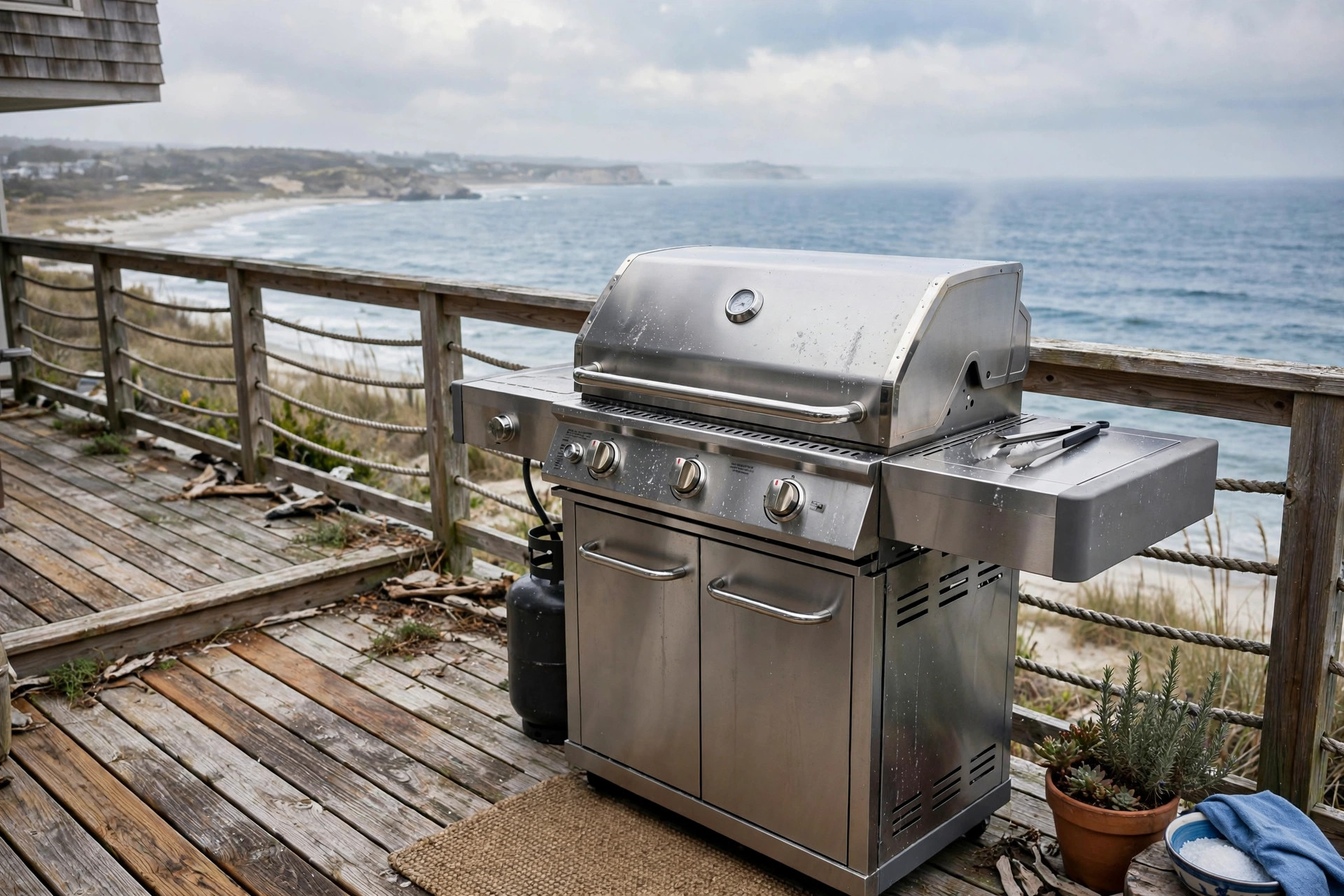
Salt air is hard on outdoor grills. If you live near the ocean, you know the story. You buy a fine grill in spring. By autumn the burners are rusted, the grates are flaking, and the knobs feel stiff. The best outdoor grill for coastal salt air is not the one with the most burners or the tallest price tag. It is the one built with metals and finishes that can stand up to sea spray, fog, and salt wind year after year.
Sea salt corrodes common steel. It creeps into seams, settles on grates, and attacks the firebox. A standard grill that would last ten years inland may last two by the water. This guide walks you through what matters, what to look for, and which types hold up best. You will learn how to choose wisely, how much to pay, and how to keep your grill alive for many seasons.
Why Salt Air Changes Everything: Best Outdoor Grill for Coastal Salt Air
Salt is an enemy of metal. When moist sea air touches plain steel, rust forms fast. Even stainless steel is not safe unless it is the right grade. The wrong grill can corrode in months near the beach. The right one can last a decade or more.
Coastal homes face wind, fog, and spray. Salt mist coats every surface. It finds its way into burner tubes and under lids. It builds up in places you cannot see. Over time, thin metal parts grow weak and break. Handles loosen. Wheels freeze. Hinges stick. A grill made for dry inland air simply is not made for this job.
Buyers near the coast should think of a grill as a long-term tool, not a short-term purchase. Spending more up front on the right materials often costs less than buying two or three cheap grills in a row. That is the plain truth of cooking by the sea.
What to Look for in a Coastal Grill
Stainless Steel Grade Matters
Not all stainless steel is the same. The best outdoor grill for coastal salt air uses 304-grade stainless steel for the hood, firebox, and grates. This grade has more nickel and chromium than cheaper 430-grade steel. It resists salt corrosion far better.
Many grills sold as “stainless” use 430-grade steel or a stainless look over cheap metal. These may shine in the store and rust within a year by the ocean. Check the specs before you buy. Look for the words “304 stainless steel” on the main parts. If the label does not name the grade, be cautious.
Sealed and Welded Joints
Welded seams hold up better than bolts and screws near salt water. Bolted parts create small gaps where salt collects. Welds leave a smooth surface that is easy to clean and hard for salt to grip. Look for a firebox and hood made of fewer pieces, with clean welds instead of rivets.
Grates and Burners
Grates take the most direct heat and salt. Stainless steel rod grates outlast cast iron near the coast unless you season the iron often. Cast iron can work, but it needs regular oiling. Porcelain-coated grates are fine if the coating stays whole. Once it chips, rust starts under the chip.
Burners should be stainless steel or heavy brass. Thin steel burners burn through fast in salt air. Brass burners resist corrosion well and often come with long warranties. Ask about burner material before you buy.
Wheels, Handles, and Hardware
Small parts fail first. Choose grills with sealed wheels or rust-proof casters. Stainless handles are better than painted ones. Look at the knobs and ignition parts. These wear out from salt and spray. A good grill uses weather-sealed igniters and sturdy knobs that turn smoothly even after a wet winter.
Types of Grills for Coastal Areas
Gas Grills
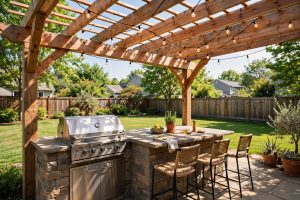
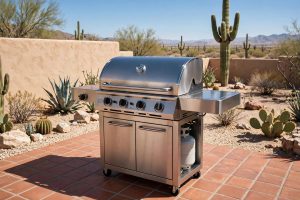
Gas grills are the most common choice near the coast. They heat fast, clean up easy, and cost less to run than charcoal over time. A 304 stainless gas grill with a thick hood and sealed cart is a strong pick. Look for stainless burner tubes and a drip system that is easy to remove and wash. Gas grills from well-known makers often offer ten-year warranties on burners, which tells you they trust the parts.
Charcoal Kettle Grills
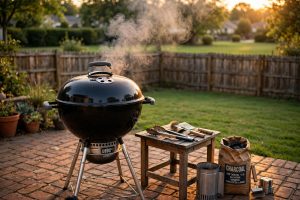
A simple charcoal kettle can last a long time by the sea if it has a baked porcelain enamel finish. The enamel shields the steel under it from salt. Kettles have few moving parts, which means fewer things to rust. They cost less and cook fine food. The trade is time. Charcoal takes longer to light and clean. For a weekend cookout, that is no trouble at all.
Kamado Grills
Kamado grills use thick ceramic walls. Ceramic does not rust at all. The outer band and hinges are metal, but those parts can be replaced or are often stainless. A kamado holds heat well and cooks for hours on little fuel. It is heavy, so it stays put in coastal wind. The price is high, but the body itself can last a lifetime.
Pellet Grills
Pellet grills cook with wood and give good smoke flavor. The electronics are the weak point near salt air. Moisture and salt can harm the control panel and the auger motor. If you want pellets by the coast, keep the grill under a covered porch or a tight cover. Clean the hopper often so damp pellets do not jam the feed.
Electric Grills
Electric grills work well on small decks and balconies where open flame is not allowed. They have few parts to corrode and simple cleanup. If you are cooking in a tight seaside space, an electric unit may be the practical answer. For more on small-space options, read our guide to the best electric grill for apartment balcony.
Cost and Price Ranges
Prices vary by type and build. A solid charcoal kettle with enamel finish runs about 150 to 250 dollars. A good stainless gas grill with 304-grade parts runs 500 to 1,500 dollars. High-end gas grills built for salt air can run 2,000 to 4,000 dollars or more. Kamado grills fall between 800 and 2,000 dollars. Electric grills run 200 to 800 dollars.
Price alone does not tell you how long a grill will last by the sea. A 700-dollar grill with 304 stainless parts will outlast a 1,200-dollar grill with cheap steel and a fancy brand name. Read the spec sheet. Ask what grade the steel is. Check the warranty on burners and the firebox. Long warranties often mark a grill the maker stands behind.
Also count the cost of a good cover and cleaning supplies. A tight cover costs 50 to 100 dollars and pays for itself many times over. Plan on new grates or a burner set at some point. Even the best coastal grill needs part swaps after years of salt and heat.
Care and Upkeep by the Sea
Clean After Every Cook
Brush the grates while they are hot. Wipe the hood and side shelves with a damp cloth. Salt film builds fast near the beach. A quick wipe after each cook stops it from setting in. Once a week, wash the outside with mild soap and water. Rinse well and dry with a soft cloth.
Deep Clean Each Season
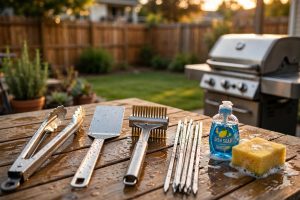
Twice a year, take the grates and flavor bars out. Soak them in hot soapy water and scrub off grease and salt crust. Check burner tubes for spider webs and rust flakes. Poke out clogged ports with a thin wire. Clean the grease tray so old fat does not catch fire. Look at our tips on how to clean bbq tools after grilling to keep your whole kit in shape.
Use a Tight Cover
A cover is your best defense. Choose a heavy vinyl or canvas cover that fits tight and vents at the bottom. Cheap loose covers trap moisture and can make rust worse. After rain, lift the cover and let the grill air out for an hour. Store the cover dry when the sun is strong.
Oil and Protect Moving Parts
Spray hinges, latches, and wheel axles with a food-safe silicone spray every few months. Do not use cooking oil on moving parts, since it turns sticky. Keep the igniter dry. If the grill sits through a wet season, light it for ten minutes once a month to dry out the inside.
Watch for the First Spots
Rust spreads. When you see a small orange spot, scrub it with a stainless pad and rinse. On stainless grates, a paste of baking soda and water lifts light rust. Touch up chipped enamel with heat-rated paint. Small repairs now save big repairs later.
Safety Notes for Coastal Grilling
Wind is the first safety concern by the sea. Strong gusts can lift a hot lid or push flames toward wood railings. Set your grill on a level spot away from railings, walls, and overhangs. Leave at least ten feet of open space around it. Lock the wheels when you cook.
Check gas lines and hoses each season. Salt air can crack rubber hoses over time. Look for splits, soft spots, and loose clamps. Brush soapy water on connections with the gas on. If you see bubbles, you have a leak. Shut off the gas and replace the part before you light up.
Never store a spare propane tank under the grill or in a closed cart. Keep tanks upright in open air, away from heat. If you are building a full outdoor setup, review the outdoor kitchen ventilation requirements guide before you enclose anything.
Keep a fire extinguisher rated for grease fires within reach. Never pour water on a grease fire. Smother it by closing the lid and shutting off the gas. These are simple rules, and they save lives every summer.
FAQ
What is the best outdoor grill for coastal salt air on a budget? A porcelain-enamel charcoal kettle is the best budget pick. The enamel coating shields the steel from salt, and there are few parts to rust. With a cover and basic care, it can last many years for under 250 dollars.
Is 304 stainless steel really worth the extra cost? Yes. The 304 grade resists salt corrosion far better than 430-grade or plain steel. A grill built with 304 parts often lasts three to four times longer by the sea. The extra cost is small compared with buying a new grill every two years.
How often should I clean a grill near the ocean? Wipe it after every cook. Wash the outside with soap and water weekly. Deep clean the inside twice a year. This routine takes little time and adds years to the grill’s life.
Do grill covers help or hurt in salt air? Good covers help. Choose a fitted, vented cover that breathes. Let the grill air out after rain. A tight cover keeps off salt spray and rain, which are the main causes of rust.
Can I leave my grill out all winter by the coast? You can, but only with a good cover and monthly checks. In harsh spots, move the grill to a garage or shed for the worst months. At the least, remove the gas tank and store it upright in a dry, open-air spot.
Are cast iron grates okay for coastal grills? They can work if you season them often with oil after each cook. Most coastal owners do better with stainless rod grates, which need less care and resist salt without constant seasoning.
A Final Word
The best outdoor grill for coastal salt air is built for the sea, not just for the store shelf. Choose 304-grade stainless steel, sealed welds, and strong burners. Spend wisely on a cover and keep up a simple cleaning routine. Do these things and your grill will cook well for many seasons while your neighbors buy their third replacement. The ocean gives you the view and the breeze. With the right grill, it will not take your cookouts too.
For more background, see The Spruce Eats, AmazingRibs.com, and Consumer Reports. For more background, see Weber, Char-Broil, and Traeger. Buying guides are also published by Napoleon and Big Green Egg.
References
AmazingRibs.com. (n.d.). Barbecue and grilling science. https://www.amazingribs.com Big Green Egg. (n.d.). Kamado grills and outdoor cooking. https://www.biggreenegg.com Char-Broil. (n.d.). Gas and charcoal grills. https://www.charbroil.com Consumer Reports. (n.d.). Product reviews and ratings. https://www.consumerreports.org Napoleon. (n.d.). Fireplaces, grills, and heating products. https://www.napoleon.com The Spruce Eats. (n.d.). Recipes and cooking guides. https://www.thespruceeats.com Traeger. (n.d.). Wood pellet grills. https://www.traeger.com Weber. (n.d.). Grills and outdoor cooking. https://www.weber.com
Was this guide helpful?

About Robert Taylor
The My Garden US editorial team writes practical, in-depth home and garden guides for American homeowners — tested advice, no fluff.