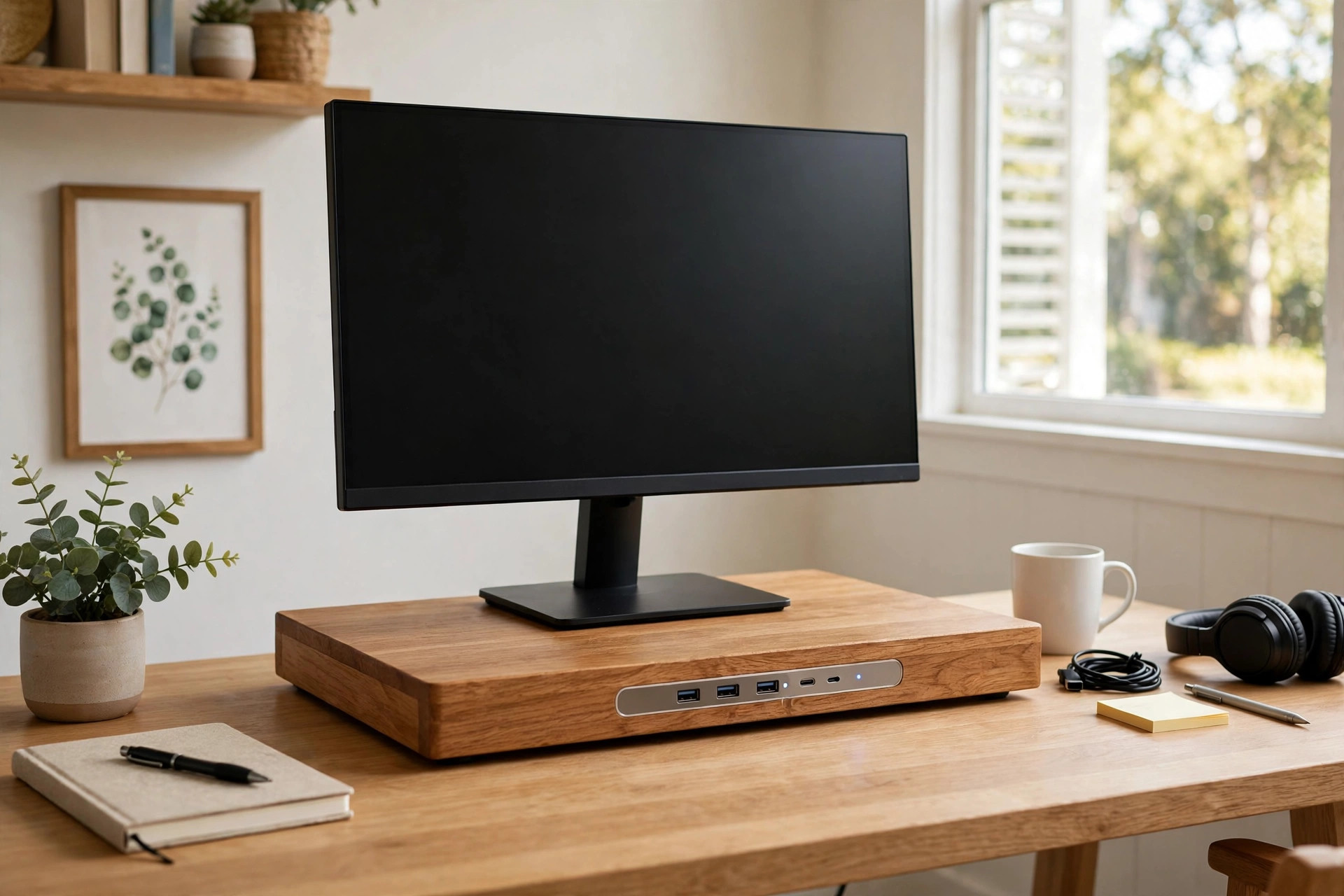

A home office monitor stand with usb hub is one of the simplest upgrades a home worker can make. It lifts the screen to a better height. It brings extra USB ports to the front of the desk. And it hides the clutter that grows under every monitor. Many people who work from home now spend eight hours a day, or more, in front of a screen. A low monitor forces the neck down. A tangle of cables eats desk space. This small piece of furniture answers both problems at once.
Office workers have used risers and shelf boards for decades. What is new is the built-in hub. A stand with USB ports lets you plug in a keyboard, a mouse, a phone charger, or an external drive without reaching behind the computer. This guide explains why the product helps, what to look for, the types on the market, typical costs, care, safety, and answers to common questions.
Why a Home Office Monitor Stand With USB Hub Matters
Posture and Comfort
When a monitor sits flat on a desk, the top of the screen often rests far below eye level. The user bends the neck down to read. Over hours, that bend adds strain to the neck and shoulders. Ergonomic advice has long said the same thing: the top of the screen should sit at or just below eye level, and the screen should sit about an arm length away. Workplace posture guidance from makers like Steelcase has taught office planners this lesson for years. A stand raises the monitor by three to six inches in most cases. That small lift can change the whole working posture.
The benefit grows when the stand is paired with a good chair. A best ergonomic office desk chair for back pain supports the lower back, while the raised screen keeps the head level. People who add a riser often report less stiffness at the end of the day.
Fewer Cables on the Desk
A modern desk holds more plugs than ever. The monitor needs power. The laptop needs a dock. The phone needs a charger. Cables fall behind the desk and tangle into a knot. A home office monitor stand with usb hub moves several of those connections to one clean spot. Plug the hub into one port on the computer. Then plug the small devices into the hub. The long cables stay behind the stand, out of sight.
This also frees desk space. The stand creates a shelf. A notebook, a phone, a pen tray, or a small external drive all fit in the space below the screen. Home office setup tips from home guides often list cable control as one of the first steps toward a calmer desk. A stand with a hub does that step in one purchase.
What to Look for When You Choose One: Home Office Monitor Stand with Usb Hub
Height and Screen Level
Not every stand lifts the screen the same amount. Fixed stands raise the monitor by a set height, often between three and five inches. Adjustable stands let you add or remove legs or steps. The right height depends on the user. A tall person needs more lift. A short person needs less. Sit in your usual chair and measure from the desk surface to your eye level. Then check the stand height against that number.
Some stands also tilt. A slight tilt can help if the screen sits low. But tilt is no substitute for proper height. If the stand cannot reach the needed level, the neck will still bend. Take time on this point. It is the main reason to buy the product. A related long-tail phrase buyers search for is an ergonomic monitor lift for home office setups.
USB Ports: Number and Speed
The hub is the second reason to buy. Count the ports. Most stands offer two to four USB ports on the front or side. Think about what you will plug in each day. A keyboard and mouse may take two ports if they are wired. A phone charger takes one more. An external drive takes one more. Four ports is a safe number for most home offices.
Speed matters too. Older USB 2.0 ports move data slowly. They are fine for a keyboard, a mouse, or a charger. They are slow for file transfers. USB 3.0 ports move data much faster and suit external drives. Guides to USB hub speed standards explain the differences in plain terms. Also check the power rating. If phone charging is your plan, look for a port marked for charging or a higher amp rating.
Weight Limit and Size
A monitor stand must hold the monitor without bending or wobbling. Check the weight limit on the product page. Most home monitors weigh between eight and twenty pounds. Ultrawide monitors can weigh more. Choose a stand rated well above your monitor weight. A stand rated for fifty pounds will hold a fifteen-pound monitor with ease and stay solid for years.
Size matters as well. Measure your monitor base. The stand top should be wider than the base. A stand that is too small will leave the monitor feet hanging over the edge. Also measure your desk depth. A deep stand on a shallow desk will crowd the keyboard. Leave room for the keyboard and mouse in front of the stand.
Materials and Build
Wood, metal, bamboo, and plastic are the common materials. Solid wood and bamboo look warm and suit home decor. Metal and steel look modern and hold the most weight. Plastic is light and cheap but may flex under a heavy screen. Desk organization ideas from furniture makers often show wood risers in home offices because they match other furniture.
Build quality shows in small details. Look for non-slip feet that grip the desk. Look for rounded edges that will not scratch the desk surface. Look for a vented top or open back so heat can escape from the hub. A well-built stand feels solid when you press down on it. A cheap one will creak or rock.
Types and Options
Wood and Bamboo Stands
Wood stands are the most popular for home offices. They look like furniture, not office gear. Bamboo is a common choice because it is strong, light, and resists moisture. Many wood models include one or two small drawers under the top. The USB hub usually sits on the right side or the front edge. Wood stands cost more than plastic, but they last longer and look better in a living room or bedroom office.
Metal and Steel Stands
Metal stands suit heavy monitors and modern rooms. Steel frames hold fifty pounds or more without strain. Many metal models have an open frame design, so air flows around the hub and the cables drop through cleanly. Metal stands with USB hubs often include four ports and a separate power cord for charging. They pair well with standing desk accessories when the desk itself can rise and fall.
Foldable and Compact Stands
Small desks need small stands. Foldable models collapse flat for storage or travel. Compact models are narrow and fit beside a laptop dock. The trade-off is weight capacity. Compact stands usually hold less than full-size models. Check the limit before you buy. A related search phrase here is a monitor riser with USB ports for small desks.
Stands With Drawers and Storage
Some stands add storage to the riser. One wide drawer, two small drawers, or open side cubbies are common. These models turn dead space under the monitor into useful room. The USB hub on these models is often built into the front panel, which keeps ports easy to reach. Storage stands cost more and weigh more, but they replace a desk organizer and a hub in one item.
Cost and Price
Prices range widely. A basic plastic riser with two USB 2.0 ports may cost fifteen to twenty-five dollars. A mid-range wood or bamboo model with three or four USB 3.0 ports usually costs thirty to sixty dollars. Premium steel models with fast charging ports and drawers can cost seventy to one hundred twenty dollars. Brand-name ergonomic makers such as Herman Miller sell higher-end workspace gear at higher prices, while marketplaces like Wayfair carry monitor stands and risers across every price band.
What drives the price? The USB version is one factor. USB 3.0 hubs cost more than USB 2.0. Materials are another. Solid wood costs more than plastic. Added storage adds cost too. A good rule is to spend enough to get the port speed and weight rating you need, and no more. Check monitor stand reviews from independent testers before you pay a premium. Testers often find that mid-price models perform as well as costly ones.
Watch for hidden costs. Some hubs need their own power adapter, which may be sold apart. Shipping fees can add ten dollars or more to a heavy wood model. Read the full listing before you click buy.
Care and Upkeep
A monitor stand with a USB hub needs little care, but a few habits will extend its life. Dust the top once a week with a dry cloth. Dust builds up fast on a horizontal surface, and it can work into the USB ports. For wood stands, use a slightly damp cloth and dry at once. Check the screws every few months. Daily typing vibrates the desk, and screws can loosen over time.
Care for the hub as well. Unplug devices by the plug, not by the cord. Pulling the cord strains the port. Keep drinks away from the hub. A spill into an open USB port can kill the hub or short the computer. If a port stops working, try another device in it before you assume the hub is dead.
Keep the cable path tidy. Once a year, pull the stand forward and check the cables behind it. Look for frayed cords or bent plugs. Replace damaged cables at once. A damaged cable is a fire risk.
Safety
Safety is simple but worth stating. Never exceed the weight limit. An overloaded stand can crack or tip, and a falling monitor can injure hands or break the screen. Place the stand on a flat, stable desk. Do not stack books or boxes under the legs to gain height. That trick makes the stand unstable. Keep the stand away from desk edges. The monitor should sit well back from the front edge so a bump will not push it off.
Electrical safety matters for the hub. Use only the power adapter that came with the stand, or one the maker approves. Do not plug high-draw devices like space heaters into a USB hub. USB ports are for small electronics only. If the hub feels hot to the touch, unplug it and let it cool. For larger desks with more gear, a home office desk with side return extension gives the stand and its cables more room, which reduces crowding.
Frequently Asked Questions
Will a monitor stand with a USB hub work with both Windows and Mac computers?
Yes, in most cases. USB hubs follow a common standard, so the ports work with Windows PCs, Macs, and Chromebooks alike. No special software is needed. One note: some hubs draw power from the computer alone. If you plug in several power-hungry devices, the computer may not supply enough. A hub with its own power adapter avoids this problem.
Can I use the USB ports to charge my phone?
Usually yes. Most hubs supply at least enough power for slow charging. Many stands include one port marked for charging that fills a phone faster. Check the amp rating in the product details. If charging speed matters to you, choose a stand with a powered hub rather than one that draws all power from the computer.
How much weight can these stands hold?
It varies by model. Light plastic stands may hold twenty pounds. Wood and bamboo stands often hold thirty to forty pounds. Steel stands can hold fifty pounds or more. Always check the listed limit and stay below it. When in doubt, choose a stand rated for twice your monitor weight.
Do I still need a separate USB hub if my monitor has USB ports?
Not always. Many modern monitors include their own USB ports on the back. But those ports are hard to reach. A stand hub puts the ports in front, within easy reach. Some people use both: the monitor ports for devices that stay plugged in, and the stand hub for items they connect and remove each day, like a phone or a flash drive.
Is a wood or metal stand better?
It depends on your needs. Wood looks warmer and suits home decor. It holds most home monitors with ease. Metal holds more weight and suits ultrawide or dual-monitor setups. If your desk sits in a living room, wood may look better. An under monitor cable organizer tray, a related long-tail add-on, works with either material to hide the last loose cords.
Can a tall person use a standard monitor stand?
Sometimes. Standard stands add three to five inches. A very tall person may need six inches or more to bring the screen to eye level. Adjustable stands help because you can add height in steps. Sit first, measure your eye level, then buy. If no stand reaches the height you need, a monitor arm that clamps to the desk may suit you better. For seating to match, an ergonomic office chair with headrest for tall men can raise the whole sitting position to meet the screen.
A Final Word
A home office monitor stand with usb hub is a small buy with daily payoffs. It lifts the screen to a kinder height. It moves USB ports to the front of the desk. It turns cable chaos into order. Choose by height, port count and speed, weight limit, and material. Keep it clean, keep it within its limits, and it will serve your home office for years.
References
Herman Miller. (n.d.). Office furniture and ergonomic seating. https://www.hermanmiller.com IKEA. (n.d.). Home furnishings. https://www.ikea.com PCMag. (n.d.). Technology product reviews. https://www.pcmag.com Steelcase. (n.d.). Office furniture and workplace research. https://www.steelcase.com The Spruce. (n.d.). Home and garden advice. https://www.thespruce.com UPLIFT Desk. (n.d.). Standing desks and ergonomic office furniture. https://www.uplift-desk.com Wayfair. (n.d.). Furniture and home goods. https://www.wayfair.com Wirecutter. (n.d.). Product reviews from The New York Times. https://www.nytimes.com/wirecutter
Was this guide helpful?

About James Carter
The My Garden US editorial team writes practical, in-depth home and garden guides for American homeowners — tested advice, no fluff.
You May Also Like

Narrow Ladder-Style Bookshelves for the Home Office
February 26, 2026 0 views
Home Office Desk Mat in Leather for Writing: A Complete Guide
March 22, 2026 0 views
Ergonomic Desk Chair for Plus Size Adults: A Complete Buying Guide
April 10, 2026 0 views