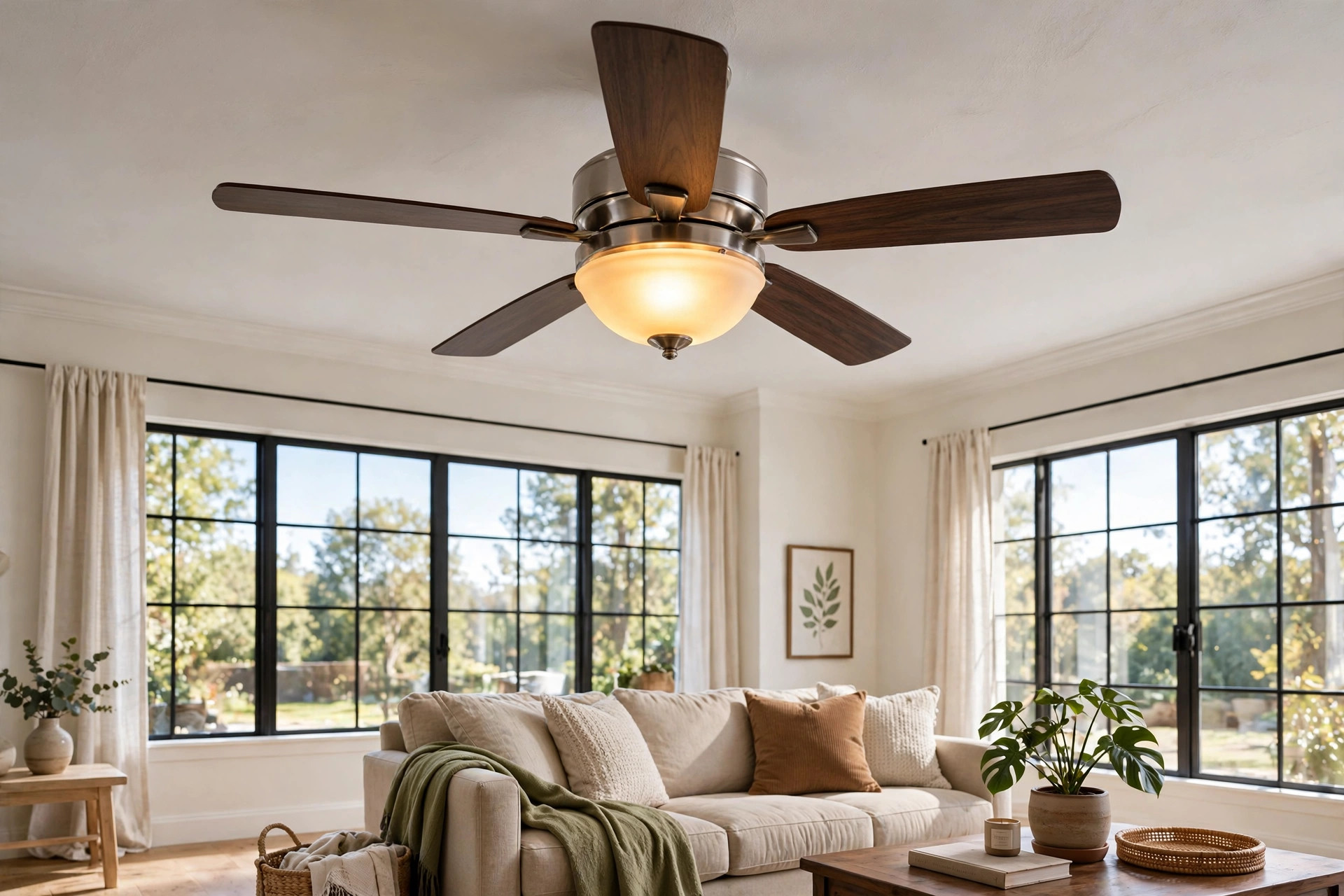

A ceiling fans lights reviews buying guide usa brings together the two things shoppers ask about most: how well a fan moves air and how well its light serves the room. A ceiling fan with a light kit is one of the most practical fixtures in an American home. It cools a room in summer, spreads warm air in winter, and takes the place of a separate ceiling lamp. This guide walks through what matters when you shop: blade size, motor quality, light output, control options, and price. By the end, you will know how to read reviews with a clear head and pick a model that fits your room and your budget.
Why It Matters
Ceiling fans have cooled American homes for more than a century. They do not make air colder. They move it. Moving air feels cooler on the skin, and that simple fact can let you set the thermostat a few degrees higher in summer without loss of comfort. The U.S. Department of Energy has long noted that a ceiling fan used with an air conditioner can cut cooling demand in the rooms where it runs.
Adding a light kit turns the fan into the main ceiling fixture. Most living rooms, bedrooms, and kitchens need both overhead light and air movement. One fixture that does both saves ceiling space, saves wiring cost, and keeps the room tidy. It also matters in rooms with low ceilings. A single flush-mount fan with a light kit gives you everything you need without hanging parts low over your head.
Reviews matter because fans differ more than they appear to. Two fans with the same blade size can move very different amounts of air. Motor quality, blade pitch, and blade shape decide real airflow. The light side differs too: some kits give bright, even light; others give a dim glow that frustrates the whole room. Reading careful reviews and test results helps you tell the difference before you spend your money.
What to Look For: Ceiling Fans Lights Reviews Buying Guide Usa
Room Size and Fan Size
Match the fan to the room. A fan that is too small will struggle in a large space. A fan that is too big can feel harsh and look out of place in a small bedroom. A common rule of thumb:
– Rooms up to 75 square feet: a 29 to 36 inch fan. – Rooms from 75 to 144 square feet: a 36 to 44 inch fan. – Rooms from 144 to 225 square feet: a 44 to 54 inch fan. – Rooms above 225 square feet: a 54 inch fan or larger, or two fans.
Measure your room before you shop. Many buyers skip this step and end up exchanging the fan. A tape measure and five minutes of work prevent most sizing mistakes.
Motor Type
The motor is the heart of the fan. Two main types are sold today.
AC motors are the old standard. They are simple, proven, and cheap to build. Most basic fans use them. They work fine, though they run at only a few fixed speeds and use more electricity than the newer type.
DC motors are the newer choice. They use less power, run quieter, and offer many smooth speeds. A DC motor fan can move the same air with half the watts of an AC model. The catch is price: DC fans cost more up front. Many reviewers favor DC motors for bedrooms, where quiet running matters most.
Look for reviews that mention wobble and noise at top speed. A good fan should run smooth and quiet on its highest setting. If many reviewers complain of humming or shaking, the motor or the factory balance is poor.
Airflow and Efficiency
Airflow is measured in cubic feet per minute, or CFM. A 52-inch fan may rate anywhere from 3,000 to 7,000 CFM. Efficiency is CFM per watt. A fan that moves 5,000 CFM at 30 watts is better than one that moves 5,000 CFM at 70 watts.
Energy Star rated fans are tested for both airflow and efficiency. The Energy Star program sets minimum performance levels, and fans that earn the label use tested, honest numbers. When you compare reviews, favor models with published CFM and watt figures over models that hide them.
The Light Kit
The light side of the fan deserves the same care as the motor. Consider these points.
Brightness. Light output is measured in lumens. A bedroom ceiling fixture often needs 1,500 to 3,000 lumens. Check the kit’s lumen rating. Many cheap kits give only 800 lumens, which feels dim in a main room.
Color temperature. Light color is measured in Kelvin. Warm white around 2700K suits bedrooms and living rooms. Neutral white near 3500K suits kitchens and work areas. Some kits offer selectable color temperature, which lets you change the tone after the fan is installed. Reviewers praise this feature because it removes guesswork.
Bulb type. Most new fans use built-in LED modules. LEDs last many years and use little power. Make sure the module can be dimmed if you want dimming, and check whether the fan needs a special dimmer switch. Some older kits use standard bulbs with a medium base. Those are easy to replace but often dimmer.
Shade style. Bowl shades give soft, spread light. Open bulb kits give brighter, more direct light. Dome and drum shades sit between the two. Think about where the fan hangs. Over a dining table, a bowl shade works well. In a workshop or laundry room, brighter open bulbs may suit better.
If you are comparing fixtures, our guide to kitchen track lighting covers brightness and color temperature in more detail for kitchen spaces.
Controls
Older fans use pull chains. Most new fans come with a remote control. Some work with wall switches or smart home systems. Think about how you will use it daily. A remote is handy in a bedroom. A smart fan that joins your voice assistant can suit a living room. Check reviews for range and reliability of the remote before you buy.
Types and Options
Flush Mount Fans
Flush mount fans hug the ceiling. They suit rooms with ceilings under eight feet. The light kit sits close to the ceiling, which spreads light well. Clearance rules still apply: blades must sit at least seven feet above the floor in most local codes.
Downrod Fans
Downrod fans hang from a pipe. They suit standard and high ceilings. Longer downrods place the fan in the best air for tall rooms. Most fans include a short downrod in the box. Longer rods are sold separately.
Outdoor and Damp-Rated Fans
Porches, patios, and sunrooms need damp or wet rated fans. A standard indoor fan will rust in outdoor air. Damp-rated fans resist moisture in covered areas. Wet-rated fans can face direct rain. Light kits for outdoor fans should use sealed shades that keep insects out.
Smart Fans
Smart fans connect to Wi-Fi and join systems such as Alexa or Google Home. You can set schedules, change speeds by voice, and dim the light from your phone. Smart bulbs have grown popular for the same reasons, and our guide to smart bulbs for the home covers what to expect from connected lighting.
Reading Reviews the Smart Way
Reviews are useful only if you read them well. Keep these rules in mind.
Look at patterns, not single complaints. One bad review can be a bad unit or a bad install. Ten reviews with the same complaint point to a real flaw.
Check the install date. A review written the day after install tells you little about long life. Reviews written after a year of use tell you much more.
Watch for fake praise. Very short five-star reviews with no detail may be planted. Detailed reviews that mention both good and bad points are more trustworthy.
Read the one-star reviews first. They often reveal the worst case: poor balance, weak light, failed remotes, hard installs. If the worst cases look rare and minor, the fan is probably sound.
Compare independent tests. Consumer Reports tests fans for airflow, noise, and ease of use under controlled conditions. Pairing user reviews with lab tests gives you a full picture.
Cost and Price
Ceiling fans with light kits span a wide price range in the USA.
– Budget, 60 to 120 dollars. Basic AC motor fans with simple light kits. Fine for spare bedrooms and rentals. Expect fewer speeds and simpler remotes. – Mid-range, 120 to 250 dollars. Better motors, brighter light kits, nicer finishes. Most buyers land here. DC motors start to appear in this range. – Premium, 250 to 500 dollars and up. Quiet DC motors, smart controls, designer finishes, strong warranties. Best for main living spaces you use every day.
Do not forget install cost. If you are replacing an old fan on an existing box, a handy homeowner can often do it alone. If new wiring or a new ceiling box is needed, a licensed electrician may charge 150 to 300 dollars or more. Some retailers, including Home Depot and Lowe’s, list install services in many areas.
Energy cost is small but worth a look. A DC fan may use 30 watts at top speed. Run five hours a day, and that is about 55 kilowatt-hours a year. At typical U.S. rates, that is under 10 dollars a year. An old AC fan may use twice the power. The Energy Star program publishes efficiency data that makes these comparisons easy, and the Department of Energy offers plain guides on home cooling.
Care and Upkeep
A ceiling fan asks little of its owner, but a few habits keep it running well for years.
Dust the blades. Dust builds up on blade tops and throws the fan off balance. Wipe blades with a damp cloth every few months. An old pillowcase pulled over each blade works well.
Tighten screws once a year. Vibration can loosen blade and bracket screws over time. A loose screw causes wobble and noise. Check them each spring.
Clean the light shade. Glass and plastic shades collect dust and dull the light. Remove the shade and wash it with mild soap and water. Let it dry fully before you put it back.
Change or reset as needed. LED modules last a long time, but they can fail. Keep the manual so you know the part number. For bulb-based kits, replace burned bulbs with the same type and wattage the maker specifies.
Mind the seasons. Many fans have a reverse switch. Run the blades counter-clockwise in summer for a cooling downdraft. Run them clockwise at low speed in winter to push warm air down from the ceiling. The switch is usually on the motor housing or the remote.
Safety
Ceiling fans are safe when installed right, but they deserve respect.
– Mount the fan only to a box rated for fan support. A standard light box cannot hold a spinning fan. – Keep blades at least seven feet above the floor. – Keep blade tips at least 30 inches from walls and sloped ceilings. – Turn off power at the breaker before wiring. – If the fan wobbles badly, stop using it until you fix the cause. Check balance, screws, and mounting first.
The Consumer Product Safety Commission publishes recall notices and safety guidance for home products, and it is worth a quick check before you buy a brand you do not know.
Frequently Asked Questions
How bright should a ceiling fan light be?
For a bedroom, look for at least 1,500 lumens. For a living room or kitchen, 2,000 to 3,000 lumens suits most spaces. If the room is large or has dark walls, aim higher. Dimmable kits let you tune the level after install.
Are ceiling fans with lights energy efficient?
Yes, most are. LED light kits use 15 to 25 watts, and efficient DC motors use 20 to 40 watts. The whole fixture often uses less power than one old incandescent bulb. Philips and other makers publish detailed specs so you can compare before you buy.
Can I add a light kit to a fan I already own?
Sometimes. Many fans are sold as light-kit adaptable, and the maker sells a matching kit. Check your model number first. Kits from other brands rarely fit, and wiring must match. If your fan is old or cheap, buying a new fan with a kit is often simpler.
Do I need an electrician to install a ceiling fan?
If a fan-rated box and wiring are already in place, many homeowners install the fan themselves. If wiring is missing or the box is not fan rated, hire a licensed electrician. Fan retailers and lighting specialists such as Lamps Plus and Lumens sell models with clear install guides that show what the job needs.
How long do ceiling fan lights last?
Built-in LED modules often last 25,000 to 50,000 hours. At five hours a day, that is 13 to 27 years. Bulb-based kits last as long as the bulbs you screw in. Heat and vibration shorten life, so keep the fan clean and balanced.
What is the best color temperature for a fan light?
Warm white near 2700K suits bedrooms, living rooms, and dining rooms. Neutral near 3500K suits kitchens, offices, and laundry rooms. Selectable color temperature kits let you switch after install, which reviewers rate highly. Style guides from The Spruce offer room-by-room lighting ideas that pair well with fan lights.
A Short Final Word
A ceiling fan with a light kit is one of the hardest working fixtures in a home. Choose the right size, favor a quiet motor, and check the light output before you buy. Read reviews for patterns, trust tested numbers over sales claims, and match the fixture to the room it will serve. For more buying guidance across the home, see our companion article on ceiling fan light options. With a careful pick, your fan will cool, light, and serve your family for many years.
References
Consumer Reports. (n.d.). Product reviews and ratings. https://www.consumerreports.org ENERGY STAR. (n.d.). Energy efficient products. https://www.energystar.gov Lamps Plus. (n.d.). Lighting and home decor. https://www.lampsplus.com Lowe’s. (n.d.). Home improvement products. https://www.lowes.com Lumens. (n.d.). Lighting and ceiling fans. https://www.lumens.com Philips. (n.d.). Lighting products. https://www.philips.com The Home Depot. (n.d.). Home improvement products. https://www.homedepot.com The Spruce. (n.d.). Home and garden advice. https://www.thespruce.com U.S. Consumer Product Safety Commission. (n.d.). Product safety information. https://www.cpsc.gov U.S. Department of Energy. (n.d.). Energy efficiency and renewable energy. https://www.energy.gov
Was this guide helpful?

About Robert Taylor
The My Garden US editorial team writes practical, in-depth home and garden guides for American homeowners — tested advice, no fluff.
You May Also Like

Solar Path Lights American Homes Guide
April 24, 2026 0 views
Landscape Spot Lights American Homes Guide: How to Light Your Yard the Right Way
October 1, 2026 1 views
Indoor Wall Sconces Deals Near Me: How to Find Good Value Close to Home
April 17, 2026 0 views