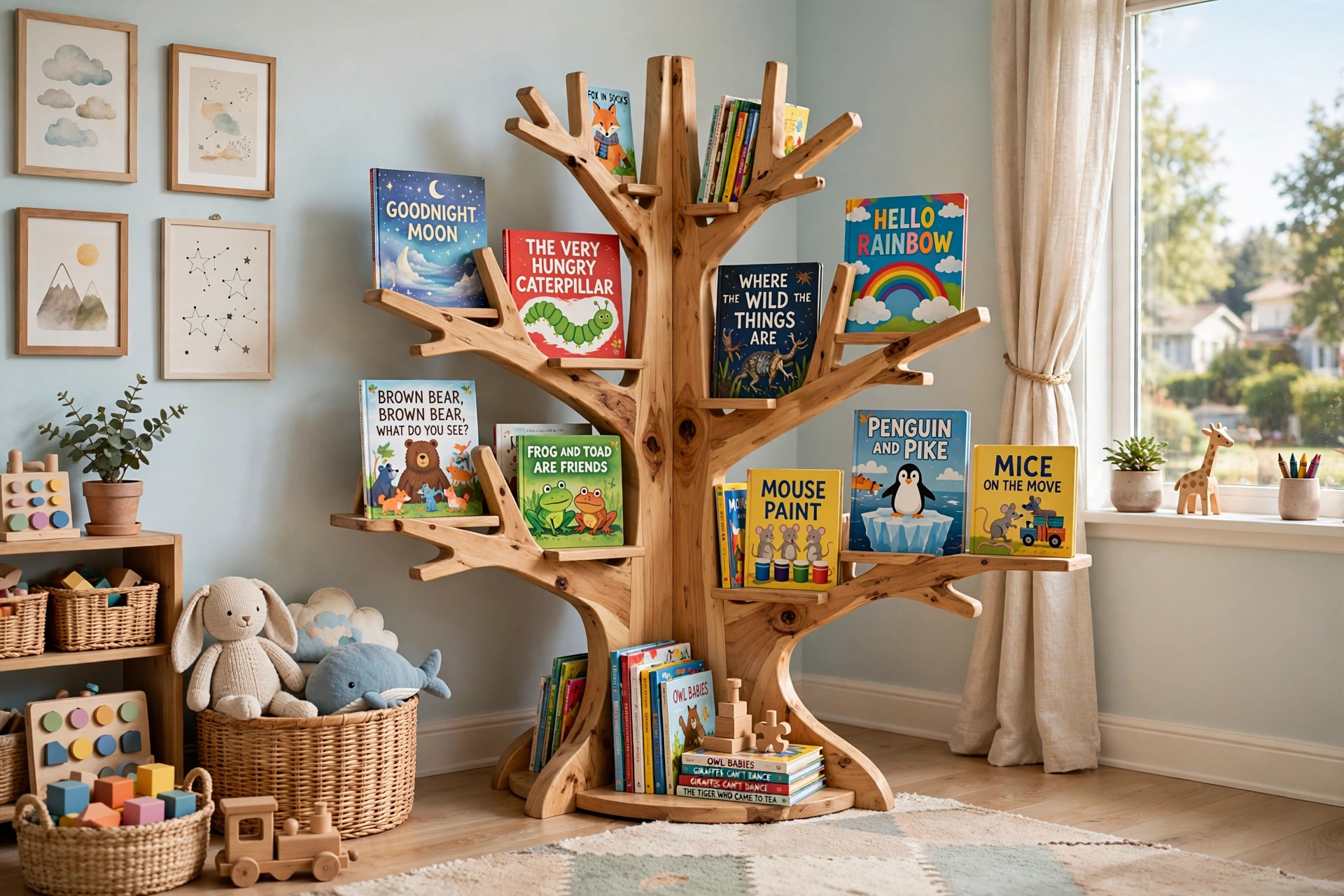

A kids bookshelf tree shaped for playroom use is a small shelf built to look like a tree. It holds picture books, board books, and early readers. Children can see the covers and reach them on their own. The shape turns plain storage into a piece of room decor that children enjoy.
Many parents pick this shelf for a reading corner. It works well in a playroom, in a nursery that is growing into a toddler room, or in a family room. The tree design feels warm and friendly. It can make a plain corner feel like a small forest where stories live.
Before you buy one, it helps to know what to look for. Size, material, and safety all matter. A good shelf should last through the toddler years. It should also stand steady when small hands pull at it. This guide walks through each point in plain terms so you can choose with care.
Why a Tree Shaped Shelf Belongs in the Playroom
Books that sit in a closed box are easy to forget. Books that stand on open shelves get picked up. A tree shaped shelf shows book covers face forward. A child walks past, sees a bright cover, and pulls it down. That small habit builds a love of reading.
The playroom is the right place for this habit. It is where children spend long, free hours. A shelf that looks like a tree fits the spirit of the room. It is not office furniture. It is part of the play. Children treat it as a small landscape for their toys and their stories.
The shape also teaches order without nagging. Each branch is a small slot. A child learns that every book has its place. Put the books back on the branches, and the tree looks full again. Parents who set up reading corners often pair the shelf with a soft rug and a small chair. Decor guides from sources such as IKEA and The Spruce show how one shelf can anchor a whole corner.
A tree shelf also grows with the child. At age two it holds board books. At age five it holds early chapter books. The shelf itself stays the same while the books change. That makes it a fair value over time.
What to Look for When You Buy One: Kids Bookshelf Tree Shaped for Playroom
Not every tree shelf is built the same. Some are sturdy. Some are thin and wobbly. Use the points below to judge any model before you bring it home.
Size and Fit
Measure the wall space first. Most tree shelves stand between three and five feet tall. A shelf that is too tall looks cramped under a low ceiling. A shelf that is too short gets lost against a bare wall.
Check the width too. The branch shape spreads wide. Leave room on each side so the shelf does not crowd a door or a window. In a small playroom, a narrow tree shelf fits better than a wide one. If floor space is tight, look at a toddler table and chair set for playroom layouts that leave wall space open for shelving.
Material and Build
Solid wood lasts longest. Engineered wood and MDF are common and cost less. Both are fine if the panels are thick. Thin panels bow under the weight of books. Press on the shelves in the store or read the panel thickness in the listing. Half an inch or more is a good sign.
Look at the joints. Screws and dowels hold better than glue alone. The back panel adds strength. A shelf with a full back resists racking better than one with an open back. Finish should be smooth with no rough spots. Rough edges can catch small fingers or snag book covers. Paints and stains should be labeled non toxic and safe for children. If you need more closed storage for toys, a kids bookshelf with bins for toy storage may suit you better than an open tree design.
Shelf Design and Book Access
The branches should be deep enough to hold books upright. A depth of five to eight inches works for most picture books. Some tree shelves use sling pockets instead of flat boards. Slings show covers well but hold fewer books. Flat boards hold more and suit a growing library.
Spacing between branches matters. Picture books vary in height. Gaps of eight to ten inches fit most titles. If the gaps are too small, tall books will not stand straight. If they are too big, books fall over sideways. Some models mix deep and shallow slots, which is handy for books of mixed sizes. For families who want to show covers high on the wall as well, kids wall shelves for books and toys display make a good companion piece.
Types of Tree Shaped Kids Bookshelves
Makers sell several styles of tree shelf. Each suits a different room and budget.
Standing floor shelves are the most common. They look like a tree trunk with branches on both sides. They stand on the floor and need no wall screws in some cases, though anchoring is still wise. They suit wide playroom walls.
Wall mounted trees hang flat against the wall. They save floor space. They work in small rooms and in corners above a bench. They must be fixed to wall studs because books are heavy.
Rotating tree shelves turn on a base. Children spin them to find books. They are fun, but the turning parts can pinch. They also cost more than fixed shelves.
Book trees with toy storage mix open branches with small cubbies or drawers at the base. The trunk section holds bins for small toys. These suit families that want one unit to do two jobs.
Corner tree shelves fit into a corner with two faces of shelves. They use dead corner space well. They hold fewer books than a full tree, so they suit smaller collections.
Finish choices run from natural pine to painted colors. White and natural wood fit most rooms. Painted greens and browns play up the tree theme. Retailers such as Wayfair and Pottery Barn Kids carry many of these styles, and big stores like Target and The Home Depot stock simpler models at lower prices.
What It Costs
Prices for a kids bookshelf tree shaped for playroom use fall into three bands. Small wall mounted models start near thirty dollars. Most standing floor models sell between sixty and one hundred fifty dollars. Large solid wood trees with toy cubbies can reach two hundred fifty dollars or more.
Price tracks with material and size. Solid pine or birch costs more than MDF. A taller tree with more branches costs more than a small one. Brand names add a small premium. Handmade trees from small shops cost the most, but they often use thicker wood.
Think about cost per year of use. A seventy dollar shelf that serves from age two to age seven costs ten dollars a year. That is a fair deal for daily use. A cheap shelf that wobbles and must be replaced in a year is the worse buy. Check shipping costs too. These shelves are bulky, and freight can add twenty dollars or more.
Sales cluster around back to school season and the winter holidays. Prices dip then. Buying a floor model in a store can cut the price further. Check that all parts and screws are in the box before you leave the store.
Care and Upkeep
A tree shelf needs little care. Dust it once a week with a soft cloth. Books shed paper dust, and it settles on the branches. A damp cloth handles sticky spots. Dry the wood right after so moisture does not soak in.
Tighten screws twice a year. Wood moves with the seasons. Joints loosen a little over time. A quick check with a screwdriver keeps the shelf firm. Look at the wall anchor at the same time. Give the shelf a firm push. It should not rock.
Rotate the books now and then. Heavy books on one side can strain a branch. Spread the weight across the shelf. Keep the bottom branches for the biggest books. The trunk area is the strongest part of most designs.
Repaint or touch up chips when they appear. Chipped paint on cheap models can peel further if left alone. A small bottle of matching paint costs little. Sand the chip lightly first, then paint two thin coats. Let it dry fully before children touch it. General care advice for painted nursery furniture appears on sites like Parents and What to Expect.
Safety Comes First
Safety is the most serious part of this guide. Furniture tip over is a real hazard for small children. The Consumer Product Safety Commission tracks injuries from tipping furniture each year. A bookshelf filled with books is top heavy. A climbing toddler can pull it forward.
Anchor every tree shelf to the wall. Use the anti tip strap or bracket that comes in the box. If the box has none, buy a furniture strap at a hardware store. Fix the strap into a wall stud, not just drywall. Studs hold the screw firm. A toggle bolt is the next best choice in drywall alone.
Place the shelf away from windows with cords. Keep it clear of radiators and heaters. Do not put heavy objects on the top branch. The top should hold light books or nothing at all. Teach children not to climb the shelf. The branches are not steps. A simple rule, said often, works better than a long lecture.
Check for recalls before you buy a used shelf. The CPSC posts recall notices for nursery and kids furniture. Look up the brand and model on their site. Health guidance from HealthyChildren.org, run by the American Academy of Pediatrics, also covers safe room setup for toddlers. A used shelf can be a fine buy if it is solid, complete, and not under recall.
Frequently Asked Questions
What age is a tree shaped bookshelf good for? It suits ages two through seven best. Toddlers enjoy the low branches. Early readers use the full shelf. Older children may outgrow the look, but the shelf still holds books well.
How many books does a tree shelf hold? Most floor models hold forty to eighty picture books. Sling style pockets hold fewer, often twenty to thirty. Flat board branches hold the most. Count your books before you shop so the shelf fits your library.
Is a tree shaped shelf safe for toddlers? It is safe when anchored to the wall and built from sturdy material. Anchor straps stop tip over. Smooth edges stop scrapes. Always anchor it, even if the shelf feels heavy on its own.
Can I put it in a bedroom instead of a playroom? Yes. It works in any child room. In a bedroom, pair it with a night light for evening reading. Keep it clear of the bed so a child cannot climb from the bed onto the shelf.
How do I keep it from tipping over? Use a furniture anti tip strap fixed to a wall stud. Spread heavy books across the lower branches. Keep the top light. Check the strap twice a year.
What wood finish is best for a playroom? A sealed natural finish or a water based paint is best. Both wipe clean. Avoid finishes with strong fumes. Let any new shelf air out for a day before children use it.
A Short Final Word
A kids bookshelf tree shaped for playroom use is a simple thing that does real work. It stores books. It invites reading. It makes a corner feel warm. Choose a sturdy model, anchor it to the wall, and fill it with books your child loves. The shelf will earn its place for years.
References
American Academy of Pediatrics. (n.d.). HealthyChildren.org. https://www.healthychildren.org IKEA. (n.d.). Home furnishings. https://www.ikea.com Parents. (n.d.). Parenting advice and family life. https://www.parents.com Pottery Barn Kids. (n.d.). Kids furniture and decor. https://www.potterybarnkids.com Target. (n.d.). Retail store. https://www.target.com The Home Depot. (n.d.). Home improvement products. https://www.homedepot.com The Spruce. (n.d.). Home and garden advice. https://www.thespruce.com U.S. Consumer Product Safety Commission. (n.d.). Product safety information. https://www.cpsc.gov Wayfair. (n.d.). Furniture and home goods. https://www.wayfair.com What to Expect. (n.d.). Pregnancy and parenting guidance. https://www.whattoexpect.com
Was this guide helpful?

About Emily Rodriguez
The My Garden US editorial team writes practical, in-depth home and garden guides for American homeowners — tested advice, no fluff.
You May Also Like
Nursery Wall Organizer for Diapers and Lotion
May 12, 2026 0 views
Nursery Rocking Chair Upholstered for Comfort: A Plain Buying Guide
February 21, 2026 0 views
Toddler Bed Frame with Headboard for Style: A Buyer’s Guide
August 21, 2026 0 views