Wire is the backbone of handmade jewelry. It holds beads in place. It forms clasps and hooks. It wraps around stones to hold them firm. The right wire makes a piece strong and clean. The wrong wire leads to breaks, tangles, and wasted time. This guide explains how to pick the best jewelry wire for wrapping and beading, so every project starts on solid ground.
A crafter can find wire in many shops and online stores. Choices range from plain copper to sterling silver. Each metal has its place. Each gauge has a use. By the end of this article, you will know which wire fits your project, your budget, and your skill level.
Why the Right Wire Matters
Jewelry that breaks is jewelry that disappoints. Wire that is too soft will bend out of shape with wear. Wire that is too stiff will snap when you try to form a loop. The best jewelry wire for wrapping and beading matches the job at hand. It bends where it should bend. It holds where it should hold.
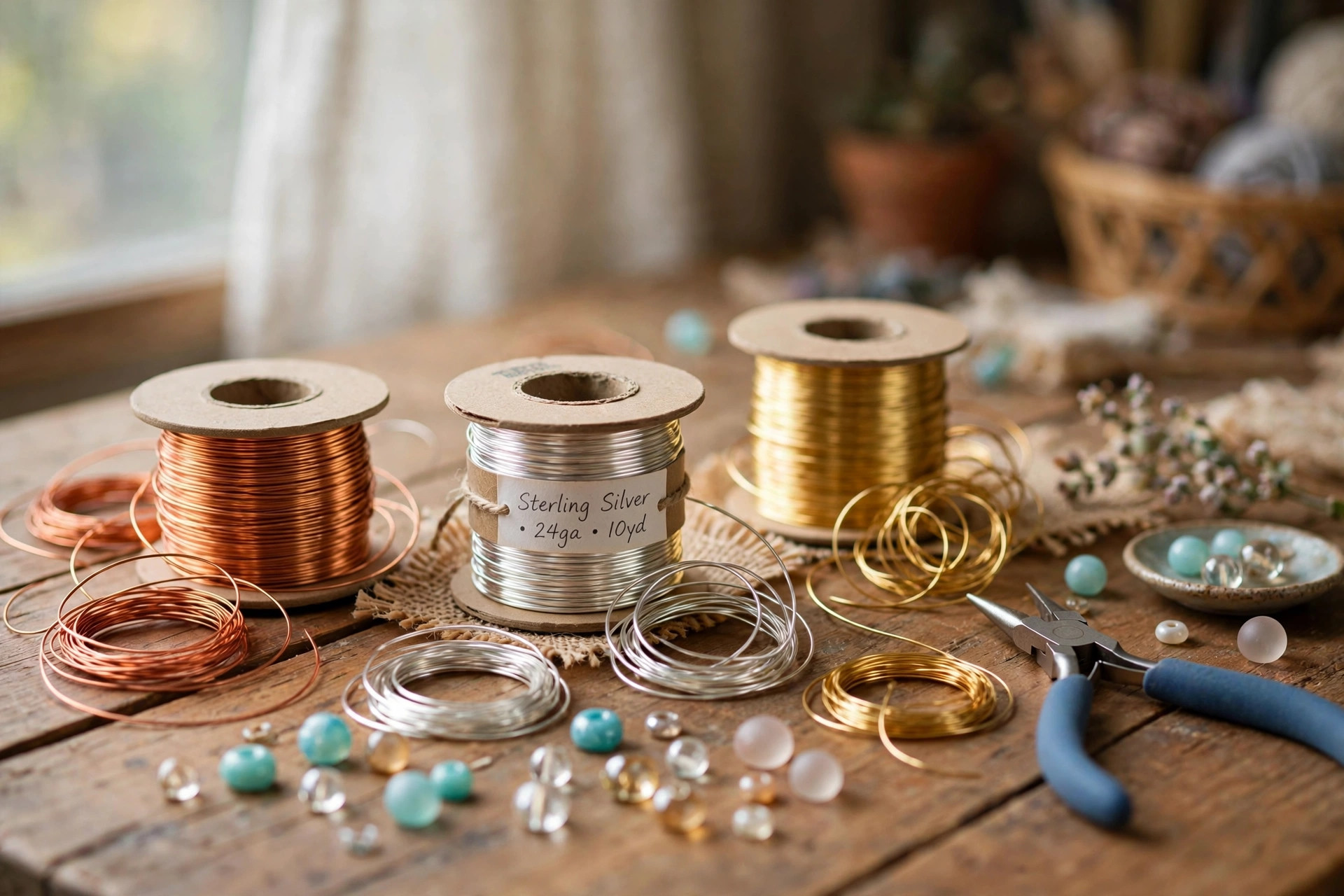
Wire also shapes the look of a piece. Bright silver wire gives a clean, modern feel. Antique brass wire gives warmth and age. Copper wire brings a rich red glow that pairs well with stone beads. Color and finish are part of design, not afterthoughts.
Good wire also saves money over time. Cheap wire that tarnishes fast or breaks under light work costs more in the long run, because projects must be redone. A spool of solid wire costs a little more at first but serves many pieces. Many crafters start with affordable copper to learn, then move to silver or gold-filled wire for gifts and sales. This step-by-step path keeps waste low and skills growing.
How to Choose Jewelry Wire: Best Jewelry Wire for Wrapping and Beading
Three traits decide how wire behaves: gauge, temper, and metal. Learn these three, and the wall of spools at the craft store becomes easy to read.
Wire Gauge
Gauge is the thickness of the wire. In the United States, the American Wire Gauge system is used. The numbers work in reverse. A higher number means thinner wire. This point confuses many beginners.
Common gauges for jewelry work are 18, 20, 22, 24, and 26. Each has a role:
– 18 gauge is thick and strong. Use it for frames, bangles, and ring bands. – 20 gauge is a good all-around wire. It suits ear wires and sturdy loops. – 22 gauge bends with ease. It works well for most wire wrapping. – 24 gauge is fine and soft. Use it for weaving and wrapping around stones. – 26 gauge is very fine. It suits delicate coils and tiny wraps.
Most beading projects need 22 or 24 gauge for wraps and 20 gauge for structure. If you buy only two spools to start, pick 20 and 24. They cover the widest range of simple projects.
Temper
Temper is how hard or soft the wire is. Wire comes in three tempers: dead soft, half hard, and full hard.
Dead soft wire bends with little effort. It is best for wrapping and weaving. It forms coils without springing back. Half hard wire holds its shape better. It suits ear wires, clasps, and jump rings. Full hard wire is stiff and strong. It is used for frames and findings that must not flex.
Most wire sold for wrapping is dead soft. That is what you want for bead work. If a spool feels stiff in the package, check the label. It may be half hard, which fights you during wraps.
Metal and Finish
The metal sets the price, the color, and how the wire ages. Here are the common choices:
– Copper is soft, cheap, and easy to shape. It is ideal for practice and for warm-toned designs. – Silver-plated copper gives the look of silver at a low price. The plating can wear with heavy use. – Sterling silver is true silver. It costs more but lasts and shines. It is the standard for fine handmade pieces. – Gold-filled wire has a thick layer of gold bonded to a base core. It outlasts gold-plated wire by a wide margin. – Brass and bronze give antique gold tones at fair prices. They age to a soft patina that many buyers like.
Coated craft wire, such as the kind sold at Michaels and JOANN, comes in many colors. These spools are great for fun, bright designs. They are less suited for fine jewelry meant to last for years.
Types of Wire Shapes for Wrapping and Beading
Wire also comes in shapes beyond round. Each shape serves a purpose in wire work.
Round Wire
Round wire is the most common shape. It suits nearly every task: loops, wraps, coils, and chains. Beginners should start here. A spool of round dead-soft wire in 22 gauge will carry you through your first dozen projects. Specialty suppliers like Fire Mountain Gems and Rio Grande stock round wire in many metals and gauges.
Half-Round Wire
Half-round wire is flat on one side and curved on the other. The flat side sits flush against a stone or bead. This makes it the best choice for binding wraps, the neat bands that hold a wrapped setting together. It gives finished work a clean, professional edge.
Square Wire
Square wire has four flat sides. It catches light in sharp lines and gives designs a bold, modern look. It is also less likely to roll while you work, which some crafters prefer. Square wire pairs well with flat beads and geometric designs.
Most home crafters keep round wire on hand and add half-round for binding. Square wire is a fine third step once basic wrapping feels natural.
What Jewelry Wire Costs
Prices vary by metal more than by brand. A 30-foot spool of copper wire often costs a few dollars. Silver-plated wire costs a little more. These are the best picks for learning and for casual wear pieces.
Sterling silver wire is priced by the troy ounce, like silver itself. A small spool may cost tens of dollars. Gold-filled wire costs more still. These metals are worth it for pieces you sell or give as keepsakes.
Watch for sales at large craft chains. Both Home Depot tool aisles and dedicated craft shops carry pliers and cutters, and seasonal sales at craft stores can cut wire prices by half. Buying larger spools also lowers the cost per foot. Online marketplaces like Amazon let you compare prices across brands in one place, though quality varies, so read reviews before you buy.
A beginner can stock a full starter kit, including wire, pliers, and beads, for a modest sum. A jewelry making kit for beginners often bundles wire with tools, which is a smart way to begin.
Care and Upkeep of Wire and Finished Pieces
Wire jewelry needs light care to stay bright. Store finished pieces in dry places. A small zip bag with an anti-tarnish strip keeps silver from dulling. Keep copper and brass pieces away from damp air, which speeds tarnish.
Clean silver with a soft polishing cloth. Avoid harsh dips, which strip plating from coated wire. For copper and brass, a paste of baking soda and water, rubbed gently and rinsed well, restores shine. Dry each piece fully before storage.
Beaded pieces with wire wraps can catch on cloth. Store necklaces flat or hung, not piled in a box. Bracelets last longer when they are not worn during sports or housework. These small habits add years to handmade jewelry.
Keep the wire itself in good shape too. Store spools in their bags or in a divided box so gauges do not mix. Label each spool with its gauge and metal using a small tag or a bit of tape. This saves time when you sit down to work. Wire that is kinked can often be saved by rolling it gently between two soft cloths. Wire that is deeply kinked or scratched should be cut away and used for practice wraps rather than for finished pieces.
Safety Notes for Home Crafters
Wire work is safe when a few rules are followed. Cut wire with flush cutters, and point the cut end away from your face. Small snipped ends can fly. Many crafters wear safety glasses when cutting heavy gauges.
File or tuck every cut end. A sharp wire end can scratch skin and snag clothing. Use a cup burr or a small file to round the tips. Check each finished piece by running a finger over the wraps. If you feel a sharp point, fix it before the piece is worn.
Some wire contains nickel, which can irritate sensitive skin. If you or the wearer has a nickel allergy, choose nickel-free wire and label it as such. Sterling silver and copper are usually safe choices. Wash hands after long work sessions, and keep small wire bits away from children and pets.
General home craft safety guides from Family Handyman, This Old House, and Bob Vila offer useful tips on tool use and workbench setup. Art supply retailer Blick also publishes beginner guides for jewelry tools and materials.
Frequently Asked Questions
What is the best gauge of wire for wire wrapping stones?
For most stone wrapping, 22 gauge dead-soft wire is the best pick. It is thick enough to hold a stone firm and thin enough to form neat coils. Use 20 gauge for the frame and 24 or 26 gauge for the fine binding wraps. This mix gives strength where it counts and grace in the details.
Can I use craft wire from a hobby store for jewelry I plan to sell?
You can, but know its limits. Coated craft wire looks bright and comes in fun colors, yet the coating can chip with wear. For pieces you sell, sterling silver or gold-filled wire is a better choice. Buyers pay for materials that last, and fine wire lifts the value of your work.
How do I keep wire from tangling as I work?
Cut only the length you need for each step. Long tails tangle fast. Hold the spool with one hand and pull wire straight with the other. Some crafters run the wire through a soft cloth to remove the curve before they start. A tidy bench with a spool holder also helps.
What tools do I need besides the wire?
Three tools cover most wrapping and beading: round-nose pliers, flat-nose pliers, and flush wire cutters. Round-nose pliers form loops. Flat-nose pliers grip and flatten. Flush cutters trim ends clean. Add a small file for smoothing. A basic resin art kit for jewelry making or a bead loom kit for bracelets pairs well with wire skills if you want to widen your craft.
Why does my silver wire turn dark?
Silver reacts with sulfur in the air. This forms a dark layer called tarnish. It is normal and not a flaw. Store silver in airtight bags and polish it with a soft cloth when needed. Anti-tarnish strips in the storage bag slow the process.
Is gold-filled wire worth the higher price?
For pieces meant to last, yes. Gold-filled wire has a thick bonded layer of gold that resists wear far better than thin gold plating. It keeps its color through years of normal wear. For practice pieces, stick with copper or plated wire and save the gold-filled stock for finished work.
A Final Word
The best jewelry wire for wrapping and beading is the one that fits your project, your hands, and your budget. Start with copper in 20 and 24 gauge. Learn your loops and wraps. Then step up to sterling silver or gold-filled wire for pieces that matter. Good wire, simple tools, and steady practice will take you further than any single brand or trend.
References
Amazon. (n.d.). Online shopping. https://www.amazon.com Blick Art Materials. (n.d.). Art and craft supplies. https://www.dickblick.com Bob Vila. (n.d.). Home improvement advice. https://www.bobvila.com Family Handyman. (n.d.). DIY home repair and maintenance. https://www.familyhandyman.com Fire Mountain Gems and Beads. (n.d.). Jewelry making supplies. https://www.firemountaingems.com JOANN. (n.d.). Fabric and craft supplies. https://www.joann.com Michaels. (n.d.). Arts and crafts supplies. https://www.michaels.com Rio Grande. (n.d.). Jewelry making tools and supplies. https://www.riogrande.com The Home Depot. (n.d.). Home improvement products. https://www.homedepot.com This Old House. (n.d.). Home renovation guidance. https://www.thisoldhouse.com
Was this guide helpful?

About Robert Taylor
The My Garden US editorial team writes practical, in-depth home and garden guides for American homeowners — tested advice, no fluff.