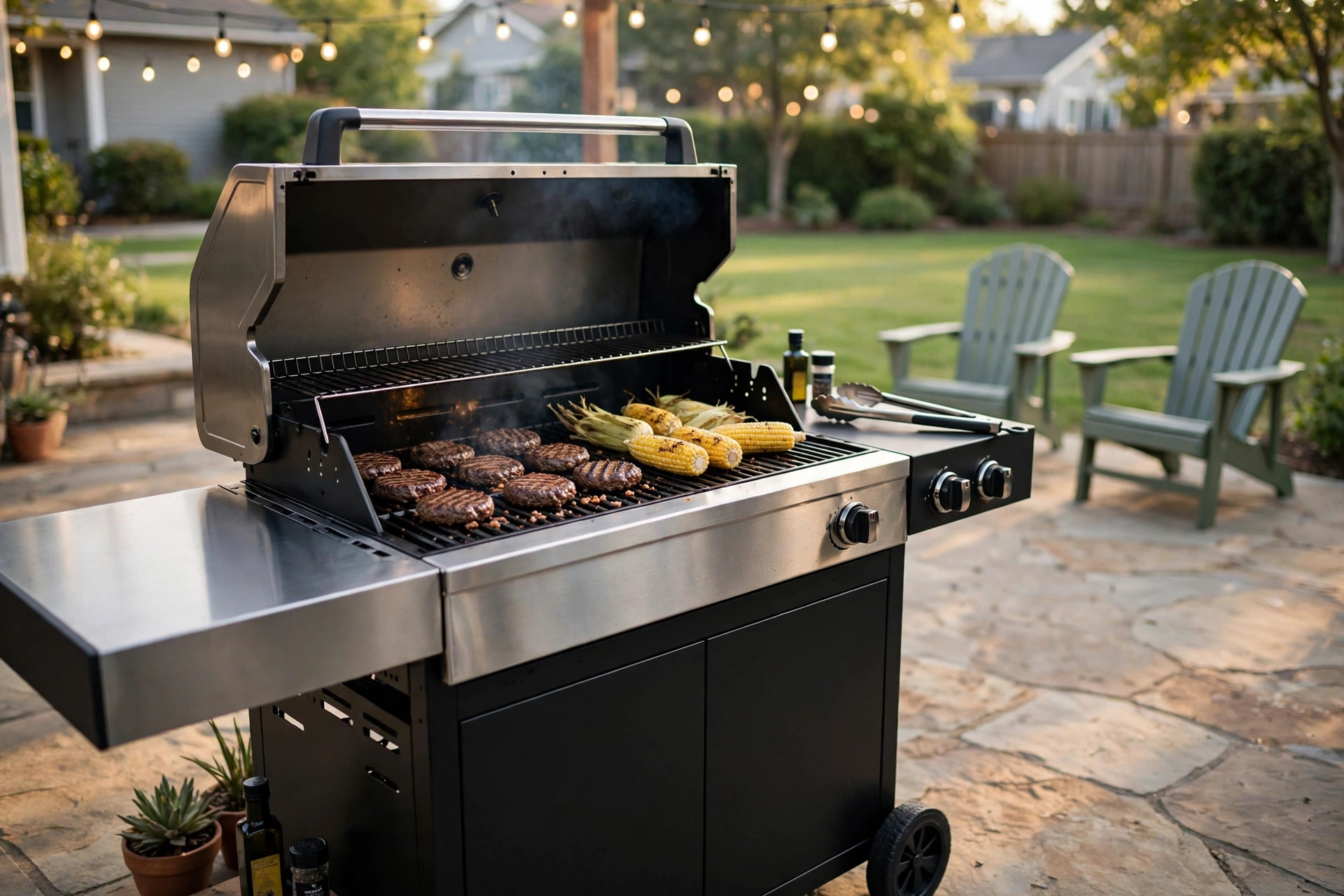
A small family grill is a fine thing. It cooks six burgers and a few hot dogs with no trouble. But a block party, a graduation, or a big family reunion asks for much more. You need a cooker that holds a full load of food at once and keeps its heat steady for hours. That is where these best bbq for large gatherings reviews come in.
This guide walks through what matters when you buy a barbecue for a crowd. We look at cooking space, fuel types, heat control, build quality, price, care, and safety. The goal is simple. Help you buy once and buy right.
Why Cooking for a Crowd Is Different
Feeding forty people is not the same as feeding four. The math alone changes everything. A crowd of forty eats about twenty pounds of meat. That is roughly eighty hamburgers, or forty large chicken pieces with sides to match. A small grill with 300 square inches of cooking space forces you to cook in batch after batch. Each batch takes twenty to thirty minutes. Your first batch sits and cools while the last batch finishes. Guests eat at different times. Nobody is happy.
A grill built for large gatherings changes the rhythm. With 700 to 1,000 square inches of cooking space, you can lay out the whole meal at once. Food finishes together. You serve everyone hot. You also spend your time talking to guests instead of standing over the grate for three hours.
Heat control matters even more at scale. A hot spot on a small grill burns two burgers. A hot spot on a crowd-sized grill burns twenty. Good reviews of large barbecues pay close attention to even heat. They test whether the edges run cooler than the center. They check whether the lid seals well enough to hold temperature in wind. These details decide whether your cookout runs smooth or turns into a juggling act.
Time is the other hidden cost. A large event means long cook times. Brisket needs twelve hours. Pulled pork needs ten. A cooker that holds steady temperature without constant tending is worth its weight in gold. That is why many of the best bbq for large gatherings reviews give high marks to pellet grills and well-built gas models. They let the cook step away.
What to Look for Before You Buy: Best Bbq for Large Gatherings Reviews
Shopping for a big cooker is easier when you know what counts. The list below covers the points that show up in nearly every serious review.
Cooking Area
Square inches tell the real story. For a party of twenty to thirty, look for at least 600 square inches. For forty to sixty guests, aim for 800 to 1,000. Some large gas grills reach 1,000 square inches across the main grate and warming rack. A few big offset smokers offer even more by stacking racks.
Do not forget usable shape. A wide, shallow grate suits burgers and steaks. Deep racks suit whole chickens and ribs. Think about what you cook most.
Heat Control and Fuel
Each fuel has a trade. Gas lights fast and adjusts with a knob. It suits cooks who value control and speed. Charcoal gives the classic smoke taste but needs more skill and attention. Pellet grills split the difference. They burn wood pellets, hold temperature with a digital control, and add real smoke flavor. Many reviewers call them the best of both worlds for big groups.
Consider your setting too. If your patio sits in open wind, a gas model built for gusty weather holds heat better than a thin charcoal kettle. Check windy-condition gas grill guides for more on this point.
Build Quality
A cooker that feeds crowds runs hot and runs long. Thin metal warps. Cheap grates rust. Look for heavy gauge steel, porcelain-coated cast iron grates, and sturdy wheels. You will roll this unit around the yard. The frame must carry the weight of food and fuel.
Lid fit deserves a test. Close the lid and look for big gaps. Smoke leaking from every seam means heat escapes too. A good lid sits flat and closes with a solid feel.
Extra Features Worth Having
Side burners boil corn or simmer sauce while the main grate cooks meat. A warming rack holds finished food at safe temperature. Tool hooks keep tongs and spatulas in reach. None of these are required. But on a busy cook day, each one saves trips back to the kitchen.
The Main Types of Large Cookers
Most crowd-sized barbecues fall into four groups. Each has clear strengths. The best bbq for large gatherings reviews we studied weigh all four.
Large Gas Grills
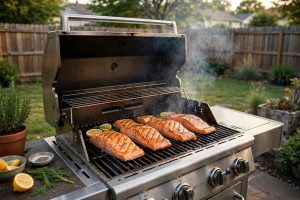
A six-burner gas grill is the workhorse of the backyard party. It heats up in ten minutes. Each burner zone runs at its own temperature. You sear steaks over high heat on one side and hold chicken at low heat on the other. Reviews from Consumer Reports often praise gas models for even cooking across wide grates.
The main drawback is flavor. Gas alone makes no smoke. Many cooks add a smoker box filled with wood chips to bring some smoke taste back. If speed and ease top your list, gas is hard to beat.
Charcoal Grills and Smokers
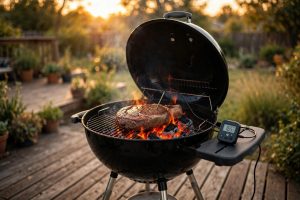
Charcoal remains the flavor king. Nothing matches the taste of meat kissed by real wood smoke. Large kettle grills and barrel smokers give plenty of room. Offset smokers, the kind with a firebox on the side, handle the biggest loads of all.
The cost is attention. Charcoal needs the vents managed and fresh coals added over long cooks. For a skilled cook, that is part of the pleasure. For a busy host, it is a second job. AmazingRibs offers deep science on charcoal fire control if you want to learn the craft.
Pellet Grills
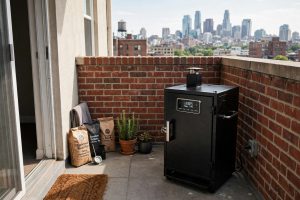
Pellet grills burn compressed wood pellets fed by an electric auger. A digital controller holds your set temperature within a few degrees. You load the hopper, set the dial, and walk away. Reviews note that pellet models from Traeger and others make brisket and ribs almost foolproof.
Sizes run large. Many pellet grills offer 700 square inches or more. They cost more up front and need an outlet. But for feeding a crowd with little stress, reviewers keep putting them near the top of every roundup.
Kamado Ceramic Cookers
Kamado cookers look like giant eggs. Their thick ceramic walls hold heat with great care. They grill at high sear temperatures and smoke low and slow. Big Green Egg built its name on this design. Large sizes exist, and some come with extra racks that expand cooking space.
Kamados are heavy and pricey. They suit cooks who want one cooker that does everything well and lasts for decades.
Cost and Price
Big cookers span a wide price range. A large basic charcoal grill may cost two hundred dollars. A mid-size gas grill with six burners often runs five hundred to nine hundred dollars. Large pellet grills sit between eight hundred and two thousand. High-end kamado cookers and premium gas models can pass two thousand.
The review pattern is clear. Spending more buys even heat, thicker metal, and better controls. But the sweet spot for most families sits in the middle. A well-made grill around six to eight hundred dollars usually feeds a crowd for years.
Do not forget running costs. Gas needs propane refills. Charcoal needs bags of briquettes or lump. Pellets come in twenty-pound bags that a big cook can burn through in a weekend. A charcoal vs gas grill cost comparison breaks these numbers down in full detail.
Accessories add up too. A good instant-read thermometer is the single best buy for crowd cooking. Covers, grill brushes, and drip pans round out the kit. Budget another one hundred dollars for the basics.
Care and Upkeep
A large grill is an investment. Care keeps it cooking for a decade or more.
Clean the grates after every use. A hot grate cleans easiest. Brush it while the grill is still warm, then wipe with a little oil on a paper towel held with tongs. This builds a natural nonstick layer over time.
Empty ash and grease often. Charcoal ash blocks airflow and kills heat control. Grease pans left full are a fire risk. Check the grease tray before every big cook.
Cover the grill between uses. Sun and rain wear down paint, igniters, and wood parts. A fitted cover from the maker lasts longer than a cheap universal one. Char-Broil and Weber both sell covers cut for their large models.
Once a year, do a deep clean. Pull out the grates, heat tents, and burners. Scrub with a brush and warm soapy water. Check burner tubes for rust or clogs. Spiders love to nest in gas tubes over winter. A clogged tube causes weak flames and uneven heat.
Safety Rules for Big Cookouts
Crowd cooking brings extra risk. More food means longer cooks, hotter fuel, and more people near the grill. Follow these rules.
Place the grill well away from the house, deck rails, and low branches. Ten feet is the common advice. Never grill in a garage or under a covered porch. Carbon monoxide from any fuel can kill.
Keep children and pets back. Set up a simple rope line or a row of chairs three feet from the grill. The cook needs clear space to move.
Watch grease fires. A drip of fat hitting a hot burner flares up. Keep the lid handy. Closing the lid starves a small flare of oxygen. Keep a spray bottle of water for minor flares and a fire extinguisher close for real trouble. Never throw water on a large grease fire.
Check food temperatures. The danger zone sits between forty and one hundred forty degrees. Poultry must reach one hundred sixty-five degrees inside. Ground meat needs one hundred sixty. A fast thermometer takes seconds and prevents food poisoning. The Spruce Eats keeps a clear chart of safe temperatures for every meat.
Frequently Asked Questions
How many square inches do I need to feed fifty people?
Plan for about 800 to 1,000 square inches of total cooking space. That holds roughly forty burgers at once, or a mix of burgers, chicken, and sausages. If you also serve slow-cooked items like ribs or brisket, add a smoker or a second grill to the plan.
Is gas or charcoal better for a large group?
Gas wins on ease and speed. It lights fast and holds steady. Charcoal wins on flavor. Many hosts use gas as the main cooker and a small charcoal grill on the side for smoky items. Your skill and your patience should decide.
What is the best fuel for a very long cook?
Wood pellets and charcoal both handle long cooks. Pellet grills do it with the least work because the digital controller feeds fuel itself. A charcoal offset smoker needs fresh coals every hour or two but gives the deepest smoke flavor.
Should I buy a grill and smoker in one unit?
A combo unit saves space and money. Many reviewers find that a grill that handles both smoking and grilling suits most families well. Pure smokers do the slow job better, but they cannot sear a steak. If you only buy one cooker, a combo is the smart pick.
How far in advance should I start cooking for a party?
Count back from serving time. Burgers and hot dogs need about an hour of grill time for a crowd. Chicken pieces need ninety minutes. Ribs need five to six hours. Brisket needs ten to twelve. Start the long items the night before or early in the morning.
Where can I find more buying help?
Large retailers like The Home Depot show side-by-side specs for crowd-sized models. Makers such as Napoleon and Broil King publish detailed manuals and cooking guides for their big grills. Reading both reviews and manuals gives the full picture.
A Final Word
The best barbecue for a large gathering is the one that fits your crowd, your fuel, and your habits. Size the cooking space to your guest list. Pick the fuel you will actually enjoy using. Buy the heaviest build your budget allows. Then learn your cooker, keep it clean, and cook with care. Do that, and every cookout becomes the kind of day people remember.
References
AmazingRibs.com. (n.d.). Barbecue and grilling science. https://www.amazingribs.com Big Green Egg. (n.d.). Kamado grills and outdoor cooking. https://www.biggreenegg.com Broil King. (n.d.). Gas and charcoal grills. https://www.broilkingbbq.com Char-Broil. (n.d.). Gas and charcoal grills. https://www.charbroil.com Consumer Reports. (n.d.). Product reviews and ratings. https://www.consumerreports.org Napoleon. (n.d.). Fireplaces, grills, and heating products. https://www.napoleon.com The Home Depot. (n.d.). Home improvement products. https://www.homedepot.com The Spruce Eats. (n.d.). Recipes and cooking guides. https://www.thespruceeats.com Traeger. (n.d.). Wood pellet grills. https://www.traeger.com Weber. (n.d.). Grills and outdoor cooking. https://www.weber.com
Was this guide helpful?

About David Wilson
The My Garden US editorial team writes practical, in-depth home and garden guides for American homeowners — tested advice, no fluff.