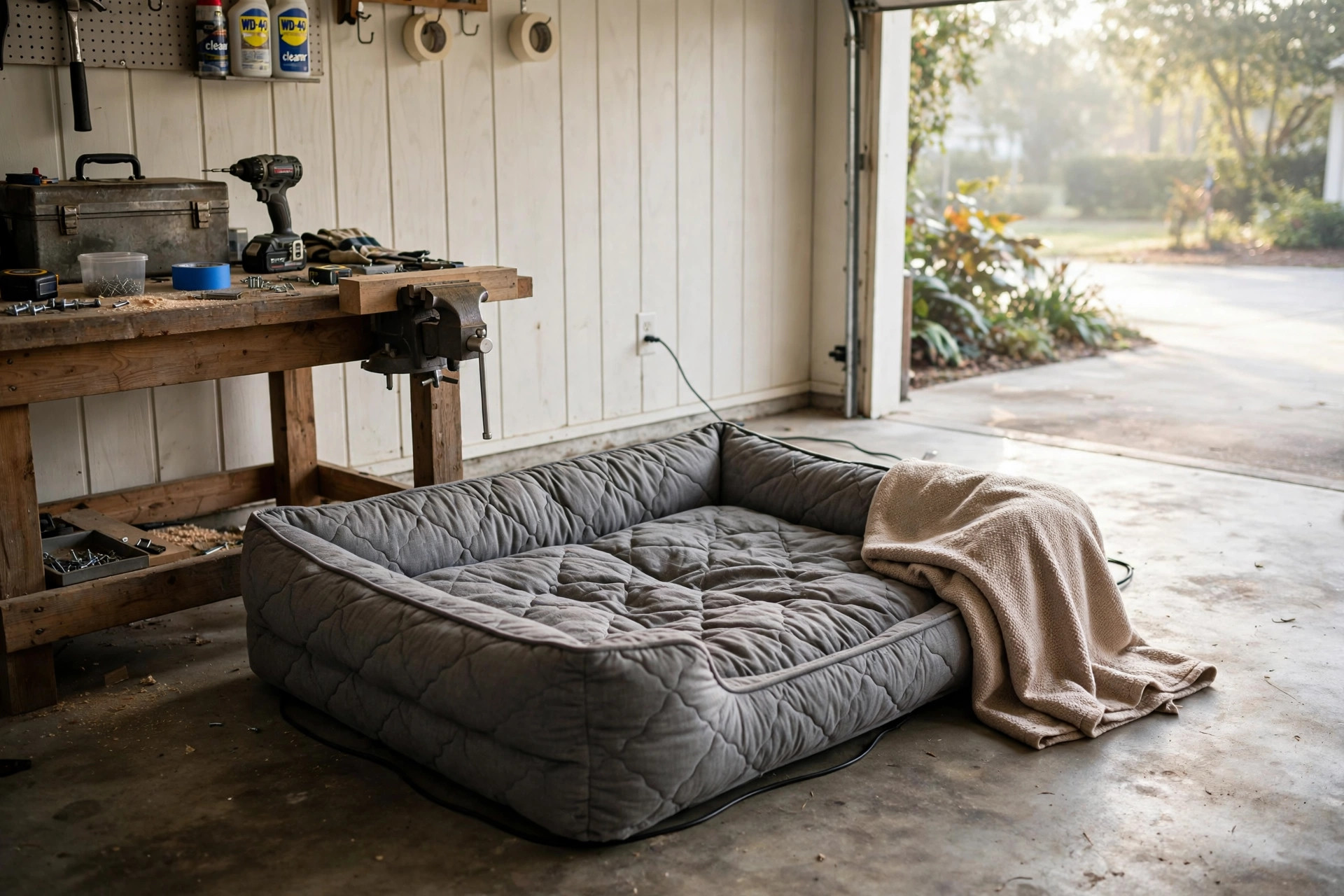

Many dogs spend part of their day outside or sleep in a garage, a barn, or a screened porch. A heated dog bed for garage and outdoor use gives these dogs steady warmth when the air turns cold. This guide explains how such beds work, what to look for, how much they cost, and how to use them safely.
Why It Matters
Cold air can be hard on a dog. Old dogs feel it in their joints. Short-haired breeds lose body heat fast. Puppies cannot control their body heat as well as grown dogs. A heated bed keeps the surface of the bed warm even when the floor is cold. Concrete floors in a garage pull heat away from the body. A heated bed puts the heat back.
Warmth also helps dogs rest. A dog that shivers through the night does not sleep well. Poor rest can make an old dog stiff and sore in the morning. A bed with gentle heat can ease that stiffness. Many owners of senior dogs find that a warm bed helps their pet get up and move more easily. This is why a heated dog bed for garage and outdoor use is a common pick for the family dog that sleeps away from the living room.
There is also the question of the seasons. In the northern states, cold weather can last for months. A garage can stay near freezing for weeks at a time. A heated bed made for outdoor use keeps working in those conditions. It is built to run for long hours without getting too hot.
How to Choose the Right Bed: Heated Dog Bed for Garage and Outdoor Use
Choosing a heated bed starts with a few simple questions. Where will the bed sit? How cold does the spot get? How big is the dog? Answers to these questions point to the right type and size.
The Setting
A garage is sheltered from rain but not from cold. The floor is often bare concrete. The bed needs good insulation under it. A covered porch keeps rain off but lets damp air in. The bed cover must resist moisture. A fully open spot needs a bed that can handle wet weather. Most heated beds work best under some kind of roof. The ASPCA’s cold weather care guidance reminds owners that outdoor dogs still need shelter from wind and rain, and a heated bed is only one part of that care.
The Dog
Measure the dog from nose to tail while it sleeps in its usual curled or stretched pose. The bed should be longer than the dog by several inches. A bed that is too small lets the dog’s legs hang off the warm zone. A bed that is far too large wastes power and takes up space. Large breeds need thick foam to hold their weight off the hard floor. Small breeds do fine with a thinner pad. For a large breed that sleeps in an outdoor kennel, many owners also look at a heated dog house for winter cold climates for full shelter with built-in warmth.
The Heat Source
Most outdoor heated beds plug into a standard wall outlet. They use low wattage, often between 25 and 100 watts. Some use a thermostat that turns the heat on and off to hold a set temperature. Others warm up only when the dog lies on them, using a pressure switch. Pressure switch beds save power because they do not run when the bed is empty. Thermostat beds keep the bed ready at all times.
Types and Options
Heated beds come in a few main types. Each one fits a different kind of use.
Electric Plug-In Pads
These are flat pads with a heating element sealed inside. They sit on top of an existing dog bed or on the floor under a blanket. They are simple and low in cost. Most have a chew-resistant cord. Some are rated for outdoor use and can sit on a porch. They work well in a garage where an outlet is close by. The downside is that they offer little cushion on their own, so many owners pair them with a thick orthopedic bed. A heated pet bed for arthritic older dogs often combines this same heating element with supportive foam.
Self-Warming Reflective Beds
These beds have no cord. They use a layer of reflective material that sends the dog’s own body heat back up. They are useful where there is no outlet, such as a dog run or a far corner of the yard. They cost less than electric beds and need no power. The warmth is gentler than an electric pad. They work best in mild cold rather than deep freeze. They also fold up for travel.
Heated Pads with Orthopedic Foam
These are thick beds with a heating element built into memory foam or dense support foam. They are the most comfortable option. The foam keeps the dog’s weight off the cold floor. The heat soothes joints and muscles. They suit old or stiff dogs that sleep in the garage all winter. They cost more than flat pads, and they are heavier to move. Most are made for sheltered spots rather than open yards.
Raised Heated Cots
Some heated cots hold the dog off the ground on a frame. Air moves under the cot, which keeps the bed drier in damp spots. These work well on porches and in barns. They are easy to clean. They may need a blanket on top for extra warmth in very cold air. If the bed will live on an open patio, a waterproof model matters more than heat alone, so owners often compare a best outdoor dog bed waterproof for patio alongside heated options.
Cost and Price
Prices for a heated dog bed for garage and outdoor use vary with size and type. Simple electric pads often cost between 30 and 60 dollars. Self-warming beds usually cost between 25 and 50 dollars. Orthopedic heated beds for large dogs often cost between 60 and 120 dollars. Raised heated cots can cost between 70 and 130 dollars.
Running costs are low. A 40-watt bed running all day uses about one kilowatt hour of power per day. At common United States power rates, that is roughly 12 to 18 cents a day. A bed with a pressure switch costs even less, because it heats only when the dog lies down. Pet supply retailers such as Chewy and home stores such as Home Depot both carry heated beds, and their listings make it easy to compare wattage and size across models.
Money spent on a heated bed often saves money elsewhere. A warm bed can reduce trips to the vet for cold-related stiffness in old dogs. It can also protect wooden and concrete floors, since a dog that is warm and settled is less likely to scratch at doors to come inside.
Care and Upkeep
Heated beds last longer with simple care. Vacuum the bed cover once a week to remove hair and dust. Wash the removable cover in the machine on a gentle cycle. Do not put the heating element in the washer. Wipe the pad with a damp cloth if it gets dirty.
Check the cord once a month. Look for cracks in the outer cover of the cord. Make sure the plug fits tight in the outlet. A loose plug can spark. Keep the cord out of the dog’s reach as much as possible. Run it along a wall or under a rubber cord cover. Chewing on a live cord is one of the main risks with any heated product.
Store the bed in a dry spot when not in use. Fold it loosely instead of creasing it hard. A hard fold can damage the heating wire inside. Before the first cold snap each year, plug the bed in and let it warm up while you watch. Check that the whole surface heats evenly. If one spot feels much hotter than the rest, stop using the bed and replace it.
Safety
Safety comes first with any heated product. Buy only beds listed by a known testing lab, such as UL or ETL. The label should say the bed is rated for the kind of spot where you will use it. Some beds are rated for indoor use only. A bed for the garage or porch should carry an outdoor or damp-location rating.
Do not let the bed get soaked. Even outdoor-rated beds work best when they stay mostly dry. Keep the bed under a roof or an overhang. Do not cover the bed with thick blankets that can trap heat and raise the temperature too high. One light blanket over the dog is fine.
Watch your dog for the first few nights. Some dogs chew cords. Some dig at new bedding. If your dog chews the cord, the bed is not right for that dog. PetMD and The Spruce Pets both publish guides on pet bedding safety that stress cord protection and close watch during the first days of use.
The U.S. Consumer Product Safety Commission advises care with all heated home products, and its recall pages are worth a look before buying an older or used heated bed. The American Kennel Club also notes that very young puppies, sick dogs, and dogs that cannot move away from heat should not use heated beds without a vet’s advice, since they cannot shift if the bed feels too warm.
Never use a human heating pad as a dog bed. Human pads get much hotter than pet beds. They can burn a dog’s skin. Pet heated beds are made to reach a safe surface temperature, usually around 100 to 102 degrees Fahrenheit, close to a dog’s body heat.
Frequently Asked Questions
Can a heated dog bed stay outside in the rain?
Most heated beds should not sit in open rain. They are made for sheltered spots such as a garage, a covered porch, or under a roof. A few models carry a full outdoor rating. Check the box or the maker page before you place one in the open.
How much power does a heated dog bed use?
Most models use between 25 and 100 watts. That is far less than a space heater. At common power rates, a full day of use costs well under a quarter of a dollar. Pressure switch models use less because they heat only when the dog is on the bed.
Is a heated bed safe to leave on all day?
A bed listed by a testing lab and used as directed can run for long hours. Make sure the cord is protected from chewing and the bed stays dry. Unplug it when you will be away for more than a day. Guides at The Spruce suggest checking heated pet products at the start of each season.
What size heated bed does a large dog need?
Measure the dog while it sleeps. Add at least four inches to the length. Large breeds often need a bed that is 36 inches or longer. The bed should also have thick foam so the dog’s weight does not press straight through to the cold floor.
Will a heated bed help an old dog with stiff joints?
Gentle warmth can ease morning stiffness in many old dogs. It is not a cure for arthritis. If your dog limps or has trouble standing, see a vet for a full check. Reviewers at Consumer Reports note that the best pet products solve one problem well, and for senior dogs that problem is often the cold floor.
Can I wash a heated dog bed?
Wash only the removable outer cover. Never soak the heating element. Wipe the pad with a damp cloth. Let the pad dry fully before you plug it back in.
A Final Word
A heated dog bed for garage and outdoor use is a small cost for real comfort. It keeps the sleeping spot warm through long cold nights. It helps old dogs rest without stiffness. It lets the family dog stay in its usual spot even when the weather turns. Choose the right size, keep it dry, protect the cord, and the bed will serve for many winters.
References
American Kennel Club. (n.d.). Dog care and training resources. https://www.akc.org ASPCA. (n.d.). Pet care and animal welfare resources. https://www.aspca.org Chewy. (n.d.). Pet supplies. https://www.chewy.com Consumer Reports. (n.d.). Product reviews and ratings. https://www.consumerreports.org PetMD. (n.d.). Pet health information. https://www.petmd.com The Home Depot. (n.d.). Home improvement products. https://www.homedepot.com The Spruce. (n.d.). Home and garden advice. https://www.thespruce.com The Spruce Pets. (n.d.). Pet care guides and product reviews. https://www.thesprucepets.com U.S. Consumer Product Safety Commission. (n.d.). Product safety information. https://www.cpsc.gov
Was this guide helpful?

About James Carter
The My Garden US editorial team writes practical, in-depth home and garden guides for American homeowners — tested advice, no fluff.
You May Also Like
Dog Fence Panels for Temporary Yard Enclosure
February 6, 2026 0 views
A Heated Outdoor Cat House for Multiple Cats: A Complete Guide
April 27, 2026 0 views
Cat Window Perch for Sunny Window Lounging
August 7, 2026 0 views