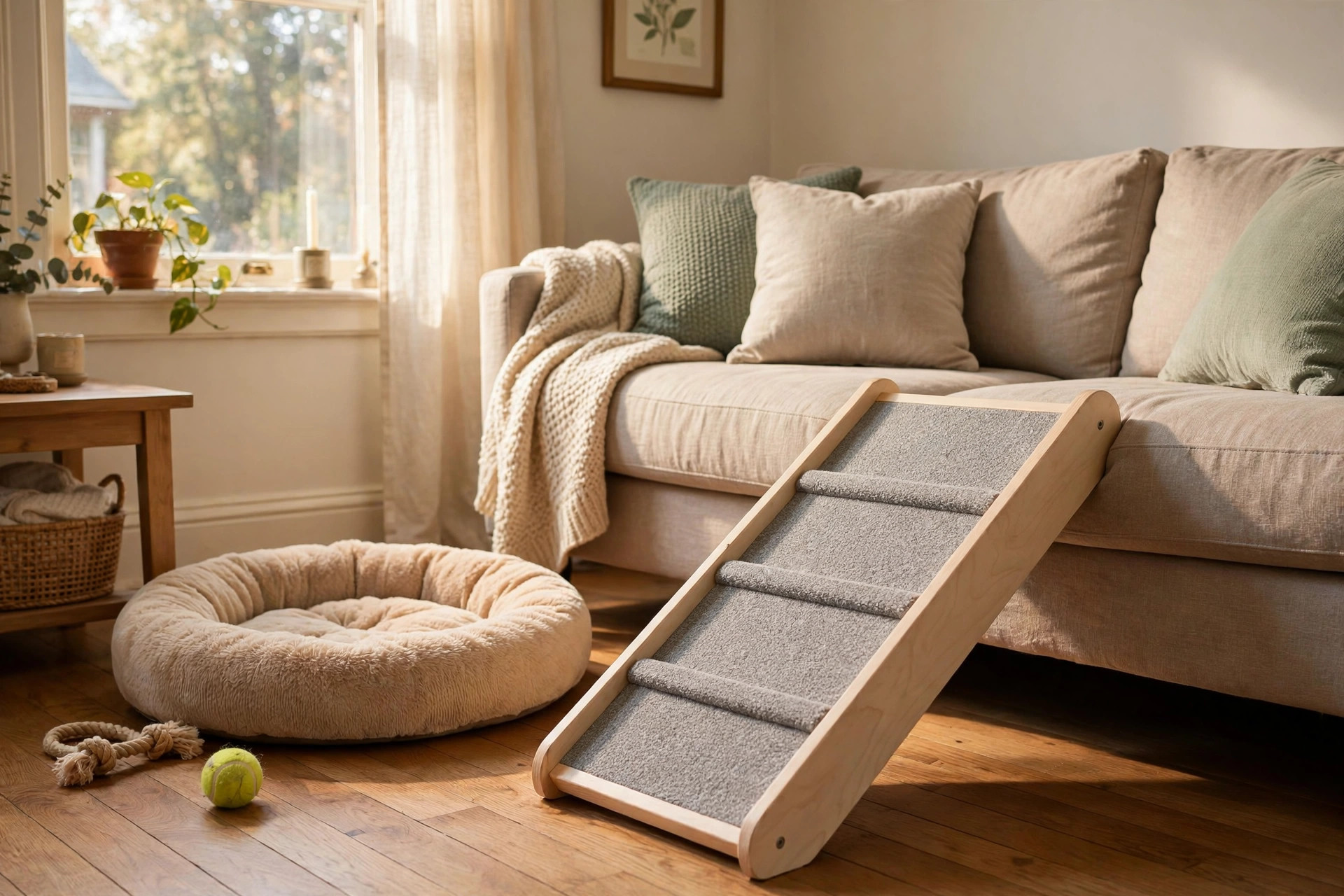

Many small dogs love the couch. They nap on the cushions. They watch the family from a soft seat. They feel close to their people there. When a dog grows old, the jump to the couch gets hard. Joints stiffen. Muscles weaken. A pet ramp for couch for small senior dogs solves this problem. It gives an old dog a gentle slope to walk up instead of a hard jump. The dog keeps its favorite spot. The owner avoids worry. This guide explains why a ramp matters, how to choose one, what it costs, and how to keep it safe.
Why a Ramp Matters for an Aging Small Dog
Small dogs live long lives. Many reach fourteen or sixteen years of age. With age comes arthritis. The cartilage in the joints wears thin. The spine grows stiff. A jump of eighteen inches, which was easy at age three, can cause pain at age twelve. Each hard landing adds stress to weak joints. Over time, the dog may stop trying to climb up at all. It may lie on the cold floor while the family sits on the couch.
A pet ramp for couch for small senior dogs changes this pattern. The dog walks up a gentle slope. There is no jump. There is no hard landing. The joints take far less shock. Many dogs that refused to climb will use a ramp at once. Others learn in a few days with treats and praise.
There is another benefit. Falls are a real danger for old dogs. A small dog that tries to jump and misses can hit the floor hard. It can hurt a hip or a leg. A fall from couch height can even cause a serious break in a tiny breed. A ramp lowers this risk. The American Kennel Club offers guidance on caring for aging dogs and notes how small changes at home help old pets stay safe (https://www.akc.org). The ASPCA also publishes senior pet care resources that stress keeping familiar resting places within reach (https://www.aspca.org).
How to Choose the Right Ramp: Pet Ramp for Couch for Small Senior Dogs
A good ramp fits the dog, the couch, and the room. These points help with the choice.
Measure the Couch Height
Start with a tape measure. Measure from the floor to the top of the seat cushion. Most couches sit between fifteen and twenty inches high. Write the number down. The ramp must reach this height with a gentle slope. PetMD explains how joint problems develop in older dogs and why reducing jump height matters for their comfort (https://www.petmd.com).
Check the Slope
A gentle slope is the whole point of a ramp. Experts suggest a slope of about eighteen to twenty five degrees for small dogs. A steeper slope is hard on weak legs. A longer ramp gives a gentler slope, but it also takes more floor space. Many owners accept a small loss of floor space for a slope their dog will actually use.
Weight, Width, and Surface
A small senior dog needs a ramp that is wide enough for steady feet. Ten to twelve inches of width suits most small breeds. The surface must not be slippery. Look for carpet, ribbed rubber, or a sandpaper-like tread. Smooth wood or plastic can cause a scared dog to slip. The ramp itself must be light enough to move but sturdy enough to hold the dog. Most small-dog ramps support twenty to fifty pounds, which is plenty for a small breed.
Retailers such as Chewy carry many ramp models and list weight limits, widths, and surface types in the product details (https://www.chewy.com). PetSmart and Petco also sell ramps in their stores and online, and staff there can answer basic questions about fit (https://www.petsmart.com) (https://www.petco.com).
Think About the Material
Ramps come in wood, plastic, and foam-covered frames. Wood looks best in a living room and feels very solid underfoot. Plastic is light and easy to clean, though some models feel less steady. Foam-covered frames are soft and quiet but may dent over time. For a small senior dog, stability matters more than looks. A heavy, solid ramp that never wobbles gives an old dog the confidence to climb every day.
Types of Pet Ramps
There are three common types. Each has its strengths.
Solid Wood or Plastic Ramps
These are one-piece ramps. They look neat beside the couch. Many match home furniture. They do not fold, so they take a fixed amount of space. They are often the most stable choice. A solid ramp does not wobble when the dog walks up.
Folding Ramps
Folding ramps bend in the middle or slide into a shorter shape. They suit homes with little space. They can be stored behind a door or under a bed. They are also useful for travel. If the dog rides in a car, the same ramp can serve the couch at home and the vehicle outside. For more on vehicle access, see our guide to a dog ramp for SUV and high bed access.
Ramps Versus Pet Stairs
Pet stairs are a common option. They work well for young, able dogs. For a small senior dog with stiff joints, a ramp is usually kinder. Stairs still require a step up for each tread. Each step is a small jump. A ramp lets the dog walk on a smooth, even slope. The Spruce Pets has published comparisons of ramps and stairs that reach the same conclusion for older pets (https://www.thesprucepets.com).
Cost and Price
A pet ramp for couch for small senior dogs is not an expensive item. Simple folding ramps start near twenty five dollars. Solid wood ramps with carpet covering often cost forty to seventy dollars. Premium models with adjustable height can reach ninety dollars or more. Most owners find a good ramp between thirty and sixty dollars.
Price is not the only thing to watch. A cheap ramp with a slippery surface is a poor buy. A mid-priced ramp with a grippy surface and a solid frame is a better buy. Consumer Reports tests pet products for build quality and safety, and its ratings can help a buyer judge value before spending money (https://www.consumerreports.org). Amazon lists many ramps with customer reviews that show how a model holds up in real homes (https://www.amazon.com).
There are also ongoing costs to think about. Carpet tread wears out and needs replacement strips. Rubber feet dry out and crack. These small parts cost only a few dollars, and replacing them keeps the ramp safe. A well-kept ramp bought for fifty dollars can serve a dog for its whole life.
Some owners build a ramp themselves. A board, some carpet, and rubber feet from a home store can work well. The Home Depot sells all of these parts (https://www.homedepot.com). A homemade ramp must be tested for wobble and slip before the dog uses it alone.
Care and Upkeep
A ramp lasts longer with simple care. Check the surface each month. Carpet tread wears down. Rubber pads come loose. Replace worn parts before they cause a slip. Wipe the surface clean with a damp cloth. Pet hair collects on carpet tread and reduces grip.
Check the frame for wobble. Folding hinges loosen over time. Tighten screws when needed. If the ramp has rubber feet, make sure they grip the floor. Hardwood floors are slippery, and a ramp that slides is dangerous. Place a rug under the base if needed.
Keep the ramp in a dry place. Wood warps in damp rooms. If the ramp sits near a door or a patio, wipe it dry after rain. Store folding ramps flat or standing against a wall. Do not stack heavy items on top of a folding ramp, since this can bend the hinges.
Safety Tips
Safety comes first with any pet product. Put these rules in place from the first day.
Train the dog slowly. Lay the ramp flat on the floor and let the dog walk across it. Give treats. Raise one end a little. Give more treats. Let the dog learn that the ramp is safe. Never force a scared dog up a steep ramp.
Place the ramp so the top rests firmly on the couch seat. There should be no gap between the ramp and the cushion. A gap can trap a small paw. The base should sit flat on the floor, well away from slick surfaces.
Watch the dog during the first week. Some dogs rush up and may tumble. Guide the dog with a hand near its body until it moves at a steady pace. Never leave a very old or blind dog on a ramp without supervision.
Pair the ramp with a soft landing spot. An orthopedic dog bed for senior large dogs placed at the base gives the dog a safe place to rest. For dogs with arthritis, a heated pet bed for arthritic older dogs near the couch adds comfort on cold days.
Frequently Asked Questions
Will my old dog really use a ramp? Most will. Small senior dogs want to stay near their people. If the ramp is gentle and grippy, most dogs learn within a few days. Use treats and patience. A few dogs refuse ramps. For those dogs, lifting them gently or using pet stairs may work better.
What size ramp does a small dog need? A width of ten to twelve inches suits most small breeds. The length depends on the couch height. For a couch of eighteen inches, a ramp of about thirty six to forty two inches gives a gentle slope. Measure the couch first, then match the ramp length to it.
Are ramps better than stairs for senior dogs? For most senior dogs, yes. Stairs ask the dog to lift its legs for each step. A ramp lets the dog walk on one smooth slope. Dogs with arthritis, hip problems, or spinal issues do better with ramps.
Can one ramp serve both the couch and the bed? Yes, if the heights are close. Many folding ramps adjust to more than one height. A ramp that reaches the couch may also reach a low bed. For car access, look for a longer ramp built for vehicles.
How do I stop the ramp from sliding? Use rubber feet on the base. Place the ramp on a rug or carpet. Some ramps have suction cups or non-slip pads for hard floors. Test the ramp by pressing on it firmly before the dog uses it.
How often should I replace a pet ramp? A well-made ramp lasts several years. Replace it when the surface wears smooth, the hinges loosen, or the frame cracks. Check it each month and replace worn parts at once.
A Final Word
An old small dog gives its family years of love. A pet ramp for couch for small senior dogs is a small way to give comfort back. It costs little. It takes little space. It keeps the dog close to the family and off the hard floor. Choose a ramp with a gentle slope, a grippy surface, and a solid frame. Train the dog with patience. Then enjoy the sight of an old friend climbing up to its favorite spot with ease. It is a small kindness that makes a large difference.
For more background, see Petco and PetSmart.
References
American Kennel Club. (n.d.). Dog care and training resources. https://www.akc.org ASPCA. (n.d.). Pet care and animal welfare resources. https://www.aspca.org Chewy. (n.d.). Pet supplies. https://www.chewy.com Petco. (n.d.). Pet supplies and services. https://www.petco.com PetMD. (n.d.). Pet health information. https://www.petmd.com PetSmart. (n.d.). Pet supplies and services. https://www.petsmart.com The Home Depot. (n.d.). Home improvement products. https://www.homedepot.com The Spruce Pets. (n.d.). Pet care guides and product reviews. https://www.thesprucepets.com
Was this guide helpful?

About David Wilson
The My Garden US editorial team writes practical, in-depth home and garden guides for American homeowners — tested advice, no fluff.
You May Also Like
Indoor Dog Potty for Apartment Living Training: A Simple Guide
May 29, 2026 0 views
Pet Water Dispenser Gravity Fed for Dogs: A Simple Guide for Owners
March 18, 2026 0 views
Best Dog Door for Sliding Glass Door Installation
September 5, 2026 0 views