
The geothermal heat pump cost per ton in the USA is one of the first numbers a homeowner asks for when the old furnace fails. The question is simple. The answer takes some care. This guide explains the price in plain words, ton by ton, so you can plan with clear eyes.
A ton in heating and cooling is a measure of power. One ton equals 12,000 BTUs per hour. Most American homes need between two and five tons of heating and cooling. A small ranch house may need three tons. A large two-story home may need five. The geothermal heat pump cost per ton in the USA tells you how much of that power will cost you to install, before you sign any contract.
Why the Cost Per Ton Matters
Most contractors price a geothermal system as a full job, not per ton. They give you one big number for the whole project. That number can range from $15,000 to $45,000 or more. When you break it down by ton, you can compare bids from different companies in a fair way. You can also see when one bid is much higher than the others for no good reason.
Per-ton pricing also helps you judge size. An oversized system costs more to install and cycles on and off too often, which wears it out early. An undersized system runs all day and never keeps the house warm. When you know the cost per ton, you can ask hard questions about why the contractor picked the size they did.
There is one more reason. Federal tax credits and state rebates for geothermal systems are large. When you know your per-ton cost, you can work out what the system will really cost you after the credit. That true cost is what matters to your bank account.
What the Geothermal Heat Pump Cost Per Ton USA Really Is
For a home in the United States, the geothermal heat pump cost per ton usually falls between $4,000 and $8,000 per ton of installed capacity. Some jobs run lower. Some run higher. The range is wide because the ground work is the costly part.
To see what this means, take a four-ton system for an average home. At $5,000 per ton, the job costs $20,000. At $7,000 per ton, the same size system costs $28,000. The size did not change. The ground, the house, and the labor changed the price.
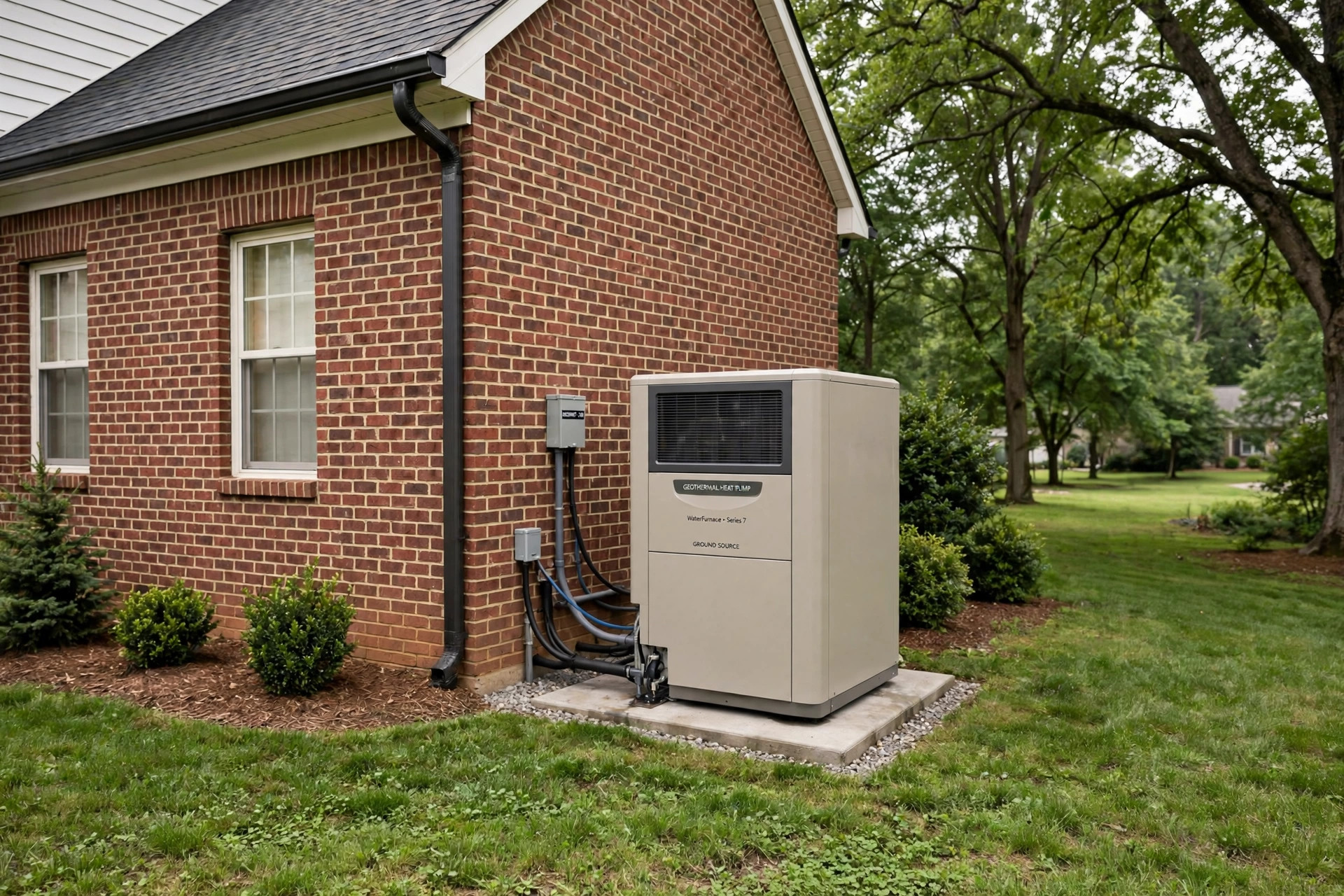
Contractors often split the price into two parts. The indoor heat pump unit itself costs about $2,000 to $5,000 per ton. The ground loop, which is the pipe buried in the yard, costs another $2,000 to $4,000 per ton. Together they form the total cost per ton that you see in a bid.
Why the Ground Loop Costs So Much
The ground loop is the heart of the system. It is a set of plastic pipes buried in the earth. Water mixed with antifreeze flows through the pipes and picks up heat from the ground in winter. In summer it drops heat back into the ground. Digging or drilling to place these pipes takes heavy machines and skilled crews. That is where much of your money goes.
Why Prices Differ From State to State
The geothermal heat pump cost per ton in the USA changes with the ground under your feet. Soft sandy soil in the Southeast is easy to dig. Rocky ground in New England is slow and costly. Local labor rates differ as well. A job in a big city often costs more than the same job in a small town. Local rules for drilling wells also add cost in some states.
How to Choose the Right System
Picking a geothermal heat pump is a big choice. It will serve your home for twenty-five years or more. A few plain rules will help you choose well.
Get the Size Right
Ask for a load calculation. This is a room-by-room study of how much heat your house loses in winter and gains in summer. A good contractor does this on paper before naming a size. Do not accept a bid where the size is only a guess. If you are comparing air source heat pump pros and cons, note that geothermal systems are sized with the same care, but they cost more to install and less to run.
Look at the Loop Field Options
You will hear three main types. A horizontal loop needs a large yard with trenches six feet deep. A vertical loop needs deep holes drilled like wells, which suits small lots. A pond loop drops pipes into a nearby lake or pond. Vertical loops cost the most per ton. Pond loops cost the least, but few homes have a pond that fits the rules.
Check the Equipment Ratings
Look at the EER and COP ratings on the unit. EER measures cooling power per watt. COP measures heating power per watt. Higher numbers mean lower electric bills. ENERGY STAR keeps a public list of rated geothermal units, and the ENERGY STAR site is a good place to start your reading.
Ask About the Desuperheater
Many geothermal units carry a desuperheater. This small device takes spare heat from the system and uses it to warm your hot water tank. In summer it can give you nearly free hot water. In winter it gives you part of it. Ask whether the bid includes one.
Cost and Price in Detail
Now we come to the numbers. The figures below reflect common 2026 prices across the United States. Your own bid may sit above or below them.
A full geothermal job for a typical home runs $18,000 to $40,000 before any tax credit. For a three-ton system, expect $15,000 to $24,000. For a five-ton system, expect $25,000 to $40,000. These ranges cover the unit, the loop, the ducts or pipes, the labor, and the permits.
If you are pricing heat pump installation near you in 2026, remember that geothermal bids run two to three times higher than air source heat pump bids for the same tonnage. The trade is the running cost. A geothermal system can cut heating bills by thirty to sixty-five percent compared with a normal furnace and air conditioner.
The federal tax credit changes the picture. Homeowners may claim a large percent of the total cost, including the ground loop, as a tax credit. State and utility rebates add more savings in many regions. After credits, the true cost per ton often drops close to the cost of a high-end air source system. Ask your tax adviser for the exact credit in your year.
Running Costs to Expect
A geothermal heat pump uses electricity to move heat, not to make it. That is why it is so thrifty. A well-sized system often costs $500 to $1,200 a year in electricity for heating and cooling, depending on your climate and your rates. Compare this with $1,500 to $3,000 a year for an old gas furnace and air conditioner in the same house. The savings pay back the higher install cost in five to twelve years for many families.
What Can Push the Price Up
Rocky soil adds drilling cost. A long run between the loop field and the house adds pipe and digging. Old ducts that must be resized add labor. A pond loop needs permits and water tests. Each of these can lift the geothermal heat pump cost per ton in the USA above the normal range.
Care and Upkeep
One fine thing about geothermal systems is the small upkeep they need. The loop pipes sit buried in the earth and should last fifty years or more with no care at all. The indoor unit has few moving parts that wear out.
Change the air filter every one to three months, the same as with any forced-air system. Keep the vents in the house open and clear. Once a year, have a technician check the refrigerant charge, the water flow, and the controls. This yearly visit usually costs $150 to $300. Watch the pressure gauge on the loop circuit if your unit has one. A slow drop in pressure may point to a small leak that should be fixed early.
Flush the loop water if the maker calls for it. Some systems need fresh antifreeze every few years. Keep a simple log of your electric bills. If the bills climb for no reason, call your contractor. A small fault caught early is always cheap to fix.
For general upkeep tips written for homeowners, the Family Handyman library offers many step-by-step guides on heating equipment.
Safety
Geothermal heat pumps are among the safest heating systems made. They burn no fuel inside the home, so there is no carbon monoxide risk and no flame. The outdoor part of the system makes little noise, and the loop water is sealed in pipes.
Still, take care with the install. Drilling a vertical loop uses a heavy rig. Keep children and pets clear of the work area. The trenches for a horizontal loop can be deep. A good crew fences the dig site. After the job, the ground heals over the pipes, and the yard looks as it did before.
Have all wiring done by a licensed electrician. The heat pump uses high-voltage power. Never open the unit panels yourself. If you smell a sweet chemical odor near the unit, leave the room and call your contractor. That smell may mean a refrigerant leak, which needs a trained hand.
The U.S. Department of Energy publishes safety and design facts on geothermal systems, and their pages are worth a read before you sign.
Frequently Asked Questions
How much does a geothermal heat pump cost per ton in the USA?
The geothermal heat pump cost per ton in the USA most often falls between $4,000 and $8,000 per ton installed. The indoor unit is about $2,000 to $5,000 per ton, and the ground loop adds $2,000 to $4,000 per ton. Rock, labor rates, and loop type move the number within that range.
How many tons does my house need?
Most homes need two to five tons. The right size comes from a load calculation, not from a guess based on floor space alone. Ask your contractor for this written study before you agree to a size.
Is geothermal cheaper than a furnace over time?
Yes, for many homes. The install costs more, but the monthly bills are far lower. Many families break even in five to twelve years. After that, the yearly savings are profit. If you are weighing a heat pump versus a furnace on cost, geothermal sits at the top of the price ladder but also at the top of the savings ladder.
Does a geothermal system need ductwork?
Most do, if they heat with forced air. If your home has ducts in good shape, the new system can often use them. Water-to-water units can feed radiant floors instead. Your contractor will tell you which type fits your house.
How long do geothermal heat pumps last?
The indoor unit often lasts twenty to twenty-five years. The ground loop can last fifty years or more. Makers such as Carrier, Trane, Lennox, Rheem, and Goodman all publish warranty terms for their geothermal lines.
Are there tax credits for geothermal in 2026?
Yes. The federal tax credit for home geothermal systems remains large, and it covers the ground loop cost too. Details change by tax year, so check the current rules on the ENERGY STAR and Department of Energy sites, or ask your tax adviser.
A Short Final Word
The geothermal heat pump cost per ton in the USA is only the start of the story. The price is high because the work is deep and skilled. The reward is low bills, quiet comfort, and a system that serves for decades. Get three written bids. Ask for a load calculation. Read the guides at This Old House and Family Handyman while you wait. Then choose with a clear head and a warm house.
References
Carrier. (n.d.). Heating and cooling systems. https://www.carrier.com ENERGY STAR. (n.d.). Energy efficient products. https://www.energystar.gov Family Handyman. (n.d.). DIY home repair and maintenance. https://www.familyhandyman.com Goodman. (n.d.). Heating and cooling equipment. https://www.goodmanmfg.com Lennox. (n.d.). Heating and cooling systems. https://www.lennox.com Rheem. (n.d.). Heating, cooling, and water heating. https://www.rheem.com This Old House. (n.d.). Home renovation guidance. https://www.thisoldhouse.com Trane. (n.d.). Heating and air conditioning. https://www.trane.com U.S. Department of Energy. (n.d.). Energy efficiency and renewable energy. https://www.energy.gov
Was this guide helpful?

About Lisa Anderson
The My Garden US editorial team writes practical, in-depth home and garden guides for American homeowners — tested advice, no fluff.
You May Also Like

Best Portable Humidifier for Bedroom USA: A Simple Buying Guide
August 19, 2026 0 views
Basement Humidity Control Tips for USA Homes
March 24, 2026 0 views
Boiler Replacement Cost Near Me 2026: What Homeowners Should Know
July 25, 2026 0 views