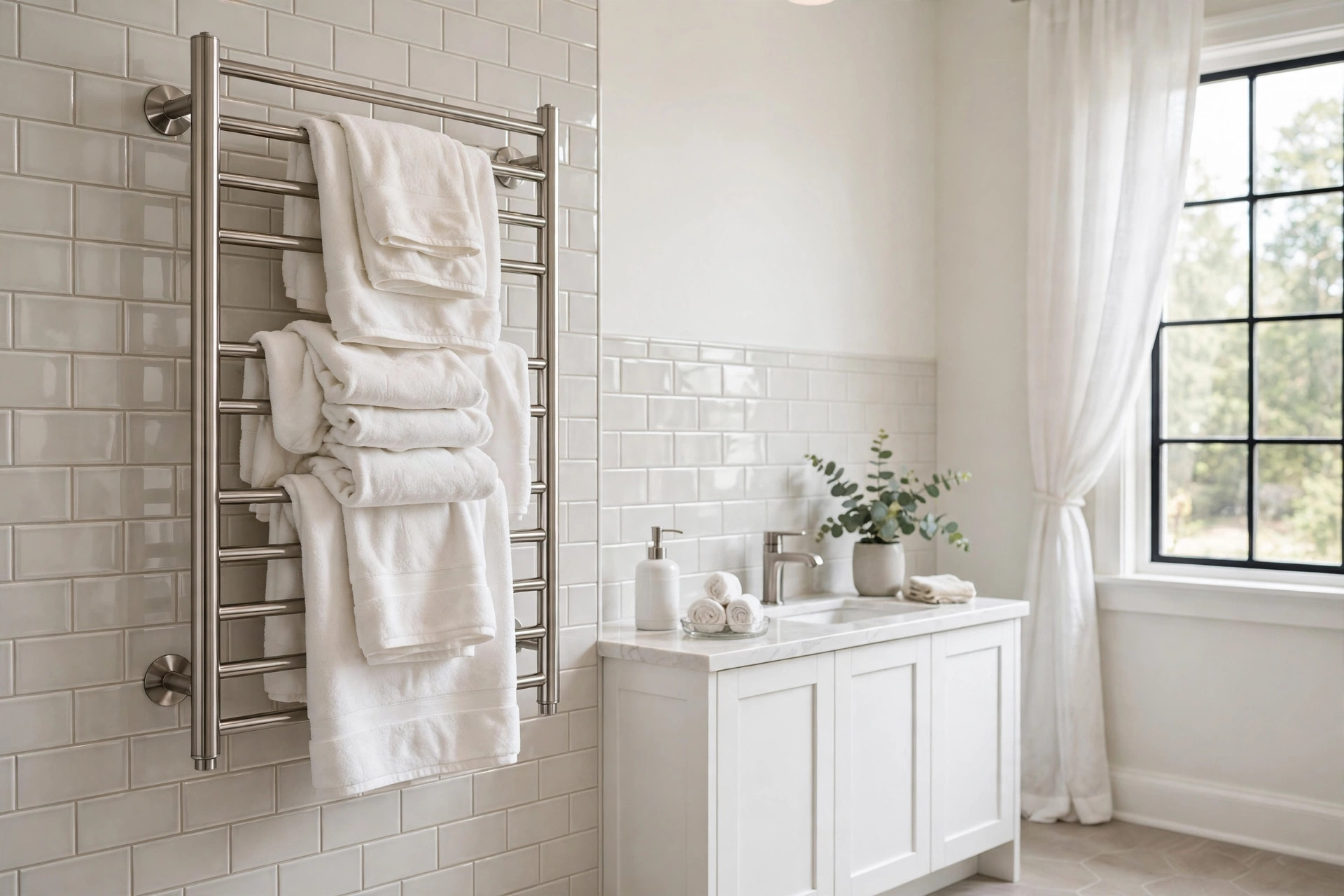

A warm towel after a shower is a small comfort that many people enjoy. This bathroom towel warmers american homes guide explains what these fixtures do, what kinds are sold in the United States, and how to choose one that fits your bath. A towel warmer is a rack made of heated metal bars. It warms towels before use and dries them between uses. American homeowners have used plain towel bars for many years. Heated versions are now common in new baths and remodels. They add comfort on cold mornings. They also reduce the damp smell of towels that never fully dry. They do not replace a room heater. They serve one clear job: dry, warm towels. This guide covers the reasons to buy one, the features that matter, the main types, the costs, the care they need, and the safety rules to follow.
Why It Matters
Wet towels are a daily problem in many homes. A towel that stays damp for hours can smell musty. In warm and humid parts of the country, the problem is worse. Towels hang in closed bathrooms with little air flow. Mildew can grow in the fibers. A towel warmer shortens the drying time. Heat drives off moisture. The towel is ready for the next use.
Comfort is the second reason. Stepping out of a hot shower into a cool room is not pleasant. A warm towel softens that moment. Many buyers first try a towel warmer in a hotel. They then want the same feeling at home. Makers of bath fixtures such as Kohler list towel warmers among the upgrades that make a bath feel finished.
The third reason is room care. A warmer reduces the amount of damp cloth hanging in the room. Less moisture in the air means less work for the exhaust fan. Walls and paint last longer. Bathing suits, washcloths, and bathrobes dry on the bars as well. One fixture serves the whole family.
What to Look For When You Choose: Bathroom Towel Warmers American Homes Guide
Start with size. Measure the wall where the unit will hang. A warmer must fit the space with room to spare. Count the bars. More bars hold more towels. A small unit with six bars suits a single bath. A tall ladder unit with twelve bars suits a family bath. Check the width of the bars against your largest bath sheet.
Look at the material. Stainless steel is the most common choice. It resists rust in damp rooms. Chrome over steel costs less and shines well. Brass and bronze finishes suit traditional baths. Match the finish to your faucets and other hardware for a calm, planned look. A maker such as Moen offers bath hardware lines with matching finishes, which helps when you plan a remodel.
Heat output matters next. Electric models list their power in watts. Most fall between 60 and 150 watts. That is less than one old light bulb, yet it is enough to dry towels. Hydronic models list output in BTUs. Ask the seller what room size the rating suits.
Check the heat-up time. Most units reach working heat in 15 to 30 minutes. Some heat in under 10 minutes. A built-in timer saves energy. It turns the unit on before your morning shower and off when you leave. A thermostat keeps the bars at a steady heat.
Decide on power. Plug-in models use a wall outlet and need no electrician. Hardwired models connect to the house wiring and look cleaner. Hydronic models tie into the hot water heat system. Each choice changes the cost of installation.
If you only need a simple bar to hold a dry towel, our brushed towel holders buying guide covers those plain fixtures in detail.
Types and Options
Three main kinds are sold in the United States. Each suits a different home and budget.
Electric Plug-In Models
A plug-in warmer is the simplest type. It hangs on the wall and plugs into a standard outlet. Installation takes less than an hour. No electrician is needed in most cases. The unit heats on its own schedule or with a timer switch. These models cost the least to buy. They work well in rentals and in baths far from the heating system. The cord is the main drawback. It shows along the wall. Some buyers find it untidy. The outlet must be a ground fault type for safety near water.
Electric Hardwired Models
A hardwired warmer connects directly to the home wiring. There is no visible cord. The look is clean. A wall timer or switch controls it. An electrician should make the connection. This adds to the cost. Hardwired models suit new baths and full remodels, where the wall is already open. They heat as fast as plug-in models. Many buyers choose them for a master bath that will be used for years. Home improvement guides at This Old House often note that hidden wiring is best planned before the walls are closed.
Hydronic Models
A hydronic warmer uses hot water from the home heating system. Pipes carry hot water through the bars. The unit stays warm while the boiler runs. It adds real heat to the room in winter. It costs the most to install. A plumber must tie it into the system. It suits homes with hot water or steam heat. It is common in older homes in the Northeast. It does not work in summer unless the boiler runs. Some models combine both systems. They heat with water in winter and with electricity in summer. Large retailers such as Home Depot stock hydronic models for these homes.
Many buyers pair a towel warmer with heated floor kits for a bath that feels warm from the floor up.
Cost and Price
Prices vary widely. A small plug-in warmer costs about 100 to 250 dollars. A mid-size hardwired unit costs 250 to 600 dollars. Large designer models in brass or with many bars cost 600 to 1,500 dollars or more. Hydronic models cost 300 to 900 dollars for the unit alone.
Installation adds to the total. Hanging a plug-in model yourself costs nothing but your time. An electrician charges 150 to 400 dollars to wire a hardwired unit, depending on the area and the work needed. A plumber charges 300 to 800 dollars or more to tie a hydronic unit into the heating system. Get two or three quotes before you agree.
Running costs are low. A 100-watt unit used two hours a day draws about 6 kilowatt hours a month. At typical United States rates, that costs less than one dollar a month. A timer cuts the cost further. Home cost guides such as Bob Vila and HGTV confirm that daily use adds only a small amount to the power bill.
Care and Upkeep
A towel warmer needs little care. Wipe the bars with a soft, damp cloth once a week. Dry them after wiping. Harsh cleaners can harm the finish. Chrome and stainless steel need only mild soap and water. Brass and bronze need the care the maker suggests.
Check the timer or thermostat each season. Make sure it still turns the unit on and off at the right times. A timer that sticks in the on position wastes power. Replace batteries in digital timers when they run low.
Hydronic models need more attention. Once a year, check the valves and joints for drips. Air can collect inside the bars. A small bleed valve at the top lets the air out. Turn the valve with a key until water flows steady, then close it. This keeps the heat even across the bars. If the system loses pressure often, call a plumber.
Electric models need almost no service. The heating parts are sealed. If a unit stops heating, first check the breaker and the timer. If both are fine, the element may have failed. Many makers sell replacement parts. A unit that trips the breaker again and again should be checked by an electrician. Safety notes from The Spruce remind owners to keep electric bath fixtures dry at the connection points.
Safety
Heat and water demand care. Follow these rules.
Use a ground fault outlet or circuit for any electric model near a sink, tub, or shower. The ground fault device cuts power fast if water reaches the wiring. This is a basic rule in American bathrooms.
Mount the unit on solid backing. A warmer with wet towels is heavy. Screw it into wall studs or use strong wall anchors. A loose unit can fall and break pipes or wiring.
Keep clear space around the bars. Do not press plastic, paper, or aerosol cans against a hot warmer. Hang only cloth on the bars. Keep the cord away from the hot bars on plug-in models.
Do not use a towel warmer to dry shoes, rubber mats, or anything with glue or plastic parts. Heat can melt them or release fumes. Towels, robes, and washcloths are safe. Delicate wool or silk may shrink in heat, so check the garment tag.
Keep children in mind. The bars get warm, not burning hot, on most models. Still, teach young children not to climb on the unit. Place the unit where a small child cannot pull it down.
Look for a safety listing. Units tested by a known laboratory carry a mark such as UL or ETL. This mark means the design passed standard safety tests. Large stores such as Lowe’s list these marks in the product details.
Frequently Asked Questions
Will a towel warmer heat my whole bathroom?
No. A towel warmer heats towels, not rooms. It gives off some warmth, but it cannot replace a heater or a heated floor. In a small bath, you may feel a slight rise in air temperature near the unit. In a large bath, you will feel almost no change. Buy a warmer for dry towels. If the room is cold, fix the room heat first.
How much electricity does a towel warmer use?
Most models use 60 to 150 watts. That is about the same as one old-style light bulb. Used two hours a day, a 100-watt unit costs well under one dollar a month at average United States rates. A timer lowers the cost by shutting the unit off when no one needs it.
Can I install a towel warmer myself?
A plug-in model is a fair do-it-yourself job for most homeowners. You mount the brackets, hang the unit, and plug it in. A hardwired model needs an electrician. A hydronic model needs a plumber. If you are not sure which type you have, ask a professional before you start.
Do towel warmers help in humid climates?
Yes. Humid air slows drying. Heat speeds it up. In damp climates, towels on a warmer dry much faster than towels on a plain bar. Faster drying means less musty smell and less mildew. Many owners in the South and along the coasts buy warmers for this reason alone.
How long does a towel warmer last?
A well-made electric unit lasts 10 to 15 years or more. Stainless steel models resist rust and age well. Hydronic models can last as long as the heating system they join. The finish may dull over time in hard water areas. Gentle cleaning keeps it looking good. Keep the receipt and the maker warranty in a safe place.
A Final Word
A towel warmer is a modest upgrade with a daily reward. It costs less than many bath fixtures. It uses little power. It keeps towels dry and ready. Choose the right size, the right power type, and a finish that matches your bath. Install it safely. Care for it with simple cleaning. The result is a small touch of comfort every morning and every night. If you are planning a wider bath update, our LED bathroom mirror guide covers another popular finishing touch.
References
Bob Vila. (n.d.). Home improvement advice. https://www.bobvila.com HGTV. (n.d.). Home and garden ideas. https://www.hgtv.com Kohler. (n.d.). Bathroom and kitchen fixtures. https://www.kohler.com Lowe’s. (n.d.). Home improvement products. https://www.lowes.com Moen. (n.d.). Faucets and plumbing fixtures. https://www.moen.com The Home Depot. (n.d.). Home improvement products. https://www.homedepot.com The Spruce. (n.d.). Home and garden advice. https://www.thespruce.com This Old House. (n.d.). Home renovation guidance. https://www.thisoldhouse.com
Was this guide helpful?

About Robert Taylor
The My Garden US editorial team writes practical, in-depth home and garden guides for American homeowners — tested advice, no fluff.
You May Also Like
Shower Niche Inserts Deals Near Me: A Plain Guide to Built-In Shower Shelves
September 24, 2026 0 views
Double Sink Vanities for California Homes: A Practical USA Guide
January 27, 2026 0 views
Rain Shower Heads for Sale USA: A Plain Buying Guide
July 8, 2026 0 views