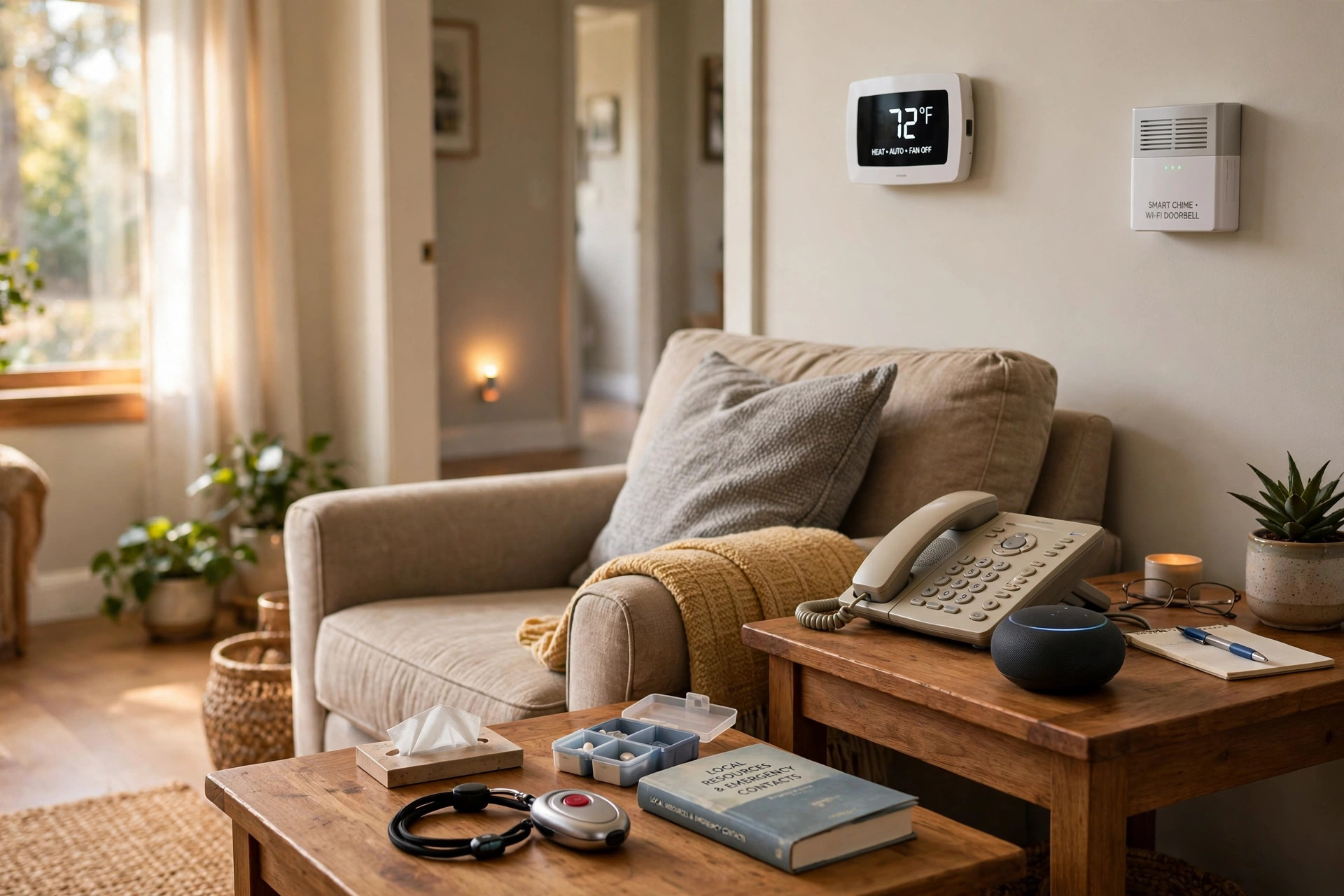

This smart home for elderly parents checklist USA families trust will help you plan a safer home for a mother or father who lives alone or with a spouse. The goal is simple. Keep the home safe, cut the risk of falls, and give family members a way to check in without taking away independence. You do not need to buy everything at once. Start with the room where the risk is highest, then add devices step by step. Each device should be easy to use, hard to break by accident, and simple for an older adult to understand.
Why This Checklist Matters for American Families
Most older Americans want to stay in their own homes. Many do live alone, and most will keep living alone for years. A fall in the night, a stove left on, or a front door left unlocked can turn into a real emergency. Smart devices can catch these small problems early. A voice speaker can call for help when hands are weak or a phone is out of reach. A motion light can stop a fall on the way to the bathroom at night.
The checklist approach works best because it stops families from buying random gadgets. You walk through each need, you check it off, and you move on. The Ring website and the SimpliSafe website both show how simple home security can be for older adults when the system is set up with care. Before you spend money, talk with your parents. Ask what worries them most. Some worry about the front door. Some worry about the stairs. Let their answers guide your list.
What to Look for When You Choose Devices: Smart Home for Elderly Parents Checklist Usa
Simple Controls
The best devices for older adults have one clear job and one clear control. A voice speaker should answer plain commands. A light should turn on when a person walks in. A video doorbell should show who is at the door on a tablet or a phone with one tap. Avoid devices that need three apps or long menus. If a device needs a manual, it is probably too complex for this job.
Loud and Clear Sound
Hearing gets weaker with age. Pick doorbells and alarms that are loud and have a clear tone. Many door chimes let you raise the volume. Voice assistants let you set a louder default voice. Test every sound in the actual home before you finish the setup. What sounds fine in a store can be too soft in a big living room.
Battery Backup and Fallbacks
Power outages happen. A video doorbell without a subscription or a security camera may stop working when the power fails unless it has a battery. Pick devices with a backup battery where it counts. Medical alert features should always have a non-smart fallback, like a wearable button that calls a monitoring center even if the internet is down.
Privacy and Consent
Your parents are adults. Tell them what each camera sees and who can watch. Put cameras only in shared spaces like the entryway or the living room, never in bedrooms or bathrooms. Many cameras, like the ones sold by SimpliSafe and ADT, have a clear on and off shutter so the older adult can see when the camera is live. Respect their wishes. A system they hate is a system they will unplug.
Types of Devices on the Checklist
Voice Assistant Speaker
A voice speaker is often the first device on a smart home for elderly parents checklist. One small speaker can set medicine reminders, read the weather, turn lights on and off, and call family members hands free. Put one in the bedroom and one in the living room. Set up the most used contacts by name. Google products are described on store.google.com, where you can see which speaker fits a small home.
Smart Locks and Keypads
A smart lock lets family members open the door with a code. No one needs to copy keys. Your father can unlock the door from the couch with a voice command. Some locks lock themselves after a set time, which helps when memory slips. Check the battery level often. Keep a normal key hidden outside the home for the worst case.
Video Doorbell and Entry Cameras
A doorbell camera lets an older adult see who is at the door without getting up. This matters for safety and for comfort. Many families prefer a video doorbell without a subscription so there are no monthly fees to forget. Related guides like our post on the best video doorbell without subscription USA explain the fee-free options in more detail. Our best wireless doorbell camera reviews USA guide compares models that work without new wiring.
Motion Sensor Lights
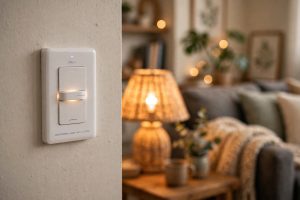
Dark halls and stairs cause many falls. Motion sensor lights turn on the moment a person walks in. Put them in the hallway, the bathroom, and at the top and bottom of the stairs. Night lights that plug into the wall work well for older adults who do not like phone apps. Our article on motion sensor flood light reviews 2026 USA covers bright options for yards and porches.
Smart Thermostat
Older adults feel cold more and may forget to change the heat. A smart thermostat holds a steady temperature and can be adjusted from a family member’s phone. Set safe limits so the heat cannot drop too low in winter. Lock the settings with a code if small hands or confused fingers change them by accident. Reviews at Consumer Reports compare thermostats that save energy and stay simple.
Stove and Leak Sensors
A forgotten stove is one of the greatest fears in a home with an older cook. Stove monitors can alert a family member when the burner stays on too long. Leak sensors sit under the sink and behind the washing machine. They send an alert when water touches them. Both devices cost little and prevent big damage.
Medical Alert System
A wearable alert button is not a luxury. It is the heart of the checklist for many families. When pressed, it calls a monitoring center that can reach a family member or send help. Pick a system with a long battery life and a clear speaker. Make sure the button can be pressed with one weak finger. ADT and SimpliSafe offer monitoring plans with medical alert add-ons.
Smoke and Carbon Monoxide Alarms
Replace old alarms with smart alarms that send alerts to a family member’s phone. A smart smoke alarm can tell you which room the smoke is in. The Consumer Product Safety Commission explains current alarm standards and recall news, which is worth checking before you buy.
Cost and Price Ranges in the USA
A basic setup can start under three hundred dollars. That covers a voice speaker, two motion lights, a smart plug for a lamp, and a doorbell chime. A mid-range setup runs from five hundred to one thousand dollars. That adds a video doorbell, a smart lock, a thermostat, and leak sensors. A full setup with a monitored medical alert system and cameras can reach one thousand five hundred to two thousand five hundred dollars plus monthly fees of twenty to fifty dollars.
Buy in stages. Start with the bedroom and bathroom, where falls are most common. Add the entryway next. Add cameras and monitoring last. Watch for holiday sales at big stores. Reviews at CNET and PCMag often track price drops on popular devices. The Verge also covers smart home news and new product releases.
Care and Upkeep for the Long Term
Smart devices need small, steady care. Write a short upkeep list and tape it inside a kitchen cabinet. Check doorbell and lock batteries every three months. Test the medical alert button once a month with your parent so they remember how it works. Update the apps twice a year. Clean camera lenses with a soft cloth when the picture looks dull.
Ask a neighbor or a nearby relative to be a backup helper. Give them the app login or a door code. If your parents live far away, a local contact is worth more than any device. Keep the Wi-Fi router in a central spot and write the Wi-Fi password on a card kept near the router. When the internet fails, label each device with a small note that says what to do. Simple notes beat long manuals.
Safety Rules for Smart Homes of Older Adults
Safety comes before convenience. Never let a camera point at a bed or a bathroom. Use strong, unique passwords on the home Wi-Fi and on every smart app. Turn on two-step sign-in where the app offers it. Update device software when the app asks. The Consumer Product Safety Commission publishes safety alerts for connected products, so check for recalls once a year.
Talk openly with your parents about what the devices do. Show them the camera view on your phone. Show them how to turn the voice speaker off. If a parent wants a device removed, remove it. Trust matters more than coverage. A home full of devices that feel like spies will not feel like a home.
Frequently Asked Questions
What is the first device to buy for an aging parent who lives alone?
Start with a voice assistant speaker in the bedroom. It costs little, sets up fast, and gives your parent a hands-free way to call you, set reminders, and turn on lights. Add motion sensor lights in the hallway the same week. These two changes cut the two biggest night risks: not being able to call for help and walking in the dark.
Do smart devices work if my parents do not own a smartphone?
Yes, many do. A voice speaker, a motion light, and a plug-in night light need no phone at all. A smart lock can open with a keypad code. A medical alert button works with no phone and no app. Family members can watch cameras and adjust the thermostat from their own phones while the parents touch nothing.
Are video doorbells too hard for older adults to use?
Most are not, if you set them up right. Pick a doorbell with a simple chime inside the home. Teach your parent to look at the tablet or the TV app with one tap. Many families also answer the doorbell on their own phones so the parent does not have to act at all. Simple chimes with no monthly fee are the easiest option.
How much does a full smart home safety setup cost per year?
After the first purchase, the yearly cost is mostly the monitoring fee. A medical alert plan runs about three hundred to six hundred dollars a year. A camera plan with cloud video can add one hundred to two hundred dollars a year, though many families skip it by choosing cameras with local storage. Devices with no monthly fee keep the yearly cost near zero.
Can smart home devices invade my parent’s privacy?
They can, which is why consent matters. Tell your parent exactly what each device records and who can see it. Skip indoor cameras if your parent is uneasy. Use entryway and doorbell cameras only. Give your parent the power to mute the speaker and close the camera shutter. Review the setup together every few months and adjust as wishes change.
What should I do during a power or internet outage?
Keep a charged power bank near the bedside. Pick a medical alert button with its own cellular link so it works without home internet. Write down the non-smart backup for each need: a flashlight by the bed, a regular key for the lock, a battery radio. Test the backup plan once with your parent so it feels normal, not scary.
A Short Final Word
A smart home for elderly parents is not about the newest gadgets. It is about quiet, steady safety. One voice speaker, one bright motion light, one loud doorbell, and one reliable alert button can change a home. Walk through this smart home for elderly parents checklist USA with your mother or father, check off what matters most to them, and add the rest in time. The best system is the one your parents understand, accept, and keep using every day.
References
ADT. (n.d.). Home security and automation. https://www.adt.com CNET. (n.d.). Technology news and reviews. https://www.cnet.com Consumer Reports. (n.d.). Product reviews and ratings. https://www.consumerreports.org Google Store. (n.d.). Smart home devices. https://store.google.com PCMag. (n.d.). Technology product reviews. https://www.pcmag.com Ring. (n.d.). Smart home security devices. https://www.ring.com SimpliSafe. (n.d.). Home security systems. https://www.simplisafe.com The Verge. (n.d.). Technology news and reviews. https://www.theverge.com U.S. Consumer Product Safety Commission. (n.d.). Product safety information. https://www.cpsc.gov
Was this guide helpful?

About James Carter
The My Garden US editorial team writes practical, in-depth home and garden guides for American homeowners — tested advice, no fluff.
You May Also Like
Best Wireless Doorbell Camera Reviews USA: A Plain Guide to Choosing Well
September 3, 2026 0 views
Lorex vs Swann Security System Comparison USA: Which Brand Protects Your Home Best
April 1, 2026 0 views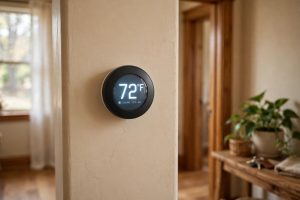
Best Learning Thermostat for Seniors USA: A Plain Guide to Simple Comfort
May 4, 2026 0 views