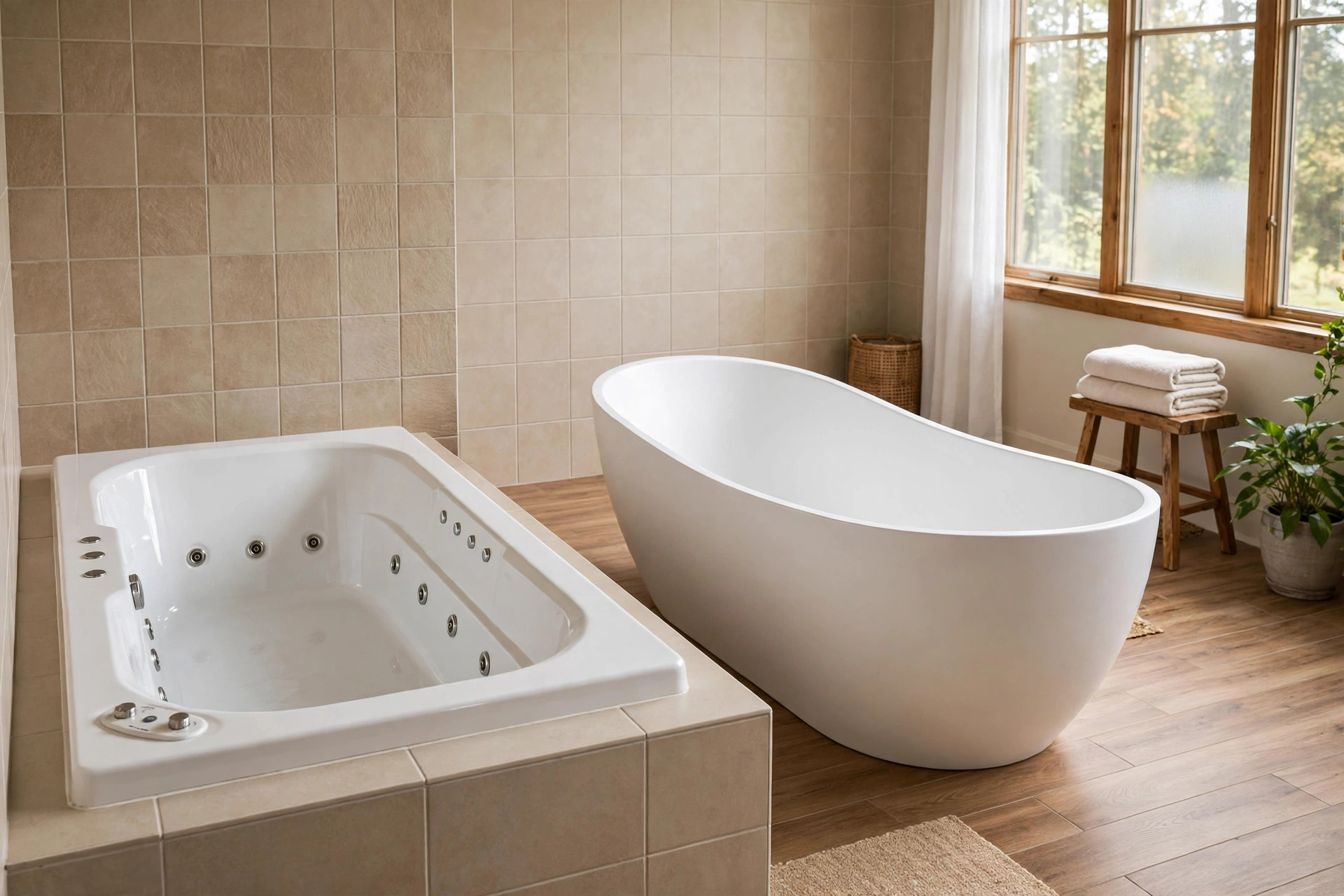

A bathroom project in the United States often comes down to one choice. The buyer must pick between a jetted tub and a soaking tub. This jetted tub vs soaking tub comparison USA guide is written for the homeowner in the United States. It explains what each tub does, what it costs, and what it asks of the owner over time. The two tubs can look alike at first glance. The real difference sits under the rim. One moves the water with jets and a motor. The other holds still water and heat with a deep, simple shell. Each has a fair claim on the buyer. Each carries a real cost. The right pick depends on the budget, the bath habits, and the room itself. The sections below walk through the full picture. The goal is a decision that rests on facts, not on guesswork.
Why This Choice Matters
A tub is one of the hardest fixtures to change later. Pipes, floor work, and wiring are set once the tile goes down. A change after that means a second remodel. That is why the choice deserves care up front.
A jetted tub brings motors, pumps, and jets into the bathroom. It needs a dedicated power line in most cases. It also needs a plumber who knows the drain and supply layout for the model. A soaking tub is simpler. It is a deep shell with no moving parts. It still needs sound plumbing and a level floor. But the work is closer to a normal tub swap.
The choice also shapes the water bill and the heater. Jetted tubs hold more water than most standard tubs. A soaking tub holds still more in some deep models. The home water heater must keep up with the fill. Buyers who are unsure about heater size should read a guide on water heater replacement cost near me 2026 before they order a large tub. A heater that runs dry in the middle of a fill is a common and costly surprise.
Resale value plays a part too. A working jetted tub can draw buyers who want a spa feel at home. A broken jetted tub can do the opposite. A soaking tub holds its appeal longer because there is less to break. Real estate agents in many markets note that simple, deep tubs photograph well and age well.
How to Choose: What to Look For: Jetted Tub vs Soaking Tub Comparison Usa
The Room and the Frame
Start with the floor. A tub full of water is heavy. A jetted tub adds the weight of the pump and motor. A deep soaking tub adds still more water weight. Many older floors need extra joists or a support frame. A contractor should check the structure before the tub ships. Guides from This Old House at thisoldhouse.com walk through common bath framing checks in plain terms.
Measure the door and the hall as well. Freestanding soaking tubs are wide and tall. They do not bend around a tight corner. Alcove models fit the three wall box of a standard bath. Take the tape to every turn on the path to the room.
The Hot Water Supply
A jetted tub can call for 60 to 80 gallons per fill. A deep soaking tub can call for 70 to 100 gallons. A standard 40 gallon tank heater cannot fill either one with hot water alone. Many buyers size up the heater or add a tankless unit when they plan a big tub. A piece on hot water recirculating pump cost installed can help too, since a recirculation loop shortens the wait for hot water at the tub.
Power and Wiring
Most jetted tubs need a 120 volt grounded line on its own breaker. Air tubs with a heated blower can need more. The line must be set by a licensed electrician. Local code in the United States almost always calls for ground fault protection near water. A soaking tub needs no power at all, unless it carries a heated backrest or chromatherapy lights.
How You Bathe
Be honest about habits. A buyer who takes a bath twice a week will use a jetted tub well. A buyer who showers nine days out of ten will gain little from the jets. Soaking tubs suit the slow bath crowd. They hold heat in deep water and invite a long stay. The jetted tub suits the buyer who wants massage and motion. It is less about stillness and more about active water.
Types and Options
The Jetted Tub
The jetted tub comes in two main types. The whirlpool tub pushes water through jets with a pump. The stream is strong and aimed at the body. The air tub pushes warm air through small holes in the shell. The feel is soft and full of fine bubbles. Some models mix both in one shell.
Whirlpool jets are best for sore muscles and for buyers who like a firm massage. Air tubs are best for gentle skin stimulation and for buyers who dislike a hard jet stream. Both types need a full cleaning cycle on a regular plan. Soap film and body oils build up in the lines. A skipped cleaning leads to stale water and a musty smell.
Brands such as Kohler and Moen publish care and sizing guides on their sites. Kohler bath products are shown at kohler.com. Moen bath fixtures are shown at moen.com. Delta Faucet lists tub fillers and trim at deltafaucet.com. These maker pages are useful for checking rough-in sizes before a plumber is booked.
The Soaking Tub
The soaking tub is defined by depth, not by jets. The shell sits deeper than a standard tub so the bather can sink to the shoulders. Common shapes are the alcove tub, the freestanding tub, and the drop-in tub set in a deck.
Alcove soaking tubs cost the least and fit the standard three wall box. Freestanding models cost more and ask for more floor space. They also ask for a floor mounted or wall mounted filler. Drop-in models sit in a tile or stone deck and give a built-in look. The Family Handyman site at familyhandyman.com has plain step guides for deck and trim work around drop-in tubs.
Material matters. Acrylic is light, warm to the touch, and easy to keep. Cast iron is heavy, holds heat long, and lasts for decades. Fiberglass costs less but can flex and dull with age. Stone resin sits in the middle on price and holds heat well.
Cost and Price
Price of the Tub
In the United States, a basic jetted tub often starts near 800 dollars. Mid range models run 1,500 to 3,000 dollars. High end whirlpool and air tubs can pass 5,000 dollars. Soaking tubs often start lower. A basic acrylic alcove soaking tub can cost 400 to 900 dollars. Freestanding soaking tubs run 900 to 3,000 dollars. Cast iron and stone resin models can reach 4,000 dollars or more.
Installation Cost
Install cost swings with the job. A simple swap in the same spot may run 1,000 to 2,500 dollars for labor and parts. A jetted tub adds electrical work. A new circuit can add 300 to 800 dollars. Floor support work can add 500 to 2,000 dollars. Moving the drain or the supply lines adds plumber hours. The Home Depot project guides at homedepot.com list common bath install steps that help a buyer read a quote with care. Lowe’s bath guides at lowes.com give a second point of view on the same work.
Buyers should get three written quotes. Each quote should list the tub model, the plumbing scope, the electrical scope, and the finish work. A vague quote hides the real price.
Running Cost
A jetted tub costs more to run. The pump draws power each use. The large fill uses more hot water and more water overall. Some towns in dry states charge tiered water rates. A big tub can push a home into a higher tier. A soaking tub has no pump cost. Its running cost is the water and the heat for the fill. That is still more than a shower, but less than a jetted tub.
Care and Upkeep
A soaking tub asks for little. Wipe the shell with a soft cloth and a mild cleaner. Rinse after each bath. Check the caulk line where the tub meets the wall twice a year. That is most of the job.
A jetted tub asks for more. The maker manual sets the cleaning plan. Most plans call for a jet purge every month or two. The purge runs hot water with a cleaner through the lines. The filter and the intake cover need a wipe as well. Skip the plan and the lines grow film. The first sign is a faint smell when the jets start.
Water quality shapes upkeep too. Hard water leaves scale on jets and on the shell. A whole house filter or softener can cut the scale. Aquasana lists home water options at aquasana.com. The EPA drinking water pages at epa.gov explain common water quality tests for a home supply.
When a jetted tub stops working, the repair path is narrow. Pump seals, jet bodies, and control boards are model parts. Some parts go out of stock when a model is old. A soaking tub has no such parts. Its repairs are the same as any tub: caulk, drain, and overflow.
Safety
Both tubs are deep. Deep water calls for care. A non-slip surface or a fitted mat cuts the fall risk. A grab bar helps the bather stand and step out. Grab bars must screw into studs or blocking, not just tile.
Water heat deserves respect. Set the heater so the tub tap cannot scald. Most safety groups advise a bath temperature at or below 120 degrees at the tap. Test the water with a wrist or elbow before a child steps in. Never leave a small child alone in a filled tub.
Jetted tubs add one more note. The suction intake must have a proper cover. A loose or missing cover is a hazard. Check it each month as part of the cleaning plan. Keep the power disconnect within reach and marked.
If a leak appears under the tub or behind the wall, act fast. Water in the floor frame grows mold and rots wood. A guide on emergency plumber near me 24 hour cost can help a homeowner plan for the fast call before it is needed.
Frequently Asked Questions
Which tub is better for sore muscles?
A jetted tub is the better pick for sore muscles. The whirlpool jets aim moving water at the back, legs, and shoulders. An air tub gives a softer feel that some buyers prefer. A soaking tub gives heat and stillness, which helps too, but it gives no massage.
Which tub costs less over ten years?
The soaking tub costs less over ten years in most cases. It has no pump to run and no jet parts to replace. Its water and heat cost per bath is also lower. The jetted tub costs more to buy, more to wire, more to run, and more to fix.
Do jetted tubs use more water?
Yes, in most cases. Jetted tubs hold more water than a standard tub. Deep soaking tubs can hold as much or more, but the jetted tub is filled more often by its typical buyer. Showers use less water than either tub in almost every case.
Is a jetted tub hard to clean?
It takes more work than a soaking tub. The monthly jet purge is the main task. It takes about 20 minutes. The shell wipes down like any tub. Buyers who dislike upkeep often pick the soaking tub and never look back.
Can I put a jetted tub where my old tub was?
Sometimes. The space must fit the new tub body. The floor must carry the weight. A new power line must reach the motor. The drain and overflow must line up or be moved. A plumber and an electrician should both see the room before the order is placed.
Which tub adds more resale value?
It depends on the buyer. A clean, working jetted tub can charm a buyer who wants a spa bath. A simple deep soaking tub charms a wider group and carries less risk. A jetted tub that is old, loud, or stained can hurt a sale. When in doubt, the soaking tub is the safer resale pick.
A Final Word
The jetted tub vs soaking tub comparison USA buyer faces is really a trade between motion and stillness. The jetted tub gives massage, power, and a spa feel. It asks for more money, more wiring, and more care. The soaking tub gives depth, heat, and calm. It asks for less of everything else. Match the tub to the room, the heater, and the honest bath habit. Then get the quotes in writing and check the floor before the tub ships. A tub chosen this way will serve the home for years, whichever side of the comparison wins.
References
Aquasana. (n.d.). Water filtration systems. https://www.aquasana.com Delta Faucet. (n.d.). Kitchen and bathroom faucets. https://www.deltafaucet.com Family Handyman. (n.d.). DIY home repair and maintenance. https://www.familyhandyman.com Kohler. (n.d.). Bathroom and kitchen fixtures. https://www.kohler.com Lowe’s. (n.d.). Home improvement products. https://www.lowes.com Moen. (n.d.). Faucets and plumbing fixtures. https://www.moen.com The Home Depot. (n.d.). Home improvement products. https://www.homedepot.com This Old House. (n.d.). Home renovation guidance. https://www.thisoldhouse.com U.S. Environmental Protection Agency. (n.d.). Protecting human health and the environment. https://www.epa.gov
Was this guide helpful?

About James Carter
The My Garden US editorial team writes practical, in-depth home and garden guides for American homeowners — tested advice, no fluff.
You May Also Like
Best Vapor Barrier for Crawl Space USA: A Complete Guide
March 24, 2026 0 views
PEX vs Copper Plumbing Cost Comparison USA: Which Pipe Saves You Money
July 28, 2026 0 views
Hybrid Water Heater vs Gas Comparison USA
February 25, 2026 0 views