Nobody enjoys standing at the sink, waiting for the shower to turn warm while gallons of good water run down the drain. A recirculating pump solves this plain nuisance by keeping hot water ready at the tap. But before you call a plumber, you need a clear picture of the hot water recirculating pump cost installed in an ordinary American home. Prices shift with the type of system, the layout of your pipes, and the rates in your town. This guide lays out the numbers, explains what drives them, and shows how to pick a system that fits your house and your budget.
Why a Recirculating Pump Matters
In most homes, the water heater sits far from the kitchen or the far bathroom. When you turn on the tap, cold water fills the pipes first and must be pushed out before hot water arrives. In a large house, the wait can last a minute or longer, and the wasted water can amount to several gallons a day. A recirculating pump keeps hot water moving through the pipes, either all the time or at set hours, so the wait nearly disappears.
How a Recirculating Pump Works: Hot Water Recirculating Pump Cost Installed
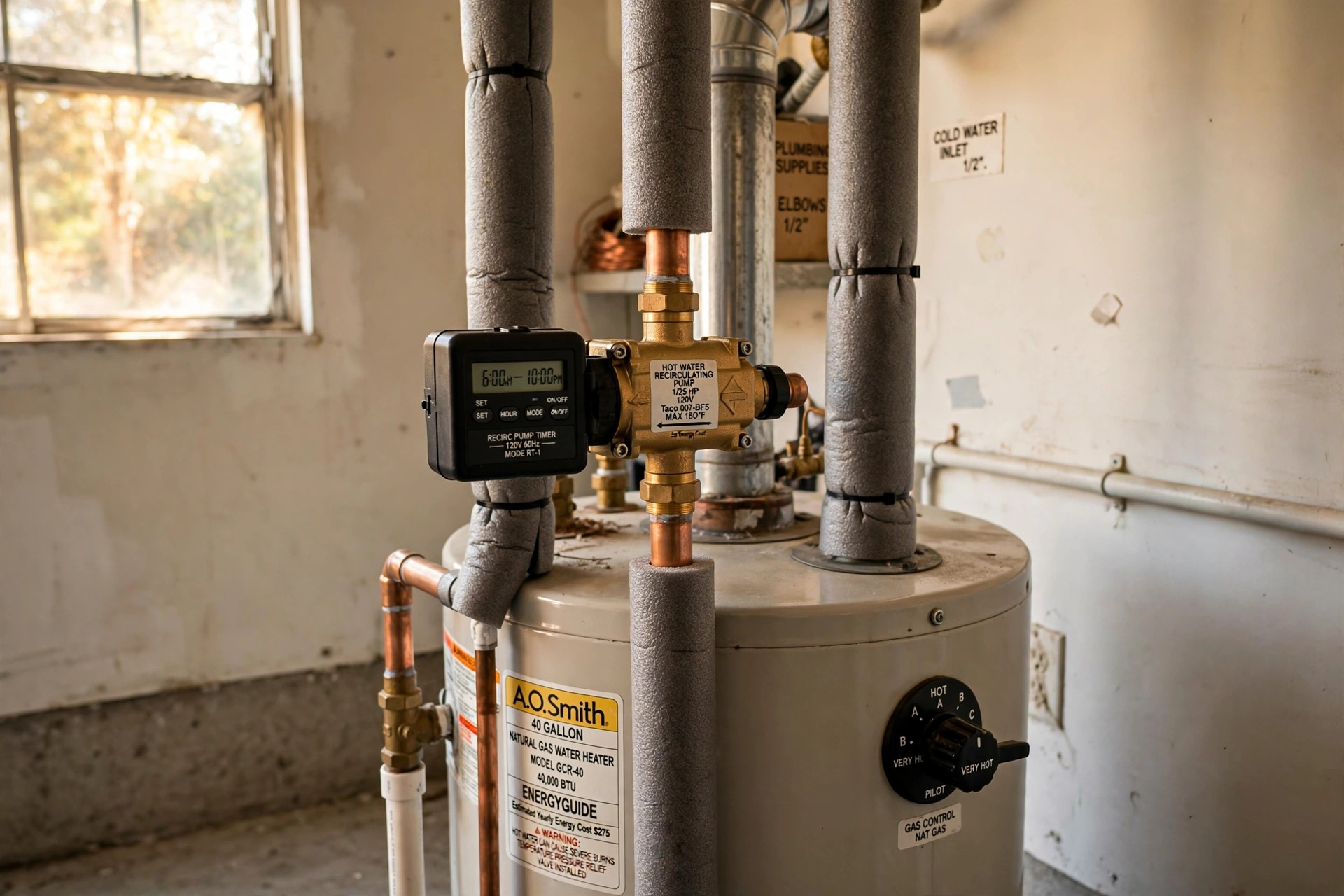
A hot water recirculating pump is a small electric pump, usually mounted on or near the water heater. It moves hot water from the tank into the hot water lines and back again in a loop. With hot water always near the fixtures, the tap runs hot within seconds.
There are two main designs. The first uses a dedicated return line that carries cooled water back to the heater. This design is common in new construction, where the extra pipe is easy to add while walls are open. The second design works with existing homes. It uses the cold water line as the return path, with a small valve installed under the farthest sink. This retrofit style needs no new pipes inside the walls. Both designs rely on a control. Simple timers run the pump during morning and evening hours. Motion sensors or smart controls run it only when someone is near a fixture. More advanced pumps read water temperature and run only until the line is warm. These controls cut electric use and keep the system from adding heat to the house in summer.
Hot Water Recirculating Pump Cost Installed
The hot water recirculating pump cost installed for a typical home falls between about 400 and 1,600 dollars. That range covers the pump itself and a standard professional installation. Most homeowners report a total near 600 to 900 dollars when a plumber handles the whole job.
The pump unit alone costs between 150 and 500 dollars. Basic timer models sit at the low end. Pumps with smart temperature sensors, built-in check valves, and quiet motors sit at the high end. A few premium models with stainless steel bodies and adaptive controls pass 600 dollars before any labor.
Labor usually adds 200 to 800 dollars. A simple retrofit install at the water heater, with a valve under the farthest sink, takes one to three hours. A dedicated loop install in an existing home costs far more, often 1,200 to 2,500 dollars in total, because it requires new piping through walls and ceilings. The numbers below assume a normal install with fair access to the pipes.
| Part of the job | Typical price range | |—|—| | Pump unit, basic timer model | 150 to 300 dollars | | Pump unit, smart or sensor model | 300 to 500 dollars | | Retrofit valve and fittings | 30 to 80 dollars | | Labor, simple retrofit | 200 to 500 dollars | | Labor, complex install | 500 to 900 dollars | | Permit and inspection, if required | 50 to 200 dollars |
What Raises or Lowers the Price
Several plain facts decide where your bill lands in that range. Distance matters most. The farther the water heater from the farthest fixture, the longer the pipe run and the more time the job takes. A one-story ranch home with the heater near the middle costs less to fit than a two-story house with the heater in a far corner.
Access matters next. If the water heater stands in an open garage or basement, the plumber works fast. If it hides behind a finished wall or inside a tight closet, the work slows and the cost rises.
The plumbing material matters too. Copper, PEX, and CPVC each need different fittings and skills. Old galvanized pipe can be a real problem. It may be too weak to cut into safely, and replacing a section adds hours.
Power matters as well. The pump needs an electric outlet nearby. If none exists, an electrician must add one, which adds 100 to 300 dollars. Some pumps plug into a standard outlet. Others need a dedicated circuit.
Local codes matter. Some towns require a permit and an inspection for any plumbing change. Some require a thermal expansion tank if your home lacks one. Ask your plumber what your town asks for before the work starts.
Types of Recirculating Systems
Three setups cover almost every home. Knowing them helps you ask the right questions when you get quotes.
Full loop systems. A dedicated return pipe runs from the farthest fixture back to the heater. This is the fastest design, with hot water at every tap in seconds. It is the natural choice in new builds. Adding it to a finished home means opening walls, so the hot water recirculating pump cost installed climbs sharply.
Retrofit systems. A comfort valve sits under the farthest sink and returns cooled water through the cold line. No new pipes. Install is quick, often under three hours. Most older homes get this type.
Point-of-use systems. A small pump sits at a single far fixture, such as a master bath. It gives instant hot water at that one spot for the lowest cost. Homes with only one problem faucet may prefer this.
When you shop, compare flow rate, motor noise, and the control type. A pump that runs on a timer uses less power than one that runs all day. A pump with a temperature sensor uses less than either. Check the warranty. Three to five years is common on decent units.
Choosing the Right Pump for Your Home
Start with your main complaint. If every bathroom waits long, a whole-house retrofit pump is the answer. If only the kitchen is slow, a point-of-use unit may be enough. Measure the wait. Fill a pitcher at the farthest tap and time how long it takes to run hot. Long waits and big pipe runs point to a full-size pump. Short waits may mean a smaller, cheaper model does the job.
Look at your water heater. Tank and tankless heaters both work with recirculating pumps, but tankless units need a compatible pump and control. Check the heater maker before you buy. Brands such as Moen, Delta Faucet, and Kohler publish guidance on matching fixtures and controls to home systems, and their product pages help you compare control options.
Think about power use. A pump that runs around the clock adds to the electric bill and reheats water that cools in the pipes. Timers and sensors keep this cost small. The Department of Energy offers plain advice on hot water efficiency, including why insulation on hot water pipes pairs well with a recirculating pump. Energy Star also notes that cutting wasted hot water trims both the water bill and the energy bill. Insulated pipes lose less heat, so the pump runs less often.
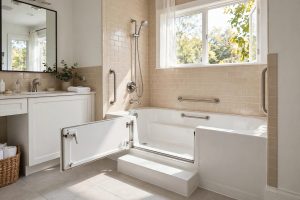
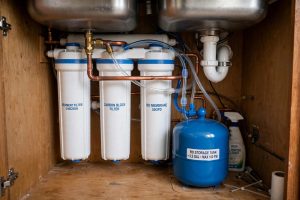
If you plan other plumbing work, bundle it. Adding a pump while a plumber replaces a water softener, for example, can cut the trip cost. Many homeowners weigh the water softener installation cost near me at the same time they price a recirculating pump, since both jobs start at the water heater. The same logic holds for larger fixtures. If a bath remodel is already planned, a pump is cheap to add while walls are open. Readers comparing big fixture projects often check the walk in tub cost installed near me alongside smaller upgrades, and the same plumber can often quote both in one visit. Even filtration projects pair well. Households looking at the whole house water filtration cost installed can have the pump and the filter mounted in one visit to the utility area.
Installation Day: What to Expect
A normal retrofit install takes a few hours. The plumber shuts off the water and the heater, mounts the pump on the hot outlet of the tank or on the wall nearby, and wires it to a timer or sensor. Under the farthest sink, a small comfort valve ties the hot and cold lines together. The plumber then restores water, bleeds air from the lines, and sets the timer to your morning and evening hours. You will hear a soft hum near the heater when the pump runs. Some owners set the timer for two hours in the morning and two in the evening and find that covers the whole day.
Ask the plumber to show you the timer or app controls before he leaves. Ask how to change the schedule. Ask where the shutoff valves are. Keep the manual in a safe place. Many pumps need almost no care, but you should know how to reset the control after a power cut. Step-by-step install guides at This Old House and the Family Handyman show what the job looks like so you can follow along with confidence.
Care and Upkeep
A recirculating pump is a low-care device. Once a year, look at it. Check for drips at the fittings. Listen for a change in the hum. A pump that grows loud or runs hot may have air in the lines or a failing bearing. Bleeding the air is simple and often fixes the noise. If the pump stops moving water, the check valve may be stuck, and a plumber can clear it in one visit.
In areas with hard water, scale builds inside pumps and valves. This is the same mineral trouble that shortens the life of heaters and faucets. A water softener or regular descaling helps. Keep pipe insulation in good shape. Wet or fallen insulation wastes the heat the pump works to keep in the pipes.
Pumps last about ten years. When the motor wears out, replacement is often cheaper than repair. A straight swap of the same model takes an hour, since the pipes and wiring are already in place.
Safety Notes
Plumbing work touches water, power, and sometimes gas. Turn off the right breakers before any electrical work. If your heater burns gas, keep the area clear and call a licensed plumber for any gas connection. Hot water at 140 degrees can scald in seconds. Most homes set the heater at 120 degrees, which is safer and still plenty hot. If anyone in the house is very young or elderly, consider a mixing valve that caps the tap temperature. Retail guides at the Home Depot and Lowe’s describe these valves in plain terms. Independent testing groups such as Consumer Reports also review home safety products and can help you judge quality before you buy.
Never block the pressure relief valve on a tank heater to make room for the pump. That valve is a safety device. The pump must be plumbed so the relief valve stays open and clear.
Frequently Asked Questions
How long does a hot water recirculating pump take to pay for itself? For most families, the payback comes from saved water and time rather than a lower bill. A home that wastes ten gallons a day waiting for hot water saves over 3,600 gallons a year. At typical water rates, that is a modest saving. The real return is comfort. If your town has high water rates, the payback is faster.
Does a recirculating pump raise the electric bill? A little, yes. A small pump uses about as much power as a light bulb. Timer and sensor controls keep it near 25 to 50 watts and only run it when needed. That adds a few dollars a month.
Can I install a recirculating pump myself? A handy homeowner can install a basic retrofit kit in a few hours. If you are not sure about plumbing or wiring, hire a pro. A bad connection can leak inside a wall for months before you see it.
Will it work with a tankless water heater? Often yes, but not always. Some tankless heaters need a specific recirculating setup or a small buffer tank to avoid short cycling. Check the heater manual before you buy the pump.
Does the pump make noise? A good pump hums softly. If a pump bangs or rattles, air is likely trapped in the line, and bleeding it usually solves the problem.
How do I set the timer? Set it for the hours your family uses hot water, such as 6 to 8 in the morning and 6 to 9 at night. Many owners add a short midday window for laundry. Smart pumps learn your habits or use motion sensors, so they need no schedule at all.
A Short Final Word
The hot water recirculating pump cost installed is fair for what it buys. A few hundred dollars for the unit, a few hundred more for a clean professional install, and the daily wait for hot water is gone. Pick the system that fits your pipes, put it on a timer, and insulate the hot lines. Get two or three quotes, ask about permits, and make sure the plumber shows you the controls. Do that, and the pump will serve you quietly for a decade.
References
Consumer Reports. (n.d.). Product reviews and ratings. https://www.consumerreports.org Delta Faucet. (n.d.). Kitchen and bathroom faucets. https://www.deltafaucet.com ENERGY STAR. (n.d.). Energy efficient products. https://www.energystar.gov Family Handyman. (n.d.). DIY home repair and maintenance. https://www.familyhandyman.com Kohler. (n.d.). Bathroom and kitchen fixtures. https://www.kohler.com Lowe’s. (n.d.). Home improvement products. https://www.lowes.com Moen. (n.d.). Faucets and plumbing fixtures. https://www.moen.com The Home Depot. (n.d.). Home improvement products. https://www.homedepot.com This Old House. (n.d.). Home renovation guidance. https://www.thisoldhouse.com U.S. Department of Energy. (n.d.). Energy efficiency and renewable energy. https://www.energy.gov
Was this guide helpful?

About Robert Taylor
The My Garden US editorial team writes practical, in-depth home and garden guides for American homeowners — tested advice, no fluff.