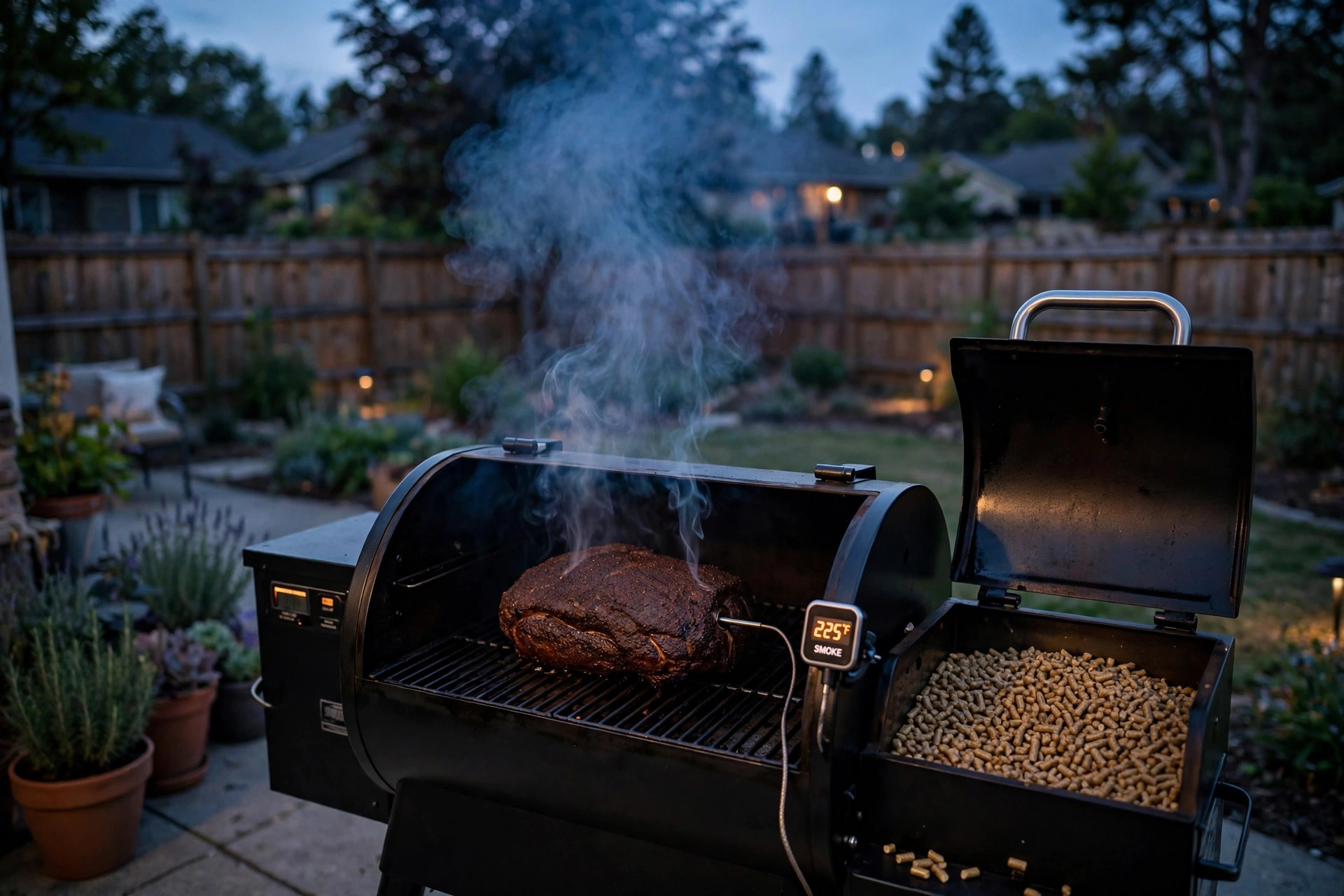
A brisket is a big cut of beef. It needs many hours of slow heat. The best BBQ wood pellets for brisket make this long cook much easier. They feed your grill with steady fuel and rich smoke. Pick the right bag and your meat turns tender, juicy, and full of flavor. Pick the wrong one and you get bitter taste and ash.
Many new cooks ask which pellets work best. This guide gives a plain answer. It covers wood types, flavors, cost, storage, and safety. Read on and you will buy with confidence.
Why the Right Pellets Matter for Brisket
Brisket is a hard muscle from the chest of the steer. It has thick bands of fat and tough fiber. Only low heat over many hours can break it down. Most cooks run their grills at 225 to 250 degrees. A full packer brisket can take ten to fourteen hours.
Wood pellets serve two jobs in this long cook. They burn to make heat. They also smolder to make smoke. Good pellets do both in a clean and steady way. Cheap pellets often fail at both. They burn hot and fast, then leave thick ash. They may use wood fillers that give off sharp smoke. That smoke can leave a bitter coat on the meat.
The best BBQ wood pellets for brisket are made from pure hardwood. Makers press sawdust into small tubes with no glue or binders. Heat from the press holds each pellet together. This gives you a clean burn with little ash. The smoke tastes sweet and mild.
A bad bag costs more than money. It costs your time. A fourteen-hour cook is a full day of work. You do not want to learn at hour ten that the pellets taste bad. Spend a little more on good pellets. It is cheap insurance for a fine result.
What to Look for When You Choose: Best Bbq Wood Pellets for Brisket
Start with the label. Look for the words “100% hardwood” or “100% food grade.” These words mean the maker used real cooking wood. Avoid bags that list only “wood fiber” or “hardwood blend” with no detail. Those bags may hold alder or oak filler mixed with small amounts of the named wood.
Check for binders and additives. Good pellets use none. The press alone makes the pellet hold its shape. Some makers add soybean oil for shine. That is safe in small amounts, but most cooks prefer pellets with no extras at all.
Look at the pellets themselves. Open the bag and take a handful. They should feel dry and hard. They should snap clean when you bend them. Soft, crumbly pellets hold too much water. They burn weak and make thick smoke.
Think about the flavor you want. Brisket takes strong smoke well. Oak gives a classic, even flavor. Hickory gives a bolder bite. Mesquite gives the strongest smoke of all. Many cooks blend two woods to balance strength with sweetness. You can learn how to smoke brisket on a pellet grill before you choose your first bag.
Size matters less than most people think. Most grill brands make pellets in one standard size. They all feed through the auger in the same way. What matters is low moisture. Dry pellets light fast and burn clean. Damp pellets clog the feed and cause temp swings.
Finally, buy fresh stock. Pellets grow stale in humid stores. Look for bags with no tears and no dust at the bottom. A bag full of dust tells you the pellets have broken down. Fresh pellets give the best burn.
Types of Wood Pellets and Their Flavors
Each wood brings its own smoke. Brisket can stand up to strong flavors, but balance still counts. Here are the main types you will find.
Oak is the classic choice for brisket. It burns long and steady. Its smoke is medium and calm. Texas pit masters have used oak for decades. If you want a safe first bag, choose oak.
Hickory is the most common smoke wood in America. It gives a rich, nutty flavor. It burns hot and makes a strong smoke ring. Use it alone or mix it with oak. Too much hickory can taste bitter on long cooks, so many cooks blend it.
Mesquite burns hot and smokes strong. It gives a sharp, earthy taste. Some people love it. Others find it too harsh for a full brisket cook. If you use mesquite, mix it with a milder wood. Guides at AmazingRibs explain how smoke strength changes with each wood.
Pecan is sweet and mild. It burns cool and slow. It works well when mixed with hickory or oak. Pecan gives brisket a warm, nutty finish.
Cherry adds a sweet fruit smoke and a deep red color. It pairs well with hickory. Many cooks use a cherry and hickory blend for a sweet outer bark.
Apple is the mildest common wood. It gives a light, sweet smoke. It suits pork and poultry best. For brisket, apple works only as a blend wood. Used alone, its flavor may fade over a long cook.
Blends are sold under names like “competition blend” or “pit master blend.” These bags mix two or three woods. A common mix is oak, hickory, and cherry. Blends save you from buying three bags. They give balanced smoke with no single note too strong. Makers like Traeger and Weber both sell popular blend bags.
Cost and Price
Wood pellets cost less than most people expect. A twenty-pound bag sells for about twelve to twenty dollars. Store brands run near the low end. Premium brands run near the high end. Bulk forty-pound bags cut the price per pound.
How much will a brisket cook use? A pellet grill burns about one to two pounds per hour at low heat. A twelve-hour cook needs twelve to twenty-four pounds. That means one brisket can use most of a twenty-pound bag. Plan on one full bag per cook.
The price gap between cheap and premium bags is small. The jump from a twelve-dollar bag to a twenty-dollar bag costs eight dollars. Over a twelve-hour cook, that is less than seventy cents per hour. For that small sum, you get cleaner smoke and less ash. Most cooks find the premium bag worth the cost.
Watch for sales at big stores. Home Depot and Char-Broil often discount pellets in spring. Buy two or three bags at a time. Keep them dry and they will last for months.
Some cooks ask about fancy flavored pellets. These cost more per pound. Most are made with oils added to oak or alder base wood. They give less real flavor than pure hardwood bags. Spend the extra money on pure hardwood instead.
Care and Upkeep
Pellets need dry storage. Water is their worst enemy. A wet pellet falls apart into sawdust. It burns poorly and can jam your grill.
Keep bags in a dry garage or shed. Do not leave them outside in rain. If a bag tears, move the pellets into a sealed plastic bin with a tight lid. Five-gallon buckets with snap lids work well. Keep the bin off a damp floor.
Do not leave pellets in the hopper for weeks. Humidity seeps in through the grill lid. Pellets left in the hopper can swell and jam the auger. After each cook, run the grill until the hopper is low. Many owners finish cooks and then check their pellet grill maintenance routine before the next session.
Clean the fire pot before each long cook. Old ash blocks air flow. A clean pot lights faster and holds temp better. Vacuum the ash out with a small shop vacuum. This takes five minutes and saves hours of trouble.
Check your pellets before each cook. Grab a handful and bend a few. They should snap with a dry crack. If they bend or feel soft, dry them in a warm oven for an hour or replace the bag. Fresh dry pellets make the whole cook smooth.
Safety
Pellet grills are safe when used with care. A few rules keep every cook safe.
Keep the grill on a flat, hard surface. Place it ten feet from the house, the fence, and any trees. Never use a pellet grill in a garage or under a low roof. Smoke and carbon monoxide build up fast in closed spaces. Maker sites like Broil King and Napoleon state the same clear rule: grills run outdoors only.
Watch grease buildup. Brisket drips a lot of fat over twelve hours. A full grease tray can catch fire. Line the tray with foil and change it each cook. Clean the drip path often.
Store pellet bags away from heat. Keep them far from the grill, the fire pit, and the house heater. Sawdust burns fast. A sealed bin in a cool dry spot is best.
Handle hot parts with care. The fire pot and drip tray stay hot long after the cook ends. Let the grill cool for an hour before you clean it. Keep kids and pets away from the grill while it runs. Reviewers at Consumer Reports note that cool-touch handles and stable legs are worth checking when you shop.
Let the grill finish its shutdown cycle. When you turn the dial off, the grill runs the fan for ten to twenty minutes. This burns the last pellets and cools the fire pot. Do not unplug the grill during this cycle. A skipped shutdown can cause a burn-back into the hopper.
Frequently Asked Questions
How many pounds of pellets does a brisket cook use? A pellet grill uses about one to two pounds per hour at smoking heat. A twelve-hour brisket cook needs twelve to twenty-four pounds. Buy one twenty-pound bag per cook to be safe. Some long cooks stretch past fourteen hours, so keep a spare bag on hand.
Which wood flavor is best for brisket? Oak is the safest choice. It gives steady heat and calm smoke. Hickory adds richer flavor. Mesquite is the strongest and suits bold tastes. Most cooks blend oak with hickory or cherry. Try small bags first and pick the flavor you like best.
Can I mix different pellet flavors? Yes. Mixing is common and safe. Pour half a bag of oak and half a bag of cherry into the hopper. The auger blends them as it feeds. Many cooks keep two open bags and mix each cook. This is a cheap way to test new flavors.
Do pellets go bad or expire? Pellets do not spoil like food, but they do break down. Moisture makes them crumble into dust. Heat and time make them stale. A bag stored dry and sealed can last a year or more. A bag left open in a humid garage may fail in weeks. Snap test before each cook.
Are expensive pellets really better? Often, yes. Premium bags use pure hardwood with low ash. Cheap bags may use filler woods and bark. The price gap is only a few dollars per bag. For a cook that takes all day, the better bag is worth it. Cooking writers at The Spruce Eats often make the same point about fuel quality.
Can I use heating pellets in my grill? No. Heating pellets are not food safe. They may hold bark, glue, or treated wood. They can give off harsh smoke and bad taste. Use only pellets marked for cooking or grilling. Food-grade bags cost a little more, but they keep your meat safe.
A Final Word
Good brisket starts with good fuel. Choose pure hardwood pellets with no fillers. Pick oak for a classic taste or blend in hickory and cherry for depth. Store your bags dry. Clean your grill each cook. Keep the grill outside and let it shut down on its own.
If you are still weighing grill types, read a guide on pellet grill versus gas grill before you buy. And for gear reviews, Big Green Egg offers more reading on slow cooking methods. Then fill the hopper, set the temp, and give the brisket the long slow smoke it deserves.
References
AmazingRibs.com. (n.d.). Barbecue and grilling science. https://www.amazingribs.com Big Green Egg. (n.d.). Kamado grills and outdoor cooking. https://www.biggreenegg.com Broil King. (n.d.). Gas and charcoal grills. https://www.broilkingbbq.com Char-Broil. (n.d.). Gas and charcoal grills. https://www.charbroil.com Consumer Reports. (n.d.). Product reviews and ratings. https://www.consumerreports.org Napoleon. (n.d.). Fireplaces, grills, and heating products. https://www.napoleon.com The Home Depot. (n.d.). Home improvement products. https://www.homedepot.com The Spruce Eats. (n.d.). Recipes and cooking guides. https://www.thespruceeats.com Traeger. (n.d.). Wood pellet grills. https://www.traeger.com Weber. (n.d.). Grills and outdoor cooking. https://www.weber.com
Was this guide helpful?

About Robert Taylor
The My Garden US editorial team writes practical, in-depth home and garden guides for American homeowners — tested advice, no fluff.