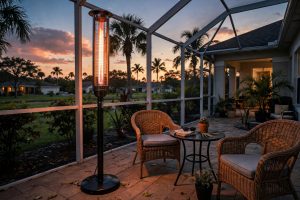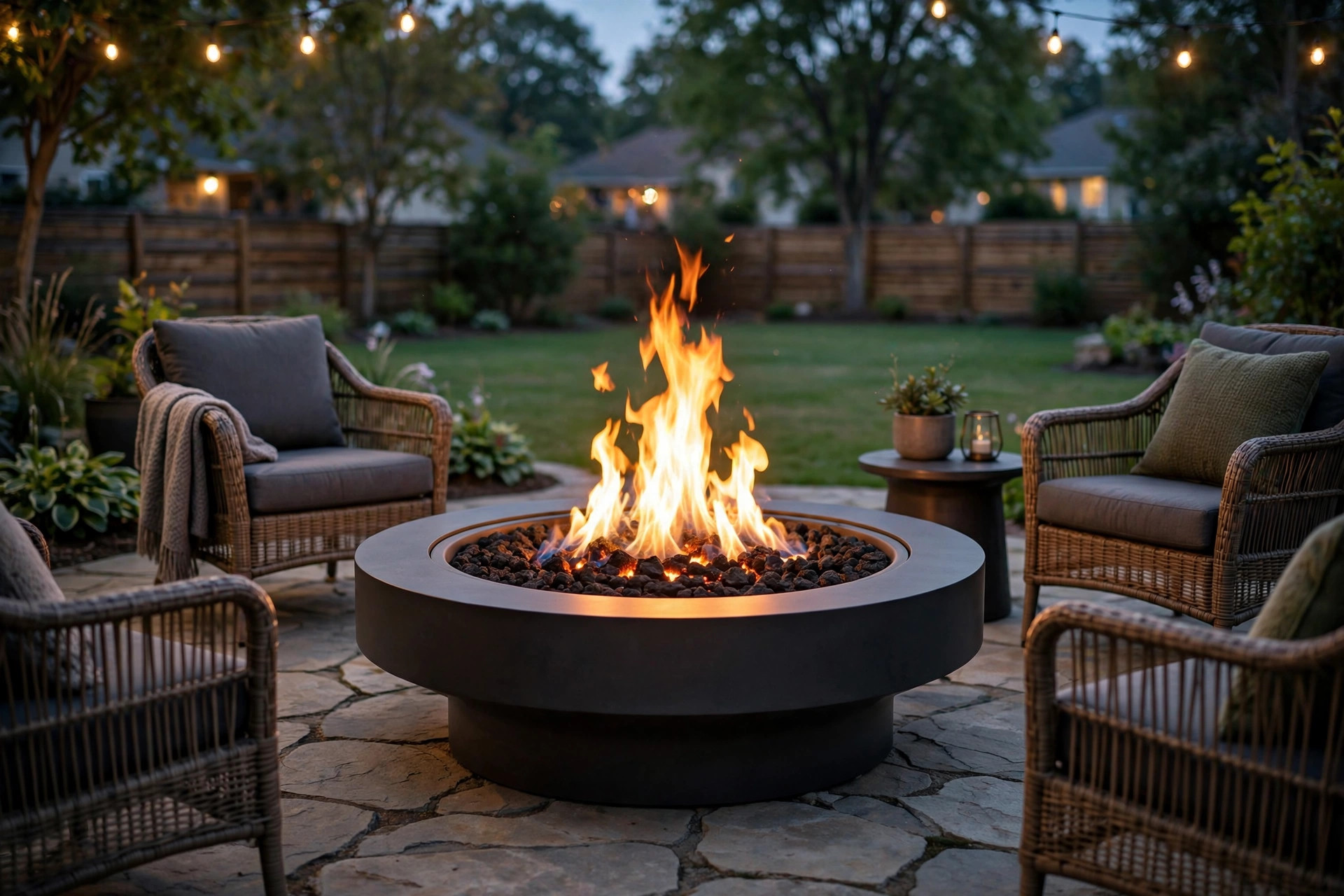

More families now want the look and feel of a real fire without the smoke, the sparks, and the high cost of wood. Energy efficient propane fire pits for sale meet that wish. They burn clean, light at the touch of a button, and turn off with one more touch. Many owners say their fire pit is the most used seat in the house on cool evenings.
This guide walks you through how these units work, what makes one efficient, what types you can buy, what they cost, and how to keep them safe. By the end, you will know exactly what to look for before you spend your money.
Why Efficiency Matters in a Propane Fire Pit
A standard propane fire pit can burn through a 20 pound tank in eight to ten hours. That gets costly. An energy efficient propane fire pit for sale today is built to give you more flame per gallon. It does this in three ways.
First, the burner design matters. High quality stainless steel burners spread gas in small, even streams. That produces a fuller flame with less fuel. Cheaper brass burners often waste gas on tall, thin spikes of flame that give off little heat.
Second, heat direction matters. Some fire pits throw most of their heat straight up. Good designs use the pit wall or a heat reflector to push warmth outward, toward the people sitting around it. You feel warmer while the tank lasts longer.
Third, controls matter. Units with adjustable flame height let you dial the fire down when you only need a little glow. Units with only an on and off setting run full blast or not at all. Over one season, that difference shows up in how many tank refills you buy.
Efficiency is not just about saving money. A clean burning unit also releases less carbon dioxide and leaves no ash or soot. For many buyers, that is a strong reason to choose propane over wood.
What to Look For When You Shop: Energy Efficient Propane Fire Pits for Sale
Heat Output and BTU Rating
BTU stands for British Thermal Unit. It measures heat output. Most backyard propane fire pits rate between 40,000 and 65,000 BTU. A 40,000 BTU unit warms a small seating circle. A 60,000 BTU unit can warm a larger patio.
Do not assume bigger is always better. A very high BTU number on a small patio can feel harsh. Match the output to your space. Read owner reviews for the model you want. They often say how far the warmth reaches on a cold night.
Ignition Type
There are three common ignition types. Manual ignition uses a lighter or match. It is the least costly and the most reliable, but it requires you to lean over the burner. Push button ignition uses a spark to light the gas. It costs a bit more and works well for years if kept dry. Electronic ignition lights at the flip of a switch and may include a remote. It is the easiest to use, but it needs batteries or a power source.
Materials and Build
Look for steel frames with a rust resistant finish or aluminum frames. Aluminum will not rust at all. Check the burner too. Stainless steel burners last longer than brass or cast iron in wet weather. Covers are worth the price. A good cover keeps rain out of the burner pan and can double the life of the unit.
Safety Features
A flame sensor that shuts off the gas if the flame blows out is the most important safety feature. Some models add a tip over switch that cuts gas if the unit tilts. Check the distance rules in the manual. Most units need several feet of clear space on all sides.
Types and Options on the Market
Table Style Fire Pits
These sit at coffee table height. Many double as a table when the lid is on. They fit small patios and decks. The propane tank hides inside the base, so the look stays clean.
Bowl and Pit Style Fire Pits
These sit low to the ground and echo the campfire. They throw more heat outward and seat more people. Many come in round or square shapes with stone or concrete looks.
Fire Pit Tables With Dining Height
These are full size dining tables with a fire feature in the center. They cost more but serve two jobs. If you plan to eat outside often, this type earns its price.
Portable and Tabletop Units
Small units run on one pound canisters and move with you. They give charm and light but little heat. They are a good low cost way to test if you enjoy gas fire features before you buy a full size pit.
If you are also thinking about keeping warm on chilly nights, compare your options against affordable infrared outdoor heaters. Heaters and fire pits serve different moods, and some yards do well with both.
Cost and Price: What You Should Expect
Prices for energy efficient propane fire pits for sale fall into three bands. Tabletop units cost 60 to 150 dollars. Mid size table and bowl styles cost 200 to 600 dollars. Large dining height tables cost 700 to 1,800 dollars.
Running cost matters too. Propane prices change by region and season, but a 20 pound tank refill often costs 15 to 25 dollars. An efficient 50,000 BTU unit burns about two pounds per hour at full flame. That is ten hours per tank. Dialed down to half flame, the same tank can last twenty hours or more. Over a summer, the adjustable flame can save you several refills.
Look at the total cost, not just the sticker. A cheap unit that burns gas fast and rusts in two years costs more than a mid priced unit that lasts a decade. Many buyers browse large home stores such as Home Depot and Lowe’s to compare prices and read owner reviews before they choose.
Care and Upkeep
Care is simple but it matters. After each use, turn the gas off at the tank first, then at the unit. Let the pit cool. Then put the cover on. Water left in the burner pan is the main cause of rust and clogged jets.
Once a season, check the gas line and connections for wear. Brush dust out of the burner ports with a soft brush. If the flame burns yellow or uneven, a port may be blocked. The fix is often a simple cleaning. Many owners find step by step care tips on sites such as Family Handyman, which publishes clear outdoor maintenance guides.
Store small canisters indoors if the manual allows it, or follow local rules for tank storage. Keep the area around the pit clear of leaves and paper. A clean pit is a safe pit.
Safety Rules You Must Follow
Gas fire pits are safe when used as directed. These rules are not optional.
Keep the unit on a stable, non flammable surface. Stone, concrete, and tile are good. Dry wood decks need extra care and often a heat mat. Never use the pit under a low roof, awning, or tree limb. Wind can push flames sideways and damage nearby items.
Do not let children or pets play near the pit while it burns. The outer ring can stay hot for a while after you turn the fire off. Teach everyone in the house the same rule: no touching.
If you smell gas, turn the tank valve off at once and step away. Do not try to light the pit. The EPA and safety groups remind homeowners that fuel burning appliances deserve respect and routine checks. For gas appliance safety basics, Bob Vila and This Old House both keep helpful guides.
Local rules count too. Some towns limit open gas flames or require permits. Check your city code before you buy. Apartment balconies often ban fire pits entirely.
Where to Buy and What Reviews Say
You can buy energy efficient propane fire pits for sale at large home centers, specialty hearth stores, and online. Large stores let you see the unit in person. Specialty stores often give better advice on parts and service. Online shops offer the widest choice.
Before you buy, read reviews for your exact model. Look for patterns. If many owners report rust in one season, weak flame, or poor customer service, take it as a warning. ENERGY STAR offers guidance on choosing efficient home products, which can help you think about fuel use in the same way.
Decorating shows and idea sites such as HGTV show how fire pits look in real yards. That can help you pick a style that fits your patio.
For brand history and design ideas, maker pages such as Napoleon and Heatilator show how modern gas fire features are built and finished.
FAQ
How long does a propane tank last in a fire pit? A standard 20 pound tank holds about 4.6 gallons of propane. A 50,000 BTU unit uses roughly two pounds per hour at full flame, so a tank lasts eight to ten hours. Running the flame lower can double that time.
Are propane fire pits cheaper to run than wood fire pits? Often yes. Wood costs add up, and many owners buy it bag by bag. Propane costs less per hour of flame in most areas, and you skip the ash cleanup. An efficient burner widens that gap.
Can I use a propane fire pit on a wood deck? Sometimes, but only if the manual allows it. You will likely need a heat mat or pad under the unit and extra clear space around it. Some decks ban fire features in their rules, so check first.
Do propane fire pits give off real heat? Yes. A 50,000 BTU unit gives useful warmth to people seated within six to eight feet. Wind cuts the effect, so a sheltered spot works best. If raw heat is your main goal, you may also want to read about top rated propane patio heaters and top rated outdoor patio heaters to compare warmth and cost.
Can I convert a propane fire pit to natural gas? Some models offer a conversion kit, and some do not. Never adapt the gas line yourself. Use the kit made for your model and have a licensed installer do the work.
What should I do for winter storage? Clean the unit, disconnect the tank, and cover the pit. Store the tank upright in a ventilated outdoor spot away from heat, following local rules. Bring small units indoors if the manual says you may.
A Short Final Word
An energy efficient propane fire pit for sale is a small luxury that pays for itself in long evenings outside. Choose a model with a quality burner, an adjustable flame, and a flame shutoff feature. Buy from a seller with good reviews. Care for the unit, respect the safety rules, and your patio will have a warm heart for many seasons to come. The right unit turns an ordinary backyard into a favorite room of the house.
References
Bob Vila. (n.d.). Home improvement advice. https://www.bobvila.com ENERGY STAR. (n.d.). Energy efficient products. https://www.energystar.gov Family Handyman. (n.d.). DIY home repair and maintenance. https://www.familyhandyman.com Heatilator. (n.d.). Fireplaces and fireplace products. https://www.heatilator.com HGTV. (n.d.). Home and garden ideas. https://www.hgtv.com Lowe’s. (n.d.). Home improvement products. https://www.lowes.com Napoleon. (n.d.). Fireplaces, grills, and heating products. https://www.napoleon.com The Home Depot. (n.d.). Home improvement products. https://www.homedepot.com This Old House. (n.d.). Home renovation guidance. https://www.thisoldhouse.com U.S. Environmental Protection Agency. (n.d.). Protecting human health and the environment. https://www.epa.gov
Was this guide helpful?

About Emily Rodriguez
The My Garden US editorial team writes practical, in-depth home and garden guides for American homeowners — tested advice, no fluff.
You May Also Like
Premium Outdoor Patio Heaters for Sale: A Simple Buying Guide
March 17, 2026 0 views
High Efficiency Fireplace Remote Controls with Free Shipping: A Full Buying Guide
July 19, 2026 0 views
Reliable Fireplace Installation Services in Arizona: A Homeowner’s Guide
September 13, 2026 0 views