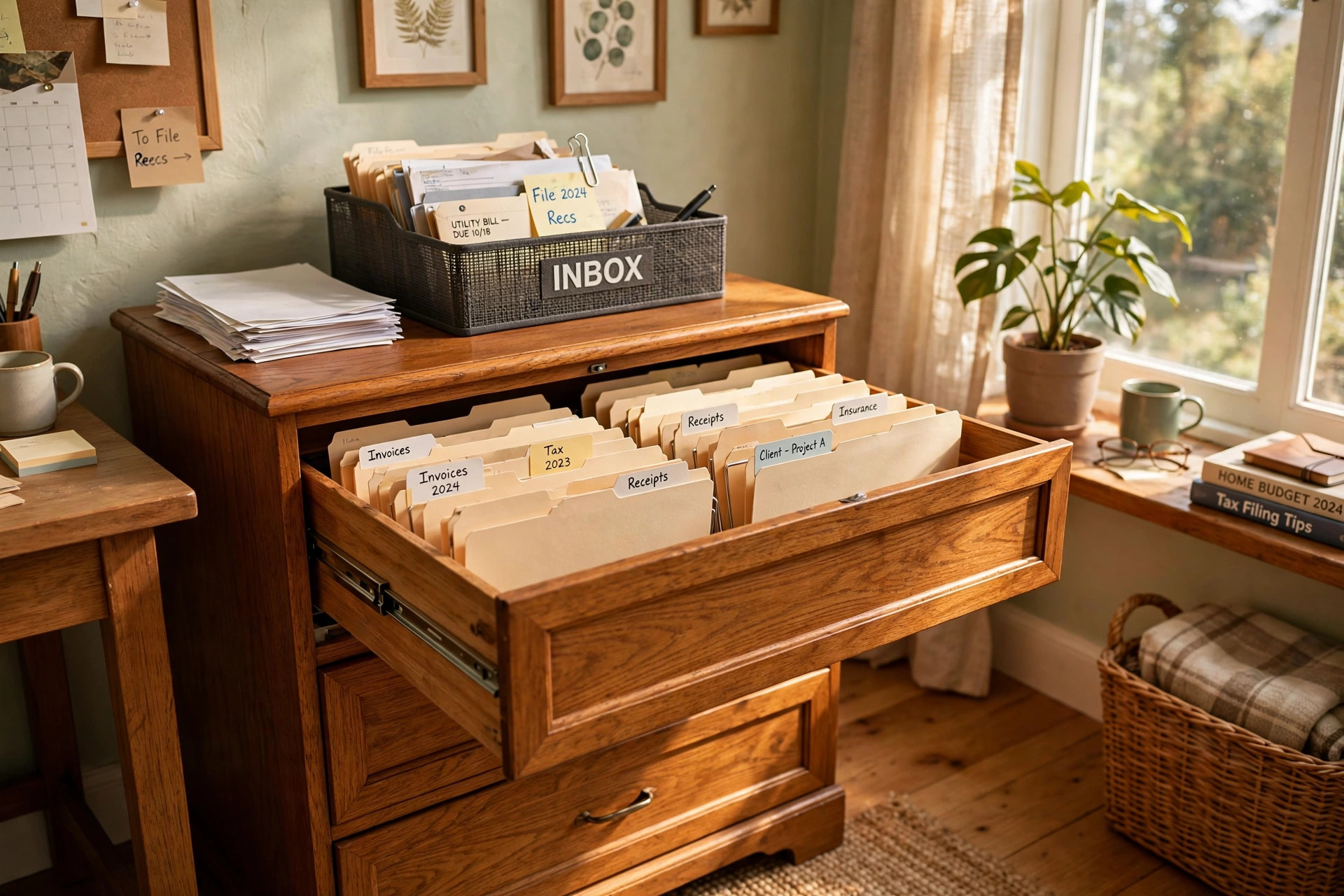

A home office filing systems price comparison USA guide is worth reading before you spend a dollar. Papers pile up fast. Bills, tax forms, school records, and work files all need a place to live. A good filing system keeps them in order. A poor one costs you time and lost documents.
Prices in the United States vary widely. A simple set of hanging folders can cost less than twenty dollars. A heavy steel lateral cabinet can cost more than a thousand. This guide compares home office filing systems across price ranges so you can buy with confidence. You will learn what types exist, what drives price, and how to choose the right one for your space.
Why a Filing System Matters in a Home Office
A home office is not the same as a corner of the kitchen table. When you work from home, paper does not leave the house. It stays. It gathers in drawers, on desks, and in bags by the door. A filing system gives every paper a home.
Good files save real money. The Internal Revenue Service can ask for proof of a deduction years later. A lost receipt can mean a lost claim. Insurance papers, warranties, and deeds matter most when you cannot find them. A filing system protects you in these moments.
It also protects your time. Most people spend far too long looking for papers they know they have. Ten minutes a day adds up to more than forty hours a year. A simple folder system can cut that search to seconds.
A calm desk helps a calm mind. Studies of home offices keep finding the same thing. People work better when their space is in order. Filing systems are a quiet part of that order. They do the work in the background so you can do your own work in the front.
What to Look for When You Choose: Home Office Filing Systems Price Comparison Usa
Start with the amount of paper you hold. A renter with a small drawer of bills needs a different system than a contractor with five years of job files. Count your current files and guess how much they will grow in two years. Buy for that larger number.
Size and Drawer Depth
File drawers come in letter and legal sizes. Letter size fits most home office paper. Legal size is deeper and suits contracts and older records. Lateral cabinets are wider than they are deep. Vertical cabinets are deeper than they are wide. Measure your floor space before you shop. Leave room to open a fully loaded drawer.
Material and Build
Steel cabinets are strong and last for decades. They are heavy and can look cold in a home office. Wood cabinets blend with home furniture. They cost more and hold less weight. Laminate and engineered wood sit in the middle on both counts. Plastic drawer units are light and cheap. They suit a desk side unit but sag under heavy loads.
Lock and Security
A lock keeps nosy visitors and children out of private files. Tax returns, medical records, and bank papers deserve a locked drawer. Many steel cabinets include a central lock. Wood units may need a lock added later. If your files include client records, a lock is not optional. It is a duty.
Fire and Water Protection
Most filing systems do not resist fire or water. Fire-rated chests and safes do, but they cost far more. If your most important papers are paper only, keep copies in a second place. A bank box or a family member in another town can hold the backup.
Fit with Your Desk and Room
A filing system should fit the room it lives in. A tall cabinet can serve as a printer stand. A low two-drawer unit can slide under a desk. Rolling units move to where the work is. Measure the height under your desk before you buy a rolling unit. Retailers such as IKEA and Wayfair show exact dimensions on each listing, which helps you plan.
Types of Home Office Filing Systems
Hanging Folder Frames and Boxes
The cheapest option is a set of hanging folders inside a plastic box or a wire frame. Prices run from about ten to thirty dollars. This suits a light filer with one or two dozen folders. It is also a fine starter system while you learn your habits.
Vertical File Cabinets
The classic two-drawer or four-drawer vertical cabinet costs between sixty and four hundred dollars in the United States. Steel units at the low end come from big-box stores. Solid steel units at the high end run smoother and last longer. Vertical cabinets fit well against a wall in a small room. If you want to compare models side by side, a buy vertical file cabinets online in texas style search shows how prices shift by state and seller.
Lateral File Cabinets
Lateral cabinets hold folders side to side. A two-drawer lateral unit costs between one hundred fifty and six hundred dollars. Three and four drawer units run from three hundred to well over a thousand. They need more wall space but less depth. Many double as a credenza behind a desk.
Rolling Drawer Units
A rolling pedestal that fits under the desk costs between forty and two hundred dollars. These are popular with people who want files within arm’s reach. Check the caster quality before you buy. Cheap wheels fail fast on carpet. For small rooms, a rolling unit can pair well with ideas from a guide on top rated rolling storage carts for small apartments.
Open Shelving and Wall Systems
Open shelves with labeled boxes cost between thirty and two hundred fifty dollars. Pegboard panels with bins run from twenty to one hundred dollars. These suit people who file by sight and keep current work close. They are less good for old archives. See a pegboard wall organizers price comparison usa approach for how wall systems price out against closed cabinets.
Digital Hybrids
Many homes now mix paper and digital. A scanner and a small desktop box cost less than a second cabinet. You scan papers, file them in folders on your computer, and keep only originals in paper. A good document scanner costs between one hundred fifty and four hundred dollars. The habit matters more than the machine.
Home Office Filing Systems Price Comparison USA: What Each Tier Costs
Budget Tier: 10 to 75 Dollars
This tier covers hanging folder kits, plastic drawer carts, and small fabric boxes. The build is light. The life is short. But for a student or a light filer, it is enough. Expect simple designs and limited locks. Home Depot and Lowe’s both carry wide budget ranges in this tier.
Mid Tier: 75 to 300 Dollars
This is the sweet spot for most American home offices. Two-drawer steel cabinets, solid rolling units, and wood-look lateral cabinets live here. Locks are common. Drawers run on ball-bearing slides. The finish looks at home in a living room that doubles as an office. The Container Store specializes in this middle range with many measured options.
Upper Tier: 300 to 700 Dollars
Here you find four-drawer steel cabinets from office furniture brands, real wood veneer units, and fire-resistant chests. Drawers glide fully loaded. Metal is thicker. Finishes resist scratches. A unit in this tier can serve for twenty years.
Premium Tier: 700 Dollars and Up
Premium lateral cabinets, solid wood furniture-grade pieces, and high-rated fireproof files live here. Businesses that keep client records at home often buy in this tier. So do people who want the cabinet to look like fine furniture. Expect lifetime warranties on some brands.
Hidden Costs to Watch
Price tags hide costs. Delivery on a two-hundred-pound cabinet can add fifty to one hundred fifty dollars. Assembly takes an hour or more on flat-pack units. Hanging folders, labels, and tabs add ten to thirty dollars. A lock replacement can cost twenty dollars. Add these to the sticker price before you compare.
How to Compare Prices the Smart Way
Start by listing what you must have. Letter or legal size. Lock or no lock. Two drawers or four. Then compare only units that meet your list. A cheaper unit that lacks your must-haves is not cheaper. It is the wrong product.
Compare price per drawer, not just total price. A four-drawer cabinet at four hundred dollars costs one hundred dollars a drawer. A two-drawer cabinet at two hundred fifty dollars costs one hundred twenty five dollars a drawer. The larger unit wins on value if you need the space.
Read the return policy. Cabinets are heavy. Return shipping can cost more than the item. Stores that allow in-store returns save you this risk. Check the warranty too. A one-year warranty on a three-hundred-dollar cabinet is thin. Five years is a fair floor for the mid tier.
Watch for sales cycles. Office furniture goes on sale in January and again in late summer, when students return to school. Holiday weekends in the fall often bring price cuts. Patient buyers save twenty to thirty percent.
Check used markets. Office liquidators sell solid steel cabinets for a fraction of retail. Many American cities have warehouses full of used office furniture. A used steel cabinet at eighty dollars often outlasts a new budget unit at the same price. Inspect the drawer slides before you pay.
Care and Upkeep of Your Filing System
A filing system needs small habits to stay useful. Purge old papers once a year. Tax records in the United States should be kept for at least three to seven years. Utility bills can go after one year if you do not need them for taxes. Shred papers with account numbers. Do not put them in the trash.
Label folders with clear, plain words. “Tax 2026” beats “Misc Important.” Keep an index sheet taped inside the cabinet door that lists what lives in each drawer. When you add a new category, write it on the index.
Oil drawer slides once a year with a light spray lubricant. Wipe steel cabinets with a damp cloth. Tighten screws on wood units twice a year. A filing cabinet that tips when a drawer opens is a hazard. Load the bottom drawers first to keep the center of gravity low. The CPSC warns about tip-over risks from tall furniture, and filing cabinets are no exception.
For stain and dust advice, home care guides at Family Handyman cover cabinet upkeep in plain detail. For room-by-room organization ideas, Apartment Therapy offers many home office setups worth a look.
Safety in a Home Office File Area
Keep the file area clear of heaters and open flames. Paper is fuel. A cabinet against a radiator is a risk. In earthquake-prone parts of the country, anchor tall cabinets to the wall with straps.
Teach children that the file cabinet is not a ladder. Drawers can slide out and tip. Lock drawers that hold sharp objects or medicines. Keep a small fire extinguisher in the home office if you store years of irreplaceable paper there.
Back up the papers that matter most. Scan them and store copies on an external drive or in a trusted cloud account. Paper copies in a second location are even better. A filing system is a tool, not a vault. The true safety comes from having copies.
Frequently Asked Questions
How much should I spend on a home office filing system? Most home offices do well between seventy five and three hundred dollars. Spend less if you keep few papers. Spend more if you keep client records or need fire protection. Price follows size, material, and security features.
Are vertical or lateral cabinets better for a home office? Vertical cabinets suit small rooms because they use wall space, not floor depth. Lateral cabinets suit wider rooms and can double as a printer stand. Both hold the same paper. Measure your room and choose the shape that fits.
Do I still need paper files in a digital age? Yes, for many papers. Deeds, car titles, and some legal papers must exist on paper. Tax papers need keeping for years. A hybrid system, with most papers scanned and key originals filed, works best for most homes.
What size folders do I need, letter or legal? Letter size fits bills, bank statements, and most tax forms. Legal size suits contracts and some court papers. Most home offices do fine with letter. Buy legal only if your papers demand it.
Can I use a used filing cabinet safely? Yes, if you inspect it first. Open every drawer fully. Check that slides move smooth and locks turn. Look for rust inside the drawers. Used steel cabinets from office liquidators are often the best value in this market.
How do I keep a filing system from growing out of control? Purge once a year. File new papers within a week. Keep a one-in, one-out rule for old categories. When a drawer is full, decide what leaves before you buy a new cabinet. The habit matters more than the furniture.
A Short Final Word
A home office filing systems price comparison USA search ends with one simple truth. The best system is the one you will actually use. A fifty-dollar folder box that stays current beats a seven-hundred-dollar cabinet that becomes a junk drawer.
Start with your must-haves. Compare price per drawer. Buy a little more space than you need today. Set a yearly purge habit. Do that, and your papers will serve you instead of burying you. A well-kept filing system is quiet, honest work. It pays you back every day in time saved and worry removed.
References
Apartment Therapy. (n.d.). Home design ideas and inspiration. https://www.apartmenttherapy.com Family Handyman. (n.d.). DIY home repair and maintenance. https://www.familyhandyman.com IKEA. (n.d.). Home furnishings. https://www.ikea.com Lowe’s. (n.d.). Home improvement products. https://www.lowes.com The Container Store. (n.d.). Storage and organization products. https://www.containerstore.com The Home Depot. (n.d.). Home improvement products. https://www.homedepot.com U.S. Consumer Product Safety Commission. (n.d.). Product safety information. https://www.cpsc.gov Wayfair. (n.d.). Furniture and home goods. https://www.wayfair.com
Was this guide helpful?

About Jennifer Lee
The My Garden US editorial team writes practical, in-depth home and garden guides for American homeowners — tested advice, no fluff.
You May Also Like

Closet Organizer Systems Reviews and Buying Guide
March 23, 2026 0 views
A Guide to Stackable Makeup and Cosmetics Organizers with Free Shipping
June 9, 2026 0 views
Premium Attic Storage Solutions Buying Guide
February 13, 2026 0 views