
Most parents know the scene well. A child’s closet door opens, and clothes, shoes, and toys tumble out in a heap. The mess builds again only days after a clean-up. This kids closet organizers reviews and buying guide was written to end that cycle. It reviews the common types of closet storage made for children, shows how to pick the right one for your space and your budget, and gives plain facts about cost, care, and safety.
Why It Matters
A child’s closet is small, but it holds a lot. School clothes, play clothes, jackets, shoes, sports gear, and old toys all compete for space. When there is no system, items pile up on the floor. Parents waste time each morning hunting for a matching pair of socks. Children cannot dress on their own because nothing is within reach.
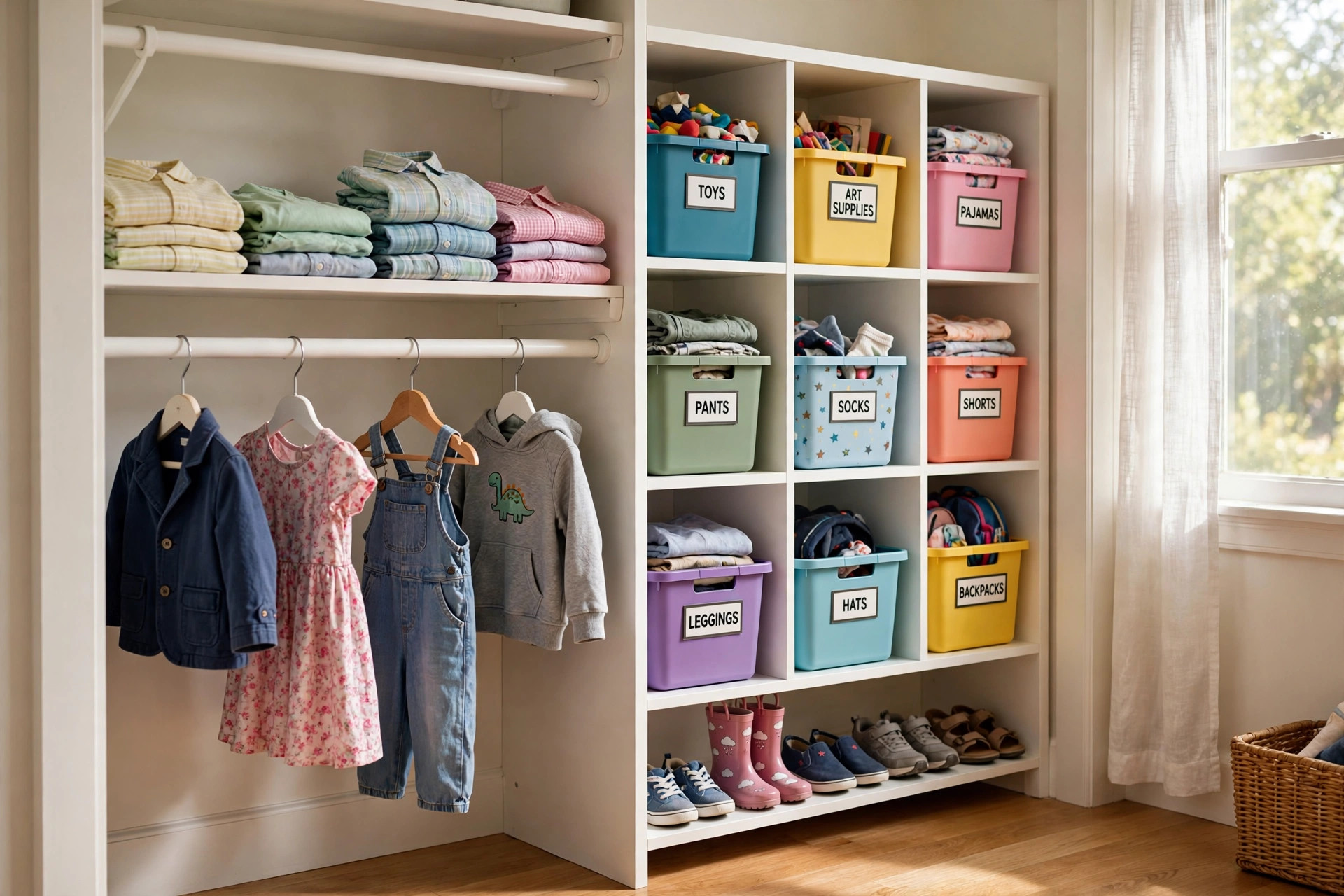
A good organizer changes the daily routine. Low shelves let a four-year-old pick out her own shirt. Labeled bins keep socks apart from swim gear. Hooks at child height give coats a home. The child learns to put things back where they belong, and the parent spends less time picking up. Good children’s closet organization is not about a perfect magazine photo. It is about a plan that a real child can follow every day.
What to Look for and How to Choose: Kids Closet Organizers Reviews and Buying Guide
Before you buy, take three steps. Measure, watch, and plan.
Measure the closet first. Note the width, the depth, and the height. Note where the door swings. A unit that is one inch too wide will not fit, and a unit that is too deep will block the door. Write the numbers down and take them with you or keep them near the phone when you order.
Watch how your child uses the space. Does she throw everything on the floor? Then open bins and low shelves will serve her better than drawers with tricky latches. Does he line up his shoes in a row? Then a shoe shelf or a tilted shoe rack will suit him. Does your child like to dress for the week ahead? Then a set of small weekday dividers on a shelf will help. The best kids closet storage fits the habits of the child, not the wishes of the parent.
Plan the zones. Most child closets need three zones: hanging clothes at low height, folded clothes and toys on shelves, and shoes and bins near the floor. Sketch the plan on paper. Then look for pieces that fill the zones. Helpful starting points for ideas include the storage guides at The Spruce and the small-space tips at Apartment Therapy.
Three rules should guide every choice. First, keep it low. A child who cannot reach a shelf will not use it. Adjustable rods and double hanging rods bring clothes down to child height. Second, keep it simple. If a bin needs no lid to close, a child will use it more often. Third, keep it safe. The unit must stand firm and must not tip. We cover safety in full below.
Types and Options
Double-Hang Rod Kits
A double-hang kit adds a second rod below the top rod. This doubles the hanging space in the same closet. For a child’s closet, this is often the single best upgrade. Shirts go on the top rod, pants on the bottom rod, and both sit low enough for a young child to reach. Most kits cost little and install in under an hour. Retailers such as Home Depot and Lowe’s carry several brands in stock.
Stackable Shelves and Cubbies
Cube shelves and stackable cubbies turn dead space into useful space. They work well for folded shirts, pajamas, and toys. Many are sold as open cubes that take fabric bins. The bins slide in and out, and a child can pull one out to see what is inside. These units come in wood, laminate, and sturdy plastic. Wood and laminate last longer and look better, but plastic is light and easy to wipe clean.
Hanging Fabric Organizers
A hanging fabric organizer hooks over the closet rod. It has shelves of fabric or canvas, six to ten high. It needs no tools and no screws. It is the cheapest way to add shelf space fast. The weak point is strength. Fabric shelves sag under heavy items, and they swing when a child pulls at them. Use them for light things like hats, folded tees, and swim gear, not for books or heavy toys.
Bins, Baskets, and Drawer Units
Open bins on low shelves are the workhorse of any child closet. Plastic bins wipe clean and come in bright colors. Woven baskets look warm but can snag small fingers and are hard to clean. Drawer units on wheels can roll out from under a hanging section and hold socks, underwear, and small toys. For families who want a secure option for medicines or sharp items kept in the room, see our guide on lockable kids closet organizers with free shipping.
Specialty Pieces
Shoe organizers that hang on the closet door keep shoes off the floor. Tie and belt hooks hold small items. For very small closets, a full wardrobe unit may serve better than closet parts; read our space saving kids closet organizers for midwest homes guide for compact ideas. For hall closets that serve children too, our linen closet organizers reviews and buying guide covers shelf systems that also work for bedding and towels.
Cost and Price
Prices vary by size and material. Here is what most families pay.
Hanging fabric organizers are the low end. They run about fifteen to forty dollars. They add space in minutes, but they wear out faster than hard units.
Plastic bins and baskets run about five to twenty dollars each. Most closets need four to eight bins. Buy the same size so they stack and swap.
Cube shelves and stackable units run about forty to one hundred twenty dollars, based on size and material. Laminate cubes sit in the middle. Solid wood costs more and lasts for years.
Double-hang rod kits run about twenty to fifty dollars. A full closet system with rods, shelves, and drawers runs about one hundred to three hundred dollars for a reach-in closet. Large walk-in systems can pass four hundred dollars.
To stretch your budget, start with the cheap wins: a double-hang kit and four bins. That small change fixes most closets for under one hundred dollars. You can add cubes or a drawer unit later. Watch for sales at big stores such as Walmart and Amazon, and compare full systems at Wayfair and IKEA. The Container Store also sells closet parts in many sizes that fit together as one system.
Care and Upkeep
A closet organizer needs little care, but a small routine keeps it working.
Wipe shelves and bins once a month with a damp cloth. Plastic bins can be washed in a sink with mild soap. Fabric bins can be shaken out and spot cleaned. Check screws and brackets twice a year. Children pull and climb, and a loose bracket is easy to miss until a shelf drops.
Teach the child a ten-minute weekly reset. Every Sunday, the child puts each item back in its zone. Make it a game for young children: race the clock, or sort by color. Replace fabric bins when they sag. Tighten or replace anchors at once if a unit wobbles. The Family Handyman site has simple how-to guides for fixing loose closet hardware.
Safety
Safety comes first in a child’s closet. Follow these rules.
Anchor every tall or heavy unit to the wall. Tip-over injuries are a real risk, and the CPSC warns families about unanchored furniture. Most units ship with wall straps or brackets. Use them. If you rent, ask your landlord about anchors; small screw holes are cheap to patch when you move.
Keep heavy items low. Books, games, and heavy toys belong on the bottom shelves. Light items go up high. This lowers the center of gravity and makes tip-over less likely.
Check for pinch points and sharp edges. Drawer slides should move smoothly. Laminate edges should be sealed, not raw. Avoid small hooks and loose parts that a toddler could pull off and swallow.
Keep the closet clear of cords. Window blind cords, if any are near, must be out of reach or fitted with a cord cleat. No organizer should block the closet door, and nothing should stop a child from getting out.
Pick low-VOC and lead-free materials where you can. Solid wood and low-emission laminate are good choices. Cheap pressed board may off-gas when new; air it out in a garage or on a porch for a day before you install it in a child’s room.
FAQ
What is the best kids closet organizer for a toddler? Low open bins and a single low rod work best. A toddler can see everything, reach everything, and put things back with no lids to fight. Add labels with pictures, not words, so a child who cannot read still knows where things go.
How much does it cost to organize a kids closet? Most families spend between fifty and two hundred dollars. A fabric hanging organizer plus bins runs under fifty dollars. A cube shelf unit with bins and a double-hang kit runs about one hundred dollars. Full systems with drawers run two hundred dollars and up.
Are hanging closet organizers good for kids? They are good for light items and tight budgets. They install in minutes with no tools. But they sag under weight and swing when pulled. For a young child who yanks at things, a firm shelf or cube unit holds up better.
What size bins fit a standard closet shelf? Most closet shelves are twelve inches deep. Bins about eleven inches deep, ten inches wide, and eight inches high fit well and leave room to pull them out. Measure your own shelf before you buy, since depths vary.
How do I stop the closet from getting messy again? Give every type of item one home, and keep the number of homes small. Four to six bins beat twelve tiny ones. Do a ten-minute reset each week with your child. When a bin stays empty, remove it. When one overflows, add a bin or move some items out.
Should I buy a closet system or build one from parts? Parts give more freedom and often cost less. Buy a rod kit, a shelf, and bins that fit your exact closet. Full systems look neat and go up fast, but they may waste space in an odd-size closet. Measure first, then decide.
A Short Final Word
A child’s closet does not need to be large or costly. It needs to be low, simple, and safe. Measure the space, watch your child, and start with rods and bins. Add shelves as you learn what works. Involve your child in the choice where you can. A child who helps pick the bins will take pride in keeping them tidy. The best system is the one your child actually uses, day after day, without being told. Start small this weekend, and enjoy the calm that follows.
References
Amazon. (n.d.). Online shopping. https://www.amazon.com Apartment Therapy. (n.d.). Home design ideas and inspiration. https://www.apartmenttherapy.com Family Handyman. (n.d.). DIY home repair and maintenance. https://www.familyhandyman.com IKEA. (n.d.). Home furnishings. https://www.ikea.com Lowe’s. (n.d.). Home improvement products. https://www.lowes.com The Container Store. (n.d.). Storage and organization products. https://www.containerstore.com The Home Depot. (n.d.). Home improvement products. https://www.homedepot.com The Spruce. (n.d.). Home and garden advice. https://www.thespruce.com U.S. Consumer Product Safety Commission. (n.d.). Product safety information. https://www.cpsc.gov Walmart. (n.d.). Everyday low prices. https://www.walmart.com Wayfair. (n.d.). Furniture and home goods. https://www.wayfair.com
Was this guide helpful?

About Michael Thompson
The My Garden US editorial team writes practical, in-depth home and garden guides for American homeowners — tested advice, no fluff.
You May Also Like
Affordable Toy Storage Bins for Sale: A Parent’s Guide
September 25, 2026 0 views
Space Saving Corner Closet Organizers for Southern States: A Practical Guide
March 19, 2026 0 views
Home Office Filing Systems Price Comparison USA
August 13, 2026 0 views