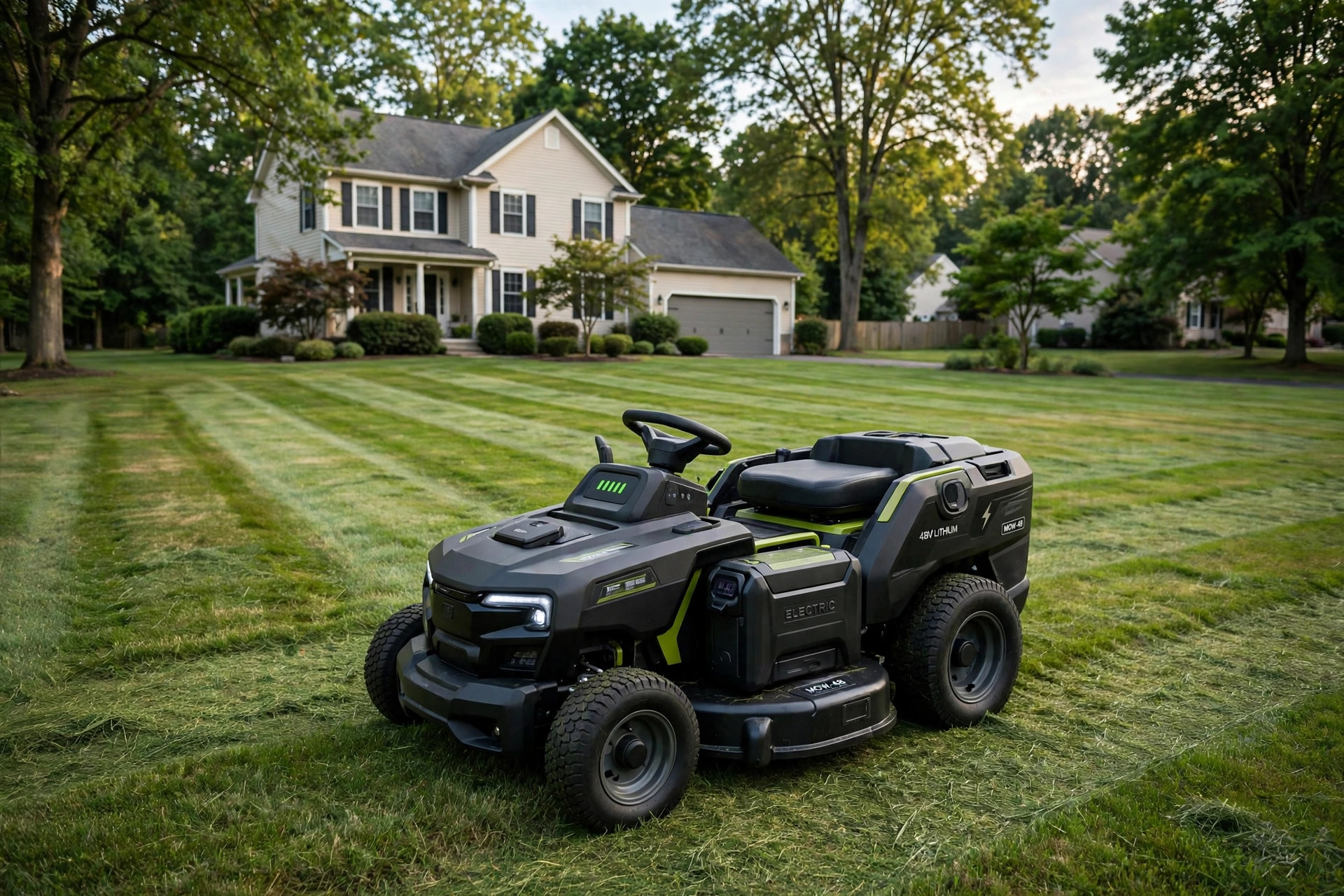

Electric riding mower reviews for small acreage are worth reading before you spend your money. A riding mower is a big purchase. An electric one is a newer idea. It cuts grass with battery power instead of gasoline. For a yard of half an acre to two acres, it can be a fine fit. It is quiet. It starts with a key. It needs no gas can in the shed. This guide reads the reviews with a plain eye. It tells you what buyers like, what they do not like, and what to check before you buy.
Why It Matters
A small acreage is a middle ground. It is too big for a push mower. A walk behind machine will eat your whole Saturday. Yet it is too small to justify a big farm tractor. A riding mower fills this gap. It lets you sit down and finish the job in less than an hour.
Electric riding mowers have changed this math. Ten years ago, battery mowers were weak toys. That is no longer true. The motors are stronger. The batteries last longer. The decks cut as wide as gas models. Many reviewers now rate them even with gas riders for yards under two acres.
There are real reasons owners give for switching. The mower is quiet. You can mow early in the morning without waking the street. There is no engine oil to change. There is no air filter to clean. There is no spark plug to replace. You charge it like a car. You turn the key and go.
There are also honest limits. A battery runs out. A gas tank can be refilled in one minute. A battery needs hours to charge. If your yard is bigger than the battery range, you will park the mower half done. Reviews for small acreage homes keep coming back to this point. Know your lot size. Know the mower range. Match the two before you pay.
What to Look For: Electric Riding Mower Reviews for Small Acreage
Battery and Run Time
The battery is the heart of the machine. Look at run time first. Makers state it in acres, not minutes. A claim of one acre means one acre of flat, open grass in fair weather. Hills, tall grass, and hot days cut that number down.
Most small acreage models claim one to two acres per charge. Reviews suggest you treat the claim with care. Take off twenty percent for real life. If your yard is one acre, buy a mower rated for one and a half. That margin saves you on the weeks when the grass is tall.
Ask how the battery charges. Some mowers have a built in battery that charges through a port. Others use slide out packs you can charge in the garage. Slide out packs cost more but give you options. You can buy a spare pack and swap it mid mow. Check the charge time. Most take two to four hours on a standard outlet.
Deck Size
The deck is the steel housing under the mower that holds the blades. A wider deck cuts more grass in one pass. For small acreage, decks run from thirty to forty eight inches. A thirty inch deck fits through gates and tight spots. A forty two inch deck finishes an acre faster.
Wider is not always better. A wide deck scalps bumps and high spots. It needs more battery power. It can be hard to steer around trees. Reviews favor the forty to forty two inch range for mixed yards. It is a fair trade between speed and control.
Motor Power and Drive
Electric mowers use one or more electric motors. Some have a single drive motor. Others have two, one per wheel. Two motor models turn tighter and climb better. Look at the blade motor too. It should keep blade speed steady in thick grass. Cheap models slow down and leave ragged tips.
Transmission matters less than on gas mowers. Most electric riders have simple pedal controls. Press to go forward. Press the other to back up. There is no clutch and no gear oil. Test the seat and the steering if you can. You will spend an hour a week in that seat. Comfort counts.
Types of Electric Riding Mowers
Rear Engine Riders
Rear engine riders put the motor behind the seat. They are short and light. They turn in tight circles. They suit flat yards of half an acre to one acre. Prices run lower than other types. Reviews praise them for easy storage. They fit in a small shed. Their limits show on hills. The light front end can lose grip on slopes.
Lawn Tractors
Electric lawn tractors look like classic gas tractors. The battery sits where the engine used to sit. They cut forty two to forty eight inches wide. They pull small carts and spreaders. They suit one to two acres. This is the type most best riding lawn mower for one acre lots guides point to. Reviews call them the safe middle choice. They cost more than rear engine riders but do more work.
Zero Turn Mowers
Zero turn mowers steer with two levers, one per wheel. They spin in place. They mow around trees and beds fast. Electric zero turns are newer and dearer. They suit open yards where speed matters. Reviews warn that they need practice. New drivers tear turf until they learn the levers. They also cost the most. For most small acreage homes, a tractor is enough.
Cost and Price
Electric riding mowers cost more up front than gas riders. A rear engine electric rider starts near two thousand five hundred dollars. A mid size electric tractor runs three thousand to five thousand dollars. Electric zero turns run five thousand to eight thousand dollars. These are list prices. Spring sales cut them by hundreds.
The long math favors electric. There is no gasoline to buy. A charge costs less than a dollar in most states. There is no oil, no filter, no plug, no belt service in the first years. Reviewers who keep records say the mower pays back the price gap in three to five years for a one acre yard.
Watch the battery warranty. The battery is the dearest part. Good makers give three to five years on the battery. Read the fine print. Some warranties cover the frame for five years but the battery for only two. A short battery warranty is a red flag. Also ask the price of a spare battery pack. On some models it runs over one thousand dollars. That number changes the true cost of ownership.
If your yard is small enough, a walk behind may serve you. Check self propelled mower deals for usa homeowners before you commit to a rider. A strong self propelled mower handles a quarter acre with ease and costs a fraction of a rider. But past half an acre, most backs vote for a seat.
Care and Upkeep
Electric mowers need less care than gas mowers, but they are not care free. The blades still dull. Sharpen them once or twice a season. A dull blade tears grass and turns the tips brown. Keep the deck clean. Hose off packed grass after each mow. Packed grass traps damp and rusts steel.
The battery needs the most thought. Store the mower in a dry place. Do not leave the battery at full charge all winter. Most makers say to store it near half charge in a cool garage. Charge it fully before the first spring mow. Heat hurts batteries. Do not leave the mower baking in full sun all day.
Tires, belts, and bolts need the same checks as any mower. Check tire pressure each month. Low tires scalp the lawn. Tighten the blade bolts each spring. Grease the front wheels if the manual calls for it. Keep the manual. It holds the charge chart and the torque numbers you will need.
Winter storage is simple. Clean the deck. Sharpen the blades. Charge the battery to the level the manual states. Park the mower off bare concrete if you can. A wood board under the tires stops flat spots. In spring, charge full, check the tires, and mow.
Safety
A riding mower is a machine with fast steel blades. Treat it with respect. Read the manual before the first mow. Wear closed shoes. Never let children ride along. The seat switch stops the blades when you stand. Do not bypass it. That switch saves fingers.
Mow slopes with care. Go up and down, never across. A mower can tip on a side slope. If the grass is wet, wait. Wet slopes are slick. Wet grass clumps and clogs the deck. Electric mowers are quiet, which is a small risk. People may not hear you coming. Look behind before you back up.
Charging safety is simple but firm. Use the charger that came with the mower. Plug it into a grounded outlet. Keep the charger dry. Do not charge on a wet floor. If the battery case is cracked or swollen, stop using it. Call the dealer. A damaged lithium battery is not a home repair.
For homes with pets and children playing on the lawn, low noise is a plus. You can hear a child call out while you mow. Some owners also weigh a robot lawn mower for half acre yards for daily trimming between riding mows. A robot cannot replace a rider, but it keeps the lawn neat with no effort.
Frequently Asked Questions
How long does the battery last on one charge? Most small acreage models cut one to two acres per charge on flat ground. Hills and tall grass cut that down. Plan for eighty percent of the stated range in real use.
Can an electric riding mower cut tall or wet grass? It can, but not well. Tall grass drains the battery fast. Wet grass clumps under the deck. Mow on a dry day. Cut often so you never take off more than a third of the blade height.
How long do the batteries last before replacement? Makers rate them for five to ten years of home use. Heat and deep drains shorten life. Store at partial charge in winter and you will reach the high end of that range.
Are electric riding mowers good on hills? Gentle slopes are fine. Steep slopes are not. The mower is heavy with the battery low in the frame, which helps. But wheel motors can overheat on long climbs. Walk slopes over fifteen degrees first. If you would not walk it with ease, do not mow it.
What does it cost to charge? A full charge for a mid size mower uses about two to four kilowatt hours. At average home rates that is well under one dollar. A season of mowing costs less than ten dollars in power for most one acre yards.
Do I still need a trimmer? Yes. No riding mower reaches fence lines, tree trunks, and bed edges. Keep a string trimmer for the edges. It is the one gas or battery tool most rider owners still buy.
A Final Word
Electric riding mower reviews for small acreage tell a steady story. For yards under two acres, the electric rider is ready. It cuts well. It runs quiet. It costs less to feed and keep. Buy enough battery range for your lot, with margin to spare. Read the battery warranty like a contract, because it is one. Then charge it up on a Saturday morning and enjoy the quietest mow you have ever done.
Trusted maker sites carry spec sheets and manuals worth reading before you buy: Toro, Deere, and Briggs & Stratton.
References
Toro. (n.d.). Lawn mowers and outdoor power equipment. https://www.toro.com Deere. (n.d.). John Deere lawn and garden equipment. https://www.deere.com Briggs & Stratton. (n.d.). Engines and outdoor power products. https://www.briggsandstratton.com
Was this guide helpful?

About Emily Rodriguez
The My Garden US editorial team writes practical, in-depth home and garden guides for American homeowners — tested advice, no fluff.
You May Also Like
Best Battery Powered Lawn Tools Combo: A Guide for Homeowners
August 25, 2026 0 views
Best Shade Tolerant Grass Seed Mix: A Plain Guide for Shady Lawns
September 10, 2026 0 views
How to Pick the Best Drought Tolerant Grass Seed California Lawns Need
September 13, 2026 0 views