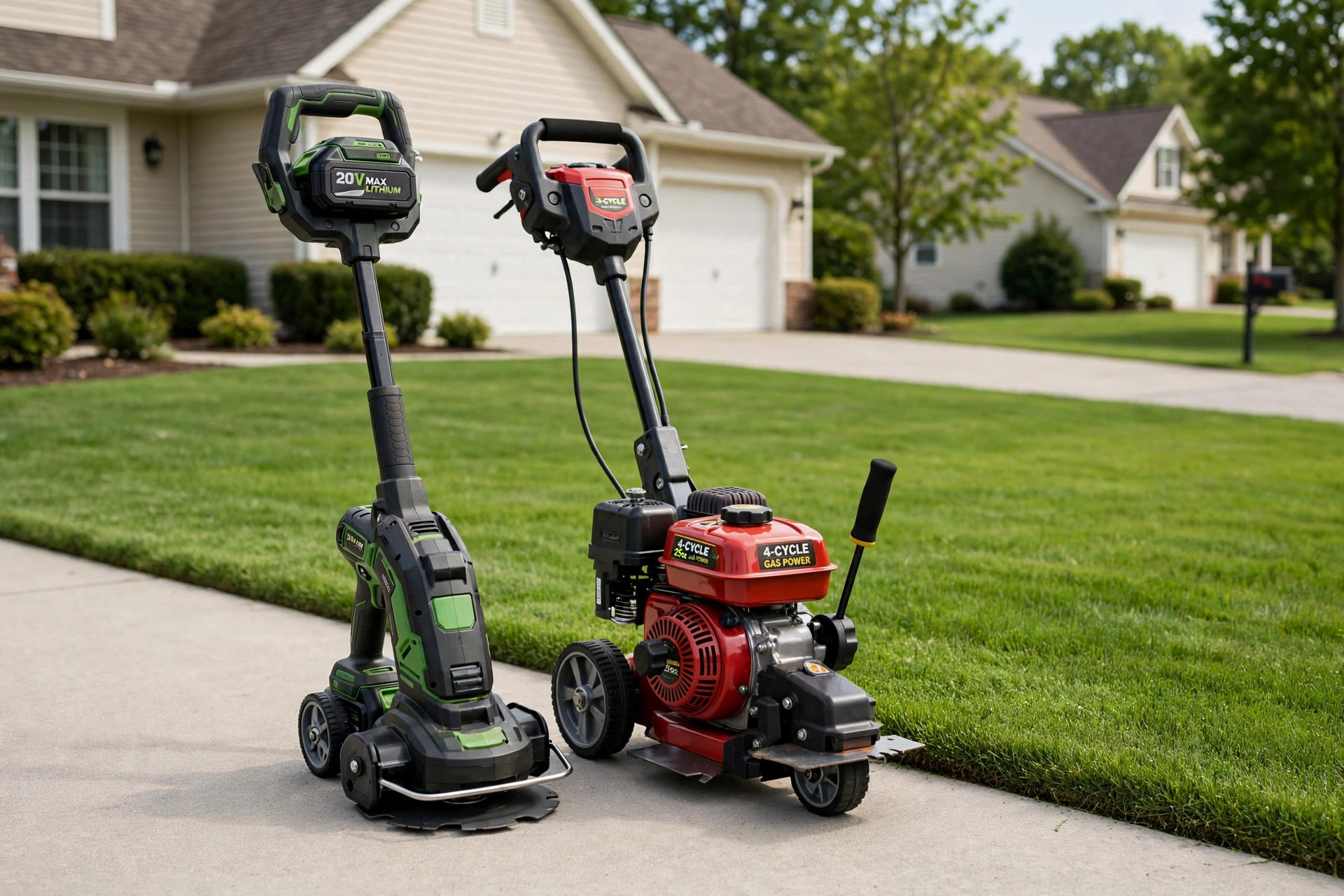

A crisp lawn edge makes a whole yard look neat. The grass may be green and the flowers may be fine, but a ragged edge along the walk still drags the look down. That is why so many owners buy a lawn edger. Two kinds rule the market: cordless edgers that run on battery power, and gas edgers that run on small engines. This cordless edger vs gas edger comparison guide lays out how the two compare on power, run time, cost, noise, weight, upkeep, and safety. Read it through, and you will know which one fits your yard.
Why a Good Edger Matters
An edger cuts a clean line where the lawn meets the walk, the drive, or the curb. Mowers can mow close, but they cannot carve a sharp trench. A string trimmer can edge, yet it leaves a rough line unless held just right. A real edger rides on wheels with a guide, so the blade stays at a fixed depth and angle. The result is a straight, crisp border that holds for weeks.
The choice between cordless and gas is the big one. It shapes how much power you get, how long you can work, how loud the job is, and how much care the tool asks of you. Pick wrong and you will fight the tool every week. Pick right and the job turns into a quick, easy part of the routine.
How Each Type Works: Cordless Edger vs Gas Edger Comparison Guide
A cordless edger runs on a rechargeable battery, most often 40 volts or 56 volts in lawn tools. An electric motor drives a steel blade. There is no cord and no fuel tank. You charge the battery indoors, slide it in, and start with a switch.
A gas edger runs on a small two-stroke or four-stroke engine. Two-stroke engines burn a mix of gasoline and oil. Four-stroke engines take straight gasoline with a separate oil sump. A pull cord starts the engine, and the motor spins the blade through a shaft.
Both cut the same way: a flat steel blade digs a shallow trench, guided by wheels. The power source is the whole difference.
Power and Cutting Ability
Power is where gas still holds the edge. A gas engine puts out strong, steady torque that never fades until the tank runs dry. It cuts through thick soil, tough roots, and overgrown edges that have gone a season or two without care. Many pros still favor gas for this reason. ECHO and other outdoor power brands build gas edgers for this kind of hard duty.
Cordless edgers have come a long way. Modern 56-volt models cut neat edges in normal soil with ease. They handle weekly upkeep with no trouble at all. Where they fall short is heavy first-time cutting on ground that has grown over for months. The battery gives less torque than a gas engine, and thick roots can slow the blade.
Rule of thumb: for new ground or overgrown edges, gas wins. For weekly upkeep of edges already in shape, cordless holds its own.
Run Time and Work Sessions
A gas edger runs as long as you keep fuel in it. Most small tanks give 30 to 60 minutes of work. Refill in two minutes and you are back at it. For large lots or full-day jobs, that endless run time is hard to beat.
A cordless edger runs on the battery charge. A typical large pack gives 30 to 45 minutes of edging. That is enough for most city and suburban yards in one pass. For bigger yards, you need a second battery. Swapping takes seconds, though each extra pack costs money.
Think about your yard size before you buy. A quarter-acre lot with a modest walk and drive can be edged in 15 to 20 minutes, so one battery is fine. A half acre with long borders may push one pack to its limit. Reviews at Consumer Reports test run time on real turf and can help you match a model to your lot.
Ease of Use and Starting
Cordless wins on ease. Push a button or pull a switch and the blade spins. No pull cord, no choke, no priming bulb, no warm-up. The tool is also lighter and quieter, so the whole job feels less like a chore.
Gas asks more of you. Pull-start engines can be stubborn, most so in cold spring air. You set the choke, prime the bulb, and pull the cord, hoping it catches on the second or third try. Once running, the engine shakes more than an electric motor, and vibration tires the hands on long jobs.
Weight matters too. Gas engines add pounds. A gas edger may weigh half again as much as a cordless one. If you tire fast or your arms tire on long borders, the lighter cordless tool is kinder to use.
Noise
Gas edgers are loud. Most run near 90 decibels or more at the ear, which is why hearing protection is a must. Neighbors hear it too. Many towns bar loud power tools before 8 or 9 in the morning, and a gas edger at dawn can draw complaints.
Cordless edgers run far quieter, near 65 to 75 decibels. You can still hear it well, but the tone is a hum rather than a roar. You can edge early in the morning without waking the street. That alone sells many owners on battery power.
Cost and Price
Up front, the two types cost much the same in the middle ranges. A solid cordless edger with battery and charger often sells for about the same as a mid-level gas edger. Bargain cordless tools cost less. Top gas models cost more.
Running costs differ. A cordless edger drinks cheap electricity. A full charge costs a few cents. Gas burns fuel that costs real money each time you fill the tank. Two-stroke engines also need two-stroke oil mixed with the gas. Over five years of weekly use, a gas edger can cost tens of dollars more per year in fuel and oil.
Battery replacement is the wild card. Packs last three to five years of hard use. A new pack can cost a third of the tool price. Gas engines need spark plugs, air filters, and blade work in the same span. The Home Depot lists parts and prices for both kinds, so you can price a five-year plan before you buy.
Care and Upkeep
Upkeep is where cordless tools shine. After each use, brush the blade clean and store the tool in a dry spot. Charge the battery before it sits for winter. That is nearly all there is. There is no fuel to go stale, no spark plug to foul, no oil to change.
Gas engines ask for real care. Two-stroke fuel mix goes stale in a few weeks, and stale fuel clogs the carburetor. Most owners add fuel stabilizer or drain the tank for winter. The air filter needs cleaning. The spark plug needs checks each season. Briggs & Stratton publishes full care charts for small engines, and it is worth a look before you buy gas.
Storage differs as well. A cordless edger hangs on the garage wall with no fumes and no spill risk. A gas edger holds fuel, so it needs a vented spot away from heat. You also must keep fresh fuel and oil on hand, which means a fuel can in the shed.
Smoke and Fumes
Gas engines burn fuel and give off exhaust. Two-stroke engines burn oil in the mix, so they smoke more and smell stronger. You breathe some of that exhaust as you work behind the tool. Four-stroke engines run cleaner but still give off fumes.
Cordless edgers give off no exhaust at all. If anyone in the home has asthma or dislikes the smell of small engines, cordless is the clear pick.
Blade Life and Repairs
Both types use flat steel blades that wear and nick over time. Blades are cheap and swap out with basic tools. Keep the blade sharp and the cut stays clean.
Repairs differ. Cordless edgers have few parts to break. If the motor dies, though, repair can cost more than a new tool. Gas edgers have many small parts that wear, but small-engine shops can fix nearly anything for a fair price. A gas engine can last 10 years or more with care. How-to guides at The Spruce walk through blade changes and basic care for both types.
Which Yard Fits Which Tool
Match the tool to the yard and the habit.
Choose cordless if: your yard is small to medium; you edge every week or two; you want quiet, light, easy work; you hate engine care; you own other tools on the same battery line. Brands like RYOBI and Greenworks build battery lines where one pack fits many yard tools, which cuts the cost per tool.
Choose gas if: your lot is large; edges have gone wild and need a first hard cut; you run long sessions without stops; you want one tool that never waits on a charger. Pro crews and large-lot owners still lean this way, and pros write about the trade at LawnStarter.
Think twice about gas if: you have noise rules, close neighbors, or no wish to store fuel. Think twice about cordless if: you edge only twice a year and each job is a jungle.
What to Look for When You Shop
Whatever power type you pick, check these points:
– Blade depth setting. You want at least three depth stops. Deeper cuts hold the edge longer. – Guide wheel. A solid guide wheel keeps the line straight along curbs and walks. – Weight and balance. Hold the tool as you would in use. It should feel steady, not nose-heavy. – Handle comfort. A padded or foam grip cuts vibration and blisters. – Battery line (cordless). If you own a trimmer or mower on a 40- or 56-volt line, buy the edger from the same line and share packs. John Deere and other makers offer battery tools alongside gas models, so you can compare side by side. – Engine size (gas). Look for 25 cubic centimeters or more for tough ground. – Warranty. Two to three years is normal. Read the fine print on batteries, which often carry their own shorter term.
For soil and seed care along the fresh edge, lawn pros point to brands like Pennington when patching bare spots the blade may expose.
Safety
Both types spin a sharp blade at ankle height. Treat them with respect.
– Wear closed shoes, long pants, safety glasses, and gloves every time. – With gas, add hearing protection, and keep fuel cans sealed and away from the work path. – Keep children and pets indoors while you edge. – Clear rocks, sticks, and wire from the edge line before you start. A blade can throw small stones. – Unplug or pull the battery before you touch the blade. With gas, shut the engine off and let it cool before blade work. – Never reach under the deck while the blade may still spin.
FAQ
Is a cordless edger strong enough for thick grass? For normal weekly edges, yes. For edges overgrown for months, a cordless blade may bog down. Make a first pass with a gas edger, then keep it up with the cordless tool.
How long does the battery last on a cordless edger? Most large packs give 30 to 45 minutes of steady edging. That covers most suburban yards. Carry a spare pack if your lot is large or your borders are long.
Do gas edgers need mixed fuel? Two-stroke engines need a gas-and-oil mix, sold premixed or mixed at home. Four-stroke engines take plain gas with oil in a separate sump. Check the manual before you fill.
Which type lasts longer? A cared-for gas engine can run 10 years or more. Cordless tools last many years too, but you will likely buy at least one new battery in that span. The body of the tool often outlives the packs.
Can I use my trimmer batteries in the edger? Only if the edger is on the same battery line and voltage. Many brands share packs across trimmers, mowers, and edgers, which is a real money saver. Cross-brand packs do not fit.
Is a gas edger too loud for morning work? It can be. Gas edgers run near 90 decibels. Many towns set quiet hours until 8 or 9 a.m. A cordless edger hums along quietly and is far kinder to neighbors.
A Short Final Word
This cordless edger vs gas edger comparison guide comes down to a simple trade. Cordless gives you quiet, light, easy work with almost no upkeep, and it is the right pick for most small and mid-size yards with regular care. Gas gives you raw power and endless run time, and it stays the right pick for large lots, wild first cuts, and long work days. Match the tool to your yard, buy a blade you can swap with ease, and keep the edge cut often. The line will stay sharp, and the whole yard will look better for it.
Want to dress up the beds inside that crisp edge? See our flagstone walkway ideas for backyards for paths that pair well with sharp borders. Keeping the whole yard in shape calls for gear: read our guide to cheap lawn mower parts online usa and our look at the lawn striping kit for riding mowers for pro-style stripes.
References
ECHO USA. (n.d.). Outdoor power equipment. https://www.echo-usa.com Consumer Reports. (n.d.). Product reviews and ratings. https://www.consumerreports.org The Spruce. (n.d.). Home and garden guides. https://www.thespruce.com The Home Depot. (n.d.). Home improvement retailer. https://www.homedepot.com RYOBI. (n.d.). Power tools and outdoor products. https://www.ryobitools.com Greenworks. (n.d.). Battery-powered outdoor tools. https://www.greenworkstools.com Briggs & Stratton. (n.d.). Small engines and power products. https://www.briggsandstratton.com LawnStarter. (n.d.). Lawn care services and guides. https://www.lawnstarter.com Pennington. (n.d.). Lawn and garden products. https://www.pennington.com John Deere. (n.d.). Lawn and garden equipment. https://www.deere.com
Was this guide helpful?

About Michael Thompson
The My Garden US editorial team writes practical, in-depth home and garden guides for American homeowners — tested advice, no fluff.
You May Also Like

Affordable Tree Stump Grinding Service Near Me: What It Costs and How to Choose
May 4, 2026 0 views
Edging Flower Beds with Stone Ideas That Lift Any Yard
March 20, 2026 0 views
Lawn Sweeper for Pine Needles Reviews: What Real Owners Say
April 17, 2026 0 views