Introduction
When the swimming season ends, every pool owner faces the same job. The water must be shut down, cleaned, and covered for the long cold months ahead. The best pool cover for inground winter use is the one tool that does the most work during this rest period. It keeps leaves out. It keeps snow and ice from harming the pool shell. It blocks sunlight so algae cannot grow in the dark weeks of winter. And it adds a layer of safety around a pool that no one should enter until spring.
Many owners treat the cover as a simple tarp. That is a mistake. A good cover costs more at first, but it saves money on chemicals, labor, and repairs when the pool opens again. This guide walks through the types of winter covers for inground pools, what to look for when you shop, what they cost, and how to care for them through the season.
Why a Winter Cover Matters: Best Pool Cover for Inground Winter
An inground pool sits out in the weather all winter. Leaves blow in from nearby trees. Rain and snow add water and dirt. Sunlight still reaches the water on mild days. Without a cover, all of this flows straight into the pool. Algae spores ride in on leaves and dust. When the water warms a little in late winter, those spores wake up and bloom.
A cover breaks this chain. It blocks the sun, so algae has no light to feed on. It keeps out most leaves and trash. It lowers the amount of chlorine and shock you will need at spring opening. Many owners find that a pool opened from under a good winter cover needs only light brushing and a normal dose of chemicals before it is ready to swim.
The cover also protects the pool itself. Ice can push against tile lines and coping stones, and a cover steadies the water level to cut that force. For vinyl liner pools, a cover shields the liner from wind-borne grit. That matters, because Homeguides keep rising each year.
There is also a safety side. An open pool in winter is a hazard for children and pets who wander into the yard. Safety-rated covers stretch tight and hold weight. They are not a fence, but they add one more guard when no one is watching the water.
How to Choose the Best Pool Cover for Inground Winter
Choosing a cover is not hard once you know the steps. Start with facts about your pool, then match the cover type to your climate and your budget.
Measure Your Pool First
Covers are sold by pool size, but the cover must be larger than the water surface. Plan on five to eight feet of extra length and width for anchoring at the deck. Measure twice, note the shape, and remove steps and ladders so the cover lies flat.
Think About Your Climate
Cold regions with heavy snow need strong covers. The fabric must bear the weight of snow without tearing, and the weave must resist ice damage. Solid covers shed snow well but hold water on top, so a small cover pump is almost a must. Mesh covers let rain and melted snow drain through, which cuts the load but lets fine silt pass into the pool.
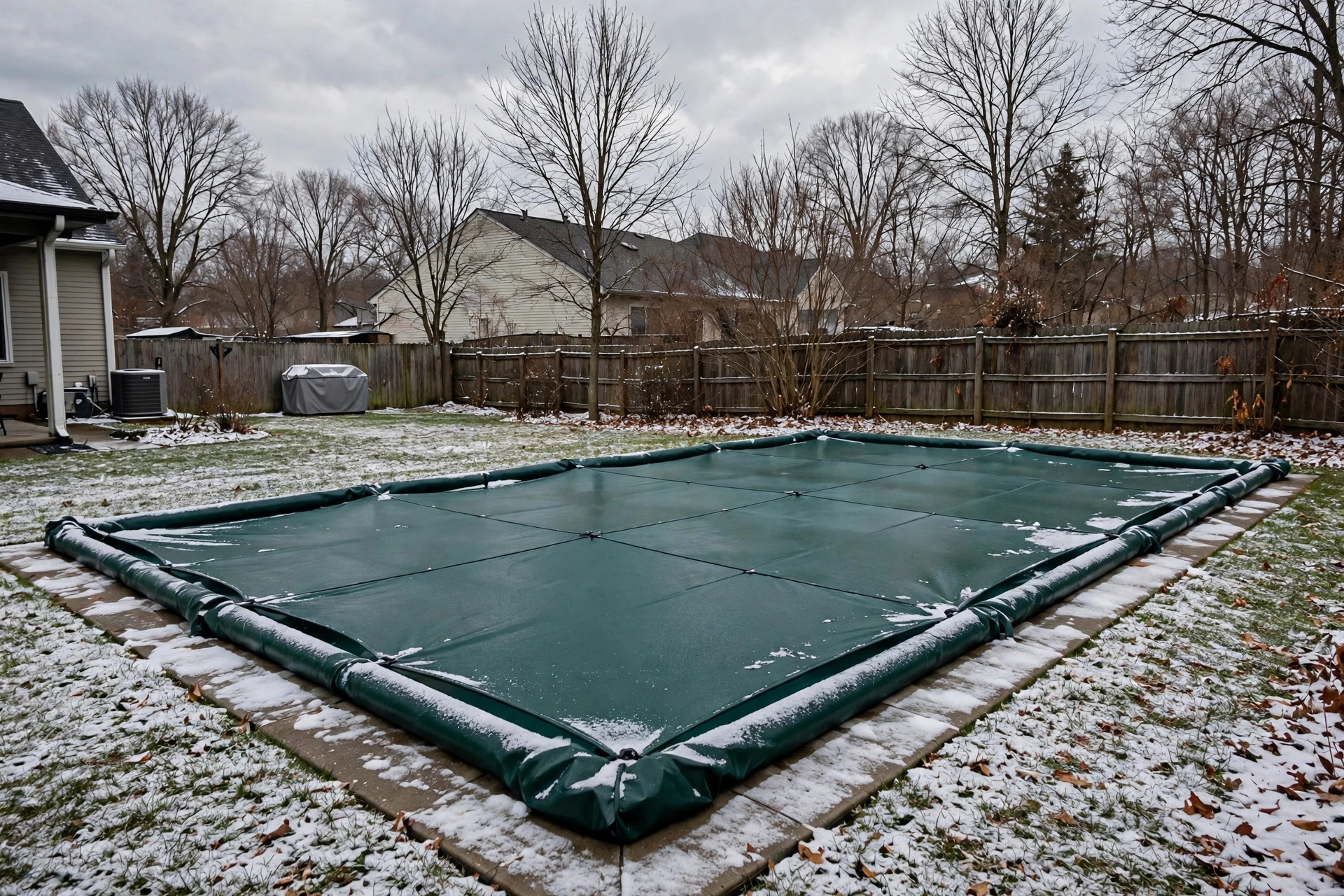
Windy areas need covers with good anchoring. Winter covers hold on with water bags or cable and winch systems. Water bags sit on the deck and pin the cover edge down. They work well on smooth decks. Cable systems cinch the cover tight around the pool. They hold better in wind but need a tight fit. In windy states, many owners use both.
Mild-winter regions have an easier choice. A lighter solid or mesh cover may do the job, and you can open earlier. But do not skip the cover even in a mild climate. Leaves and algae do not take the winter off in warm states.
Check the Hardware
Look at what comes in the box. A good kit includes the cover, a storage bag, and patch material. Check the seams and grommets. Heat-sealed seams and metal grommets outlast the cheap kind. Read the warranty. A five-year warranty is a fair sign of honest quality.
Types of Winter Pool Covers for Inground Pools
Three main types serve inground pools in winter. Each has its own strengths, its own weak points, and its own price range.
Solid Winter Covers
Solid winter covers are the most common choice for seasonal closing. They are made of thick polyethylene or vinyl fabric that blocks all light and water. Leaves stay on top. Sunlight never reaches the water. Algae cannot grow in the dark.
The trade-off is water on top of the cover. Rain and melted snow pool on the surface. You must pump or siphon it off through the winter, or the weight will drag the cover down. A small automatic cover pump does this job with little effort and is worth its cost.
Solid covers come in standard and deluxe grades. Standard covers use lighter fabric and shorter warranties. Deluxe covers use heavier scrim, stronger seams, and longer warranties. For cold climates, the deluxe grade pays for itself. A solid winter cover is often the best pool cover for inground winter owners who want the cleanest spring opening.
Mesh Winter Covers
Mesh covers are woven so water passes through while leaves and trash stay on top. Rain and melted snow drain into the pool instead of pooling on the cover. You skip the pump and the winter visits to drain standing water.
The price of this ease is water quality. Fine silt and dissolved dirt pass through the mesh with the water. The pool opens dirtier in spring and needs more cleaning and more chemicals. Mesh works best where winters are wet and owners want low upkeep through the season.
Safety Covers
Safety covers are the top tier. They stretch drum-tight across the pool on straps anchored into the deck. They hold the weight of a grown adult, and many meet strict safety standards. They come in solid and mesh forms. Solid safety covers block light like standard solid covers. Mesh safety covers drain like standard mesh covers.
Safety covers cost more and need professional anchoring. Holes are drilled into the deck for brass anchors. The install is work, but the cover then lasts many years and goes on fast each fall. For homes with children or pets, a safety cover is worth strong thought.
Cost and Price
Prices move with pool size, cover type, and grade. As a rough guide, standard solid winter covers for common inground sizes run from about sixty to one hundred fifty dollars. Deluxe solid covers run from about one hundred fifty to three hundred dollars. Mesh covers run from about one hundred to two hundred fifty dollars. Safety covers start near five hundred dollars and climb past two thousand for large pools with full installs.
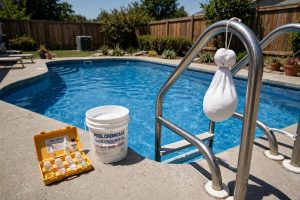
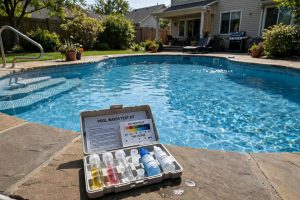
Do not forget the extras. Water bags cost a few dollars each, and a pool may need a dozen or more. A cable and winch kit runs twenty to forty dollars. A cover pump costs forty to ninety dollars. Closing chemicals add another thirty to sixty dollars. Many owners buy Www.lesliespool.com that bundle the chemicals in one box.
Compare prices across sellers before you buy. Listings of Www.poolwarehouse.com from pool supply stores help you see the range for your pool size. Www.homedepot.com also carry covers and the tools that go with them. A little shopping can save fifty dollars or more on the same cover.
Think in terms of cost per year. A one hundred dollar cover that lasts two seasons costs fifty dollars a year. A two hundred fifty dollar cover that lasts five seasons costs fifty dollars a year too, but it protects better in between.
Care and Upkeep Through Winter
A winter cover is not a set-and-forget item. A little care through the cold months keeps it working and stretches its life.
Check the water level under a solid cover once a month if you can. If the pool loses water, the cover sags and strains its anchors. Add water through the winter on mild days to keep the level right. Pump standing water off solid covers after heavy rain or snowmelt. Do not let a foot of water sit on the cover for weeks.
Brush leaves off the cover before they rot into a mat. A soft broom or a leaf blower does the job fast. After big snowfalls, clear heavy snow with a soft tool. Never use a sharp shovel or a metal rake. One cut can ruin a cover.
Watch the water bags. They can shift, leak, or freeze and split. Replace split bags at once so wind cannot get under the cover edge. A loose edge flaps in the wind and wears the fabric thin. Keep a few spare bags on hand, and buy In The Swim before the season starts so you are never caught short. For clearing snow without cutting the fabric, a Lowe’s from a home improvement store does the job safely. Www.swimuniversity.com walk through these monthly checks in plain order.
In late winter, walk the yard and look for low spots. Ice can shift covers and pull anchors loose. Fix small problems before spring storms make them big. The hour you spend in February can save a weekend of work in April.
Safety First
A pool cover is a safety aid, not a safety plan. Keep the fence locked and the gate latched all winter. Tell children that the pool is closed and off limits. Tell guests the same. Dogs should not be let out near the pool alone. Federal Www.cpsc.gov backs the use of barriers and covers together, never as a stand-in for a fence or for watchful adults.
Safety covers that meet industry standards can hold a person’s weight. Standard solid and mesh winter covers cannot. They look solid when snow lies on them, but they will not hold a child or a pet. Never walk on a standard winter cover. Never let children play on a snow-covered pool. The sight is tempting, but the risk is real.
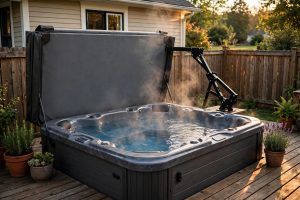
Store pool chemicals away from the house and out of reach of children. Winter is a good time to check the storage shed and throw out old, swollen, or leaking chemical containers per local rules. U.S. Consumer Product Safety Commission also remind owners that layers of protection work best: fence, cover, alarm, and watchful adults together. Hot tub owners face the same winter questions, and makers of Www.hotspring.com and Www.bullfrogspas.com give the same advice about cover fit and heat loss.
Frequently Asked Questions
Should I drain my inground pool for winter?
No. An inground pool should not be fully drained. The water holds the walls and floor in place against ground pressure. Drain only below the skimmer and the return lines. An empty pool can pop out of the ground or crack. Lowering the water a little is normal. Emptying the pool is not.
When should I put the winter cover on?
Put the cover on after the water stays below about 65 degrees. Covering too early, while the water is still warm, traps heat and feeds algae. In most states this means late September to late October. Once the water is cold and the leaves start to fall, it is time.
Can I use a tarp instead of a real pool cover?
A blue tarp can work in a pinch, but it is a poor stand-in. Tarps tear at the grommets, shift in the wind, and let light leak through the thin weave. A real winter cover is sized for pools, has strong hems and grommets, and blocks light fully. The price gap is small. The result gap is large.
How long should a winter pool cover last?
A standard solid cover lasts two to four seasons. A deluxe cover lasts four to seven. A mesh cover lasts three to five. A safety cover can last eight to twelve years with care. Sun, ice, and wind wear all of them down. Storing the cover clean and dry each spring adds a year or more to its life.
Do I need a pillow under my winter cover?
Air pillows help on above-ground pools, where ice pressure can harm the walls. On inground pools they are optional. Some owners use them to lift the cover center so water runs off. Most inground owners skip the pillow and rely on a cover pump instead. Either method works. Pick the one you will keep up with.
What is the best way to clean the cover in spring?
Let the cover dry, then brush off leaves and dirt with a soft broom. Hose it down and let it dry fully before folding. Fold, do not cram. Store it in its bag or a clean bin in a dry shed. A Homeguides can clear the last bits of trash from the pool floor once the cover is off. General Www.thespruce.com cover these spring tasks step by step. Good spring care starts with good storage.
A Short Final Word
The best pool cover for inground winter is the one that fits your pool, suits your climate, and matches the care you will give it. Solid covers give the cleanest spring. Mesh covers give the easiest winter. Safety covers give the most protection and the longest life. Measure well, anchor firmly, and check the cover through the cold months. When you Homeguides, you will be glad you chose with care in the fall.
Related guides on this site include best above ground pool for families, how to open pool for summer season, and best pool pump for inground pools.
References
Bullfrog Spas. (n.d.). Hot tubs and spas. https://www.bullfrogspas.com Homeguides. (n.d.). Home and garden information. https://homeguides.example.com/pool-liner-replacement-cost-estimate/ Homeguides. (n.d.). Home and garden information. https://homeguides.example.com/best-pool-vacuum-for-leaves-reviews/ Hot Spring Spas. (n.d.). Hot tubs and spas. https://www.hotspring.com In The Swim. (n.d.). Pool supplies and accessories. https://www.intheswim.com Leslie’s Pool Supplies. (n.d.). Pool supplies and equipment. https://www.lesliespool.com Lowe’s. (n.d.). Home improvement products. https://www.lowes.com Pool Warehouse. (n.d.). Pool equipment and supplies. https://www.poolwarehouse.com Swim University. (n.d.). Pool and hot tub care guides. https://www.swimuniversity.com The Home Depot. (n.d.). Home improvement products. https://www.homedepot.com U.S. Consumer Product Safety Commission. (n.d.). Product safety information. https://www.cpsc.gov Www. (n.d.). Home and garden information. https://www
Was this guide helpful?

About Sarah Mitchell
The My Garden US editorial team writes practical, in-depth home and garden guides for American homeowners — tested advice, no fluff.