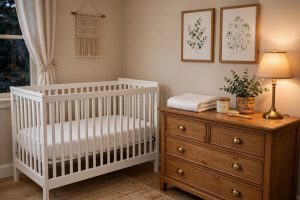

A baby who wears cloth diapers needs a place to keep them. Parents who choose cloth soon learn that the best nursery dresser for cloth diaper storage is not the same as an ordinary dresser. Cloth diapers are bulky. The clean ones take up more room than paper diapers. The used ones need a special place of their own. A good dresser answers both needs at once. It holds the fresh stack where you can reach them in the dark. It also leaves room for the wet bag or pail that holds the soiled ones until wash day. When the dresser is chosen well, every change goes faster. When it is chosen badly, the nursery stays messy and the parent stays tired. This guide explains what to look for, what to avoid, and how to set up a dresser that serves a cloth diaper family from the first week home until potty training.
Why the Right Dresser Matters for Cloth Diapering
Disposable diapers are thin and flat. You can stuff a large pack into one drawer and forget about it. Cloth diapers are a different matter. A single fitted cloth diaper, folded and snapped, is as thick as a small book. A family that uses cloth will keep twenty to thirty diapers in rotation. Add liners, covers, wipes, and cream, and the supply pile grows large. It will not fit in a shallow drawer built for baby socks.
The best nursery dresser for cloth diaper storage also solves the second half of the problem. Used diapers must wait somewhere between changes and wash day. Most families give them a wet bag or a pail. That pail needs a home. Some parents keep it on the floor beside the dresser. Others keep a wet bag hanging inside a tall drawer or in the open space under a changing tray. The dresser you choose should leave room for this. A dresser with a mix of wide drawers and open shelves often works better than one with six identical shallow drawers.
Speed matters too. Newborns need changing ten to twelve times a day. Every change should take the same few steps. Open the drawer. Take the diaper and the cover. Change the baby. Drop the used diaper in the pail. Close the drawer. If the dresser forces you to dig or to walk across the room, you will feel it by the tenth change.
What to Look for in a Nursery Dresser: Best Nursery Dresser for Cloth Diaper Storage
Drawer Depth and Width
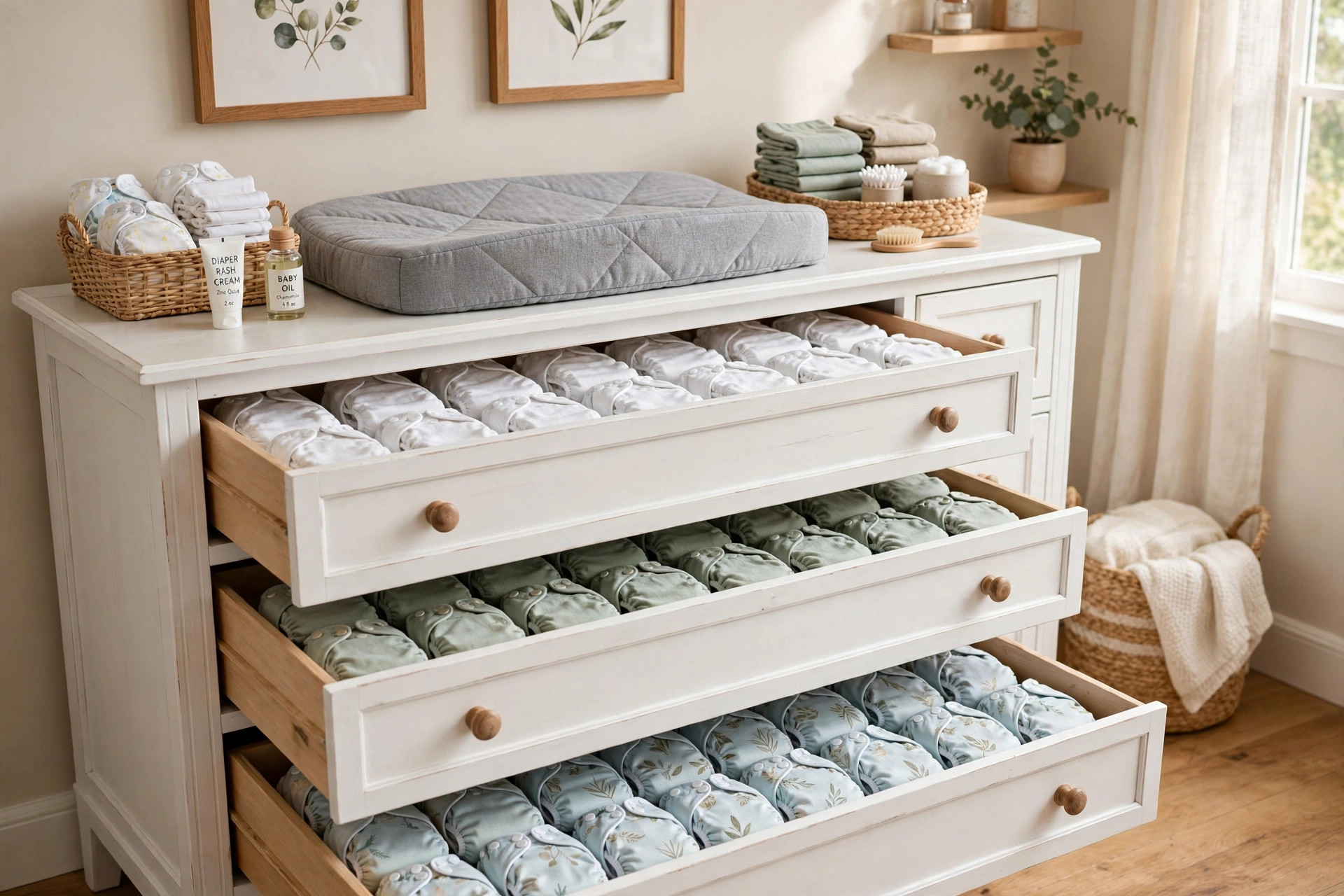
Drawers should be deep enough to stand cloth diapers on edge, like books on a shelf. This filing method lets you see every diaper at once. You do not have to lift the stack to find the one you want. For folded diapers, a drawer depth of at least six inches works well. Some dressers meant for nurseries have drawers eight inches deep, and those are ideal.
Wide drawers matter more than many drawers. Two deep, wide drawers often hold more than six small ones. Small drawers fill up with one category of supplies and leave you short of space. When you shop, open the drawers and picture twenty folded diapers in a row. If they will not fit side by side, keep looking.
Top Surface for Changing
Many parents place a contoured changing pad on the dresser top. This turns the dresser into a changing station. For this to work, the top must be wide and flat. A dresser that is at least 33 inches tall keeps most adults from bending too far. The top should be at least 32 inches wide to hold the pad with a little room at the sides for cream and wipes. A raised lip or rim around the top is a fine feature, though not a must. If the dresser has an overhanging frame or decorative trim that eats into the flat area, it may not serve as a changing station. Many families pair a dresser with a nursery dresser changing table combo for small space when the nursery is tight.
Solid Build and Smooth Drawers
A nursery dresser will open and close hundreds of times a month. Cheap drawer slides wear out. They stick, they sag, and they pinch small fingers. Look for drawers that glide on metal slides or wooden runners and stop before they fall out. The frame should feel heavy when you push on the corner. Solid pine, poplar, or hardwood dressers last through one baby and into the toddler years. Particle board dressers are cheaper, but they swell when wet and their drawer slides often fail early. In a room where damp wipes and wet diapers are part of daily life, solid wood is worth the extra money.
Anchoring Hardware Included
Every tall dresser in a nursery should be anchored to the wall. Babies learn to pull up on furniture. Toddlers climb. The Consumer Product Safety Commission explains the danger and the fix on cpsc.gov, and many dressers ship anchoring kits in the box. If the kit is missing, buy one before the dresser goes in the room.
Types of Dressers That Work for Cloth Diapers
Wide Three Drawer Dressers
The wide dresser with three long drawers is the classic choice. The drawers are deep and generous. One drawer can hold the full diaper stash filed on edge. The second can hold covers, liners, and swim diapers. The third can hold pajamas and spare onesies. The top serves as the changing area. Brands like DaVinci Baby and Delta Children make nursery dressers in this style at fair prices.
Tall Six Drawer Dressers
Tall dressers stand about 48 inches high. They give more drawers without taking more floor space. The height can make changing awkward, since 48 inches is tall for most parents. Many families use a tall dresser for bulk storage and keep the changing pad on a shorter piece. Measure the drawer width before you buy.
Dressers With Open Shelving
Some nursery dressers mix closed drawers with open cubbies or shelves. This design suits cloth families well. The closed drawers hide the mess. The open shelves hold the diaper pail, the folded wipes, and the stack of diapers you use every day. Everything stays within reach. Pottery Barn Kids and similar shops sell this style, and general retailers like Target and Walmart carry budget versions.
Setting Up the Drawers: A Simple System
The best nursery dresser for cloth diaper storage works best with a simple layout. Keep it plain. The person changing the baby at three in the morning should not need a map.
Use the top drawer, or the drawer closest to the changing pad, for the daily kit. This drawer holds the clean diapers, folded and filed on edge. Put the diaper covers and inserts next to them. Place the cloth wipes in a small basket at one end. Keep the diaper cream and a spare pacifier in the same drawer. When everything for one change lives in one drawer, the change goes fast. Use a second drawer for backups. This is where the extra covers, the nighttime diapers, and the swim diapers live. Keep the next size up here too, so it is ready when the baby grows.
Use the third drawer for the wet bag system. Hang a medium wet bag on a hook inside the drawer, or fold two wet bags flat at the front. This drawer can also hold the pail liners and the odor drops if you use them. Keeping the dirty laundry supplies with the dresser means the whole cloth routine happens in one spot.
Label each drawer. A strip of masking tape with a written word is enough. Labels help tired parents and visiting grandparents. They also help the day the sitter comes. Thin boxes or fabric cubes turn one wide drawer into neat rows. They stop the filed diapers from falling over when the drawer is half empty.
Cost and Price: What to Expect
Nursery dressers range from about one hundred dollars to more than a thousand. The price depends on the wood, the brand, and the size.
Budget dressers, around one hundred to two hundred and fifty dollars, are common at Target and Walmart. They are often made of engineered wood. They can work well if the drawers are deep and the slides are smooth. Check the reviews for complaints about sticking drawers before you buy.
Mid range dressers, around three hundred to six hundred dollars, are the sweet spot for most cloth families. They are usually solid wood. They include better drawer slides and anchoring kits. DaVinci Baby and Delta Children both sell strong mid range options. This is where most parents find the best nursery dresser for cloth diaper storage without overpaying.
High end dressers, seven hundred dollars and up, add design options. They are beautiful but not necessary. A high end dresser holds the same twenty diapers as a mid range one. Buy high end for the look of the room, not for the function.
A used dresser can save money. Check that the drawers run true and that no slides are bent. Sand and repaint if the finish is worn. Always anchor a used dresser to the wall, since older pieces may not include hardware.
Care and Upkeep
Wipe the dresser top after changes. Diaper cream and water leave marks on unfinished wood. A quick wipe with a damp cloth keeps the finish sound. Keep a soft towel under the changing pad to catch drips.
Empty the wet bag drawer on wash day and air it out. Damp air trapped in a closed drawer can make the wood smell. Leave the drawer open for an hour while the laundry runs. Sprinkle a little baking soda in the drawer now and then if odors linger.
Check the anchoring hardware twice a year. Houses settle. Screws loosen. A quick tug on the top of the dresser tells you if the anchor still holds firm.
When the baby outgrows diapers, the dresser should still serve the room. That is one more reason to buy solid wood. A good dresser becomes a clothes dresser for a toddler, then a storage piece for a school child. The drawers that held cloth diapers hold folded shirts just as well.
Safety First
The nursery is a place for a small child. Every piece of furniture in it should be safe. Keep these rules in mind.
Anchor all tall furniture to the wall, as noted above. This is the single most important step.
Choose low odor finishes. Babies sleep in this room for twelve hours a night. Paint and stain fumes should be gone before the baby arrives.
Keep small items out of the baby’s reach. Drawer knobs should be round and firmly fixed. Avoid dressers with decorative cutouts where a toddler’s finger can catch.
Never leave a baby alone on the dresser top. Even newborns can surprise you. Keep one hand on the baby during every change. Some parents find it helps to keep the changing area near the nursery glider chair with ottoman for breastfeeding, so feeding and changing happen in one corner.
Watch for recalls. The Consumer Product Safety Commission lists furniture recalls on its site. Check the model name before you buy, new or used.
Frequently Asked Questions
How many cloth diapers should the dresser hold?
Plan for twenty to thirty diapers in the active stash. The dresser should hold at least that many, filed on edge, in one drawer. If your stash is larger, use two drawers. The goal is to wash every two to three days without running short.
Can I use a regular bedroom dresser instead of a nursery dresser?
Yes, if it meets the same tests. The drawers must be deep enough for filed diapers. The top must be flat and wide enough for a changing pad. The piece must be anchored to the wall. A sturdy bedroom dresser from a shop like IKEA can work as well as a nursery model.
Where should the diaper pail go?
Beside the dresser or in the bottom open shelf is best. The pail should be within arm’s reach of the changing spot. You should not have to carry a soiled diaper across the room. A pail with a foot pedal lid keeps smells in and keeps toddlers out.
What is the best drawer layout for cloth diapers?
Top drawer for the daily kit: clean diapers, covers, wipes, cream. Second drawer for extras: night diapers, swim diapers, next size up. Third drawer or open shelf for the wet bags and pail liners. The Spruce has nursery organization ideas that show similar layouts in photos.
Should the dresser double as a changing table?
For most families, yes. A dresser with a changing pad on top saves floor space and keeps supplies together. Make sure the top is high enough that you do not stoop. If the room is small, a best convertible crib for small nursery room paired with a dresser changer can free up real space.
How do I keep the nursery from smelling?
Wash every two to three days. Keep the pail closed. Air out the wet bag drawer on wash day. Baking soda in the drawer absorbs odor. Avoid strong air fresheners near the baby.
A Short Final Word
Cloth diapering asks more of a nursery dresser than paper diapers do. The diapers are thicker. The system has two sides, clean and used. The pace is fast, ten or more changes a day. But the answer is not complex. Find a dresser with deep, wide drawers and a flat top. Set one drawer for the daily kit, one for backups, and one for the dirty laundry gear. Anchor it to the wall. Label the drawers. Then let the system do the work. The best nursery dresser for cloth diaper storage is the one that makes the third night home a little easier. Buy for that night, and the rest of the nursery will follow.
References
DaVinci Baby. (n.d.). Nursery furniture. https://www.davincibaby.com Delta Children’s Products. (n.d.). Children’s furniture. https://www.deltachildren.com IKEA. (n.d.). Home furnishings. https://www.ikea.com Pottery Barn Kids. (n.d.). Kids furniture and decor. https://www.potterybarnkids.com Target. (n.d.). Retail store. https://www.target.com The Spruce. (n.d.). Home and garden advice. https://www.thespruce.com U.S. Consumer Product Safety Commission. (n.d.). Product safety information. https://www.cpsc.gov Walmart. (n.d.). Everyday low prices. https://www.walmart.com
Was this guide helpful?

About James Carter
The My Garden US editorial team writes practical, in-depth home and garden guides for American homeowners — tested advice, no fluff.
You May Also Like
The Best Nursery Chair for Tall Parents Comfort: A Plain Guide for Long-Legged Mothers and Fathers
September 29, 2026 0 views
Best Nursery Storage for Small Apartment Living
January 18, 2026 0 views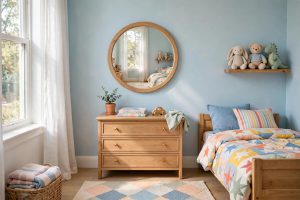
Kids Wall Mirror for Bedroom Decor Safety: A Buyer’s Guide
April 5, 2026 0 views