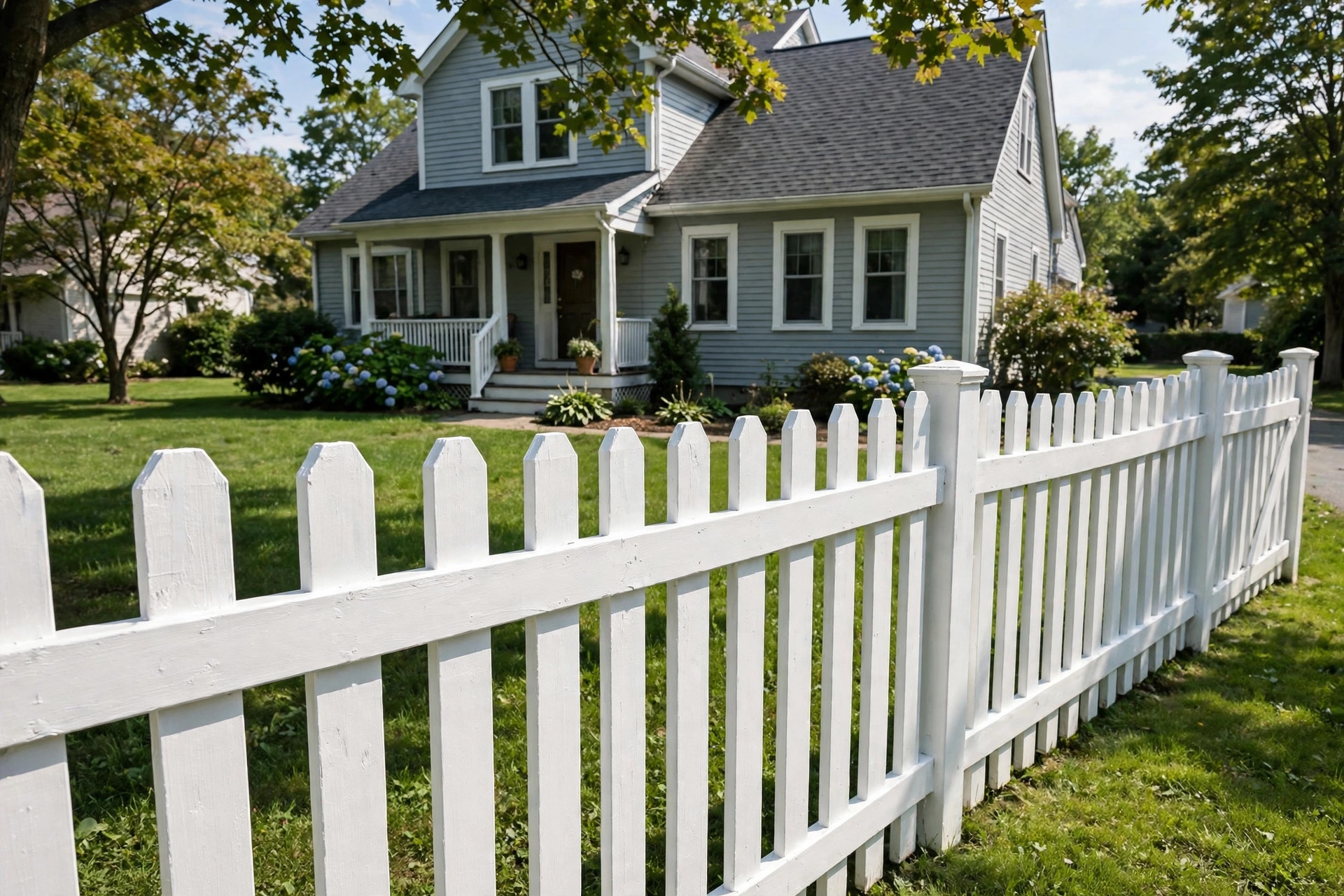

The white picket fence is one of the most loved sights in American home life. It speaks of care, order, and a warm welcome. But keeping it white is a job that takes the right paint. This guide to white picket fence paint reviews usa looks at what home painters and fence owners across the country say about the best products, how much they cost, and how to get a finish that lasts.
A fence stands in the weather all year. It gets sun, rain, snow, and heat. Ordinary wall paint will peel and crack in one season. The reviews gathered here point to paints made for exterior wood. They resist fading, they fight mildew, and they stay bright white for years.
Why Good Fence Paint Matters
A picket fence has more surface area than most people guess. Every picket has a front, a back, and two edges. Cheap paint fails on all of them at once. Water gets into the wood, and the paint lifts. Within a year, the fence looks grey and worn.
Good exterior paint forms a tough skin over the wood. It keeps water out and holds its color in strong sun. Reviews from American homeowners put the life of a quality paint job at three to seven years before new work is needed. A cheap job may fail in two. When you count the hours spent on painting, the better paint is the cheaper choice over time.
What Reviewers Say About the Top Brands: White Picket Fence Paint Reviews Usa
American shoppers return to a small group of trusted names when they shop for white fence paint. Reviewers praise some lines for cover power, others for long life, and still others for price.
Acrylic Latex Exterior Paints
The most common choice in white picket fence paint reviews usa is a 100 percent acrylic latex paint. These paints are easy to clean up with water, and they stay flexible as wood moves with the seasons. Reviewers at The Home Depot often give top marks to Behr Premium Plus and Behr Marquee lines for thick coverage. Many say two coats on new wood give a full, clean white.
Sherwin-Williams paints also earn strong reviews. Homeowners on Sherwin-Williams pages praise lines such as Duration and SuperPaint for holding a bright white without yellowing. The company notes that its exterior formulas carry strong resistance to mildew, a point that matters in humid states like Florida and Louisiana.
Benjamin Moore is another name that comes up often. Reviewers like Aura and Regal Select for smooth brush work and deep white tone. The Benjamin Moore site describes Aura as a self-priming paint, though reviewers still suggest a primer on bare cedar or redwood.
Budget and Mid-Price Options
Not every fence needs a premium paint. Reviewers at Lowe’s say store-brand exterior acrylics do a fair job on fences that are already in good shape. The trade-off is life. Where a premium paint may last five years, a budget paint may need new coats in three.
A useful rule from the reviews: spend your money where the weather is harsh. A fence in Arizona sun or Minnesota winters deserves the stronger paint. A fence in a mild, shaded yard can get by with a mid-price line.
Paint Versus Stain for Fences
Some reviewers ask whether a white solid-color stain might beat paint. Guides at This Old House explain that solid stains soak into the wood instead of sitting on top. They peel less, but they fade sooner and need fresh coats more often. Paint gives the crisp, bright white that a picket fence is famous for. Most white picket fence paint reviews usa still prefer paint for the classic look.
How to Choose the Right Paint
Check the Surface First
Old fences carry old problems. Walk the full length of the fence before you buy a single can. Look for peeling paint, cracked boards, and soft spots where wood has started to rot. A scraper and a stiff brush will tell you where old paint is loose.
If the fence was painted before, you need only wash, scrape, and sand it. If it is new bare wood, a primer is a must. Reviews agree that skipping primer on bare wood is the single most common cause of early peeling.
Finish and Sheen
Flat sheen hides flaws but picks up dirt. Gloss is easy to wash but shows every brush mark. Most reviewers pick satin or semi-gloss for a fence. It looks clean, sheds dirt, and gives a mild shine that suits a picket fence.
Climate Factors
Sun breaks paint down faster than almost anything else. In the South and the Southwest, reviewers look for paints that claim strong UV resistance. In the North, the main worry is water getting behind the paint and freezing. In wet states, a formula that resists mildew earns its keep. Articles at The Spruce suggest that regional weather should guide the choice as much as brand name.
Color Match and Brightness
White is not one color. Some whites lean warm, with a touch of yellow. Others lean cool, with a touch of blue. Reviewers often buy a small sample and paint two or three pickets to compare in daylight. A bright, neutral white keeps the fence looking fresh the longest.
Types of White Paint for Picket Fences
Acrylic latex exterior paint. The top pick in most white picket fence paint reviews usa. Easy to use, fast to dry, and long lasting.
Oil-based exterior paint. Once the standard, now less common. It gives a hard, smooth finish but is slow to dry and harder to clean up. Some reviewers still use it for the final coat on old fences.
Solid-color acrylic stain. A middle path between paint and stain. It gives good coverage but must be redone more often.
Self-priming paint-and-primer in one. Reviewers like these for repainting fences with sound old paint. On bare wood, most reviewers still add a real primer.
Cost and Price
Paint prices in the United States vary by brand and line. Expect to pay about 30 to 60 dollars per gallon for quality exterior acrylic paint. A primer runs about 20 to 40 dollars per gallon.
A 100-foot picket fence, about four feet tall, needs roughly three to four gallons of paint for two coats, counting both sides. Add one to two gallons of primer for bare wood. Most reviewers spend between 150 and 300 dollars on paint and primer for a fence of that size.
Tools add to the bill. A good brush set, rollers, a paint tray, painter’s tape, sandpaper, and a drop cloth may add 50 to 80 dollars. Many reviewers also rent or buy a paint sprayer for faster work. If you hire the job out instead, compare fence staining service prices near you before you sign.
How to Paint a Picket Fence
A neat fence comes from neat prep work. Reviewers who rate their projects highly almost always follow the same steps.
1. Clean the fence. Wash with a garden hose and a mild cleaner. A pressure washer on a low setting works well. Let the fence dry fully.
2. Scrape and sand. Remove all loose and peeling paint with a scraper. Sand the edges smooth so the new paint grips.
3. Repair and prime. Replace rotted pickets. Fill cracks with exterior wood filler. Prime bare wood and any bare spots.
4. Paint the details first. Do the tops, the edges, and the rails first. Then paint the flat faces. This order keeps drips off the finished work.
5. Apply two thin coats. Two thin coats last longer than one thick coat. Let the first coat dry fully, as the can directs.
Reviews at Bob Vila add one more tip: paint in the morning or late day, never in hot midday sun. Paint dries too fast in the heat, and brush marks set before they can smooth out.
Care and Upkeep
A painted fence needs small, steady care. Wash it once a year with a hose and a soft brush. Dirt and green algae hold water against the paint and shorten its life.
Check the fence each spring. Touch up chipped spots with a small brush before water can get under the paint. Keep plants and soil away from the bottom rails so wood does not sit in damp ground.
Many reviewers say a quick wash and a few touch-ups each year add two or more years to the life of a paint job. The fence stays bright, and the full repaint comes less often.
Safety
Lead paint is a real risk in fences built before 1978. If your fence is old, have the paint tested before you scrape or sand. A lead test kit from a hardware store costs little and works fast. If lead is found, follow local rules for safe removal or hire a certified pro.
Paint fumes need fresh air. Work outside in the open air, and wear a dust mask when sanding. Keep paint cans closed when not in use, and keep children and pets away from wet paint. Used paint and cleaning water should be cleaned up the way your town asks. Never pour leftover paint into a drain.
Frequently Asked Questions
How long does white fence paint last?
Most reviewers report three to seven years. Premium acrylic paints last longest. Harsh sun, heavy rain, and poor prep work shorten the life.
Can I use interior white paint on a fence?
No. Interior paint lacks the UV blockers and mildew fighters that exterior paint carries. It will fade and peel quickly outside. Choose an exterior acrylic paint.
Do I need a primer for a white picket fence?
Yes, on bare wood or on wood sanded down to bare spots. Primer seals the wood and gives the top coat a firm grip. On fences with sound old paint, a self-priming paint is often enough.
What is the best white paint for interior walls compared with fence paint?
Interior and exterior paints are made for different jobs. A white paint for interior walls needs low odor and a soft finish. Fence paint needs weather toughness. Do not swap one for the other.
How do I keep a white fence from turning yellow?
Yellowing comes from oil-based paints and from cheap formulas that lack UV protection. Use a quality 100 percent acrylic latex paint. Reviewers say premium lines hold their white tone far better over time.
Is a paint sprayer better than a brush for a picket fence?
A sprayer is much faster on a long fence, and reviewers who rate their tools highly often mention it. A brush still gives better control around tight spots and pushes paint into cracks. Many homeowners spray the broad faces and brush the details.
A Final Word
The white picket fence earned its place in the American home for good reason. It marks a home as cared for, and it welcomes the street with a smile. The right paint keeps that look alive for years.
Read the reviews, match the paint to your weather, and give the job the prep it deserves. Two careful coats of a quality exterior white will repay your work every time you pull into the driveway.
References
Behr. (n.d.). Paints, primers, and stains. https://www.behr.com Benjamin Moore. (n.d.). Paints and stains. https://www.benjaminmoore.com Bob Vila. (n.d.). Home improvement advice. https://www.bobvila.com Lowe’s. (n.d.). Home improvement products. https://www.lowes.com Sherwin-Williams. (n.d.). Paints and coatings. https://www.sherwin-williams.com The Home Depot. (n.d.). Home improvement products. https://www.homedepot.com The Spruce. (n.d.). Home and garden advice. https://www.thespruce.com This Old House. (n.d.). Home renovation guidance. https://www.thisoldhouse.com
Was this guide helpful?

About Lisa Anderson
The My Garden US editorial team writes practical, in-depth home and garden guides for American homeowners — tested advice, no fluff.
You May Also Like

Best Projector Screen Paint Reviews USA
July 25, 2026 0 views
Where to Find Woodland Nursery Wallpaper for Sale USA: A Complete Buyer’s Guide
August 28, 2026 0 views
Best Paint for Garage Walls USA: A Plain Guide to Durable Choices
September 26, 2026 0 views