Millions of American homes draw their drinking water from a private well. A well sits outside the reach of city water plants. No agency treats the water each day. The owner of the home carries the full duty. When the topic is bacteria in well water treatment options usa, the first step is simple. Test the water. Then choose a treatment that fits the test result. This guide walks through the common signs, the test steps, and the main treatment options used across the country.
Why Bacteria in Well Water Matters
Water from a private well passes through soil and rock. Most of the time this natural filter does a fine job. But cracks in the well casing, floods, septic leaks, or animal waste can push bacteria into the water. The most common marker is coliform bacteria. A smaller share of tests turn up E. coli. These germs do not always cause harm, but they signal that a path exists for worse germs to enter.
The risk is real for families, farms, and rural rentals. Children, older adults, and people with weak immune systems face the most danger. A stomach bug that passes in a day for one person can put another in the hospital. This is why the EPA urges private well owners to test their water at least once each year for coliform bacteria, and after any flood or repair work on the well. You can read about safe drinking water standards on the Environmental Protection Agency homepage.
A well owner has no water bill and no monthly treatment fee. That freedom comes with a trade. The safety of the water rests on the owner’s own care. A yearly test and a working treatment unit form the base of that care.
How to Test Your Well Water for Bacteria: Bacteria in Well Water Treatment Options Usa
Testing comes before treatment. Do not guess. A treatment unit sized for the wrong problem wastes money and leaves the water unsafe. A home water test kit for well water gives a first read at home. For a legal record, or before you buy a house, send a sample to a certified lab.
Follow these steps for a sound test:
1. Pick a certified lab. Your state health department keeps a list of labs. The cost for a coliform test often runs from twenty to sixty dollars. 2. Use a clean bottle. The lab supplies a sterile bottle. Do not rinse it. Do not touch the inside of the cap. 3. Take the sample from a cold tap. Run the water for two to three minutes first. This clears the pipes. 4. Deliver the sample fast. Bacteria tests lose value after thirty hours. Keep the bottle cool on the way to the lab. 5. Test each year. Test again after floods, pump repairs, or any change in taste, color, or smell.
A positive coliform result means you need to act. It does not tell you the full story. Ask the lab to test for E. coli as well. E. coli points to waste from people or animals. That finding calls for a faster and fuller response.
Types of Treatment Options for Well Water Bacteria
Once the lab confirms bacteria, you have several ways to kill it. The best pick depends on the size of the problem, the flow rate of the well, and the budget of the home. Most American homes use one of four main methods.
Shock Chlorination
Shock chlorination is the classic first move. A strong dose of chlorine goes into the well. It sits there for twelve to twenty-four hours. Then the water is flushed until the chlorine smell is gone. This method kills bacteria in the well, the pipes, and the pressure tank.
Shock chlorination works well after a one-time event, such as a flood or a repair. It costs little. A jug of unscented bleach and some care are often enough. But it is not a long-term fix. If bacteria keep coming back, the source of the problem is still open. Shock the well again only as a short bridge while you fix the cause.
Continuous Chlorination
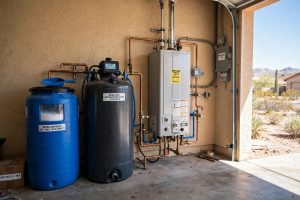
Some wells need chlorine all the time. A small feed pump drips chlorine into the water line before the pressure tank. A holding tank gives the chlorine time to work. Then a carbon filter takes the chlorine taste and smell out.
This setup suits wells with repeated positive tests. It also handles iron bacteria and sulfur smells. The cost runs higher than a single shock treatment. The pump, tank, and filter add up. The owner must also refill the chlorine tank and check the feed rate. A pump from a major maker like Moen or parts from The Home Depot are common choices for these jobs.
UV Light Purification
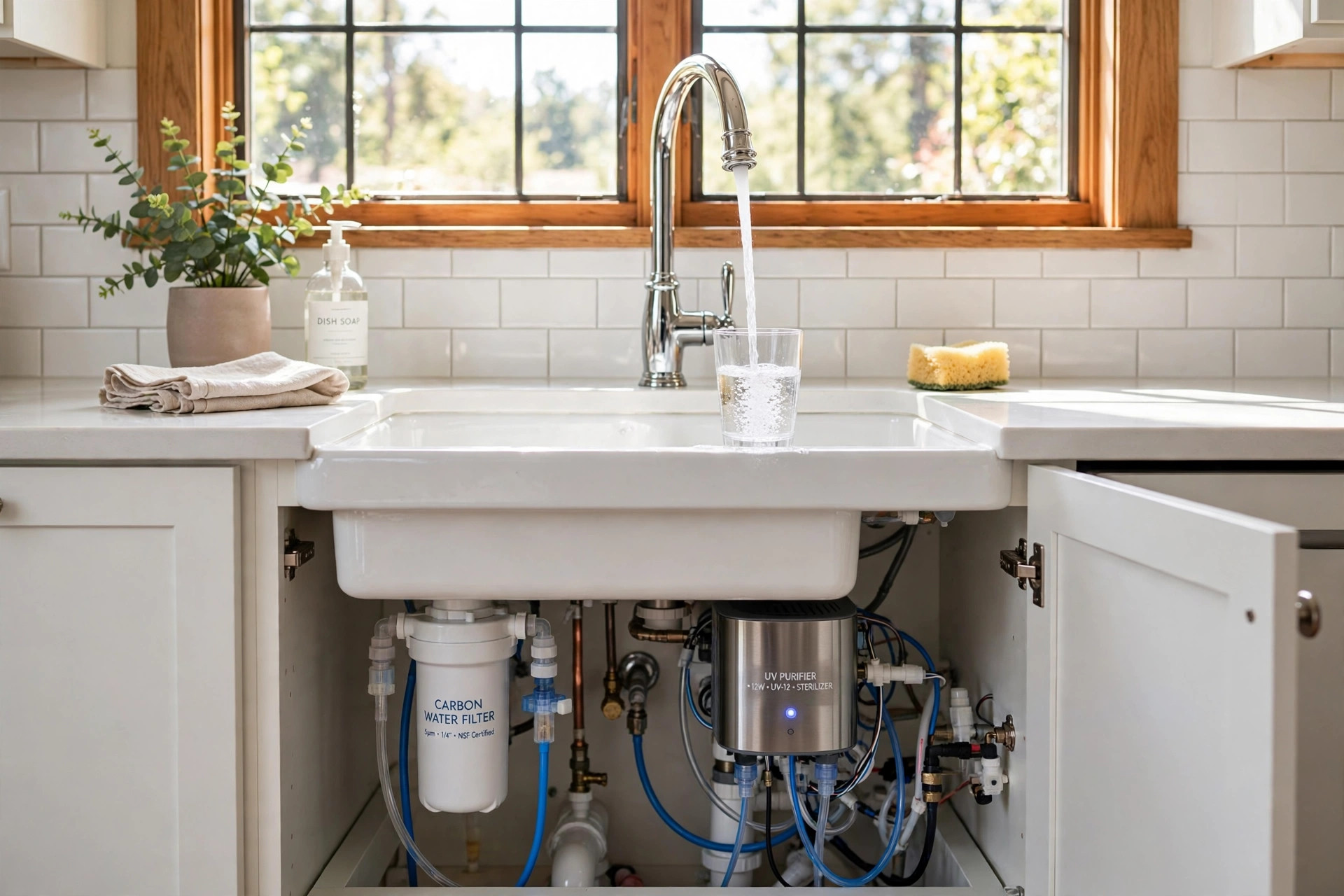
Ultraviolet light kills bacteria, viruses, and many other germs without added chemicals. Water flows past a UV lamp inside a steel chamber. The light damages the DNA of the germs so they cannot reproduce. A UV water purifier for well water is one of the most popular picks in the USA for homes with clear water and a steady flow.
UV systems need clean water to work. Sediment or rust in the water blocks the light. A sediment pre-filter almost always goes in front of the UV unit. The lamp needs a swap each year, even if it still glows. The glass sleeve around the lamp needs a wipe each few months. Prices for a whole-house UV unit often run from three hundred to nine hundred dollars, plus yearly lamp costs.
Reverse Osmosis and Point-of-Use Filters
Reverse osmosis pushes water through a fine membrane. It removes many dissolved solids, metals, and some germs. It is a strong choice for a single drinking tap, not for a whole house. The flow is slow and the unit wastes some water.
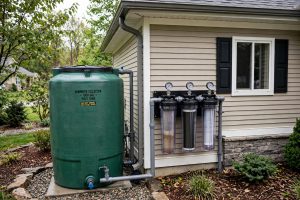
For whole-house needs, pairing a well water filtration system with UV is common. The filter takes out sediment and iron. The UV kills the germs. Each unit does the job it does best. Brands like Aquasana sell multi-stage units built for well water duty.
What to Look for When Choosing a Treatment System
Do not buy the first unit you see. A few key facts shape the right choice.
– Know your flow rate. A whole-house unit must match the gallons per minute of your pump. Too small a unit cuts water pressure. – Check water clarity. Cloudy or rusty water needs a sediment filter before UV or chlorination can work well. – Size for the household. A family of five uses more water than a couple. Size the unit for peak demand, not the average day. – Think about power. UV and pump feeders need power. Rural homes with frequent outages may need a backup plan. – Plan for upkeep. Every system needs care. Lamps, filters, and chlorine all run out. Pick a system you will actually maintain.
Ask for help from a local water treatment dealer. A dealer can read your lab report and size a unit for your home. Reviews from groups like This Old House and Family Handyman also help you compare common models before you buy.
Cost and Price of Well Water Bacteria Treatment
Prices vary by region and by the size of the system. These ranges cover most American homes:
– Lab test: 20 to 60 dollars per sample. – Shock chlorination kit: 10 to 50 dollars if you do it yourself; 150 to 400 dollars with a service call. – UV purification unit: 300 to 900 dollars for the unit; 60 to 120 dollars a year for lamps. – Continuous chlorination system: 800 to 2,500 dollars installed, plus chlorine and carbon filter costs each year. – Reverse osmosis under-sink unit: 150 to 500 dollars, plus yearly filter changes.
A full whole-house setup with filtration plus UV often lands between 1,000 and 3,000 dollars installed. That is a large sum. But a hospital stay from a waterborne illness costs far more. Many owners treat it as cheap insurance.
You can buy parts at stores like Lowe’s or order them online. Professional installers add labor but also add a warranty and a correct setup. For first-time buyers, a pro install is often worth the fee.
Care and Upkeep of Your System
A treatment unit only works when you keep it up. Set a simple schedule and stick to it.
– Test the water yearly. Even with treatment, test each year for coliform bacteria. – Change filters on time. A clogged sediment filter cuts flow and lets germs slip past the UV lamp. – Swap the UV lamp each year. The lamp loses strength long before it burns out. – Check chlorine levels. If you run a feed pump, test the chlorine level each month. – Inspect the wellhead. Keep the well cap sealed. Keep the ground sloped away from the well. Keep animals and chemicals far from the area.
Write each service date on a card taped to the unit. This small habit keeps the whole plan on track. Fixture makers like Kohler and Delta Faucet offer care guides that help you build the same habit for the rest of your plumbing.
Safety Tips for Well Owners
Safety goes beyond the treatment unit. A few habits protect the whole household.
1. Boil water during a crisis. If a test finds E. coli, boil drinking water for one full minute until the problem is fixed. 2. Never mix treatments blindly. Do not add chlorine to a system with a UV unit without a pro’s advice. The order of units matters. 3. Keep chemicals stored right. Store bleach and chlorine in a cool, locked spot away from children and pets. 4. Watch for floods. After heavy rain or flooding, test again before you trust the water. 5. Keep records. Save every lab report. A paper trail helps if you sell the home or file an insurance claim.
Frequently Asked Questions
How do I know if my well water has bacteria? You cannot tell by look, taste, or smell. Only a lab test or a home test kit can show it. Some owners first notice a slimy feel in the toilet tank or a rotten-egg smell. Those signs point to iron or sulfur bacteria. They are not always harmful, but they still call for a test.
What is the cheapest way to treat bacteria in well water? Shock chlorination is the cheapest short-term fix. A jug of unscented household bleach costs a few dollars. For a lasting fix, a UV unit with a sediment pre-filter gives the best value for most homes with clear water.
Does boiling water kill well water bacteria? Yes. A rolling boil for one full minute kills bacteria, viruses, and most other germs. Boiling is a good emergency step. It is not a practical daily plan for a whole house.
Can a standard water softener remove bacteria? No. A softener swaps out hard minerals like calcium and magnesium. It does not kill germs. In fact, a softener can give bacteria a place to grow if the resin tank is not cleaned. Always pair a softener with a real disinfection method when bacteria are present.
How often should I test my well for bacteria? Test at least once a year. Test again after any flood, pump repair, or well work. Test if the water changes in taste, color, or smell. Homes with new babies or with guests from the city should test before the visit.
Is UV light safe for drinking water? Yes. UV treatment adds no chemicals and changes no taste. It is used by city plants and bottled water makers across the country. It only works when the water is clear and the lamp is fresh, so keep up with filters and lamp swaps.
Final Word
Bacteria in a private well is a common problem with a clear path to fix it. Test first. Pick the treatment that fits the test. Keep the system up with yearly care. The options in the USA are proven and within reach: shock chlorination for one-time events, continuous chlorination for stubborn cases, UV light for clean and steady protection, and reverse osmosis for the drinking tap. With a yearly test and a working unit, a private well can give safe water for decades.
References
Aquasana. (n.d.). Water filtration systems. https://www.aquasana.com Delta Faucet. (n.d.). Kitchen and bathroom faucets. https://www.deltafaucet.com Family Handyman. (n.d.). DIY home repair and maintenance. https://www.familyhandyman.com Kohler. (n.d.). Bathroom and kitchen fixtures. https://www.kohler.com Lowe’s. (n.d.). Home improvement products. https://www.lowes.com Moen. (n.d.). Faucets and plumbing fixtures. https://www.moen.com The Home Depot. (n.d.). Home improvement products. https://www.homedepot.com This Old House. (n.d.). Home renovation guidance. https://www.thisoldhouse.com U.S. Environmental Protection Agency. (n.d.). Protecting human health and the environment. https://www.epa.gov
Was this guide helpful?

About James Carter
The My Garden US editorial team writes practical, in-depth home and garden guides for American homeowners — tested advice, no fluff.