
Introduction
A loud bathroom fan can ruin a quiet morning. It drowns out the radio. It makes phone calls hard to hear. And many old fans still fail to clear the steam. If you searched for quiet exhaust fans where to buy usa, this guide gives you plain answers. You will learn what makes a fan quiet, which sizes fit which rooms, what fair prices look like, and the stores that stock the best models.
A bathroom exhaust fan has one main job. It pulls moist air out of the room and sends it outside. When the fan works well, mirrors stay clear and paint lasts longer. When the fan is weak or too loud, people simply turn it off. That is when mold starts to grow in corners and on ceilings. A quiet fan solves both problems at once. It moves enough air, and it runs so softly that you leave it on.
Good bathroom ventilation protects the whole house, as the home experts at This Old House have long pointed out. Moisture harms wood, drywall, and paint. A fan that runs during every shower is one of the cheapest ways to protect a bath remodel — if it is quiet enough that you actually use it.
Why a Quiet Exhaust Fan Matters: Quiet Exhaust Fans Where to Buy Usa
Noise is the main reason people hate their bathroom fans. Old builders’ models often hum at three or four sones. A sone is the unit used to measure how loud a fan sounds. At one sone or below, it is closer to a soft whisper. Most new quiet bathroom exhaust fans run at 1.0 sones or less, and premium models reach 0.3 sones. You can barely hear them at all.
Quiet fans change habits. When a fan is loud, people switch it off the moment the shower ends. Steam then settles on walls and ceilings, feeding mold and mildew over time. A quiet fan stays on because no one minds it. Many models include a delay timer or humidity sensor that shuts the fan off once the air is dry.
Comfort matters too. A roaring fan ruins a calm room. Quiet models from makers such as American Standard and Kohler use better motors and balanced blades to move the same air with far less noise. In a remodeled master bath, you notice the difference every day.
New fans also use efficient motors. Running one for thirty minutes costs only pennies — far less than scrubbing mold or repainting a damaged ceiling.
What to Look for When You Buy
Noise Level and Sone Ratings
The sone rating is the first number to check on the box. Lower is better, and anything at or under 1.0 sones counts as quiet. Store displays rarely let you hear the fan, so trust the rating and check buyer reviews for real-world noise reports.
Beware of fans that claim to be quiet but list no sone rating. If the box hides the number, the fan is probably loud. Also keep duct runs smooth and straight — a fan forced to push air through a narrow or kinked duct sounds louder than its rating.
Airflow and CFM Size
CFM means cubic feet per minute — how much air the fan moves. The rule of thumb is one CFM per square foot: a 70-square-foot bath needs about 70 CFM. Larger baths and high ceilings call for more. A right-sized fan clears steam fast and then rests; an undersized one runs longer and works harder.
Check the duct outlet size too. Six-inch ducts move air with less resistance and less noise than four-inch ducts. Avoid squeezing a six-inch outlet into a four-inch duct with a sharp reducer, which raises noise and cuts airflow.
Extra Features Worth Having
Many quiet fans include helpful extras. A humidity sensor turns the fan on when steam rises and off when the air dries — ideal for kids and guests who forget the switch. Some models add a light, a heater, or a night light.
A countdown timer is another smart add-on: it runs the fan for twenty or thirty minutes after a shower, then shuts it off. If you are pairing the upgrade with other bath updates, such as LED bathroom mirrors, choose a fan with a clean white grille that matches modern fixtures.
Types and Options
Ceiling-Mounted Fans
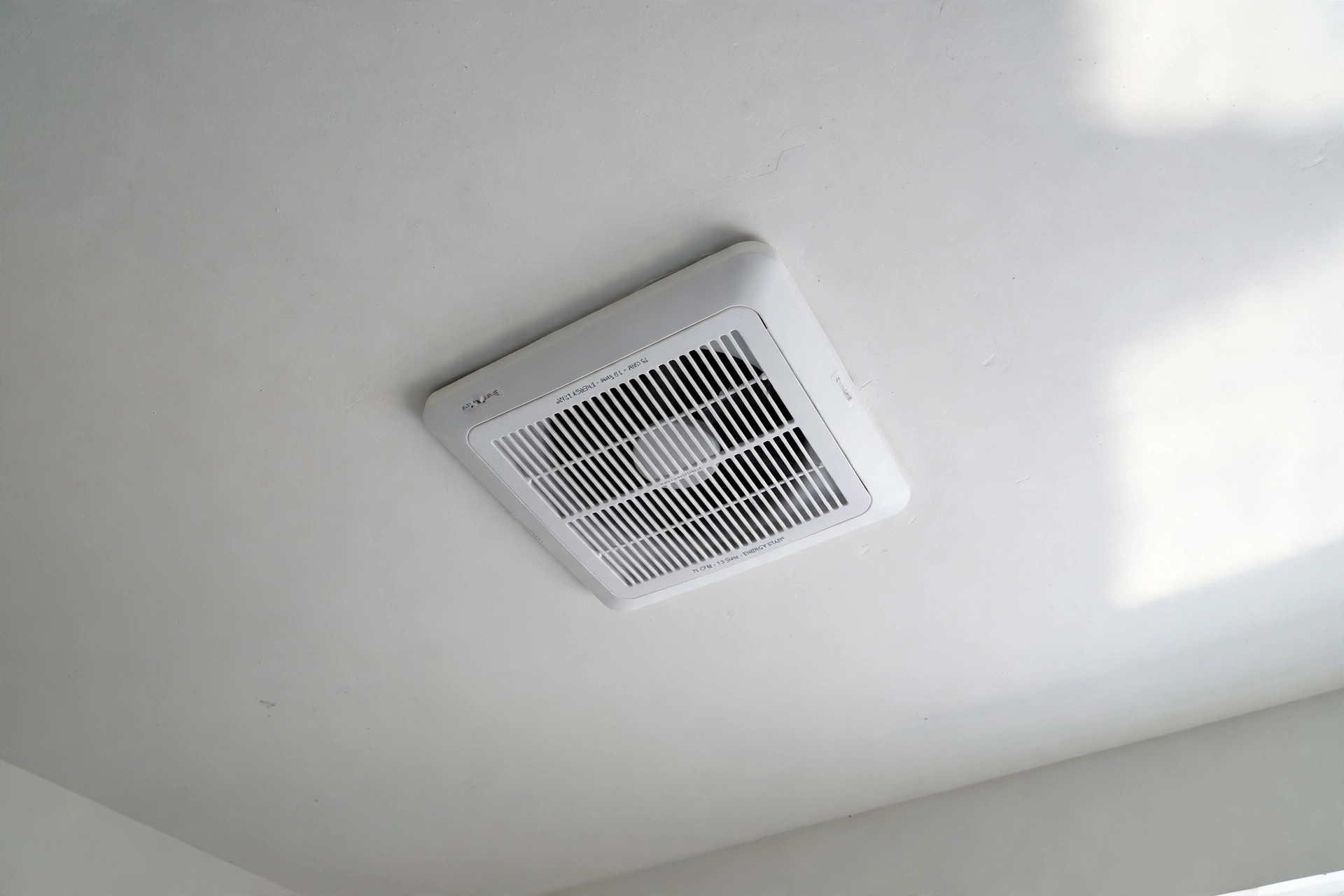
Most American homes use ceiling-mounted fans. The unit sits between the joists with only the grille showing, and ductwork runs to an outside wall or the roof. They come in every price range and suit new builds and replacements alike.
Swapping an old ceiling fan is a common weekend project — the new unit often fits the same joist bay. Always turn off the breaker before touching wiring, and call an electrician if the wiring looks old or damaged.
Inline Fans
An inline fan mounts in the duct run, with the motor sitting in the attic or a joist space several feet from the room. Because the motor is remote, the bathroom stays nearly silent. These cost more and take more work to install, but they suit luxury baths where silence is the top goal.
Wall-Mounted Fans
Some baths vent through an outside wall. A wall-mounted fan blows straight out through the wall cap. These are common in older homes, and the selection is smaller than for ceiling fans, but quiet wall models do exist. Measure the wall opening before you shop so the new unit fits.
Where to Buy Quiet Exhaust Fans in the USA
Now to the main question: quiet exhaust fans, where to buy in the USA. You have several solid options. Each suits a different kind of buyer.
Big-box home stores. The Home Depot and Lowe’s carry the widest in-store selection. You can compare sone ratings side by side and take the fan home the same day. Their websites list far more models, with delivery to your door or the store. For most buyers, these two are the fastest answer to where to buy quiet exhaust fans in the USA.
Plumbing and lighting showrooms. Local supply houses carry premium fans, and the staff usually knows the products well. Prices run higher than at big-box stores, but the advice and designer grille choices can be worth it for a full remodel.
Online retailers. Online sellers stock nearly every model made, and you can filter by sone rating, CFM, and price in seconds. Read buyer reviews for real-world noise reports, and check the return policy in case the fan does not fit your joist bay.
Manufacturer websites. Brands such as Delta Faucet and Moen sell direct or point you to local dealers — handy for odd sizes or matching grilles. Their sites also host manuals and parts diagrams for later repairs.
Warehouse clubs and discount outlets. These sometimes stock quiet fans at sharp prices, but the choice is narrow and changes often. Check that the box is sealed and all mounting parts are inside.
When you compare stores, look beyond the sticker price — check the sone rating, CFM, warranty length, and grille style. A slightly higher price for a 0.5-sone fan with a five-year warranty is often the better deal. Guides from Bob Vila and The Spruce can help you compare models before you visit a store.
Cost and Price
Quiet exhaust fans cost more than basic loud models, but the gap is smaller than many expect. A plain builder-grade fan sells for thirty to fifty dollars. A quiet model rated at 1.0 sones or less usually runs eighty to two hundred dollars. Premium models with humidity sensors, lights, or heaters can reach two hundred fifty to four hundred dollars.
Installation adds to the total if you hire help: a straight swap often costs one hundred fifty to three hundred dollars in labor, while a new install with fresh ductwork can run four hundred to eight hundred dollars.
Small extras — new duct, a roof or wall cap, a timer switch — add thirty to eighty dollars. If your remodel includes bigger changes, such as mirrored medicine cabinets, fold the fan into the same project to save on labor.
Over the long run, a quiet fan is cheap insurance. Mold cleanup can cost hundreds or thousands of dollars — far more than a good fan.
Care and Upkeep
A quiet fan stays quiet only if you keep it clean. Dust on the grille and blades makes a fan work harder and sound louder. Pop the grille off every few months, wash it in warm soapy water, let it dry, and snap it back on.
Once a year, turn off the power and vacuum inside the housing with a soft brush attachment. Wipe the blades gently and check that the damper flap — the small flap where the duct leaves the fan — moves freely. A stuck damper lets cold air in or chokes airflow.
Check the outside vent cap too. Birds and insects nest in vent caps, and a blocked cap raises noise. Clear any nests, and in cold climates watch for ice around roof caps in winter.
Seasonal checklists on sites like HGTV cover fan care alongside other bath upkeep. A well-kept fan can run quietly for fifteen years or more.
Safety
Fan safety starts with the power. Always switch off the breaker before opening the housing, and test with a voltage tester to be sure it is truly off. If you are unsure about any wire, call a licensed electrician. Never work on a fan with wet hands.
Vent the fan to the outdoors, never into the attic — a common and costly mistake that feeds mold on the roof deck. Building codes in most states require outside venting. In cold attics, use insulated duct to stop condensation inside it.
Keep older fans clear of insulation unless the box states they are rated for direct contact. When in doubt, check the manual or ask the store staff.
FAQ
How quiet should a bathroom exhaust fan be?
Look for 1.0 sones or less. At 0.5 sones or below the fan is very quiet, and premium models reach 0.3 sones — nearly silent. Avoid fans above 2.0 sones if noise bothers you.
What size fan does my bathroom need?
Use the one-CFM-per-square-foot rule: a 50-square-foot bath needs about 50 CFM. Add capacity for high ceilings, jetted tubs, or large showers. Right-sizing keeps noise low and clears steam fast.
Where is the cheapest place to buy a quiet exhaust fan in the USA?
Big-box stores and online retailers usually offer the lowest prices on popular models — watch for holiday sales and coupons. Showrooms cost more but include expert advice. Compare sone ratings and warranties, not just price tags.
Can I install a bathroom exhaust fan myself?
A simple swap is within reach for many handy homeowners with basic wiring skills and safe attic access. New installs with fresh ductwork are harder — if the job needs new wiring or roof work, hire a licensed electrician or contractor.
Do quiet fans really prevent mold?
They help a great deal, but they are not magic. A quiet fan that runs during and after every shower removes most mold-feeding moisture — but you still need to fix leaks and seal grout. If you are refinishing an older tub in the same project, bathtub refinishing kits can refresh the surface while the new fan keeps it dry.
How long does a bathroom exhaust fan last?
Most quality fans last ten to fifteen years with basic cleaning. If yours grows louder over time, cleaning may restore it. When cleaning no longer helps, replace the unit rather than living with the noise.
Final Word
A quiet exhaust fan is one of the simplest upgrades a homeowner can make. Check the sone rating, size the CFM to your room, and choose a trusted store. The right fan runs so softly you forget it is there — while mirrors stay clear, paint lasts longer, and mornings stay calm.
References
American Standard. (n.d.). Bathroom and kitchen products. https://www.americanstandard.com Bob Vila. (n.d.). Home improvement advice. https://www.bobvila.com Delta Faucet. (n.d.). Kitchen and bathroom faucets. https://www.deltafaucet.com HGTV. (n.d.). Home and garden ideas. https://www.hgtv.com Kohler. (n.d.). Bathroom and kitchen fixtures. https://www.kohler.com Lowe’s. (n.d.). Home improvement products. https://www.lowes.com Moen. (n.d.). Faucets and plumbing fixtures. https://www.moen.com The Home Depot. (n.d.). Home improvement products. https://www.homedepot.com The Spruce. (n.d.). Home and garden advice. https://www.thespruce.com This Old House. (n.d.). Home renovation guidance. https://www.thisoldhouse.com
Was this guide helpful?

About Robert Taylor
The My Garden US editorial team writes practical, in-depth home and garden guides for American homeowners — tested advice, no fluff.
You May Also Like

Bathroom Vanity Light Bars for Florida Homes
August 20, 2026 0 views
Double Sink Vanities for Sale USA: A Plain Guide for Homeowners
July 23, 2026 0 views
Freestanding Soaking Tubs for Florida Homes: A Plain Buying Guide
August 13, 2026 0 views