
Introduction
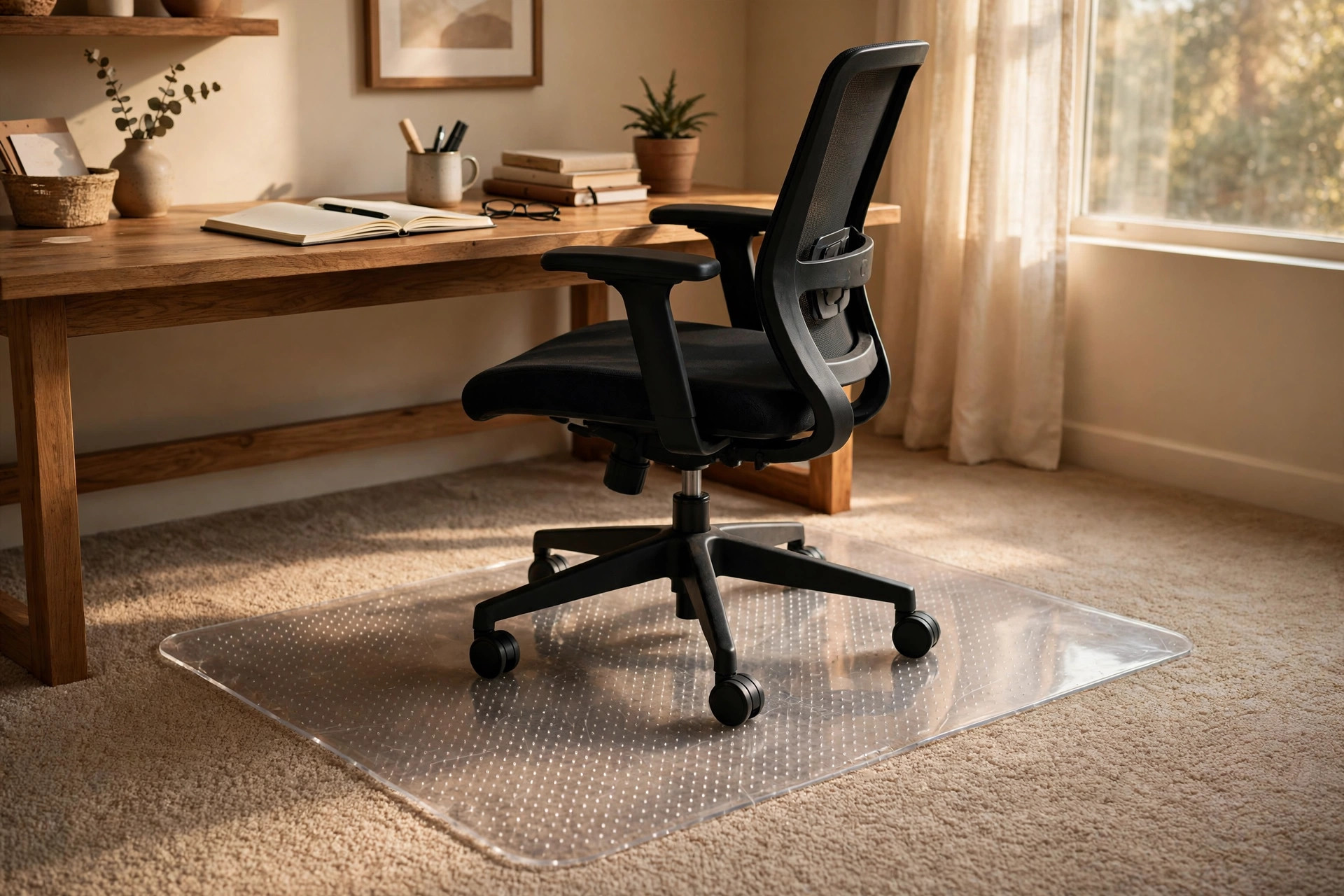
A home office chair mat for carpet protection is a flat sheet that lies on the floor under a desk chair. It takes the wear that the chair would otherwise press into the carpet. Millions of Americans now work from home, and many of them roll across carpet all day. That daily motion grinds dirt into fibers, flattens the pile, and leaves a worn circle where the chair sits. A mat stands between the chair and the carpet and keeps the floor looking new.
The choice is not hard once you know the facts. Carpet thickness, mat material, and mat size decide how well the mat works. This guide walks through each point in plain language. It covers why a mat matters, what to look for, the main types, what you can expect to pay, how to care for the mat, and how to keep the workspace safe. By the end you will know exactly which home office chair mat for carpet protection fits your room.
Why a Chair Mat Matters for Carpet: Home Office Chair Mat for Carpet Protection
A rolling chair is rough on carpet. Each caster wheel is small and hard. The weight of the seated person presses down through those five small points. Over hours and days the wheels crush the carpet pile. They also twist the fibers as the chair turns. The result is a dull, matted patch that shows against the rest of the room.
Carpet is costly to replace. A chair mat costs a small fraction of that sum. A chair also rolls more freely on a smooth mat than on thick pile, which spares your back, legs, and shoulders from daily strain.
A Www.thespruce.com. Coffee, ink, and lunch crumbs land on plastic instead of on the rug. The mat wipes clean in seconds. Without it, each spill becomes a stain that must be scrubbed out of the carpet. Guides on The Spruce note the same point: a mat is one of the cheapest ways to keep a workroom tidy.
How Chair Mats Protect Carpet Fibers
Carpet wears in two ways. First, the pile is crushed by pressure. Second, the fibers are abraded by friction. A chair mat blocks both kinds of damage. The mat spreads the chair’s weight over a wide, flat area instead of five sharp wheel points. That even spread keeps the pile from forming deep dents. The smooth top of the mat also cuts friction to nearly nothing. The wheels glide instead of grinding.
Thick or plush carpet needs a thicker mat. A thin mat can sink into deep pile and let the chair wobble. A mat built for carpet has small cleats or grippers on the underside. Those teeth bite into the pile and hold the mat still while the chair moves above. A Www.wayfair.com carpet uses a smooth back, while one for medium and high pile uses cleats. Large online furniture stores like Wayfair carry both styles and label them by carpet thickness, which makes the choice easier.
A rolling chair mat for home office use on carpet also cuts static shock. Carpet and plastic wheels build up a charge, and dry winter air makes it worse. Many mats are anti-static, which stops the small shock you feel when you touch the desk.
What to Look for When You Choose
Size
Measure the space before you buy. A good home office chair mat for carpet protection should cover every spot the chair reaches. Sit in the chair, roll in all directions, and note how far you travel. Most standard mats run 36 by 48 inches, which suits a desk and a normal rolling range. Larger desks or wide chairs call for 45 by 53 inches or more. A mat that is too small leaves the edge of the carpet exposed. That edge will show wear just outside the mat line.
Thickness
Thickness is the next choice. Standard mats handle low pile carpet up to about three eighths of an inch. For medium pile, pick a mat marked for carpet up to three quarters of an inch. A heavy duty chair mat for plush carpet is the thickest class. It stays rigid on deep pile and does not bow under a heavy chair. If you are unsure of your pile depth, press a coin into the carpet and compare. When in doubt, buy the thicker mat. A mat that is too thick for thin carpet feels stiff, but a mat that is too thin for thick carpet cracks within months.
Material
Three materials lead the market. Polycarbonate is the most popular. It is clear, strong, and resists cracking for years. PVC, or vinyl, costs less but can curl and yellow over time. Tempered glass is the premium choice. It is heavy, will not dent or yellow, and looks like part of the room. Each has a place. The right one depends on budget, carpet depth, and taste.
Shape
Most mats are rectangles with a small lip. The lip slides partway under the desk so the chair can roll in close. Round and square mats exist for corner desks and open spaces. The lip keeps the desk legs on the mat and stops the chair from rolling off the front edge.
Types of Chair Mats for Carpet
Polycarbonate Mats
Polycarbonate is a hard, clear plastic. It is the standard office chair mat for carpeted floor in American homes. It bends slightly without snapping and carries heavy chairs without complaint. Most polycarbonate mats come with a cleated back for carpet use. They stay clear for years and do not give off a strong smell. For most home offices this is the right pick.
PVC and Vinyl Mats
PVC mats cost the least. They work fine on thin carpet in a light-use room. The plastic is softer than polycarbonate, so a heavy chair can leave wheel dents over time. In warm rooms the edges may curl upward. They suit a spare bedroom office that sees light use each week.
Tempered Glass Mats
A glass mat is a sheet of tempered safety glass about a quarter inch thick. It never yellows, never curls, and supports any chair weight. The surface is almost silent when the chair rolls. The cost is high, and the mat is heavy to move. It also needs a flat carpet with low to medium pile, because glass cannot flex into deep pile. For a Www.steelcase.com, it is worth a look. Workplace research from makers like Steelcase often points to durable, quality equipment as the core of a healthy work setup.
Cost and Price: What to Expect
Prices run from low to high with material and size. A basic PVC mat in standard size sells for roughly twenty to forty dollars. A polycarbonate mat of the same size runs forty to ninety dollars. Larger sizes and thicker models climb past one hundred. A tempered glass mat starts near two hundred and can pass three hundred for large sizes.
A mid-range polycarbonate mat protects the floor for five to ten years, which works out to a few dollars a year. Cheaper mats fail sooner and must be replaced, so the savings can vanish. Buyers who read Nytimeswirecutter from sources like Wirecutter often find that mid-price mats earn the best marks for value over time.
Shipping matters too. Some retailers include free shipping on large items. Www.ikea.com sell mats in stores and online, which lets you see the thickness in person before you buy. If you order online, check the return policy. A mat that does not fit your chair or carpet should go back without a fight.
How to Place and Use Your Mat
Lay the mat on a clean, dry carpet. Vacuum the area first so no grit sits under the mat. If the mat has cleats, press it firmly into the pile with your hands or step on it in soft shoes. The teeth need full contact to hold. Place the lipped end toward the desk. Slide the desk legs onto the mat if the lip is long enough.
Let a curled mat relax before use. A mat that arrives rolled in a box may need a day to flatten. Lay it upside down in a warm room and it will settle. Do not force it flat with heat guns or heavy irons, which can warp the plastic. Once flat, set your chair on it and test the roll. The chair should glide with a light push. If it drags, the mat may be too soft for your pile, or the cleats may not be seated.
Keep the mat in one place. If you must move it, lift it fully off the floor so the cleats do not grind against the fibers.
Care and Upkeep
A chair mat is easy to maintain. Wipe the top with a damp cloth and mild soap once a week. That removes dust and keeps the wheels rolling free. Avoid harsh cleaners and ammonia, which can cloud clear plastic. For sticky spots, a small amount of rubbing alcohol on a soft cloth does the work.
Check the underside once or twice a year. Pull the mat up and vacuum the carpet beneath it. Dirt can work its way under the edges over time. While the mat is up, look at the cleats. Broken or flattened teeth let the mat creep. Most mats keep their grip for years, but a worn mat that slides is no longer doing its job.
Glass mats need gentler care. Use a glass cleaner and a soft cloth. Keep hard objects off the edges, since a sharp blow can crack tempered glass. Plastic mats should stay out of strong direct sun, since long heat exposure can warp PVC and dull polycarbonate. A home office rug to protect hardwood floors faces the same sun problem, and the fix is the same: keep strong light off the surface.
Safety in the Home Office
A chair mat should make the room safer, not riskier. The main risk is tripping on the mat edge. Low-profile edges, about an eighth of an inch or less, are best. Some mats have beveled edges that slope down to the carpet. If your mat has a raised lip edge, keep it away from walkways.
Check stability on your first day. Sit in the chair and roll hard in every direction. The mat should not slide or buckle. If it moves, swap it for a thicker cleated model suited to your pile.
Glass mats deserve one more note. Tempered glass is strong, but it is still glass. Do not drop heavy items on it. Keep the mat away from children who might jump on it. Federal safety guidance from U.S. Consumer Product Safety Commission reminds buyers to check that any glass product meets safety standards, and quality mats carry that mark. For most adults in a normal office routine, a glass mat is safe and quiet.
Frequently Asked Questions
Will a chair mat damage my carpet?
A proper home office chair mat for carpet protection does not damage carpet. The cleated back grips the pile, but the teeth are short and blunt. They hold the mat without cutting fibers, and the smooth top stops the wheels from grinding the pile. Problems come from the wrong mat: a smooth-back mat on thick carpet will slide. Match the mat to your pile and it protects, not harms.
What size mat do I need for a home office?
Most people need 36 by 48 inches. Sit at the desk and push the chair as far as you normally go in each direction, then add a few inches on each side. If your chair has a wide base or you share the desk, step up to 45 by 53 inches. A lipped mat lets you roll closer to the desk without leaving the mat surface.
Can I use a chair mat on thick or plush carpet?
Yes, with the right model. Buy a mat marked for high pile or plush carpet. These are thicker and carry longer cleats. A standard mat will flex and crack on deep pile within a year. A The Home Depot from large home stores can handle pile up to about an inch. For very deep carpet, a rigid glass mat is the best choice.
How long does a chair mat last?
A good polycarbonate mat lasts five to ten years in daily use. PVC mats last two to four years before they dent or curl. Tempered glass mats can last decades if they are not struck hard. Sun, heat, and wrong pile pairing shorten any mat’s life. Simple care, such as weekly wiping and yearly checks, adds years to a plastic mat.
Do I need a mat if I have an office chair with soft wheels?
Soft or rollerblade-style wheels are gentler on carpet, but they do not replace a mat. They still press the pile down and still grind dirt into the fibers. They also pick up carpet fuzz, which clogs the wheel bearings. A mat keeps both the carpet and the wheels clean. Many ergonomic seating makers, such as Www.hermanmiller.com, design chairs to work on mats, and their best office chair for long hours home office guidance pairs seating with proper floor care.
A Final Word
A home office chair mat for carpet protection is a small buy with a large payoff. It guards the carpet, eases the chair’s motion, and cuts cleaning work. Measure your space for size, match thickness to your carpet pile, and pick polycarbonate for value or glass for the long run. For readers who stand part of the day, a standing desk anti fatigue mat for hardwood floors offers the same kind of floor care for standing work. Home office gear advice from Www.pcmag.com and standing desk specialists like UPLIFT Desk agrees on the main point: protect the floor first, and the rest of the setup gets easier.
References
Herman Miller. (n.d.). Office furniture and ergonomic seating. https://www.hermanmiller.com IKEA. (n.d.). Home furnishings. https://www.ikea.com Nytimes. (n.d.). Home and garden information. https://www.nytimes.com/ PCMag. (n.d.). Technology product reviews. https://www.pcmag.com Steelcase. (n.d.). Office furniture and workplace research. https://www.steelcase.com The Home Depot. (n.d.). Home improvement products. https://www.homedepot.com The Spruce. (n.d.). Home and garden advice. https://www.thespruce.com U.S. Consumer Product Safety Commission. (n.d.). Product safety information. https://www.cpsc.gov UPLIFT Desk. (n.d.). Standing desks and ergonomic office furniture. https://www.uplift-desk.com Wayfair. (n.d.). Furniture and home goods. https://www.wayfair.com Wirecutter. (n.d.). Product reviews from The New York Times. https://www.nytimes.com/wirecutter Www. (n.d.). Home and garden information. https://www
Was this guide helpful?

About Lisa Anderson
The My Garden US editorial team writes practical, in-depth home and garden guides for American homeowners — tested advice, no fluff.
You May Also Like
Wall Mounted Monitor Stand to Save Desk Space
May 30, 2026 0 views
Home Office Closet Organizer for Office Supplies: A Complete Guide
May 26, 2026 0 views
Compact Treadmill Desk for Walking While Working: A Plain Guide
March 30, 2026 0 views