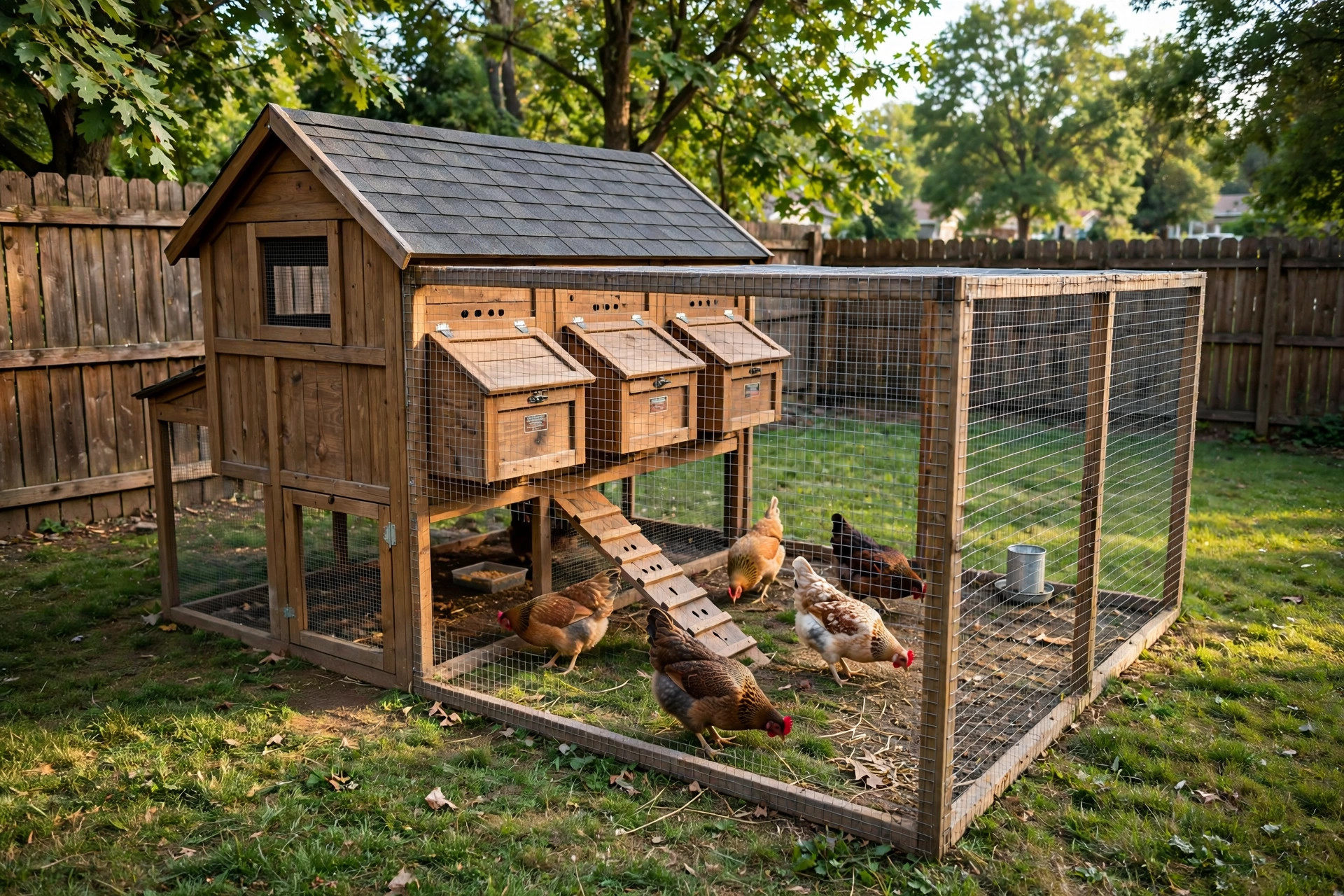

Keeping a few hens in the backyard has become a common sight across the United States. Families like the fresh eggs. Children like watching the birds. Gardeners like the rich compost the hens help create. At the center of it all stands one simple structure. An outdoor chicken coop for backyard hens usa buyers can choose from many designs gives the flock shelter, safety, and a place to lay. Pick the right one and the hens stay healthy with little daily trouble.
This guide covers why the coop matters, how to choose one, the main types sold in the USA, their cost, and how to keep them clean and safe. Everything here is written in plain terms for the first-time keeper.
Why a Good Coop Matters
Hens need more than food and water. They need a dry place to sleep. They need shade in summer and wind protection in winter. They need nesting boxes where they feel safe enough to lay eggs. They need a locked door between them and the raccoons, foxes, dogs, and hawks that roam American neighborhoods.
A good coop answers all these needs at once. It keeps the inside dry when rain falls. It lets fresh air move through without letting cold wind blow straight on the birds. It gives each hen a perch to roost on at night. Chickens roost high by instinct. A perch a few feet off the ground calms them and helps them rest.
The coop also protects your investment. Hens cost money. Feed costs money. Losing birds to predators is the fastest way to lose heart. Most losses happen at night, when a weak latch or a thin wire gives way. A solid outdoor chicken coop for backyard hens usa owners trust is built with that night in mind.
Many towns and counties now allow backyard hens, but they set rules. Common rules cover how far the coop must sit from property lines and how many birds you may keep.
How to Choose the Right Coop: Outdoor Chicken Coop for Backyard Hens Usa
Start with the number of hens you plan to keep. Then add space for growth. Many keepers start with four hens and wish within a year that they had room for eight.
Size and Space
The old rule still holds. Plan on at least 4 square feet of indoor floor space per hen, and at least 8 to 10 square feet of outdoor run space per hen. A coop sold for six hens should hold a house of about 24 square feet, with a run of about 60 square feet. Small coops crowd the birds. Crowded birds peck each other and lay fewer eggs.
Measure your yard before you shop. Draw the coop footprint on the grass with string. Walk around it. Ask if you can still mow, open the run door, and reach the nesting boxes from outside. External nesting boxes with a lift-up lid save you from crawling inside the coop each morning.
Materials and Build Quality
Cedar and pressure-treated pine are the common woods. Cedar resists rot and insects. Pine costs less but needs sealing. Look at the thickness of the boards. Thin panels warp and let drafts in. Look at the wire. Chicken wire keeps chickens in, but it does not keep predators out. Hardware cloth, a welded wire mesh with small squares, is far stronger. Good coops use hardware cloth on every opening.
Check the roof. A solid shingled or metal roof beats a thin plastic panel. Check the latches. A simple hook can be opened by a clever raccoon. Sliding bolt latches or carabiner clips work better.
For broader guidance on sizing and placement, home guides at Lowe’s and The Home Depot walk through common coop layouts and the yard space they need. Both retailers carry backyard chicken coop kits in many sizes, so you can compare footprints side by side before you buy.
Types of Outdoor Chicken Coops
Coops sold in the USA fall into a few clear groups. Each suits a different yard and budget.
Stationary coops. These are the classic choice. A wooden house sits on legs or on a foundation, with a run attached. They are sturdy and hold heat well in winter. Once built, they stay put. They suit keepers who have a fixed spot in the yard and want a long-term home for the flock.
Chicken tractors. A chicken tractor is a light coop with no floor. You drag it to fresh grass every day or two. The hens eat bugs and weeds, and their droppings feed the lawn. Tractors suit small flocks and keepers who like to move the birds around. They are less secure at night, so many owners lock the hens inside the raised house portion after dark.
Walk-in coops. These are tall enough for a person to stand in. They make cleaning easy. You can rake the floor and refill water without bending. They cost more and take more space. For flocks of ten or more, a walk-in design saves real labor over the years.
Coop and run combos. Many ready-made kits pair a raised house with a fenced run under and beside it. The hens use the shaded space below the house on hot days. These kits are the most common type sold online. Shoppers comparing kits on Wayfair or Chewy will see dozens of versions, most sized for three to eight hens.
Converted sheds. Some keepers buy a small garden shed and fit it with perches, nesting boxes, and a pop door. This route gives the most space for the money. It takes more work up front. Plans and step-by-step advice from Bob Vila and Rural King help do-it-yourself builders get the ventilation and predator proofing right.
When comparing options, think of your climate. A coop for the cold north needs thick walls and small vents you can close. A coop for the hot south needs wide shade, big vents, and light-colored roofing. Most ready-made coops sold in the USA aim for the middle. In extreme heat or cold, add insulation, extra shade, or a heated water base as needed.
If you share your yard with other pets, plan the layout with them in mind. A pet playpen with cover for outdoor shade can give small animals a safe spot away from the hens, and a best elevated dog bed for outdoor patio use keeps a watchful dog comfortable nearby. The American Kennel Club also offers advice on training dogs to behave calmly around birds, which matters when hens and dogs share a fence line.
Cost and Price Guide
Prices vary widely. A small ready-made coop for three to four hens often sells for 200 to 400 dollars. A mid-size kit for six to eight hens runs 400 to 900 dollars. Large walk-in coops and premium cedar models can pass 1,500 dollars. Building your own from lumber usually costs 300 to 700 dollars in materials for a six-hen coop, depending on local lumber prices.
Do not judge by price alone. Open the listing photos and look for hardware cloth, solid roofing, and real latches. Cheap coops with thin wire cost less up front but may need repairs within a year. Add the cost of extras: a hanging feeder, a waterer, bedding, and a bag of feed. Budget another 75 to 150 dollars for these basics.
Used coops can be a good deal. Check farm supply boards and local listings. Scrub a used coop with hot water and let it dry in the sun before the hens move in.
Running costs are steady. A laying hen eats about a quarter pound of feed per day. For six hens, that is roughly 45 pounds a month. Feed prices move with grain markets, so watch for sales at farm stores.
Daily Care and Upkeep
A clean coop is a healthy coop. Damp bedding breeds disease. Set a simple routine and stick to it.
Each morning, open the pop door and check the water. Hens drink a lot, more in summer. Refill the waterer with fresh water. Scatter feed or check the hanging feeder. Collect eggs. Hens usually lay in the morning, so one daily collection is enough for most flocks.
Once a week, rake out soiled bedding under the perches. Add fresh pine shavings or straw. Pine shavings are the most common bedding in the USA. They absorb moisture and smell mild. Avoid cedar shavings inside the coop. The strong scent can irritate the birds’ lungs.
Once a month, do a deeper clean. Remove all bedding. Scrape the perches. Wash the waterer with a brush. Look for mites in the cracks of the wood. Red mites hide in crevices by day and feed on hens at night.
Ventilation matters in every season. Warm moist air must escape through vents near the roof. Without it, frostbite strikes combs in winter and heat stress strikes in summer. Never seal a coop tight. The birds handle cold dry air far better than warm wet air.
Pet health writers at PetMD stress that clean housing and fresh water prevent most common poultry problems. The same principle runs through the care sheets at The Spruce Pets, which cover bedding choices and weekly cleaning routines in plain detail.
For the run, rotate the ground if you can. Bare dirt turns to mud. A deep layer of wood chips or straw keeps feet clean and gives the hens something to scratch.
Safety Tips for Backyard Hens
Predators are the top risk. Raccoons open latches. Foxes dig under fences. Hawks strike from above. Dogs, even friendly ones, can kill hens in play. Build the coop as if a smart, hungry animal is testing it every night. It is.
Bury hardware cloth 12 inches deep around the run, or lay an 18-inch wire apron flat on the ground around the base. Cover the top of the run with wire or netting. Lock the pop door every night without fail. Automatic pop doors on timers or light sensors help keepers who cannot be home at dusk.
Store feed in metal cans with tight lids. Open bags draw rats and mice. Rats draw snakes. A clean feed area cuts the whole chain short.
Heat kills more hens than cold in much of the USA. In summer, give the run full shade for the hot hours. A shallow pan of water lets hens cool their feet. Frozen water bottles in the waterer keep the drink cool. Watch for panting and drooping wings. Those are signs of heat stress.
In winter, keep water from freezing with a heated base or by swapping waterers twice a day. Do not add a heat lamp unless the cold is extreme. Heat lamps cause fires in dry bedding. Hens grow thick down feathers and handle cold well if the coop stays dry and draft-free.
Check local rules once a year. Some towns limit flock size or ban roosters. Roosters crow early and loud. Most suburban keepers stick to hens only. If you keep other animals, note how the whole yard works together. A dog crate furniture end table for living room keeps an indoor dog’s crate tidy inside the house, which helps when the dog spends its days watching the hens through the window instead of chasing them.
Frequently Asked Questions
How many hens can I keep in a backyard coop? Most town rules allow 4 to 12 hens. The coop maker sets the bird count, but the maker’s number is often high. Use the 4 square feet per hen rule for the house and 10 square feet per hen for the run. When in doubt, keep fewer birds in a larger space.
Do I need a rooster for hens to lay eggs? No. Hens lay eggs without a rooster. A rooster is only needed if you want fertilized eggs for hatching. Roosters are loud, so most backyard keepers in the USA skip them.
What is the best bedding for a chicken coop? Pine shavings are the top pick. They are cheap, absorbent, and easy to find. Straw works too but mats down faster. Avoid newspaper, which gets slick, and cedar shavings, which can harm the birds’ airways.
How do I keep the coop from smelling? Clean often and keep bedding dry. Remove wet spots each week. Make sure vents move moist air out. A dry coop barely smells. A wet coop smells fast.
Can chickens stay outside all winter? Yes, in most of the USA. What hurts them is wind, wet bedding, and frozen water. Give them a dry draft-free coop, extra bedding, and unfrozen water.
How long do backyard hens lay eggs? Hens lay best in their first two years. A good layer gives 200 to 300 eggs per year at peak. Laying slows after age three. Many hens live six to eight years. Plan your flock size around this curve, adding a few young birds every couple of years if you want steady eggs.
A Final Word
An outdoor chicken coop for backyard hens usa families rely on does not need to be fancy. It needs to be dry, strong, well aired, and locked at night. Size it with room to spare. Buy or build for your climate. Keep it clean with a simple weekly habit. Do these things and your hens will reward you with fresh eggs, lively company, and a yard that feels more alive. Start small, learn the rhythm, and let the flock grow with your skill.
References
American Kennel Club. (n.d.). Dog care and training resources. https://www.akc.org Bob Vila. (n.d.). Home improvement advice. https://www.bobvila.com Chewy. (n.d.). Pet supplies. https://www.chewy.com Lowe’s. (n.d.). Home improvement products. https://www.lowes.com PetMD. (n.d.). Pet health information. https://www.petmd.com Rural King. (n.d.). Farm and home supplies. https://www.ruralking.com The Home Depot. (n.d.). Home improvement products. https://www.homedepot.com The Spruce Pets. (n.d.). Pet care guides and product reviews. https://www.thesprucepets.com Tractor Supply Co. (n.d.). Farm and ranch supplies. https://www.tractorsupply.com Wayfair. (n.d.). Furniture and home goods. https://www.wayfair.com
Was this guide helpful?

About James Carter
The My Garden US editorial team writes practical, in-depth home and garden guides for American homeowners — tested advice, no fluff.
You May Also Like

Best Outdoor Dog Bed Waterproof for Patio: A Practical Guide
September 8, 2026 0 views
A Dog Life Jacket for Swimming and Boating: How to Choose the Right One
April 9, 2026 0 views
Best Dog Leash Retractable for Large Dogs: A Complete Guide
February 1, 2026 0 views