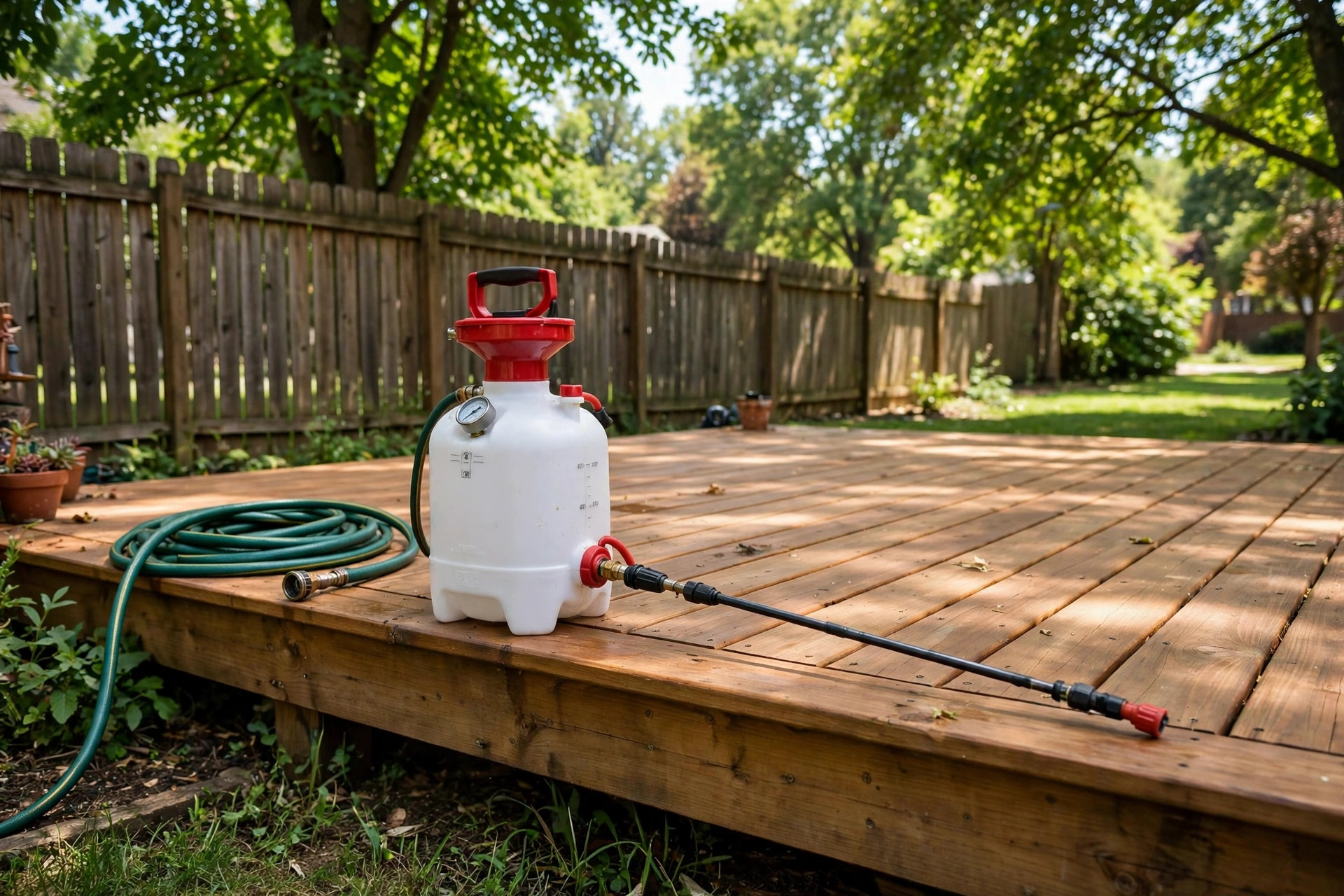

Many homeowners find that staining a deck by brush takes a whole weekend. The best garden sprayer for deck staining can cut that job in half. A good sprayer lays an even coat across boards, rails, and steps. It reaches between slats where a brush struggles. It saves the back and the knees.
But not every garden sprayer suits stain. Thin bug sprays pass through cheap nozzles. Deck stain is thick. It clogs small parts. It wears out seals. The wrong sprayer sputters and streaks. This guide explains how to pick a sprayer that handles stain, how much to pay, and how to keep the tool clean so it lasts for years.
Why the Right Sprayer Matters for Deck Staining
A deck takes a beating. Sun bleaches the wood. Rain soaks it. Foot traffic grinds dirt into the grain. Stain protects the boards. It slows rot. It keeps color rich. The stain only works if it goes on evenly.
A garden sprayer puts stain on fast and even. It mists the wood in thin layers. Thin layers soak in better than thick ones. A brush can leave lap marks where wet stain meets dry. A sprayer avoids that problem when used with care.
Speed matters too. A deck of four hundred square feet can take two days by brush and roller. With a pump sprayer, the same deck often takes one long day. Large decks and high rails save even more time.
The wrong tool wastes money. Cheap sprayers built for water or insect spray cannot move thick stain. Their pumps fail under the load. Their nozzles clog within minutes. A best garden sprayer for pesticides reviews page may look tempting, but pesticide sprayers are tuned for thin liquids. Deck stain needs its own kind of tool.
How to Choose the Best Garden Sprayer for Deck Staining
Choice comes down to a few clear points. Work through them before buying.
Tank Size
Most deck jobs need two gallons or more. A one-gallon sprayer works for a small landing or a set of steps. For a full deck, a two-gallon or three-gallon tank saves refills. Fewer refills mean fewer stops and a more even finish. Big tanks get heavy, though. Three gallons of stain weighs over twenty pounds. Choose a tank that your arms and back can carry for an hour at a time.
Pump Type
Hand-pump sprayers are the common choice. You pump the handle to build pressure, then spray. They cost less. They need no batteries. The drawback is that pressure falls as you spray, so you pump again every few minutes.
Battery-powered sprayers hold steady pressure. They cost more. They weigh more too. For a very large deck, the steady flow can be worth the price.
Nozzle and Wand
Stain needs a fan nozzle or a flat spray tip. Cone nozzles suit weeds, not decks. A long wand, eighteen inches or more, lets you stand upright while spraying low boards. Adjustable tips help switch between boards and rail spindles.
Seals and Materials
Stain eats cheap rubber. Look for viton seals or other chemical-resistant parts. Poly tanks hold up better than thin plastic. Brass wands outlast plastic ones. Read the label for the words “suitable for stains and sealers.” If the box only lists water, herbicide, and insecticide, keep looking.
Strap and Comfort
A padded shoulder strap or backpack harness makes a full tank easier to carry. Wide straps spread the weight. Backpack models cost more but save the shoulders on big jobs.
Helpful guides on tool care and storage can be found at Family Handyman and Bob Vila.
Types of Garden Sprayers That Work With Deck Stain
Not all sprayers are built the same. Here are the main types, and how each fits a staining job.
Hand-Pump Tank Sprayers
This is the classic garden sprayer. A tank, a pump handle, a hose, and a wand. Two-gallon models are the sweet spot for deck work. They cost between thirty and eighty dollars. They are simple to fix. Parts like nozzles and seals are cheap and easy to find. For most homeowners staining a deck every two or three years, this is the best garden sprayer for deck staining.
Backpack Sprayers
A backpack sprayer rides on your back like a pack. Four-gallon tanks are common. Both hands stay free, which helps on stairs and railings. They cost more, often ninety to one hundred sixty dollars. They suit large decks, fences, and multiple projects. They are heavy when full, so they fit strong users best.
Battery-Powered Sprayers
These run on rechargeable batteries. They keep pressure steady without pumping. They cost one hundred to two hundred dollars or more. They shine on very large surfaces where hand pumping would tire you out. Battery life limits the job. One charge often covers one to two gallons of spraying.
Hose-End Sprayers
Hose-end sprayers mix liquid with water from the garden hose. They are cheap and simple. They do not suit deck stain. Stain must not be thinned with water beyond the maker’s advice, and the mix ratio is hard to control. Skip these for staining.
Airless Paint Sprayers
These are pro tools, not garden sprayers. They spray stain at high pressure with a fine mist. They cost several hundred dollars. They are fast, but they overspray badly in wind. Many renters prefer to buy a good pump sprayer instead. If you own a large deck and stain it often, an airless unit may pay for itself. For most homes, the pump sprayer is enough.
Retailers like Home Depot and Lowe’s carry all these types, and test labs such as Consumer Reports publish ratings on garden tools.
Cost and Price: What to Expect
Prices vary by type and brand. Here is a plain view of the market.
– Basic hand-pump sprayers (1-2 gallon): 25 to 60 dollars. Fine for small decks and touch-ups. Check that seals handle stain. – Stain-rated hand-pump sprayers (2-3 gallon): 60 to 100 dollars. The best value for most decks. Look for viton seals and brass wands. – Backpack sprayers (4 gallon): 90 to 170 dollars. Best for large decks and fences. – Battery-powered sprayers: 120 to 220 dollars. Steady pressure at a premium price.
Stain itself is the bigger cost. A gallon of good deck stain covers about two hundred to three hundred square feet and costs thirty to sixty dollars. A medium deck may need three to five gallons. Brushes, drop cloths, and cleaners add more.
Do not buy the cheapest sprayer to save twenty dollars. A failed pump mid-job costs more in wasted stain and lost time. Spend in the middle range. A solid sprayer lasts many staining seasons.
How to Use a Garden Sprayer for Deck Stain
Good results come from good method. Follow these steps.
1. Clean the deck first. Sweep off leaves and dirt. Wash with a deck cleaner. Let the wood dry fully, usually one to two days. Stain sticks poorly to damp or dirty wood. 2. Mask what you do not want stained. Cover siding, plants, and concrete with drop cloths or plastic. Spray mist drifts. 3. Strain the stain. Pour stain through a paint strainer into the sprayer tank. This removes lumps that clog nozzles. 4. Test on a hidden spot. Spray the underside of a step or a back corner. Check the color and the flow. Adjust the nozzle. 5. Spray with the grain. Hold the wand twelve to eighteen inches from the wood. Move in smooth passes along the boards. Overlap each pass slightly. 6. Back-brush. Right after spraying each section, brush it lightly with a stain brush. This works the stain into the grain and removes drips. Spraying plus back-brushing gives the best finish. 7. Keep a wet edge. Work in sections. Do not let one section dry before the next begins. Dry edges show as lines. 8. Watch the wind. Spray on calm days. Wind carries mist onto cars, siding, and plants.
Take breaks to check the nozzle. Stain thickens as it sits. A quick wipe keeps the fan pattern clean.
More how-to guidance on outdoor projects appears at The Spruce and Gardener’s Supply.
Care and Upkeep After Staining
A sprayer full of dried stain is a ruined sprayer. Clean it the same day you use it.
– Empty leftover stain back into the can. Do not store stain in the sprayer. – Flush with the right cleaner. For oil-based stain, use mineral spirits. For water-based stain, use warm soapy water. Pump the cleaner through the hose and nozzle until it runs clear. – Take the nozzle apart. Rinse each piece. A soft brush clears dried bits from the tip. – Dry all parts before storage. Trapped water rusts metal and rots seals. – Oil the pump. A drop of light oil on the pump seal keeps it soft. – Store indoors. Heat and sun crack plastic tanks and hoses. A shed or garage shelf is best. For ideas on keeping tools tidy, see garden tool storage ideas for shed.
Once a year, replace worn seals and cracked hoses. Kits cost a few dollars. A sprayer that is cleaned and stored well can last a decade. For rust problems on older tools, read how to clean rusty garden tools.
Corona Tools (Corona Tools) and Fiskars (Fiskars) both publish care guides for hand tools, and seed and garden supplier Burpee offers seasonal project advice.
Safety Tips for Deck Staining
Stain fumes and spray mist can harm lungs, eyes, and skin. Take safety as seriously as the finish.
– Wear a respirator rated for organic vapors when spraying oil-based stain. A dust mask is not enough. – Wear goggles and gloves. Mist drifts back into the face more than users expect. – Work in fresh air. Never spray in an enclosed porch with closed windows. – Keep children and pets away until the stain dries fully. – Read the label. The stain maker lists drying times, cleanup solvents, and disposal rules. Follow them. – Dispose of rags safely. Oil-soaked rags can catch fire on their own. Spread used rags flat outdoors to dry, then throw them away per local rules. – Store stain locked away from heat and from children.
If stain gets in the eyes, rinse with clean water for fifteen minutes and get help. If fumes cause dizziness, move to fresh air at once.
Frequently Asked Questions
Can I use any garden sprayer for deck stain?
No. Many garden sprayers are built for thin liquids like weed killer. Deck stain is thick and can clog small nozzles and wear out weak seals. Buy a sprayer labeled for stains, sealers, or deck finishes. Check that the seals resist solvents.
Is spraying or brushing better for deck stain?
A mix of both gives the best result. Spray to lay the stain on fast and even, then brush it in lightly. This is called back-brushing. It pushes stain into the grain and smooths drips. Spraying alone can leave a thin, uneven coat. Brushing alone takes far longer.
How much stain will I need for my deck?
Measure the deck in square feet, including railings and steps. Divide by the coverage on the stain can, usually two hundred to three hundred square feet per gallon. Buy ten percent more than the math says. Running out mid-job forces a store trip and risks a color mismatch between cans.
Can I spray stain in hot or windy weather?
Avoid both. Heat dries stain too fast and leaves lap marks. Wind blows mist onto everything nearby. Pick a calm, cloudy day between fifty and eighty degrees. Morning or late afternoon light also makes it easier to see missed spots.
How do I keep the sprayer nozzle from clogging?
Strain the stain before pouring it in. Keep the tank agitated with a shake now and then. Wipe the nozzle tip often during the job. If flow drops, stop and rinse the tip. Never poke a clogged tip with a pin while the tank is pressurized.
How often should I re-stain my deck?
Most decks need fresh stain every two to three years. Sun-heavy decks may need it sooner. Test by sprinkling water on the boards. If the water beads up, the old stain still works. If the water soaks in dark, it is time to re-stain.
A Final Word
The best garden sprayer for deck staining is not the priciest one on the shelf. It is the one with the right tank size, stain-proof seals, and a good fan nozzle. A mid-range hand-pump sprayer suits most homes. Pair it with clean wood, calm weather, and a light back-brush, and the deck will look rich for years. Clean the tool the same day. Store it dry. It will be ready when the next staining season comes.
References
Bob Vila. (n.d.). Home improvement advice. https://www.bobvila.com Burpee. (n.d.). Seeds, plants, and gardening supplies. https://www.burpee.com Consumer Reports. (n.d.). Product reviews and ratings. https://www.consumerreports.org Corona Tools. (n.d.). Garden and landscape tools. https://www.corona-tools.com Family Handyman. (n.d.). DIY home repair and maintenance. https://www.familyhandyman.com Fiskars. (n.d.). Garden and cutting tools. https://www.fiskars.com Gardener’s Supply Company. (n.d.). Gardening tools and supplies. https://www.gardeners.com Lowe’s. (n.d.). Home improvement products. https://www.lowes.com The Home Depot. (n.d.). Home improvement products. https://www.homedepot.com The Spruce. (n.d.). Home and garden advice. https://www.thespruce.com
Was this guide helpful?

About Michael Thompson
The My Garden US editorial team writes practical, in-depth home and garden guides for American homeowners — tested advice, no fluff.
You May Also Like

Cold Frame Construction Plans Free: Build Your Own Season Extender
October 2, 2026 1 views
The Best Garden Hand Rake for Small Beds
May 21, 2026 0 views
How to Clean Rusty Garden Tools: A Step-by-Step Guide
March 18, 2026 0 views