
Spring is the season when roses wake from their winter rest. New shoots push out of old canes, and the garden begins to stir. For the home gardener, this is the best time to learn how to prune roses in spring. A careful pruning in early spring sets the whole plant up for a strong year. It removes dead wood, opens the center to light and air, and shapes the bush so that blooms come in larger numbers and finer form. This guide explains the process from start to finish in plain steps that any gardener can follow.
Why Spring Pruning Matters
A rose bush left to itself grows many thin, crowded stems. These stems fight for light and water. The center of the plant stays damp and dark, and disease finds a home there. Flowers still appear, but they are smaller and fewer. When you learn how to prune roses in spring, you change this picture. You remove the weak and the dead. You keep the strong canes. The plant sends its energy into fewer, healthier stems, and the reward is a flush of fine blooms in early summer.
Spring pruning also gives the gardener a clear view of the plant. In early spring the leaves are not yet out, or they are just beginning to open. You can see the shape of the bush and the condition of each cane. You can spot canes that were killed by frost and cut them back to live wood. This is much harder to do once the plant is in full leaf. For most gardeners in the United States, the right time is when the forsythia starts to bloom. This old garden sign marks the point when winter has passed and the roses are ready.
Tools You Will Need: How to Prune Roses in Spring
Good tools make pruning easier and kinder to the plant. Gather everything before you begin.
Bypass Pruners
A bypass pruner is the first tool to reach for. It works like a pair of scissors, with two curved blades that pass each other. This gives a clean cut that closes fast and heals well. Avoid anvil pruners for live wood. They crush the stem as they cut, and crushed stems are slow to heal. If you want help choosing a pair, read our guide to the best pruning shears for rose bushes. A well-made pair feels balanced in the hand and stays sharp through a long session.
Loppers
For canes thicker than a finger, hand pruners are not enough. Loppers give you long handles and strong leverage. They make clean cuts on old, thick wood. Keep the blades clean and sharp for the best results.
Gloves
Rose thorns are sharp, and spring pruning means working deep inside the plant. Sturdy gauntlets that cover the wrist and lower arm are worth their price. Our article on the best garden gloves for thorn protection compares the options. Never prune roses with bare hands.
Cleaning Supplies
Disease can pass from plant to plant on dirty blades. Carry a small bottle of rubbing alcohol or a diluted bleach solution with a rag. Wipe the blades between plants, and always wipe after cutting away diseased wood. A sharpening stone or tool file keeps the edge keen. Sharp blades matter more than strength. If your blades have gone dull over the winter, see our guide on how to sharpen garden tools properly.
When to Prune in Spring
Timing matters. Prune too early, and a late frost can damage the fresh cuts. Prune too late, and you waste the plant’s energy on stems you will remove anyway. In most parts of the country, the window falls between late March and early May. Gardeners in warm zones may start in February. Those in cold zones may wait until May. The forsythia test is the safest guide: when those yellow flowers open, the soil is warming and the danger of hard frost is mostly past.
Check the buds on the roses themselves. You want to see the buds swelling but not yet fully open. This tells you the plant is waking up but has not yet spent much energy on new growth. Pruning at this stage shapes the growth that follows. If a sudden cold snap comes after you prune, do not worry. Roses are hardy plants. They can handle a light frost on fresh cuts.
How to Prune Roses in Spring: Step by Step
Work through the bush in order, from the big decisions to the fine details.
Step 1: Remove Dead Wood
Start with the plainest task. Cut away every cane that is black, brown, or gray and brittle. Live wood is green under the bark. Scratch a small patch with your thumbnail to check. Cut dead canes back to their base or to live wood. Do not leave dead stubs. They invite disease.
Step 2: Remove Weak and Crossing Canes
Next, take out canes that are thinner than a pencil. They will never carry a fine bloom. Remove canes that cross through the center of the plant. Where two canes rub, wounds form and disease enters. Choose the stronger of the two and cut the other one away. Remove suckers too. These are shoots that rise from below the graft union at the base of the plant. They carry different leaves and weak flowers. Cut or tear them away at their point of origin.
Step 3: Shape the Bush
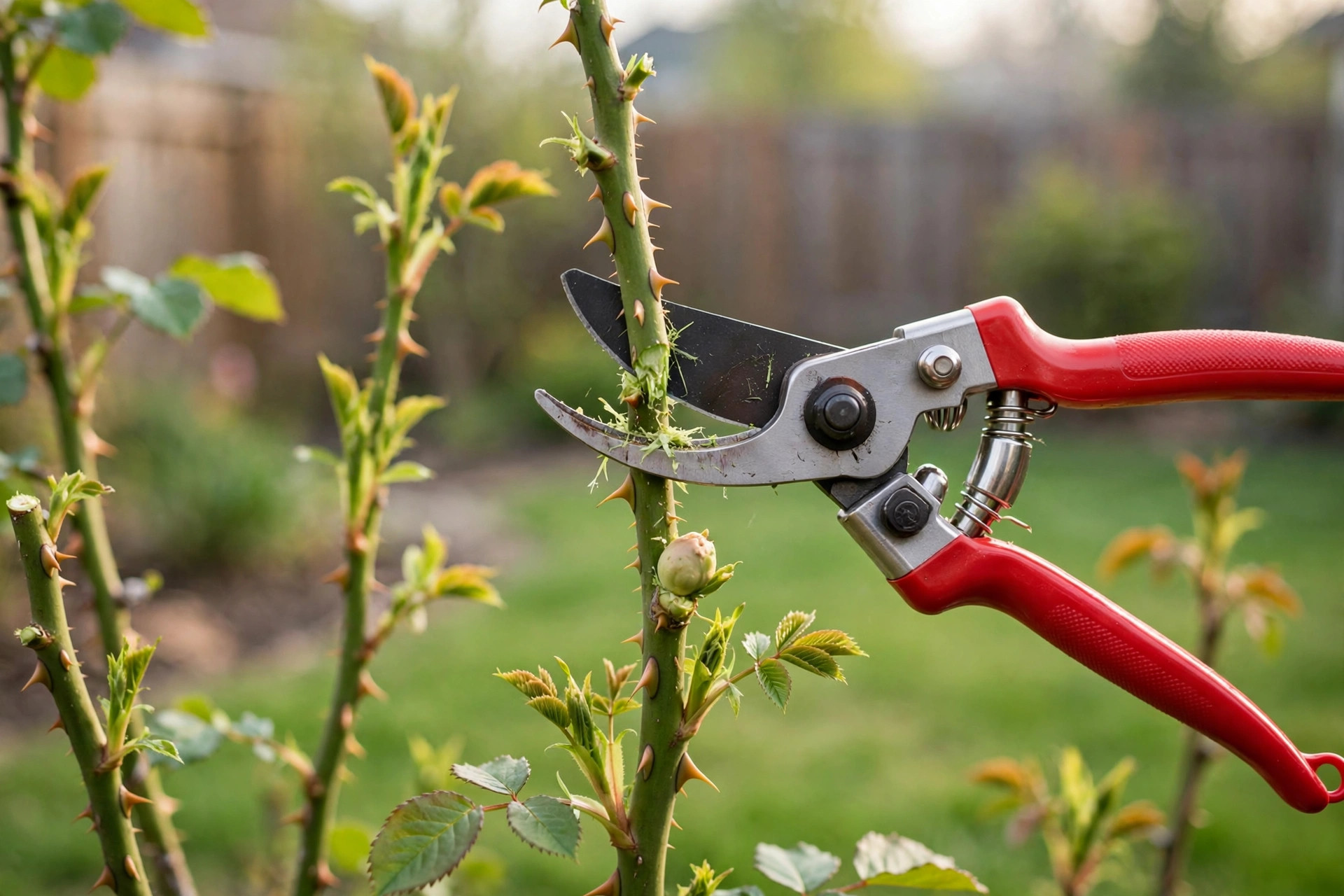
Now step back and look at what remains. A hybrid tea rose should have three to five strong canes. A floribunda can carry more. Trim each cane back by about one third to one half of its length. Make each cut just above an outward-facing bud. This is the key detail in learning how to prune roses in spring. An outward-facing bud sends growth away from the center. The result is an open, vase-shaped plant with good air flow. Cut at a slight angle so water runs off the cut surface. Do not cut into the bud itself. Leave about a quarter inch of stem above it.
Step 4: Clean Up
Pick up every cutting. Do not leave pruned wood on the ground around the roses. Fallen canes can harbor the same diseases you just removed. Put diseased material in the trash, not in the compost pile. Give the plant a deep drink of water after pruning, and add a layer of mulch around the base. This keeps the roots cool and moist as the new season begins.
Pruning Different Types of Roses
Not all roses are cut the same way. The steps above suit hybrid teas, grandifloras, and floribundas. Other types need a lighter hand.
Shrub roses and landscape roses ask for less work. Cut out dead wood in spring and trim the tips by a few inches to shape the plant. They bloom on both old and new wood, so heavy cutting only reduces flowers. Climbing roses need care too. In spring, remove only the dead and the damaged canes. Tie the long canes to their support in a fan shape. Save the main pruning of climbers for after their first bloom. Old garden roses and once-blooming types flower on last year’s wood. If you cut them hard in spring, you will remove the coming season’s flowers. Tidy them lightly and wait until after they bloom for any serious shaping.
Cost and Price
Spring pruning costs very little. If you own the tools already, the only cost is your time. A good pair of bypass pruners runs from about twenty to sixty dollars at garden centers and home improvement stores. Loppers cost a bit more, from thirty to eighty dollars. Thorn-proof gauntlet gloves sell for fifteen to forty dollars. A sharpening stone or file costs under twenty dollars. Rubbing alcohol and mulch are small additions to the household budget. For the cost of one nice bouquet from a flower shop, a gardener can buy the tools to shape a rose garden for many years. Quality tools last. A well-made pruner with replaceable blades can serve for a decade or more with care.
Care and Upkeep After Pruning
Pruning is the beginning of the season, not the end of the work. Feed the roses with a balanced rose fertilizer once the new leaves are about two inches long. Follow the directions on the package. Too much fertilizer burns the roots. Water deeply once or twice a week rather than a little every day. Deep watering builds deep roots. Mulch holds moisture and keeps weeds down. A two to three inch layer of shredded bark or compost works well. Keep the mulch a few inches away from the base of the plant.
Watch for black spot and powdery mildew as the leaves grow. Good air flow from your spring pruning helps prevent both. If disease appears, remove the affected leaves and throw them away. Keep up a steady program of deadheading through the summer. Cut spent blooms back to the first leaf with five leaflets. This tells the plant to make new flowers instead of seeds. A light feeding in midsummer supports the second flush of blooms. Stop feeding about six weeks before the first expected frost so the plant can harden for winter.
Safety
Rose pruning brings a few simple risks, and all are easy to manage. Thorns cause most of the trouble. Thick gauntlet gloves protect the hands and wrists. Long sleeves protect the arms. Eye protection is wise when working inside a dense bush, because a cane can snap back toward the face. Keep tools sharp. A dull blade needs more force, and force leads to slips. Wipe blades clean between plants to avoid spreading disease from one bush to another. If a thorn pierces the skin, wash the wound with soap and water. Deep punctures deserve a doctor’s look, since rose thorn infections can be slow to heal. Work in daylight so you can see the buds and the angle of your cuts.
Frequently Asked Questions
How far back should I cut my roses in spring?
For hybrid teas and grandifloras, cut each cane back by about one third to one half. Leave three to five strong canes on the plant. Make each cut just above an outward-facing bud. Shrub roses and climbers need lighter treatment, so learn your rose type before you cut hard.
What happens if I do not prune my roses in spring?
The plant will still grow and flower, but the results will be weaker. Canes become crowded, the center stays damp, and disease spreads more easily. Blooms are smaller and fewer. The bush grows tall and leggy with flowers only at the top. One season of skipped pruning will not kill a rose, but several seasons of neglect will.
Can I prune roses when it is raining?
It is better to wait for dry weather. Wet cuts are slow to seal, and moisture helps disease spread. If you must prune on a damp day, wipe the blades with alcohol between plants and finish the work quickly. Try to choose a dry morning so the cuts can dry during the day.
Should I seal the cut ends after pruning?
Most garden experts say no. Sealing products do not help the plant heal faster. A clean cut made at the right angle seals itself. The plant forms its own callus over the wound. Spend your effort on sharp tools and correct cuts instead of sealants.
How do I know which buds face outward?
Look at the buds along each cane. They point in different directions. Choose the bud that points away from the center of the plant. Make your cut just above it. This sends the new stem outward and keeps the center open. With a little practice, spotting outward buds becomes second nature.
When should I stop pruning in the spring season?
Finish the main pruning while the buds are swelling but before the leaves fully open. Once the plant is in full leaf and growing strongly, put the tools away. Late cuts waste the plant’s energy. Summer care is about deadheading, not hard pruning.
A Final Word
Learning how to prune roses in spring is a skill that pays back every year. The first time may feel slow. You may worry about cutting too much or too little. Trust the plant. Roses are tougher than they look, and they respond to a firm hand with vigorous growth. Each spring the work gets faster and the eye gets sharper. In return, the garden gives back weeks of fine blooms, cut flowers for the house, and the quiet pride of a plant well tended. Few garden tasks offer so much reward for so little cost.
For more background, see Fiskars, The Home Depot, and Lowe’s. For more background, see Corona Tools, Burpee, and The Spruce. See Bob Vila for more detail.
References
Bob Vila. (n.d.). Home improvement advice. https://www.bobvila.com Burpee. (n.d.). Seeds, plants, and gardening supplies. https://www.burpee.com Corona Tools. (n.d.). Garden and landscape tools. https://www.corona-tools.com Fiskars. (n.d.). Garden and cutting tools. https://www.fiskars.com Gardener’s Supply Company. (n.d.). Gardening tools and supplies. https://www.gardeners.com Lowe’s. (n.d.). Home improvement products. https://www.lowes.com The Home Depot. (n.d.). Home improvement products. https://www.homedepot.com The Spruce. (n.d.). Home and garden advice. https://www.thespruce.com
Was this guide helpful?

About Sarah Mitchell
The My Garden US editorial team writes practical, in-depth home and garden guides for American homeowners — tested advice, no fluff.
You May Also Like
Drip Irrigation Kit for Raised Beds: How to Choose, Install, and Care for One
August 29, 2026 0 views
Best Garden Gloves for Men Large: How to Find a Pair That Fits
July 26, 2026 0 views
Compost Tea Brewer for Garden Reviews: An Honest Buyer Guide
May 19, 2026 0 views