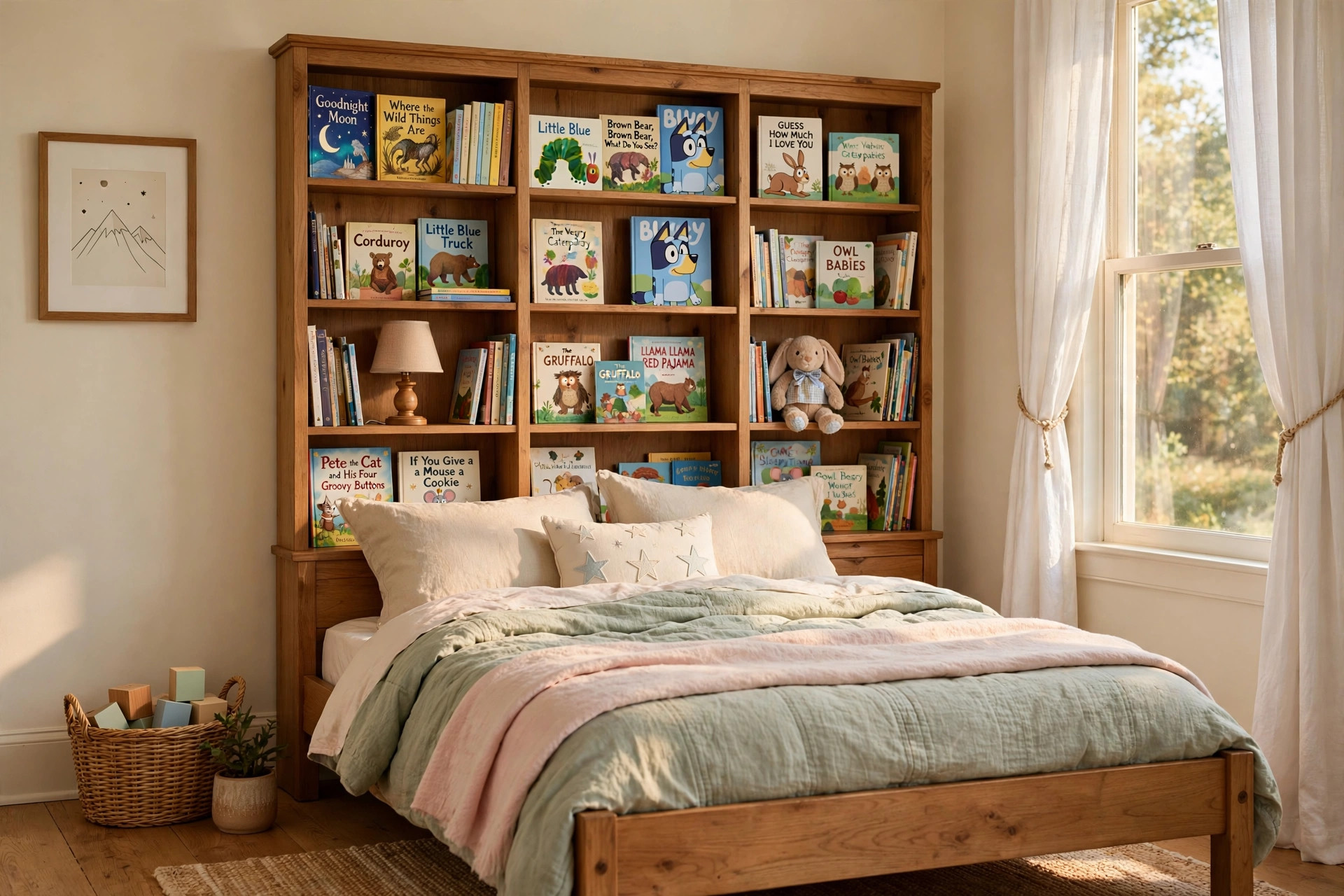

Why a Bookcase Headboard Makes Sense for a Child’s Room
Parents who search for the best kids bed with bookcase headboard usually have the same problem. The bedroom is small. The child has books, toys, and a lamp. There is no room for a separate bookcase. A bed with shelves built into the headboard solves this in one stroke.
A bookcase headboard is what the name says. The head of the bed holds shelves. They sit behind and above the pillow. A child can reach up and take a book without leaving bed. This makes bedtime reading easy. It also keeps the floor clear. Fewer shelves in the room means more space to play.
Children’s rooms change fast. A toddler moves to a big-kid bed. A big kid moves to homework years. Storage needs grow each year. The best kids bed with bookcase headboard grows with the child. Shelves that hold picture books at age four can hold chapter books and school supplies at age nine. A model with wide shelves and strong boards lasts through these years.
There is another gain. A headboard with shelves takes the place of a nightstand in many rooms. In a narrow room, a bed plus a table on each side leaves no walking space. With shelves in the headboard, the table can go away. The lamp sits on a shelf. The clock sits on a shelf. The room feels larger.
What to Look for When You Choose One: Best Kids Bed with Bookcase Headboard
Buying the best kids bed with bookcase headboard takes more care than buying a plain bed. The shelves add weight. They add height. They change how the bed must be built. Below are the points that matter most.
Sturdy Build and Real Wood Where It Counts
Shelves full of books are heavy. Books are among the heaviest things a child owns. A headboard made of thin particleboard can sag or pull away from the frame. Look for solid wood or thick engineered wood with a dense core. The side rails should be at least one inch thick. Check that the headboard attaches to the frame with bolts, not small screws alone.
Readers on sites like the home advice guides at Apartment Therapy often point out that heavier furniture lasts longer in children’s rooms. That advice fits here. A bed that will hold a growing book collection needs strength in the joints. Shake the floor model in a store if you can. If it rocks, move on.
Shelf Size, Depth, and Number of Openings
Measure the shelves against real books. A shelf should be at least ten inches deep for most picture books and novels. Some headboards have narrow shelves, only six inches deep. Books then lean out and fall. That is a daily annoyance.
Count the openings. Three to five cubbies are common. More openings give more order. A child can give each shelf a job. One shelf for books being read now. One for toys. One for the lamp and clock. Fewer, larger openings hold big items but turn into clutter. Ask what your child will store and pick accordingly.
Height of the Shelves Above the Pillow
This is a detail many buyers miss. Some headboards rise two feet above the mattress. Tall headboards hold more but can feel like a wall. They also block light from a window behind the bed. Others rise only a foot. These feel open but hold less.
Think of the child lying in bed. Can the child reach the lowest shelf without sitting all the way up? If not, the shelves are for display more than for use. For a young reader, easy reach matters. It is the difference between a shelf the child uses every night and one that gathers dust.
Finish That Handles Hard Use
Children’s furniture takes a beating. Books scrape. Toys knock. Water spills. A finish that chips in a month will look tired for years. Look for a baked-on finish or a thick laminate over solid wood. Rounded edges are kinder to small heads and easier to wipe.
A visit to the range shown at IKEA can give a sense of how different finishes look after display use. Floor models show wear fast. The beds that still look clean after months on a sales floor usually have the toughest finishes.
A Bed That Fits Standard Mattresses
Some beds with bookcase headboards use odd sizes. An odd size locks you into one mattress maker. It also locks you into one sheet maker. Look for a twin, twin XL, or full size frame. These take standard mattresses. Check the platform. A solid platform or closely spaced slats supports the mattress best. Wide gaps between slats let a mattress sag and void many mattress warranties.
Types of Kids Beds with Bookcase Headboards
Not all of these beds are the same. The main kinds suit different rooms and ages.
Twin Captain’s Bed with Bookcase Headboard
This is the classic. It is a twin bed with shelves in the headboard and often drawers under the mattress. It gives storage in two places. For a small room, this is hard to beat. The child gets a bed, a bookcase, and a dresser in one footprint. Parents comparing a kids loft bed with futon underneath for teens will find the captain’s bed sits lower and suits younger children better.
Full-Size Bookcase Bed
A full bed with a bookcase headboard suits a bigger room or an older child. It holds more books and gives more sleeping room. It can also serve a guest. The trade is floor space. A full bed is fifteen inches wider than a twin. In a room under ten feet wide, it can feel big. Measure the room first and draw the bed shape on the floor with tape.
Panel Bookcase Headboard Bed
Some beds are simple panel beds with a separate bookcase headboard attached. This kind is easy to find and easy to move. The headboard can sometimes move to a different bed later. It is a good pick when parents want the shelf look without buying a full storage bed.
Daybed with Bookcase Back
A daybed sits against the wall. Its back panel can hold shelves like a headboard. This kind doubles as a sofa by day. It works well in a shared room or a playroom that hosts guests. The shelves face into the room, so they also serve as display space.
Bunk and Loft Beds with Built-In Shelves
Some bunk beds put a bookcase headboard on the lower bunk. Some loft beds put shelves on the side panel. These save the most floor space of all. They suit older children who can use a ladder safely. For younger children, keep reading about a safe toddler pillow for the first bed transition before moving a small child to any raised bed.
Cost and Price: What to Expect
Prices for a kids bed with a bookcase headboard spread wide. A basic twin frame in engineered wood runs from about 150 to 300 dollars. These are light and fine for a young child with few books. Mid-range beds in solid pine or rubberwood run from 300 to 700 dollars. These are the sweet spot for most families. They hold up to daily use and full shelves.
Premium beds in hardwood or with full under-bed drawer sets run from 700 to 1,500 dollars. Designer brands sold through stores like Wayfair or The Home Depot sit across this range. They often add soft-close drawers, cord holes for lamps, and richer stains.
Watch for extra costs. Delivery can add 50 to 100 dollars. Assembly adds more. A new twin mattress adds 200 to 500 dollars. Add these up before you compare two beds.
Price trackers at Consumer Reports note that furniture prices move with sales seasons. Late summer and holiday weekends often bring the best deals on children’s furniture. If the need is not urgent, waiting for a sale can save a hundred dollars or more on a mid-range bed.
Care and Upkeep
A bookcase headboard needs a little care to stay safe and neat. Dust the shelves each month. Books trap dust. A damp cloth on the shelves twice a year keeps the finish clean. Do not soak the wood. Water warps particleboard fast.
Tighten the bolts twice a year. Children climb on beds. Bolts work loose over time. A loose headboard can tip when a child pulls on a shelf. A quick check with a wrench takes five minutes. This is the most important upkeep step.
Rotate the books. Heavy books on one side can strain the frame over years. Spread weight across the shelves. Keep the heaviest books on the lowest shelf. This also keeps the bed from feeling top-heavy.
Teach the child the rules. No standing on the shelves. No hanging from the top of the headboard. No stacking books so high they can fall on the sleeper. These rules sound small. They prevent most accidents with shelf beds.
If the finish chips, touch it up. Many makers sell touch-up pens in matching stains. A dab of stain on bare wood stops moisture from getting in. It keeps the bed looking cared for.
Safety First: What Every Parent Should Check
Safety comes before style. The U.S. Consumer Product Safety Commission publishes guidance on children’s furniture and bunk bed safety. Read it before you buy. Key checks for a bookcase headboard bed are simple.
First, anchor the bed to the wall. A tall headboard full of books can tip forward if a child climbs it. Most beds ship with an anti-tip strap or bracket. Use it. Attach it to a wall stud, not just drywall. This single step prevents the worst accidents.
Second, check for sharp edges and pinch points. Run a hand along every edge. Shelves should have rounded or eased edges. Adjustable shelves should lock in place. A shelf that drops when a child pulls a book is a hazard.
Third, mind the space around the bed. Keep the headboard away from windows with blind cords. Keep it away from radiators and heat vents. Books near heat dry out and can be a fire risk. Leave a few inches between the headboard and the wall if the room has baseboard heaters.
Fourth, match the bed to the child’s age. A bed with high shelves suits a school-age child. A toddler who has just moved out of a crib needs low shelves and a low bed. Parents moving a small child to a first big bed should also review safe crib bedding, bumper-free sleep sets and the guidance on toddler pillows before the switch.
Guidance from child health experts at HealthyChildren.org stresses a calm, safe sleep space. A bookcase headboard can support that. Keep the sleep surface clear. Keep a lamp where the child can reach the switch. Keep the room cool and dark. The shelves hold the books. The bed holds the child. Each job stays separate.
Also check paint and finish safety. Furniture made for children should meet federal lead and phthalate limits. Reputable brands test for this. If you buy a used bed, ask about its age and maker. Old paint from before 1978 can hold lead. When in doubt, buy new from a known maker.
Frequently Asked Questions
What age is right for a bed with a bookcase headboard?
Most children are ready around age three to four, when they move to a big-kid bed. Low shelves suit ages three to six. Taller headboards suit ages seven and up. The child should reach the lowest shelf with ease.
Can a bookcase headboard hold heavy textbooks?
Yes, if the bed is built for it. Solid wood shelves hold textbooks without sag. Thin shelves may bow over time. Put the heaviest books on the lowest shelf. If the shelf spans more than two feet with no support in the middle, keep the heaviest books near the ends. When shopping, check the weight rating in the product specs. Stores like Lowe’s list these specs on most product pages.
Does the headboard need to be attached to the wall?
It is strongly advised. Any tall furniture in a child’s room should be anchored. Bookcase headboards hold heavy items up high. Climbing children add force. Use the strap or bracket that comes with the bed. Attach to a stud. If you rent, ask the landlord. Most allow small anchor holes when the unit is restored at move-out.
Will a bookcase headboard fit in a small room?
It often fits better than a bed plus a bookcase. The shelves use wall space, not floor space. Measure the bed length, width, and headboard height. Draw the shape on the floor with tape. Leave at least two feet of clear space along one side for getting in and out. Check door swing and closet doors too.
How do I keep the shelves tidy?
Give each shelf a job. One for current books. One for the lamp and clock. One for a toy or two. Use small bins for loose items. A once-a-week tidy with the child keeps order. Less on the shelf is more. If a shelf holds more than it was made for, move some books elsewhere. Ideas for small-room order often appear in parenting and home features, such as those at Country Living and the family coverage at What to Expect.
Are these beds hard to assemble?
Most take one to two hours with two adults. Read the manual first. Lay out all parts. Count the bolts. The headboard is the heavy part, so attach it last or with help. Keep the instructions. You will need them when you tighten bolts twice a year. Many buyers say the hardest part is moving the boxes, not the assembly.
A Short Final Word
The best kids bed with bookcase headboard is not the priciest one. It is the one that fits the room, fits the child, and holds the books safely. Measure first. Pick strong wood. Anchor it to the wall. Give each shelf a job. A bed that holds a child’s books becomes the place where reading habits grow.
References
American Academy of Pediatrics. (n.d.). HealthyChildren.org. https://www.healthychildren.org Apartment Therapy. (n.d.). Home design ideas and inspiration. https://www.apartmenttherapy.com Consumer Reports. (n.d.). Product reviews and ratings. https://www.consumerreports.org Country Living. (n.d.). Country home and lifestyle. https://www.countryliving.com IKEA. (n.d.). Home furnishings. https://www.ikea.com Lowe’s. (n.d.). Home improvement products. https://www.lowes.com The Home Depot. (n.d.). Home improvement products. https://www.homedepot.com U.S. Consumer Product Safety Commission. (n.d.). Product safety information. https://www.cpsc.gov Wayfair. (n.d.). Furniture and home goods. https://www.wayfair.com What to Expect. (n.d.). Pregnancy and parenting guidance. https://www.whattoexpect.com
Was this guide helpful?

About Robert Taylor
The My Garden US editorial team writes practical, in-depth home and garden guides for American homeowners — tested advice, no fluff.
You May Also Like
Crib Rail Cover for Teething Protection Padded: A Parent’s Guide
September 14, 2026 0 views
Toddler Step Stool for Bathroom and Kitchen: A Simple Guide for Parents
September 28, 2026 0 views
Nursery Crib Mobile Musical for Baby Sleep: A Complete Guide
January 22, 2026 0 views