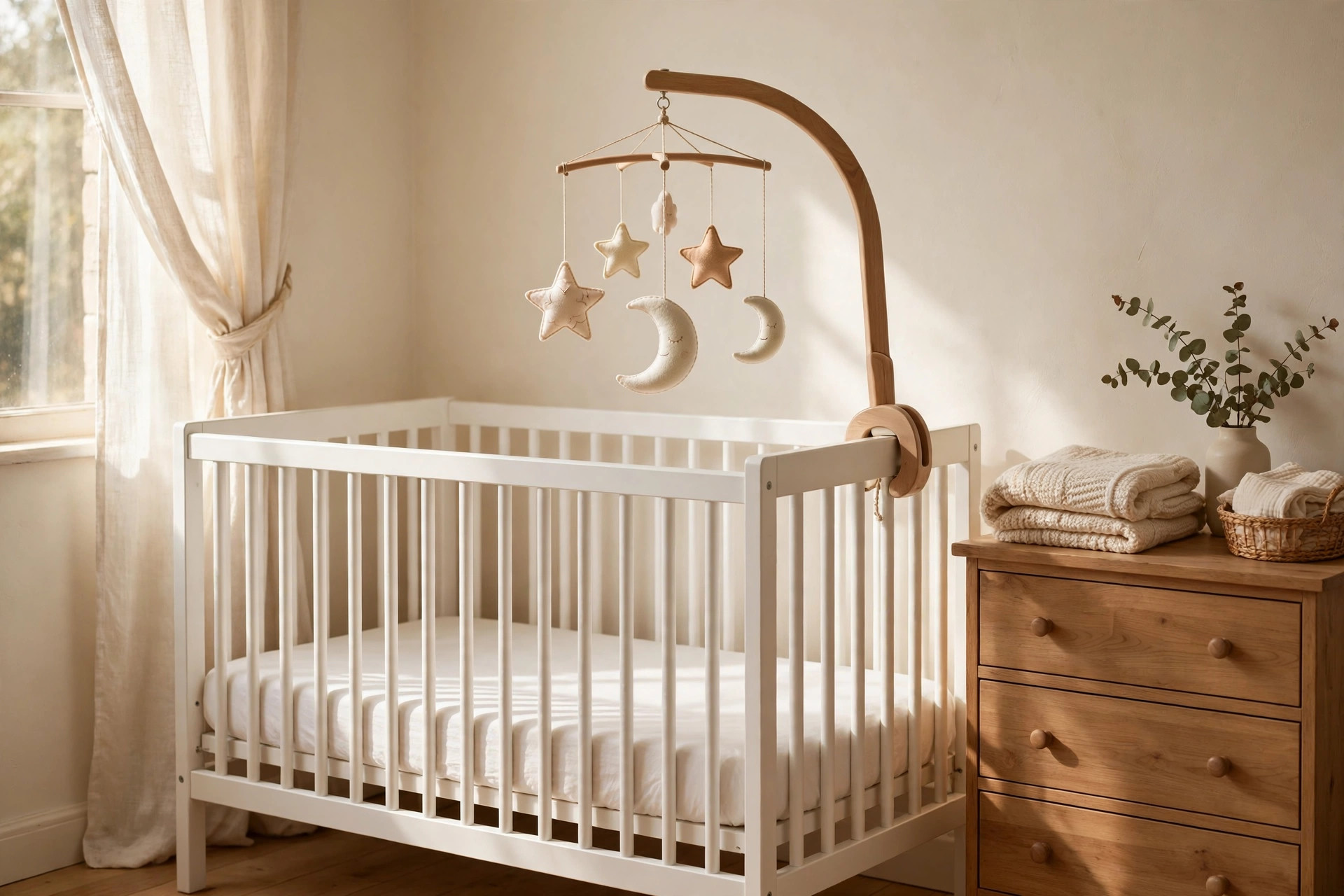

A nursery crib mobile musical for baby sleep is one of the simplest tools a parent can add to a newborn’s room. It hangs above the crib. It turns slowly. It plays soft music. The slow movement and calm sound help many babies settle down at bedtime. This guide explains how these mobiles work, how to choose one, what types exist, what they cost, and how to keep them safe.
Why a Musical Crib Mobile Matters
The first months of a baby’s life set the pattern for sleep. A baby who learns to fall asleep calmly often keeps that habit for years. A musical mobile supports this process. It gives the baby something gentle to watch. It fills the room with a soft, steady sound. Together, the sight and the sound tell the baby that bedtime has begun.
New parents often find the evening hours hard. The baby is tired but will not rest. Rocking helps, but arms get tired. A nursery crib mobile musical for baby sleep takes over part of this work. The parent can lay the baby down, start the mobile, and step back. The baby watches the slow figures turn. The music plays. Many babies grow quiet within a few minutes.
These mobiles also aid early sight and hearing. A newborn sees best at a distance of about eight to twelve inches. The hanging figures move into and out of this range. The baby’s eyes follow them. This is simple, healthy practice for the eye muscles. The music, played at low volume, gives the ears a calm sound to notice. Experts in early childhood have long noted that gentle sights and sounds support a baby’s growth. Parenting advice from What to Expect often covers how calm bedtime routines aid infant development.
A musical mobile also helps build a bedtime ritual. Babies learn from repetition. The same music at the same time each night becomes a signal. The brain links the tune with sleep. After a few weeks, the first notes may make the baby’s eyes grow heavy. This is the power of a steady routine.
What to Look For When You Choose: Nursery Crib Mobile Musical for Baby Sleep
Not every mobile suits every nursery. A few key points guide a wise choice.
Music quality comes first. Listen before you buy if you can. The tune should be soft and slow. Many models play classic lullabies such as Brahms’ Lullaby or Twinkle, Twinkle, Little Star. The sound should not be harsh or tinny. A pleasant, warm tone matters more than the number of songs. Three good lullabies beat twelve poor ones.
Motion should be smooth. The arm should turn at a steady, slow pace. Jerky or fast movement can excite a baby instead of calming one. Many models rotate for a set time, often five to fifteen minutes, then stop on their own. This auto-off feature saves you a trip back into the room.
Volume control is a must. Babies hear more sharply than adults. A mobile that is too loud can harm young ears or wake a drowsy baby. Choose a model with at least two volume levels, or one that plays softly by nature. Test the loudest setting. If it makes you flinch, it is too loud for a crib.
Attachment must be firm. Most mobiles clamp to the side rail of the crib. The clamp should grip tightly and stay put. A loose clamp can slip. Check that the arm holds the weight of the hanging figures without drooping. If your crib has an unusual rail shape, test the fit before the baby arrives.
Materials should be safe and clean. Soft fabric figures are common. Painted wood and plastic are common too. Whatever the material, it should be smooth with no sharp edges. Small parts must be fixed firmly so nothing can break off. Many nursery planners at IKEA show how simple, clean designs suit a calm nursery best.
Power source matters. Wind-up models need no batteries and often cost less. Battery models run longer and may offer more songs. If you choose battery power, check where the battery box sits. It should be sealed and hard for little hands to open.
Types and Options
Shoppers will find several main types of musical crib mobile.
Wind-up mobiles are the classic kind. You turn a key, and a music box plays while the arm turns. They are simple. They need no batteries. The music often has a sweet, old-fashioned tone. The drawback is time. Most play for only three to five minutes before they wind down.
Battery-operated mobiles run longer. Many play for ten to twenty minutes per cycle. They often include several lullabies and a volume switch. Some add a soft night-light. The cost of batteries adds up over months, so rechargeable batteries are a smart pick.
Projection mobiles cast stars or shapes on the ceiling. They combine a musical crib mobile with a light show. Many parents like them for older infants who can see farther. Keep the light dim. A bright projection can keep a baby awake instead of helping one sleep.
Travel mobiles clamp to a stroller or car seat. They are smaller and lighter. They help keep a nap routine steady when the family is away from home. They do not replace a full crib mobile but serve as a fine backup.
Handmade and wooden mobiles appeal to parents who want natural materials. These often come from craft sellers. Check each joint and string by hand. Handmade does not always mean tested. Look for signs of care in the work.
When you compare models, major stores such as Amazon, Target, and Walmart carry a wide range, from basic wind-up styles to deluxe projection models. Reading buyer reviews on these sites can reveal how a mobile holds up after weeks of nightly use.
Cost and Price
A nursery crib mobile musical for baby sleep fits most budgets. Basic wind-up models start around fifteen to twenty-five dollars. These play one tune and turn for a few minutes. They are honest, simple tools.
Mid-range battery models run from thirty to sixty dollars. This range holds the most choice. You get several songs, volume control, and auto shut-off. Many parents find all they need in this price band.
Premium models cost sixty to over one hundred dollars. These may include projection lights, remote controls, and app links. They look fine and work well, but the extra features are not needed for basic baby sleep. A plain mobile with a sweet tune does the job.
Remember the full nursery budget. A mobile is one small piece. A nursery hamper with lid for odor control keeps the room fresh. A best kids dresser for shared sibling room may matter more if two children share space. Spend on the mobile what the rest of the room allows. Specialty stores such as Pottery Barn Kids sell fine nursery pieces, but a safe mobile does not have to cost much.
Care and Upkeep
A crib mobile needs little care, but regular checks keep it safe.
Dust the figures once a week with a soft, dry cloth. Dust can dull the look and bother a baby’s nose. If the figures are washable fabric, follow the maker’s washing notes. Air dry them fully before rehanging.
Check the strings or arms every week. Pull gently on each hanging figure. If one feels loose, fix it or remove the mobile until it is repaired. Strings can stretch with time. Keep them short. Long strings are a danger.
Change batteries on a set schedule, such as the first of each month. Weak batteries can make the music slow and strange. A sudden stop mid-song can wake a sleeping baby. Keep spare batteries in a drawer near the nursery.
When the baby can push up on hands and knees, usually around five months, remove the mobile. This rule comes from safety groups and appears in home guides at The Spruce. A baby who can reach the mobile may pull it down. Move it to a shelf as a keepsake or save it for the next child.
Safety
Safety is the most vital part of this guide. The Consumer Product Safety Commission sets clear rules for crib mobiles. Follow them.
Hang the mobile out of the baby’s reach. The lowest hanging part should sit at least seven inches above the top of the crib mattress. Measure it. Do not guess. As the baby grows, this gap must grow too.
Remove the mobile once the baby can push up. This is the firm rule. No mobile is worth a risk to a child who can grab it. Strings around the neck are a real danger. When in doubt, take it down early.
Keep cords away from the crib. If your mobile has a power cord, route it far from the baby’s reach. Battery and wind-up models avoid this problem and are often the safer pick.
Check for recalls. Before you buy a used mobile, look up the model on the safety commission site. Older models may not meet current rules. Pediatric guidance at HealthyChildren.org also notes that the crib itself should stay bare, with no pillows or soft toys near a sleeping infant.
Watch the baby’s response. If the music seems to excite rather than calm, try a slower tune or lower volume. If the baby cries at the sight of the mobile, stop using it for a few weeks and try again later. Every child is different.
Frequently Asked Questions
When should I start using a musical crib mobile? You can hang it before the baby is born so the nursery is ready. Most parents start it in the first week home. Newborns benefit from the gentle sight and sound from day one. A musical crib mobile for newborns works best as part of a calm bedtime routine.
How long should the music play each night? Ten to fifteen minutes is enough for most babies. The goal is to bridge the gap between being laid down and falling asleep. A model with auto shut-off handles this on its own. There is no need for music to play all night.
Are wind-up or battery models better for baby sleep? Both can work well. A wind-up nursery mobile needs no batteries and often has a warm tone. A battery model runs longer and offers volume control. Choose based on your routine. If you want a longer play time without rewinding, pick battery power.
Can a baby sleep mobile with lullabies replace rocking? It can reduce rocking, but it need not replace human touch. Many parents rock the baby until drowsy, then lay the baby down and start the mobile. The mobile then carries the last step into sleep. This blend often works best.
What songs are best on a crib mobile? Slow lullabies with simple tunes work best. Classic choices include Brahms’ Lullaby, Twinkle, Twinkle, Little Star, and Rock-a-Bye Baby. Nature sounds, such as soft rain or a heartbeat, suit some babies too. Avoid fast or complex music.
Where can I find more nursery ideas? Home retailers such as Wayfair show full nursery sets that pair well with a simple mobile. For families planning ahead, a toddler potty chair for bathroom training becomes useful sooner than most parents expect.
A Short Final Word
A nursery crib mobile musical for baby sleep is a small purchase with a large effect. It calms the room. It builds a bedtime habit. It gives tired parents a helping hand each night. Choose one with soft music, smooth motion, and a firm clamp. Keep it clean. Keep it out of reach. Take it down when the baby can push up. With these simple steps, the mobile will serve your family well through the precious first months.
References
Amazon. (n.d.). Online shopping. https://www.amazon.com American Academy of Pediatrics. (n.d.). HealthyChildren.org. https://www.healthychildren.org IKEA. (n.d.). Home furnishings. https://www.ikea.com Pottery Barn Kids. (n.d.). Kids furniture and decor. https://www.potterybarnkids.com Target. (n.d.). Retail store. https://www.target.com The Spruce. (n.d.). Home and garden advice. https://www.thespruce.com U.S. Consumer Product Safety Commission. (n.d.). Product safety information. https://www.cpsc.gov Walmart. (n.d.). Everyday low prices. https://www.walmart.com Wayfair. (n.d.). Furniture and home goods. https://www.wayfair.com What to Expect. (n.d.). Pregnancy and parenting guidance. https://www.whattoexpect.com
Was this guide helpful?

About James Carter
The My Garden US editorial team writes practical, in-depth home and garden guides for American homeowners — tested advice, no fluff.
You May Also Like

Nursery Ceiling Fan with Light for Air Circulation: A Parent’s Guide
September 9, 2026 0 views
The Best Nursery Glider for C Section Recovery
June 24, 2026 0 views
Nursery Dresser with Removable Changing Tray: A Practical Buying Guide
January 3, 2026 0 views