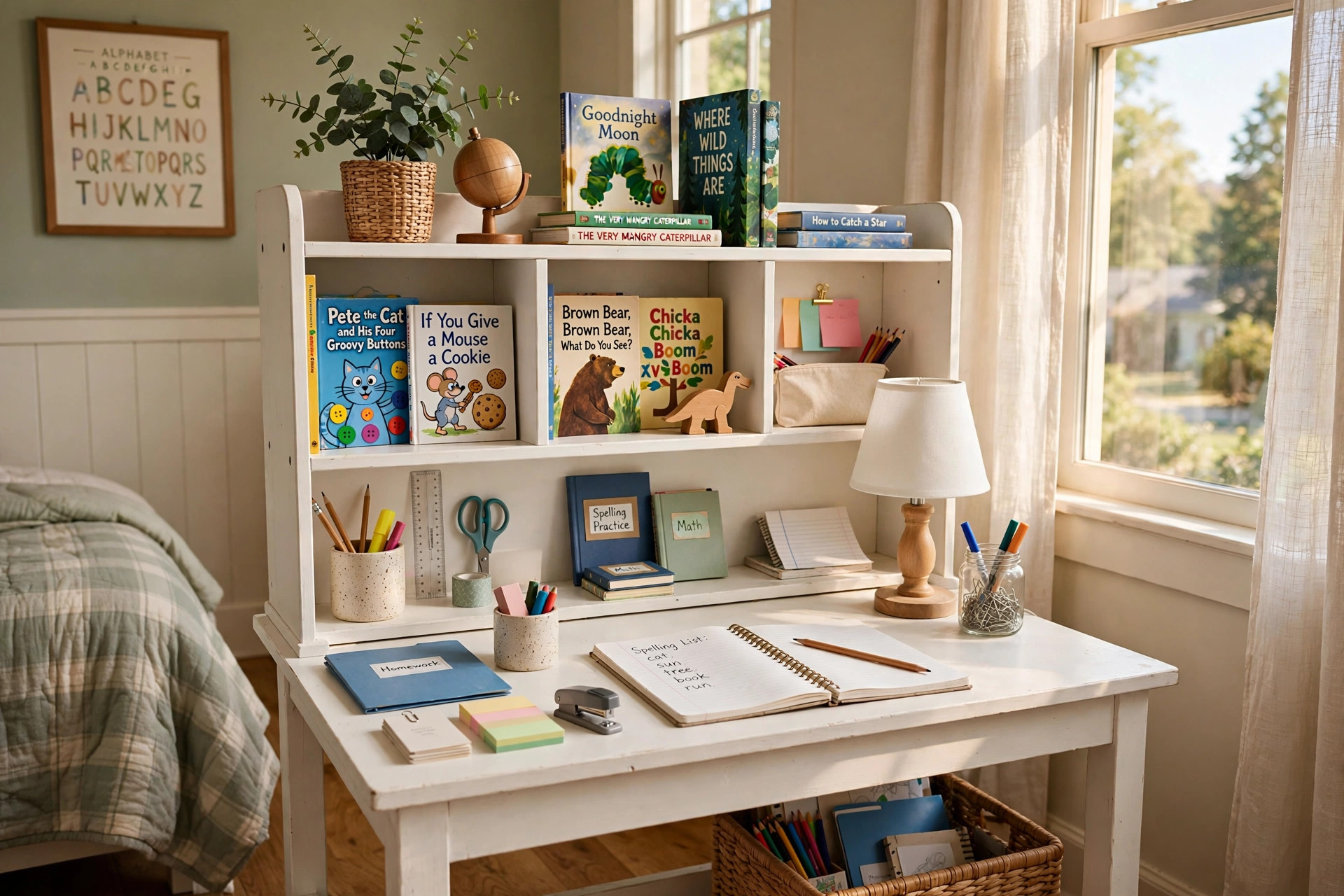
A kids study table with bookshelf attached is one of the most useful pieces of furniture a parent can buy for a school-age child. It joins two needs in a single frame: a flat place to write and draw, and shelves close at hand for books, notebooks, and school tools. The child sits down, and all is within reach. There is no need to walk to another room for a dictionary or a box of pencils.
Parents choose this design for simple reasons. Rooms are often small. A separate desk and a separate bookcase take up two walls. One combined unit takes up one. The child also learns order sooner. When each book has a place on the shelf above the table, the child puts it back without being told. Over months, this small habit shapes how the child works.
Why It Matters
A child who has a steady place to work builds a steady routine. The table marks the spot where study begins and play ends. Psychologists of the last decades have often noted that a set study place helps young minds focus. When the place never changes, the child settles faster each day.
The attached bookshelf adds a second benefit. Books kept at arm’s length get read more often. A child who sees a shelf of storybooks each evening is more likely to open one. The furniture itself becomes a quiet teacher, placing reading at the center of the child’s day.
There is also a plain matter of safety and tidiness. Loose books and papers on the floor are tripped over. A low shelf gives the child a rightful home for every item. The room stays cleaner, and the child learns that each tool has its own place. These are lessons that serve the child well beyond school.
What to Look For: Kids Study Table with Bookshelf Attached
A good study table with a bookshelf attached should fit the child, fit the room, and last through several school years. The points below guide the choice.
The Right Size
The table height must suit the child’s body. For a child of six to nine, a top near twenty-two to twenty-four inches from the floor suits most. For older children, twenty-eight to thirty inches is common. The child’s feet should rest flat on the floor, and the elbows should sit near the table top when the hands rest on it.
The table surface should be wide enough for an open textbook and a notebook at once. Thirty to forty inches of width serves most school work. The bookshelf above should not push the child too far back. A shallow shelf, about eight to ten inches deep, gives room for books without crowding the work space.
Measure the room before buying. Note the width of the wall where the unit will stand. Leave at least two feet of clear space in front of the chair so the child can sit and rise without trouble.
Materials That Last
Solid wood, such as pine or rubberwood, is strong and can be sanded and painted again when the child grows. Engineered wood, often sold as MDF or particleboard with a finish, costs less and serves well for the school years, though it does not bear heavy loads as well. Metal frames with wood tops are a third choice and suit a modern room.
Look for a smooth, sealed finish. A child spills paint, glue, and juice. A sealed top wipes clean with a damp cloth. Avoid rough edges and splinters. Run a hand along every edge before the child uses the table.
Shelves and Storage
The bookshelf section usually has two or three open shelves. Check that the shelf heights fit real school books. Tall textbooks need at least twelve inches of clearance. Adjustable shelves are best, since the child’s books change from year to year.
Some tables add small drawers or cubbies under the top. These hold pencils, rulers, and scissors. A drawer keeps small items from rolling off the table. If the unit has a drawer, open and close it in the store. It should move smoothly and stop before it can fall out.
A Chair That Fits
The table is only half the work place. A child needs a chair of the right height. Many parents pair the table with an adjustable kids desk chair that rises as the child grows. A chair with a firm back and a footrest keeps the child from slouching through long reading hours.
Types and Options
Study tables with attached bookshelves come in several forms. Each suits a different home.
The hutch desk. This is the classic form. A desk below and a shelf tower rising from its back edge. It fits against one wall and suits most rooms. It is the most common choice for elementary children.
The loft and corner desk. A corner unit uses two walls and gives the child an L of work space, with shelves above one arm. This suits children who spread out their work or use a computer beside their books.
The compact wall unit. For very small rooms, a narrow table with a tall, shallow shelf above makes use of wall height rather than floor width. It holds many books in a footprint no wider than a doorway.
The desk with hutch for homework. Older students often need more shelf room for reference books and binders. A desk with a hutch for homework gives deeper shelves and a larger top, and suits the middle and high school years.
Parents who need more book room still can add a separate kids bookshelf with storage bins beside the table. The bins hold toys and games, while the attached shelf stays free for school books.
Cost and Price
Prices vary with material, size, and brand. As a guide, in the United States a simple engineered-wood study table with an attached bookshelf often sells for sixty to one hundred and fifty dollars. Solid wood models run from one hundred and fifty to four hundred dollars. Handmade or branded designs can pass five hundred.
Delivery and assembly add to the cost. Many tables ship flat in one or two boxes. A parent with a screwdriver can build most in one to two hours. Some stores offer assembly for a fee of forty to eighty dollars. Measure doorways and stair turns before ordering, so the boxes can reach the child’s room.
Think in terms of cost per year. A well-built table that serves a child from age six to age twelve costs far less per year than a cheap one that wobbles and must be replaced. Check the weight limit in the product details. A table rated for at least seventy-five pounds handles books, a lamp, and the child’s leaning elbows without strain.
Care and Upkeep
Dust the shelves once a week. Books gather dust fast, and a child with allergies will breathe easier in a clean room. Pull the books out twice a year, wipe the shelves, and put back only what the child still reads. Give old books to the library or to a younger child.
Tighten screws and bolts every six months. Wood shifts with the seasons, and a child’s daily use loosens joints. A quick check with a screwdriver keeps the unit steady. If the finish scratches, a dab of matching furniture paint or a wax stick hides the mark.
Teach the child to cap markers, close glue, and use a desk mat under art work. A cutting mat or a sheet of craft paper saves the table top from years of scars. Spills should be wiped at once, before they sink into the finish.
Safety
Safety comes first with any children’s furniture. Buy only from makers who follow current safety standards. The Consumer Product Safety Commission publishes guidance on furniture stability and lead in paint, and its recall lists are worth checking before any purchase.
Tip-over risk. A tall shelf on a small base can tip if a child climbs it. Fasten the unit to the wall with the anti-tip straps or brackets that come in the box. This single step prevents most injuries from falling furniture.
Sharp edges and small parts. Choose rounded corners. Keep screws, caps, and small fittings out of the reach of toddlers during assembly. Pick up every dropped screw when the work is done.
Paint and finish. The paint should be non-toxic and free of lead. Reputable sellers such as IKEA and Pottery Barn Kids test their children’s lines against strict chemical standards. For health questions about materials, HealthyChildren.org offers plain guidance written by pediatricians.
Lighting. Place a lamp so the child’s writing hand does not cast a shadow on the page. The light should fall from the opposite side of the writing hand. Soft, warm light tires the eyes less during evening work.
Cords. Keep lamp and charger cords clipped behind the unit, out of the child’s path. A cord across the floor is a trip hazard, and a cord within reach invites chewing by toddlers.
Frequently Asked Questions
At what age can a child use a study table with a bookshelf attached?
Most children are ready around age four or five, when they start drawing and early school work at a table. Choose a low table for a young child, and raise or replace it as the child grows. There is no upper age limit; older students use larger versions of the same design.
Is an attached bookshelf better than a separate bookcase?
For small rooms, yes. One unit saves floor space and keeps books within the child’s reach. A separate bookcase offers more storage, so families with many books sometimes use both. The attached shelf holds the books in daily use, and the separate case holds the rest.
How do I keep the shelves from becoming cluttered?
Give each shelf a job: school books on the lower shelf, reading books on the upper shelf, supplies in the cubbies. Once a month, go through the shelves with the child and remove what no longer belongs. A small number of books, each with a place, stays tidy on its own.
Can the table hold a computer or a heavy monitor?
Check the weight rating first. Many children’s tables are built for books and light items, not for heavy equipment. If the child needs a computer, choose a model rated for at least one hundred pounds, or place the computer on a separate stand. Keep the shelf above free of heavy stacks.
What if my child shares a room?
A study table with an attached bookshelf suits shared rooms well because it claims only a small patch of wall. Place one unit per child if space allows, each against a different wall. If only one fits, give each child a set of shelf cubbies marked with their name.
How long should such a table last?
A solid wood unit can serve through all the school years and pass to a younger sibling. An engineered-wood unit commonly lasts five to eight years of daily use. The length of service depends on care: tightened joints, quick cleanup of spills, and no standing or climbing on the furniture.
A Final Word
A kids study table with bookshelf attached is a small purchase with a long reach. It gives the child a place of his or her own, a shelf of books at eye level, and a daily habit of order. Chosen with care for size, material, and safety, it will stand through years of lessons, drawings, and quiet reading hours. For room ideas and styling guidance, The Spruce and What to Expect both carry helpful pieces on children’s rooms, and Wayfair offers a wide range of models to compare side by side.
For more background, see Target.
References
American Academy of Pediatrics. (n.d.). HealthyChildren.org. https://www.healthychildren.org IKEA. (n.d.). Home furnishings. https://www.ikea.com Pottery Barn Kids. (n.d.). Kids furniture and decor. https://www.potterybarnkids.com Target. (n.d.). Retail store. https://www.target.com The Spruce. (n.d.). Home and garden advice. https://www.thespruce.com U.S. Consumer Product Safety Commission. (n.d.). Product safety information. https://www.cpsc.gov Wayfair. (n.d.). Furniture and home goods. https://www.wayfair.com What to Expect. (n.d.). Pregnancy and parenting guidance. https://www.whattoexpect.com
Was this guide helpful?

About Sarah Mitchell
The My Garden US editorial team writes practical, in-depth home and garden guides for American homeowners — tested advice, no fluff.