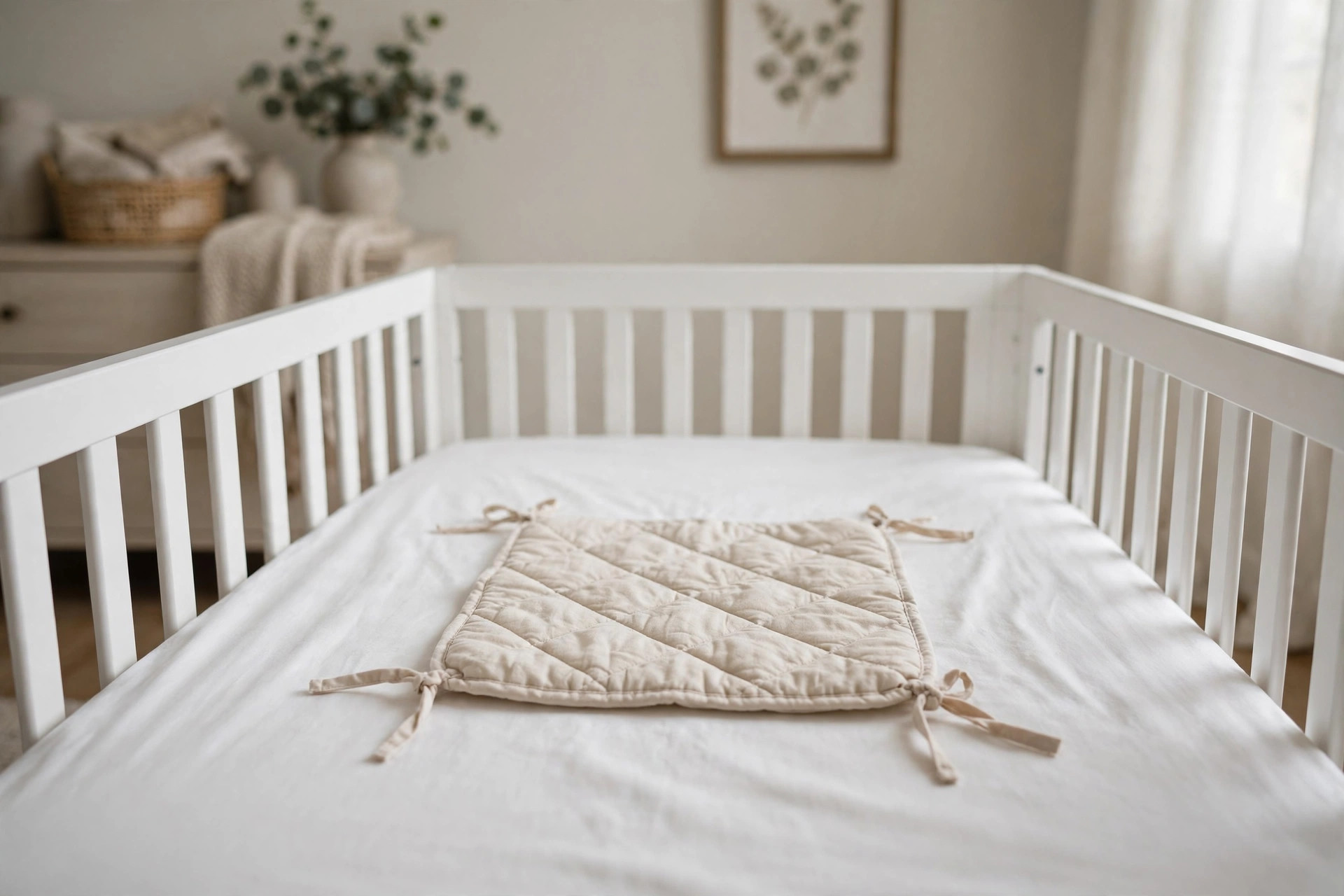

A crib sheet saver for quick diaper changes is one of the smallest tools in a nursery. It is also one of the most useful. This flat pad lies on top of the fitted crib sheet. When a diaper leaks in the middle of the night, a tired parent can lift out the saver and lay down a clean one. The sheet below stays dry. The baby stays calm. The whole task takes less than a minute. For new parents, that one minute can feel like a gift.
Many parents change a crib sheet at three in the morning at least once. A full sheet change means lifting the mattress, pulling off elastic corners, and remaking the bed while a baby cries. A sheet saver cuts all of that out. This guide explains what a sheet saver is, why it helps, how to pick one, what kinds exist, what they cost, how to keep them clean, and how to use them safely. By the end, you will know whether this simple pad belongs in your nursery.
Why a Sheet Saver Matters
Night feedings and diaper changes are hard on parents. Sleep is short. Energy is low. Small tasks feel large. A crib sheet saver for quick diaper changes shrinks one of those tasks to almost nothing. Instead of changing the whole sheet, you swap a small pad. You keep the baby in the crib. You finish fast and go back to bed.
The saver also protects the crib sheet and the mattress. Diapers leak. That is a fact of baby life. Without a saver, a leak soaks the fitted sheet and sometimes the mattress. A waterproof organic crib mattress for newborns resists damage, but it still needs a dry sheet on top. The saver takes the hit first. You wash a small pad instead of a full sheet. That means less laundry, less wear on your sheets, and a mattress that stays fresh longer.
Money is another reason. A good sheet saver costs about the same as one pack of diapers. If it saves you from buying extra fitted sheets, it pays for itself fast. Fitted crib sheets wear out with heavy washing. A saver keeps them in use longer. Parents on a tight budget get real value here.
There is also the question of the baby’s comfort. Babies wake fully when they are moved around too much. A quick pad swap keeps handling short. The baby settles faster. The parent sleeps sooner. Everyone in the house benefits.
What to Look for When You Choose One: Crib Sheet Saver for Quick Diaper Changes
Shopping for a crib sheet saver for quick diaper changes is simple when you know what matters. Focus on these points.
Size and fit. Most savers measure about 34 inches by 14 inches. This covers the center of a standard crib. The pad should lie flat with no loose ends. Loose fabric is a safety risk. Measure your crib before you buy. Some mini cribs need a smaller pad.
A secure fastening system. Most savers have ties, straps, or elastic loops that hook to the crib rails or slats. The fasteners must hold the pad flat through the night. Test them before first use. If the pad slides around, replace it.
Waterproof backing. The best savers have a soft cotton top and a waterproof layer below. The waterproof layer stops wetness from reaching the sheet. Some use polyurethane film. Others use a vinyl-free barrier. Check the product label to see which material you are buying.
Soft, safe fabric. The top layer should be soft cotton or a cotton blend. It touches your baby’s skin. It should feel smooth, not rough. Look for fabric that is free of harsh dyes and heavy chemical smells. If a pad smells strong when you open it, wash it before use.
Ease of washing. You will wash this pad often. It should go through a machine wash and dry without falling apart. Read the care label. Pads that need air drying only will slow you down.
Trusted nursery retailers carry a wide range of options. Large home and nursery stores such as IKEA and Wayfair stock nursery bedding in many styles. Children’s specialty shops like Pottery Barn Kids sell fitted sheets and savers in matching sets. Big general stores such as Target and Walmart carry low-cost savers that work just as well as pricey ones.
Types and Options
Not all sheet savers are the same. The main types differ in material and design.
Quilted cotton savers. These are the most common. They have a padded cotton top that feels soft under the baby. A thin waterproof layer sits between the cotton and the bottom. They wash well and last through many cycles. Most parents start here.
Organic cotton savers. These use organic cotton for the top layer. They cost more. Some parents prefer them for babies with sensitive skin. The waterproof layer is usually plant-based or vinyl-free. Read the label to confirm what “organic” covers.
Disposable pads. Some brands sell one-time-use pads for travel. They work for trips and for the diaper bag. They cost more per use than a washable saver. They also create waste. Most families use them only on the road.
Multi-pack sets. Many savers come in packs of two or three. A set makes sense. While one pad is in the wash, another is on the crib. Buy at least two so you always have a clean one ready.
Related nursery items pair well with a saver. A nursery dresser changing table combo gives you a stocked changing station near the crib. A convertible crib for a small nursery room leaves more floor space for that station. Planning the whole room together saves time later.
Cost and Price
A crib sheet saver for quick diaper changes is a low-cost item. Prices fall into three bands.
Single quilted savers usually cost between 8 and 15 dollars. This is the basic, reliable choice. Multi-packs of two or three run from 15 to 30 dollars. The price per pad drops in a pack. Organic or specialty savers cost between 20 and 35 dollars each.
Disposable travel pads cost about 50 cents to one dollar per pad. A pack of 25 runs 12 to 25 dollars.
Most families spend 15 to 30 dollars total and never need more. That small sum buys many months of easier nights. Compare it with the cost of extra fitted sheets at 10 to 20 dollars each. Two savers can replace two spare sheets in your routine.
Watch for sales. Baby registries, store coupons, and holiday sales bring prices down. Buying a multi-pack on sale is often the best deal. Do not pay extra for brand names alone. A basic pad with a real waterproof layer works as well as a luxury one.
Care and Upkeep
A sheet saver works hard, so give it simple care.
Wash after every leak. Do not let a soiled pad sit. Rinse it or toss it in the hamper right away. Old stains set and grow odor.
Use warm water and mild soap. Most savers wash at warm or hot settings. Mild baby-safe soap protects the waterproof layer. Skip fabric softener. It can coat the barrier and reduce its power.
Dry on medium or low heat. High heat can crack the waterproof film over time. Tumble dry on medium or low, or hang the pad to dry. Check the label for exact heat limits.
Inspect often. Look at the waterproof layer once a month. Hold the pad up to light. If you see cracks or thin spots, replace the pad. A worn barrier lets wetness through, which defeats the purpose.
Rotate your stock. If you own three pads, rotate them evenly. Even wear extends the life of all three. Keep at least one clean saver folded near the crib at all times. A changing caddy on the crib rail works well.
With basic care, a quality saver lasts six to twelve months of daily use. Organic cotton versions may last a bit longer if washed gently.
Safety First
Safety matters more than comfort. A sheet saver goes inside a baby’s sleep space, so it must meet strict rules.
Follow safe sleep guidance. The U.S. Consumer Product Safety Commission sets rules for crib products. Check their safety standards before buying nursery items. Health experts advise that a baby’s sleep area stay clear of loose bedding. A sheet saver is an exception only when it fastens down flat and snug.
Keep the pad flat and tight. The saver must not bunch, wrinkle, or fold. Bunching creates a soft spot that can press against a baby’s face. Fasten all ties and straps. Smooth the pad flat each night.
Use only with a fitted sheet. The saver goes on top of a tight fitted crib sheet. Never place it directly on the bare mattress. Never layer two savers. One flat pad is the limit.
Stop using it when the baby rolls. Once a baby can roll over, some doctors advise removing extra sleep items. Ask your own doctor about timing. Parenting guidance from the American Academy of Pediatrics, shared through HealthyChildren.org, is a trusted source for sleep questions.
Check fasteners often. Ties can loosen with washing. Straps can stretch. Inspect every fastener weekly. Replace the pad if anything no longer holds tight.
Parenting sites also offer practical help. What to Expect publishes guides on diaper changes and nursery setup. The Spruce covers nursery decor and baby gear with clear how-to articles. Both can help a new parent plan the room.
Frequently Asked Questions
How many sheet savers do I need? Two or three is ideal. Keep one on the crib, one clean and ready, and one in the wash. Three pads cover a bad night with two leaks.
Can I use a sheet saver in a bassinet or playard? Only if it is made for that size. A standard crib saver is too large for a bassinet. Loose extra fabric is unsafe. Buy a pad sized for the exact product you own.
Do sheet savers really keep the sheet dry? Yes, when the waterproof layer is intact. The cotton top absorbs wetness. The barrier below stops it from passing through. After a small leak, the fitted sheet under the saver is usually fully dry.
How is a sheet saver different from a mattress protector? A mattress protector covers the whole mattress under the fitted sheet. A sheet saver is a small pad that sits on top of the sheet. Many parents use both. The protector guards the mattress long term. The saver handles nightly leaks fast.
Can I make my own sheet saver? You can, but store-bought pads cost little and meet safety testing. A homemade pad needs a real waterproof barrier and secure fasteners. Sewing one yourself saves almost nothing. Most parents find the store version simpler and safer.
When should I replace a sheet saver? Replace it when the waterproof layer cracks, the fabric thins, or the fasteners stop holding. For most families, that means a new set every six to twelve months. Mark the purchase date on the care tag to track age.
A Short Final Word
A crib sheet saver for quick diaper changes is a humble product. It does one job well. It turns a long, messy midnight sheet change into a thirty-second pad swap. It protects the sheet and the mattress. It costs little and asks for little care. For parents in the hard early months, it earns its place in the crib. Pick a pad that fits flat, fastens tight, and washes well. Keep two or three on hand. Then get back to the sleep you need.
References
American Academy of Pediatrics. (n.d.). HealthyChildren.org. https://www.healthychildren.org IKEA. (n.d.). Home furnishings. https://www.ikea.com Pottery Barn Kids. (n.d.). Kids furniture and decor. https://www.potterybarnkids.com Target. (n.d.). Retail store. https://www.target.com The Spruce. (n.d.). Home and garden advice. https://www.thespruce.com U.S. Consumer Product Safety Commission. (n.d.). Product safety information. https://www.cpsc.gov Walmart. (n.d.). Everyday low prices. https://www.walmart.com Wayfair. (n.d.). Furniture and home goods. https://www.wayfair.com What to Expect. (n.d.). Pregnancy and parenting guidance. https://www.whattoexpect.com
Was this guide helpful?

About Jennifer Lee
The My Garden US editorial team writes practical, in-depth home and garden guides for American homeowners — tested advice, no fluff.
You May Also Like
Nursery Wall Decals Clouds for Ceiling Decor: A Calm Sky Above the Crib
April 22, 2026 0 views
Nursery Diaper Caddy Organizer Portable: A Complete Guide
October 4, 2026 0 views
The Best Kids Desk Lamp for Eye Protection: A Parent’s Guide
July 11, 2026 0 views