Shopping for snake plants indoor usa online deals is one of the easiest ways to bring a touch of green into an American home. Snake plants are tall, bold, and hard to kill. They stand up straight. They ask for very little water. And they look good in almost any room. That is why they are among the most searched indoor plants in the United States today.
But buying a living plant over the internet takes care. A photo on a screen can hide weak roots. A low price can hide high shipping costs. And a pretty listing can come from a seller who never packed a plant before. This guide will walk you through every step. You will learn how to spot a real bargain, how to judge a seller, how to pick the right type, and how to keep your plant alive long after the box arrives.
Why Snake Plants Are So Popular
The snake plant, also known as mother-in-law’s tongue, has been grown as a houseplant for many decades. It was popular in the 1970s. It is popular again now. The reasons are plain.
First, the plant is tough. It can live through low light. It can live through missed waterings. It can live through dry indoor air in winter. Few indoor plants forgive neglect as well as this one.
Second, the plant is striking. Its leaves rise up like swords. They are stiff and upright. Many types have yellow edges or silver patterns. The plant gives a room a clean, modern look without much work.
Third, the plant fits busy lives. Young workers, students, and travelers all want plants that do not die when life gets busy. The snake plant fits that need. It asks for attention only once in a while.
Fourth, buying online gives you choice. A local store may carry one or two types. Online sellers carry dozens. You can find rare colors and large sizes that no shop near you would stock. If you enjoy learning about plant sellers, reading guides like the heirloom vegetable seeds buying guide usa can sharpen your eye for honest product listings.
How to Find a Good Online Deal: Snake Plants Indoor Usa Online Deals
A good deal is not only a low price. A good deal is a fair price for a healthy plant, shipped safely, with clear terms. Here is how to judge a listing before you click buy.
Read the Listing Carefully
Start with the plant size. Good sellers tell you the pot size, such as four inch or six inch, and may give the height of the plant in inches. Poor sellers write words like “small” or “medium” without numbers. Check what is included: some listings sell a bare root plant with no pot and no soil, others sell a full potted plant. Make sure you compare like with like. Read the shipping terms. Plants should ship in boxes that hold heat in winter and allow air flow. A seller who offers no guarantee is asking you to take all the risk.
Compare Prices Across Sellers
Do not buy from the first listing you see. Open three or four listings and write down the price, the pot size, and the shipping cost. Small four-inch plants often sell for under fifteen dollars. Six-inch plants cost more. Rare types cost more still. Watch the shipping cost: a plant that costs ten dollars with twelve dollars of shipping is a twenty-two-dollar plant. Many sellers build the shipping into the price and offer free delivery, and that is often the better deal.
Check Reviews and Photos
Look for sellers with many reviews about plants, not about other goods. Read a few reviews that mention how the plant arrived. Words like “well packed,” “healthy roots,” and “arrived fast” are good signs. Words like “arrived broken,” “dry,” or “wrong plant” are bad signs.
Photos from buyers are worth more than photos from the seller. A seller photo may be old. A buyer photo shows what really arrived. If buyers post photos of full, green plants, you can trust the listing more.
Types of Snake Plants You Will See Online
Snake plants come in many forms. Knowing the main types will help you shop with a clear eye. Here are the ones you will meet most often.
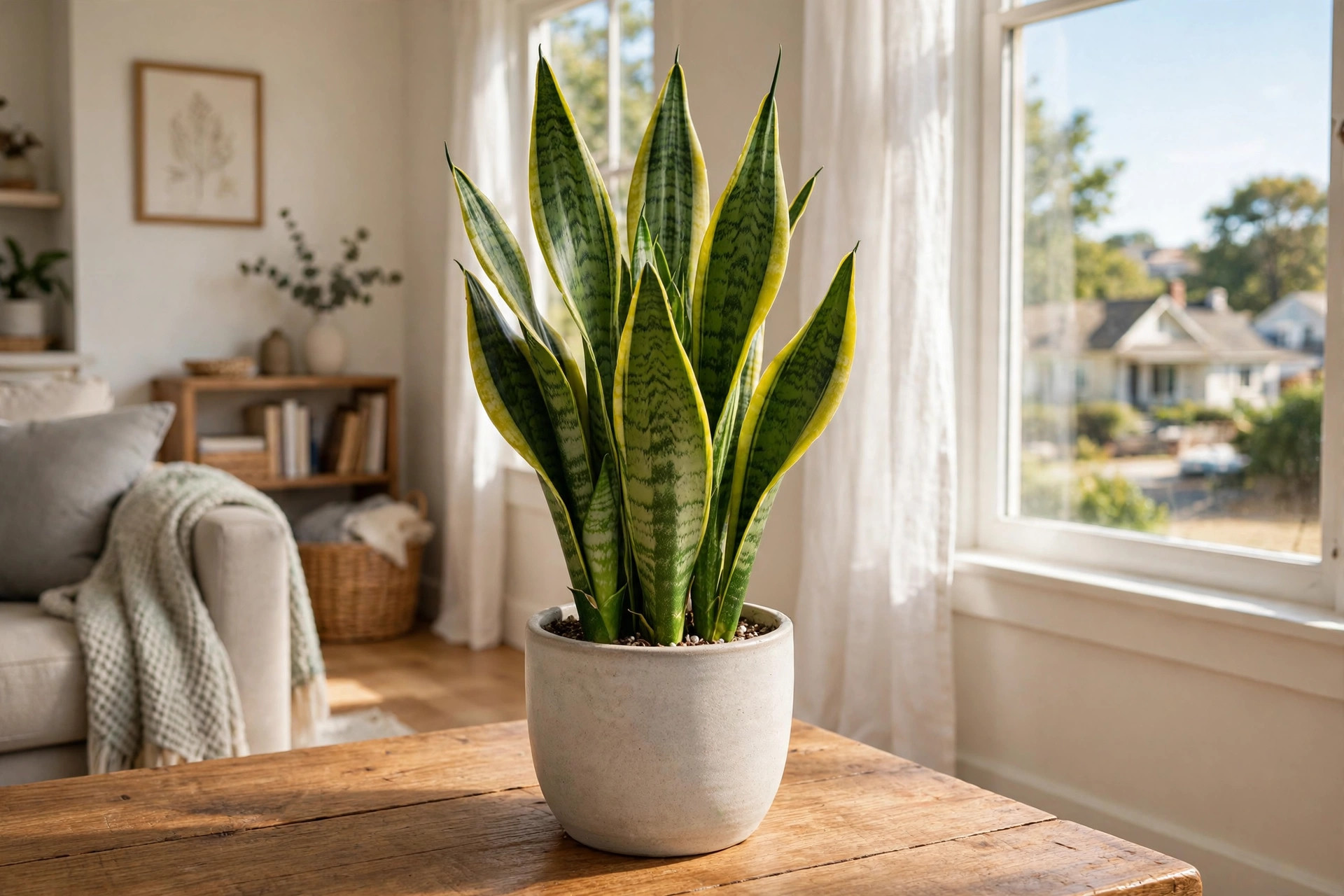
Sansevieria Trifasciata
This is the classic snake plant. Its leaves are dark green with lighter bands, standing straight and tall. It is the most common type and often the cheapest, and it is a fine choice for a first plant. Growers and catalogs such as Burpee carry many houseplants and can show you how large nursery plants should look.
Sansevieria Laurentii
This type has bright yellow edges on each leaf. It is one of the best known varieties, grows well, and looks bold in a plain pot. Because it is popular, many sellers stock it and prices stay fair.
Sansevieria Moonshine
The Moonshine has wide silver-green leaves. It looks soft and calm next to furniture. It grows a bit slower than the classic type. Because of that, large Moonshines cost more. Small starter plants are still cheap.
Sansevieria Cylindrica
This type has round, spear-like leaves that rise straight up. Some sellers braid the leaves together for a decorative look. It looks different from other snake plants. It needs the same care. The round leaves make it easy to spot in photos.
Other Named Varieties
You may also see names like Black Gold, Futura Superba, and Hahnii. These are shorter or more compact types. They fit well on desks and shelves. They cost about the same as the classic plant. Specialty growers such as Gurney’s and Monrovia often carry named varieties and can give you a sense of fair prices.
Cost and Price: What Is Fair
Prices move with the season and with plant size. Here is a rough guide for the United States.
A small plant in a four-inch pot often costs between ten and twenty dollars. This is the most common online deal. It is a young plant with room to grow.
A medium plant in a six-inch pot often costs between twenty and forty dollars. The plant will be fuller and taller. It will look good in a room right away.
A large plant in an eight-inch or ten-inch pot can cost forty to eighty dollars or more. These are showy plants. Shipping costs rise with size, so check the total.
Rare varieties cost more at every size. A rare type may cost twice what a common one costs. Decide if the rare color is worth the price to you.
Watch for bundle deals. Some sellers sell three or four small plants together for a lower price per plant. If you want more than one plant, a bundle can be a fine deal. Make sure all the plants in the bundle are types you want.
Remember that cheap plants from far away can carry hidden costs. Long shipping in heat or cold can hurt the plant. A slightly higher price from a seller in your region can be the wiser buy. Reading home and garden advice from The Spruce can help you weigh such choices.
Care and Upkeep After Delivery
The plant arrives in a box. What you do in the first days will shape its health for years.
Unpack Right Away
Open the box the same day it arrives. Take out the packing material with care. Set the plant in bright, indirect light and let it rest for a day before you water it. A day of calm helps it settle after the hard trip.
Give It Light
Snake plants can live in low light, but they grow best in bright, indirect light. A spot near an east or west window is fine. Keep the plant a few feet from a hot south window, since too much direct sun can burn the leaves.
Water With Care
This is where most owners go wrong. Water only when the soil is fully dry. In most homes, that means watering every two to three weeks. In winter, water even less. Pour water until it runs from the bottom of the pot, then empty the saucer. Never let the plant sit in water. Wet roots rot, and rot kills more snake plants than any other cause.
Potting and Soil
Snake plants like soil that drains fast. A cactus or succulent mix works well. Repot only when the plant is truly crowded, moving to a pot one size larger. Spring is the best time to repot.
Feeding
Feed the plant only in spring and summer, once a month at most, using a balanced houseplant fertilizer at half strength. Do not feed in fall or winter. Plant care guides from Gardening Know How and Park Seed offer useful notes on feeding schedules for houseplants.
Common Problems and Fixes
Even a tough plant can have troubles. Yellow leaves often mean too much water. Let the soil dry fully and cut away the yellow leaf at the base. Brown tips can mean dry air or too much fertilizer; trim the tip with clean scissors and cut back on feeding. Drooping leaves can mean cold or sitting water; move the plant to a warm spot and check the roots. Pests are rare on snake plants. Keep a new plant apart from your other plants for two weeks so any hidden pests cannot spread.
Safety: Pets and Children
Snake plants are mildly toxic if eaten. The leaves contain compounds that can upset the stomach. Dogs and cats that chew the leaves may drool or vomit. Small children who chew a leaf may feel sick to the stomach.
This does not mean you cannot own one. It means you should place the plant where pets and small children cannot reach it. A high shelf or a tall plant stand works well. Teach children that houseplants are for looking, not for tasting.
If a pet eats part of the plant, call your veterinarian. If a child eats part of the plant, call poison control in your state. Keep the plant’s name written down so you can give it to the doctor. Safety notes from The Old Farmer’s Almanac and White Flower Farm remind gardeners to place toxic plants out of reach.
Shopping Tips for the Best Deals
Timing matters. Prices often fall in spring, when nurseries ship large numbers of plants. They may rise in winter, when shipping needs heat packs. If you can wait until spring, you may pay less.
Sign up for seller newsletters. Many plant sellers send discount codes to new subscribers. A ten percent code can turn a fair deal into a good one.
Look for sellers who grow their own plants. A grower who raises the plants knows how to pack them. A reseller who buys from many sources may not. Grower listings often show greenhouses in the photos.
Buy from sellers in your climate zone when you can. A plant shipped from a warm state to a cold state in winter faces a hard trip. A seller near you sends a plant that travels a short way. Research guidance from the National Institute of Food and Agriculture explains how climate and growing zones affect plants across the country.
Avoid deals that seem too good to be true. A full six-inch snake plant for five dollars with free shipping is not likely real. It may be a scam listing or a tiny seedling. Honest sellers price their work fairly.
Where the Plant Fits in Your Home
Think about where the plant will live before you buy. A tall snake plant looks fine beside a sofa or in a hallway corner. A short, compact type fits on a desk or a bookshelf. Match the pot to the room, and set the nursery pot inside a nicer cover pot at home. If you like mixing indoor plants with seed-started greens, the organic herb seeds buying guide usa has ideas for starting small herbs on a kitchen windowsill.
Frequently Asked Questions
Are online snake plants as healthy as store plants?
They can be. A good online seller ships a plant that was growing well the day it left the greenhouse. A poor seller ships whatever is on hand. Read reviews from buyers. Look for words about healthy roots and good packing. A seller with a strong record will send you a plant as good as any store plant.
How long does shipping take?
Most sellers ship in two to five business days. Some offer faster shipping for a higher price. In summer heat or winter cold, fast shipping is worth the cost. A plant sitting in a hot or cold truck for a week may arrive damaged.
Should I buy a small plant or a large one?
Small plants cost less and grow over time. Large plants look good right away but cost more to buy and ship. If you are patient, a small plant is the better deal. If you want a finished look now, pay for the larger size.
Do snake plants really clean the air?
Snake plants were part of a well-known NASA study on indoor plants. They do take in some gases from the air. But one plant will not clean a whole room. Buy the plant because it looks good and is easy to keep. Treat air cleaning as a small bonus, not the main reason.
Can I grow more plants from one snake plant?
Yes. You can divide a crowded plant into two or more parts, which is faster and more certain than rooting a leaf cutting. Both methods give you free plants to keep or to give away.
What size pot should I start with?
Match the pot to the plant you buy. A four-inch plant goes in a four-inch pot. Do not put a small plant in a large pot. Too much soil holds too much water. That leads to rot. Move up one pot size at a time as the plant grows.
A Short Final Word
Finding the best snake plants indoor usa online deals is not hard once you know what to look for. Compare prices with care. Read the listings with a sharp eye. Check reviews from real buyers. Pick a healthy plant in a size that fits your home and your budget. Then give it bright light, little water, and a safe spot away from pets and small children.
A snake plant is a quiet friend. It does not ask for much. It gives back clean lines and calm green leaves for many years. Buy well, plant it in good soil, and let it do what it does best: stand tall and grow. For more ideas on growing plants at home, from seed mixes to starter guides, the wildflower seed mixes buying guide usa is a fine next read.
References
Burpee. (n.d.). Seeds, plants, and gardening supplies. https://www.burpee.com Gardening Know How. (n.d.). Gardening guides and plant care. https://www.gardeningknowhow.com Gurney’s Seed & Nursery Co. (n.d.). Seeds, plants, and garden supplies. https://www.gurneys.com Monrovia. (n.d.). Plants for home gardens. https://www.monrovia.com National Institute of Food and Agriculture. (n.d.). Agricultural research and extension. https://www.nifa.usda.gov Park Seed. (n.d.). Seeds, plants, and gardening supplies. https://www.parkseed.com The Old Farmer’s Almanac. (n.d.). Gardening calendars and advice. https://www.almanac.com The Spruce. (n.d.). Home and garden advice. https://www.thespruce.com White Flower Farm. (n.d.). Plants, bulbs, and garden supplies. https://www.whiteflowerfarm.com
Was this guide helpful?

About David Wilson
The My Garden US editorial team writes practical, in-depth home and garden guides for American homeowners — tested advice, no fluff.