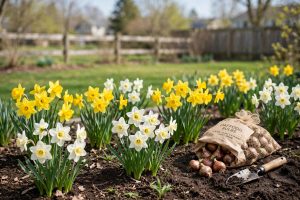
If tulips are spring's show-offs, daffodils are its reliable old friends. Narcissus pseudonarcissus and its hundreds of hybrid relatives come back year after year, multiply into generous drifts, shrug off deer and rodents that devour everything else, and ask for essentially nothing after planting. A daffodil planting is a decades-long investment that pays out every spring. Learning how to grow daffodils is one of the highest-return lessons in gardening.
Table of Contents
Table of Contents
The rules are simple: plant in the cool season, pointy end up, leave the foliage alone for six weeks after bloom, and never tie the leaves in knots no matter what the neighbors do. Follow those, and a single afternoon's planting becomes a permanent spring feature. Old farmsteads across America still bloom with daffodils planted generations ago - the bulbs outlast the houses.

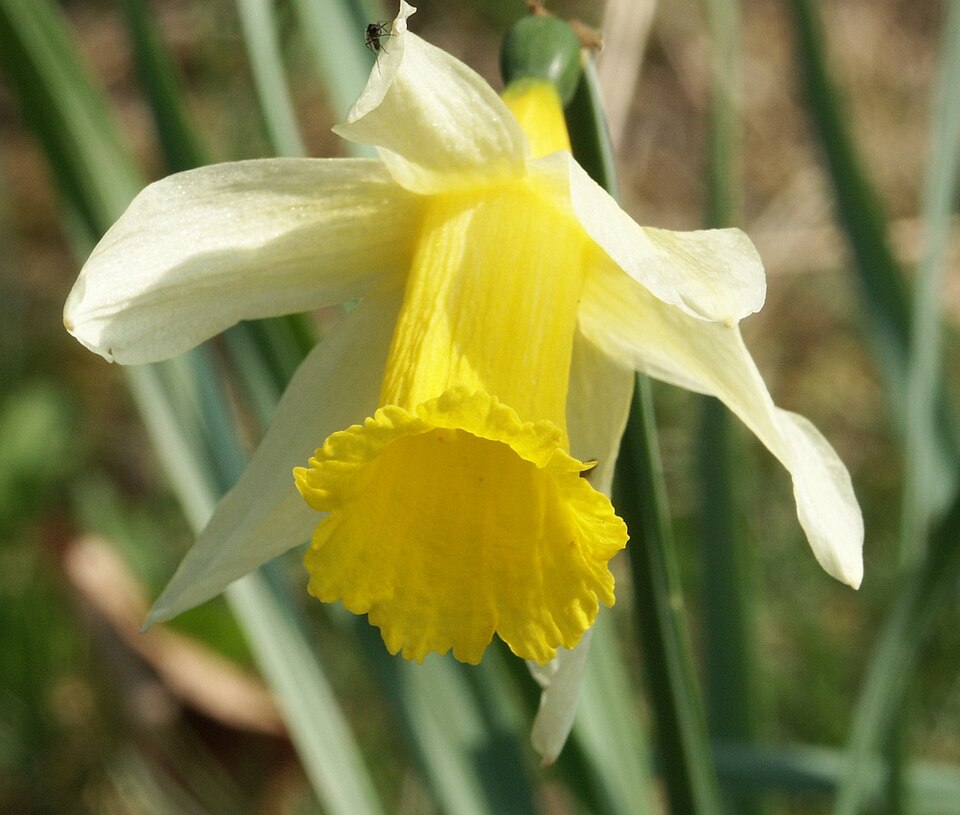
Photo: Wikimedia Commons
Getting Started: Choosing Bulbs
When it comes to how to grow daffodils, getting the details right makes all the difference.

Many homeowners find that how to grow daffodils is easier than they expected once they know the basics.
Buy firm, heavy, double-nosed bulbs - "double-nosed" meaning the bulb has two growing points, which usually means two flower stems. Big bulbs make big shows. Avoid soft, moldy, or dried-out bulbs; daffodil bulbs should feel solid and weighty, like a good onion.
The variety range is enormous: trumpets, large-cups, small-cups, doubles, triandrus, poeticus with their tiny red-rimmed cups. For naturalizing - planting drifts that multiply on their own - the old-fashioned trumpets and large-cups are unbeatable. For something different, the fragrant poeticus types perfume the whole garden. Gardenia.net variety guides help sort the dizzying options.
Daffodils are hardy in zones 3 through 9 and need a real winter chill to bloom well, which makes them poor performers in zones 10 and 11. They are also among the most animal-proof bulbs you can plant: deer will not touch them, and rodents that devour tulip and crocus bulbs leave daffodils alone, because all parts of the plant are toxic. Wear gloves when handling the bulbs - the sap can irritate skin, and you do not want it near your mouth. The USDA PLANTS database documents the species behind the garden hybrids.
When and How to Plant
Many homeowners find that how to grow daffodils is easier than they expected once they know the basics.
The key to how to grow daffodils is choosing the right approach for your space and budget.
Plant in the cool season, about seven weeks before your first fall frost, when the soil has cooled but is still workable. Roots establish through fall and winter; top growth waits for spring. If you want to check your USDA zone planting dates, our planting calendar will help you find that frost date and count back.
Set bulbs 6 inches deep - deeper than tulips - with the pointed end up, spacing them 4 to 6 inches apart. Deep planting has real benefits: it protects against temperature swings, discourages the bulbs from splitting into too many small non-blooming offsets, and puts them below the digging depth of most rodents. For naturalizing drifts, toss handfuls of bulbs and plant them where they land - the random spacing looks far more natural than rows.
Daffodils naturalize beautifully under deciduous trees and along woodland edges, in full sun to part shade. The trees are bare when the daffodils need light and leaf out just as the bulbs go dormant - a perfect partnership. Work bone meal or bulb fertilizer into the bottom of each planting hole. Water once after planting and let fall weather do the rest. The Almanac planting calendar helps nail the fall window for your zone.
Soil and Sun
The key to how to grow daffodils is choosing the right approach for your space and budget.
With a little planning, how to grow daffodils can fit even a busy schedule.
Full sun to partial shade suits daffodils. They bloom best with strong spring sun, but they tolerate the part shade of a woodland edge or the north side of a house - one reason they naturalize so obligingly. Deep, all-day shade reduces flowering over time, so give them at least a few hours of direct spring light.
Well-drained average soil is ideal. Daffodils are far more tolerant of heavy soil than tulips, but they still rot in truly waterlogged ground. If your soil stays soggy in winter, plant on a slope or in a raised bed. They are not fussy about fertility - average garden soil grows fine daffodils - though the bulb fertilizer at planting gives them a strong start.
One of their great virtues: daffodils compete well with grass. Planted in a lawn or meadow, they push through the turf each spring and bloom before the first mowing matters. Just remember the mowing rule below - it is the one thing that kills a naturalized planting. Unlike marigolds and other annuals that need bare soil, daffodils are perfectly happy sharing ground with grass.
Watering and Feeding
With a little planning, how to grow daffodils can fit even a busy schedule.
Before you start, it helps to understand how how to grow daffodils works in real homes.
Water after planting and during spring growth if the weather is dry. The critical moisture period runs from emergence through bloom; after the flowers fade, taper off as the foliage yellows. By summer dormancy, the bulbs want to be left alone - do not irrigate the bed all summer for their sake.
Feed at planting with bone meal or bulb fertilizer in the hole. A light top-dressing of balanced fertilizer when shoots emerge in spring supports strong blooms, especially in established drifts that have been in place for years. Do not feed after flowering - like tulips, daffodils recharge from their leaves, not from late fertilizer.
Established, naturalized drifts need essentially no care at all. The old farmstead plantings that still bloom after decades have not been fed or watered in living memory. This is the payoff for planting them right in the first place. The University of Minnesota Extension notes that naturalized bulbs are among the lowest-maintenance plantings a northern gardener can make.
Care Through the Season
Before you start, it helps to understand how how to grow daffodils works in real homes.
A good plan for how to grow daffodils saves time, money, and frustration.
After flowering, deadhead if you like - snapping off the spent bloom stops seed production - but it is optional for daffodils, unlike tulips. What is not optional: leave the foliage completely alone for six weeks after bloom, until it yellows and withers naturally. This is the iron rule of daffodil growing. The leaves are recharging the bulb for next year, and cutting them early is the single most common cause of declining displays.
Never tie or braid the foliage. It looks tidy, and generations of gardeners have done it, but it reduces the leaf surface catching sunlight and weakens the bulb just as surely as cutting. If the dying leaves offend you, plant the bulbs where emerging perennials - coneflowers, daylilies, ornamental grasses - will grow up and hide them. In lawns, simply do not mow the daffodil area until the foliage has yellowed, usually about six weeks after bloom.
Divide crowded clumps every few years, when flowering declines and the clumps look congested. Dig them after the foliage has died back, separate the bulbs, and replant immediately at proper spacing. One crowded clump becomes a dozen new plantings - free daffodils, the best kind. The Clemson Home and Garden Information Center has clear dividing guidance for southern growers.
Harvest
A good plan for how to grow daffodils saves time, money, and frustration.
For most people, how to grow daffodils comes down to a few smart choices.
For cut flowers, pick when the buds are fat and showing color but not yet open. They open in the vase within a day and last a week or more. Cut in the cool of the morning with sharp shears.
Here is the critical vase rule: never mix freshly cut daffodils with other flowers. Daffodil stems exude a sap that shortens the life of other blooms dramatically. Condition them separately - stand them alone in water overnight - and after that they can join mixed arrangements safely. Florists know this; home arrangers learn it the hard way once.
In the garden, a well-planned planting gives weeks of bloom. Plant early, mid-season, and late varieties together and the show runs for a month or more. The Missouri Botanical Garden plant profiles list bloom sequences that help you plan a succession.
Troubleshooting
For most people, how to grow daffodils comes down to a few smart choices.
If you are new to how to grow daffodils, start with the simplest option and build from there.
Leaves but no flowers. The classic causes: foliage cut too early last year, bulbs planted too shallow, or overcrowded clumps that need dividing. Also, deep shade creeps up on established plantings as nearby trees grow - what was full sun a decade ago may be shade now.
Bulbs rotted. Waterlogged soil. Improve drainage or move the planting to higher ground. Daffodils tolerate more moisture than tulips but they are not water plants.
Narcissus bulb fly. The larvae tunnel into bulbs, which then fail to grow. Affected bulbs feel light and may show a small entry hole. Destroy them; there is no cure for infested bulbs. Buying from reputable suppliers and inspecting bulbs at planting prevents most problems.
Basal rot in soggy soil. Same fix as rot generally: drainage. Do not replant daffodils in a spot where basal rot struck for several years.
Deer ate the flowers? Unlikely - deer avoid daffodils. If something is eating them, suspect a very hungry rabbit or check whether the "daffodils" are actually tulips. Daffodil toxicity is reliable protection, which is why they are the bulb of choice for rural gardens plagued by deer. Clemson Cooperative Extension lists them among the most deer-resistant spring bulbs.
A daffodil planting is a gift to your future self - and possibly to whoever owns your garden decades from now. The Old Farmer's Almanac has recommended them for generations, and the USDA National Agricultural Library preserves the old nursery catalogs that show how long Americans have loved them. Plant them deep, leave the leaves alone, and they will outlive us all.
References
If you are new to how to grow daffodils, start with the simplest option and build from there.
When it comes to how to grow daffodils, getting the details right makes all the difference.
- Clemson University Cooperative Extension. (n.d.). Deer-resistant spring bulbs. https://clemson.edu/extension/
- Gardenia. (n.d.). Daffodil growing guide. https://www.gardenia.net/
- Missouri Botanical Garden. (n.d.). Plant finder. https://www.missouribotanicalgarden.org/
- University of Minnesota Extension. (n.d.). Spring flowering bulbs. https://extension.umn.edu/
- U.S. Department of Agriculture. (n.d.). PLANTS database. https://plants.usda.gov/home
Many homeowners find that how to grow daffodils is easier than they expected once they know the basics.
When it comes to how to grow daffodils, getting the details right makes all the difference.
Many homeowners find that how to grow daffodils is easier than they expected once they know the basics.
Was this guide helpful?

About My Garden US
The My Garden US editorial team writes practical, in-depth home and garden guides for American homeowners — tested advice, no fluff.