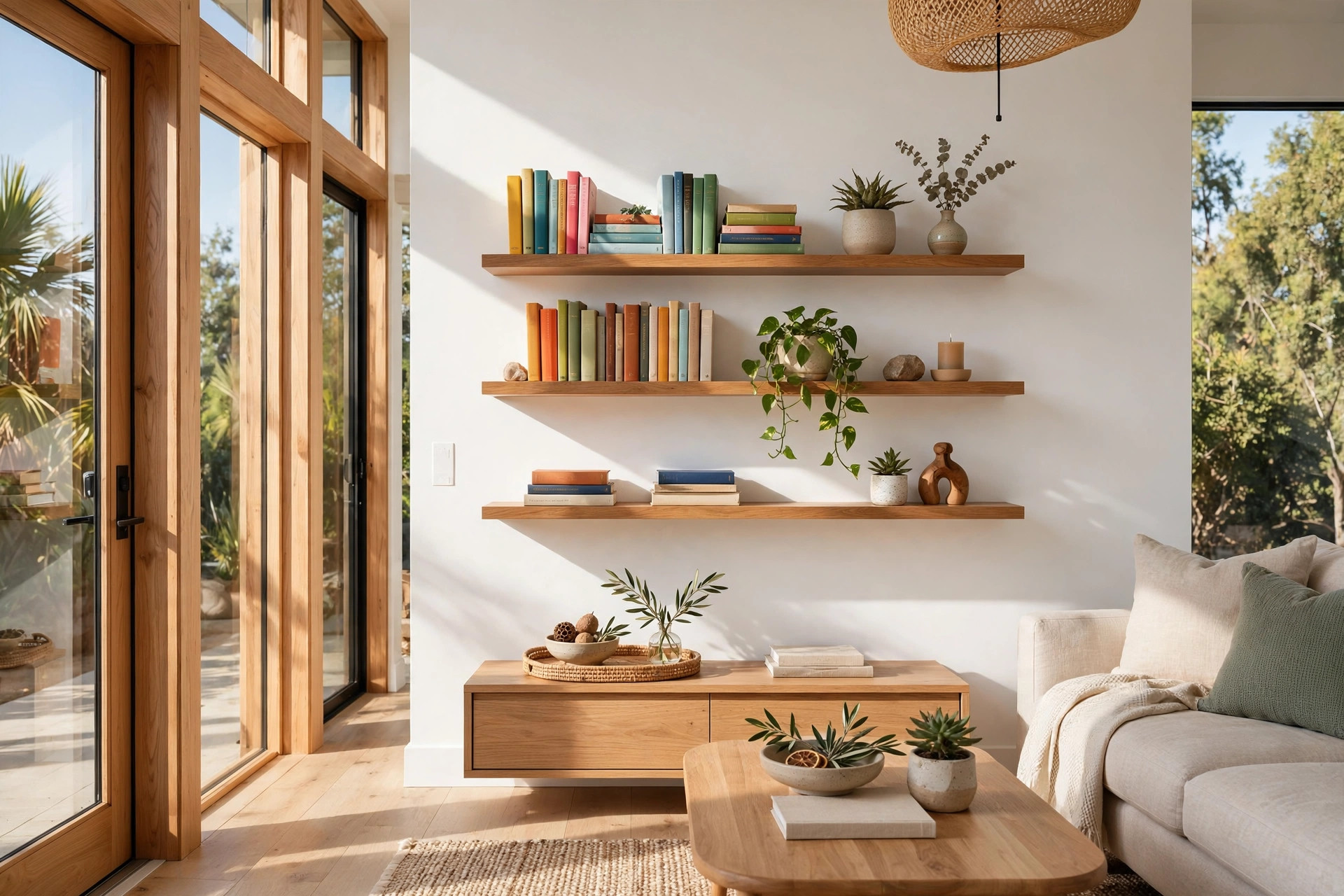

Modern wall bookshelves california homes usa is a search term that tells a clear story. A homeowner wants shelves on the wall, not on the floor. The home is in California, where rooms are often small, floors are valuable, and light matters. The style is modern, which means clean lines, simple shapes, and honest materials. This guide explains how to choose such shelves, what they cost, and how to keep them safe on your walls for years.
Why Wall-Mounted Bookshelves Matter in California Homes
California homes have their own character. Many were built in the ranch era, with long low rooms and open plans. Others are newer tract homes with wide blank walls. Apartments in Los Angeles, San Francisco, and San Diego often have limited floor space. In all these homes, the wall is the most underused surface in the room.
Floor bookcases take up square footage. In a studio apartment, a wide bookcase can eat a full yard of floor. Wall shelves give that space back. They lift books, plants, and small objects off the floor and put them at eye level, where they can be seen and enjoyed. This makes a room feel larger and calmer. They also keep the light path clear, since floor bookcases placed against a window wall can block the sun.
There is a visual reason too. Modern wall bookshelves add shape to a flat wall. A row of floating shelves draws the eye across the room. A grid of box shelves makes a blank wall look finished. Homeowners who rent can often install shelves with patchable holes and restore the wall when they leave.
What to Look for When You Choose Wall Bookshelves: Modern Wall Bookshelves California Homes Usa
Weight Capacity
The first question is weight. Books are heavy. A single shelf of paperback novels can weigh forty to sixty pounds. Choose shelves rated for the load you plan. Solid wood shelves and metal bracket systems carry more than thin particleboard. Check the weight rating from the maker before you buy.
Mounting System
Wall bookshelves hold their load only through the mount. The best systems fasten into wall studs, the wood posts behind the drywall. Stud finders make this job simple. Where there is no stud, use heavy duty toggle bolts rated for the shelf weight. French cleats, which are angled wood strips that lock together, give strong support for long shelves and box units. Many design guides at HGTV explain how cleats and brackets work in real homes.
Depth and Size
Measure the books you own before you shop. Most paperbacks need eight inches of depth. Large art books and records need ten to twelve inches. Too shallow, and books hang off the front. Too deep, and the shelf looks bulky on the wall. Mark the shelf outline on the wall with painter’s tape. Step back and look at the room. This simple step prevents many returns.
Material Quality
Modern design favors honest materials. Solid oak, walnut, and ash take a clear finish and last for decades. Good plywood with a clean edge band is a sound middle choice. Metal frames in black or brass suit a modern loft look. Painted finishes hide marks well in homes with children.
Style and Finish
California modern style leans toward light woods, white finishes, and black metal. Warm oak pairs well with the sun-washed rooms common in the state. If the room already has living room wall art, pick shelf finishes that sit quietly beside it rather than fighting it. A shelf should frame the books, not demand attention.
Types of Modern Wall Bookshelves
Floating Shelves
Floating shelves have hidden mounts and no visible brackets. They look like wood slabs that grow from the wall. They suit the modern look and keep cleaning simple, since there are no brackets to dust. Their weakness is weight. Even strong floating systems carry less than bracketed shelves. Use them for paperbacks, small plants, and decor rather than heavy reference books.
Bracket Shelves
A wood board on metal brackets is the classic wall shelf. Modern versions use slim black steel brackets and thick solid wood boards. These systems carry heavy loads and adjust easily. You can move the boards up and down the bracket slots as your needs change. Homeowners who like flexible storage often start here.
Box Shelves
Box shelves are square or rectangle frames mounted on the wall. They create small framed views on the wall, each holding a few books or one art object. Hung alone, one box shelf works as art. Hung in a group, they make a full bookcase without a floor footprint. They are popular in modern living rooms because they look planned and neat. A full rundown of fit and buying questions appears in the modern wall bookshelves buying guide.
Ladder-Style Wall Units
Some modern systems combine vertical side rails fixed to the wall with shelf boards that rest on pins. These wall units look like ladders laid against the wall, but they are fixed firmly. They give the storage of a bookcase with almost no floor depth. Many renters choose them because they use few mounting points.
Asymmetric and Geometric Sets
Modern design sometimes breaks the straight line. Staggered shelves, angled units, and zigzag forms add energy to a room. These work best as accents on one wall. In a whole room, mix one playful set with quiet straight shelves elsewhere. Many style ideas for such arrangements appear on Apartment Therapy, which covers small-space living in depth.
Cost and Price Ranges
Prices for modern wall bookshelves in the United States span a wide range. A single floating shelf of modest size often costs between thirty and ninety dollars. A pair of solid wood shelves with metal brackets may run from one hundred to three hundred dollars. Full wall systems with multiple box units or rail systems often cost from three hundred to over one thousand dollars.
Several factors move the price. Solid hardwood costs more than veneer or particleboard. Custom sizes cost more than stock sizes. Sets sold by well-known brands such as those featured on Wayfair and Article carry design value but also higher prices than plain boards from a lumber yard. Freight and delivery can add cost for long units.
Installation adds to the total. A handyman in California often charges between one hundred and two hundred dollars to mount a small set of shelves with proper anchors. Large wall systems may cost more. Renters who want no damage at all should look at freestanding wall-leaning units instead, which cost more but need no holes.
Budget advice from many home editors, including the team at The Spruce, is simple. Spend on the mounting hardware and the board material, and save on decor. A strong cheap board looks fine once it holds books. A weak pretty shelf fails, and failure costs more than the shelf.
Installing Wall Bookshelves the Right Way
Good installation starts with finding studs. An electronic stud finder marks the wood posts behind the drywall. Mount at least one end of every shelf into a stud. Long shelves should hit two studs. This rule alone prevents most shelf failures.
Use a level for every board. Even a small tilt looks wrong once books line the shelf. Mark pilot holes, drill carefully, and drive screws firmly without stripping them. For heavy loads, a French cleat spreads weight along the wall. Guides at Houzz show step-by-step mounting for many wall unit styles. Before drilling, mark the shelf outline on the wall with painter’s tape and step back to check the look.
Care and Upkeep
Wall bookshelves need little care, but regular attention keeps them safe. Once a year, check every screw and bracket for looseness. Walls shift slightly with seasons, and fasteners can work loose. Tighten anything that moves.
Dust the shelves every month or two. Books draw dust, and dust dulls finishes. A dry soft cloth is enough for most surfaces. For oiled wood, a light re-oiling once a year keeps the grain rich. Avoid strong cleaners on painted finishes. They can dull the paint or leave streaks.
Watch the load. It is easy to keep adding books until a shelf sags. If a wood board bends more than a slight curve, remove weight or add a middle support. Sagging shelves strain their mounts. In California, keep shelves out of strong afternoon sun where possible. Sun can fade book covers and dry out wood.
Safety: Earthquakes, Children, and Heavy Loads
California buyers must think about earthquakes. A wall shelf in California is not just furniture. It is an object that must stay on the wall when the ground moves. This changes how you mount and how you load.
Always fasten into studs for heavy shelves. Toggle bolts in drywall alone are not enough for a full shelf of books in an earthquake zone. Use quake straps or L-brackets that tie tall units to studs. Place the heaviest books on the lowest shelves, near the wall. Keep breakable objects away from shelf edges, or set them back from the front by several inches.
If children live in the home, add extra care. Climbing children have pulled wall shelves down. Mount shelves above a child’s reach. Never place toys or books they want on high shelves, because that invites climbing. Anchor every unit, even small ones, when a child under five lives in the home. Safety checklists from IKEA stress wall anchoring for all storage products, and that advice is worth following.
Also think about what sits above. Do not mount heavy shelves above a bed, a crib, or a desk chair. In a quake, falling objects cause most injuries. A reading chair under a light decor shelf is fine. A bed under a full shelf of hardbacks is not.
Styling Your Wall Bookshelves
Once the shelves are safe and solid, the fun begins. Styling is the art of arranging books and objects so the wall looks good.
Group books by size or by color. Size grouping looks calm and classic. Color grouping looks modern and bold. Leave some empty space. A shelf packed edge to edge looks crowded. A shelf with gaps draws the eye to what remains.
Mix books with objects. A small plant, a framed photo, or a ceramic bowl breaks the rows of book spines. Pair the shelves with entryway decorative mirrors on a nearby wall to bounce light around the room.
Follow the odd-number rule. Groups of three or five objects look more natural than pairs. Vary heights. A tall vase beside a stack of books creates a pleasing shape.
Common Mistakes to Avoid
The most common mistake is poor mounting. Shelves hung with small nails or weak anchors fall. Take the time to find studs and use proper bolts. The second mistake is wrong depth. Measure books first. The third is overloading. Respect the weight rating.
Another mistake is poor placement. Shelves hung too high are hard to use. The center of the display should sit near eye level. Shelves in a hallway should sit above head height to avoid bumps. In a living room, the bottom shelf should clear the sofa back by a few inches. A shelf must fit your books, your wall, and your weight needs before it must fit your taste.
Frequently Asked Questions
How much weight can a floating shelf hold?
It depends on the mount and the wall. A strong floating shelf set into studs may hold forty to seventy-five pounds. A cheap hollow shelf on drywall anchors may hold only ten to twenty pounds. Read the maker’s rating and cut it in half for books, since ratings often assume ideal walls. When in doubt, use brackets.
Can renters install wall bookshelves?
Often yes. Most leases allow small holes that can be patched and painted. Use the smallest strong anchor that does the job. For a no-hole option, consider a wall-leaning bookcase with a top anchor. Ask the landlord before drilling into tile or plaster.
Are wall bookshelves safe in earthquakes?
They can be, with proper mounting. Fasten into studs, keep heavy books low and near the wall, and anchor tall units. Avoid heavy shelves above beds and cribs. In strong quake zones, some owners add a thin front lip to each shelf to stop books from sliding off.
What wood is best for modern wall shelves?
Oak, walnut, and ash are the favorites for modern style. Oak is strong and takes stain well. Walnut has a rich dark tone that suits many rooms. Ash is light and clean. For painted shelves, good plywood or medium-density fiberboard with a smooth finish works well and costs less. Avoid very soft woods like pine for long heavy spans, since pine sags more.
How do I match shelves to my room style?
Look at what is already in the room. Match the shelf finish to the largest wood item, such as the floor or a table. Match metal brackets to other metal in the room, such as lamp bases or cabinet pulls. If the room is mixed, choose a quiet finish like white or natural oak that works with everything. Keep the look simple and the shelves will suit the room for years.
Where can I see real room examples before I buy?
Many retailers show shelves in styled room photos, and you can filter by finish and size. Photos that show the shelf with books on it are more useful than empty product shots, since they show true depth and load.
A Short Final Word
Modern wall bookshelves california homes usa is more than a search phrase. It is a practical answer to a real problem. California rooms are bright, often small, and full of life. Wall shelves free the floor, lift the books into the light, and give a plain wall a purpose. Choose strong materials. Mount into studs. Respect the weight limits. Style with a light hand. Do these things, and the shelves will serve the home for many years.
See West Elm for more detail.
References
Apartment Therapy. (n.d.). Home design ideas and inspiration. https://www.apartmenttherapy.com Article. (n.d.). Modern furniture. https://www.article.com HGTV. (n.d.). Home and garden ideas. https://www.hgtv.com Houzz. (n.d.). Home design and remodeling. https://www.houzz.com IKEA. (n.d.). Home furnishings. https://www.ikea.com The Spruce. (n.d.). Home and garden advice. https://www.thespruce.com Wayfair. (n.d.). Furniture and home goods. https://www.wayfair.com West Elm. (n.d.). Modern furniture and home decor. https://www.westelm.com
Was this guide helpful?

About Michael Thompson
The My Garden US editorial team writes practical, in-depth home and garden guides for American homeowners — tested advice, no fluff.
You May Also Like
Leather Recliner Chairs for Sale USA: A Complete Buying Guide
March 6, 2026 0 views
Mid Century Chairs Deals Near Me: A Simple Buying Guide
February 28, 2026 0 views
Living Room Ottomans in California Homes: A Complete Guide
May 23, 2026 0 views