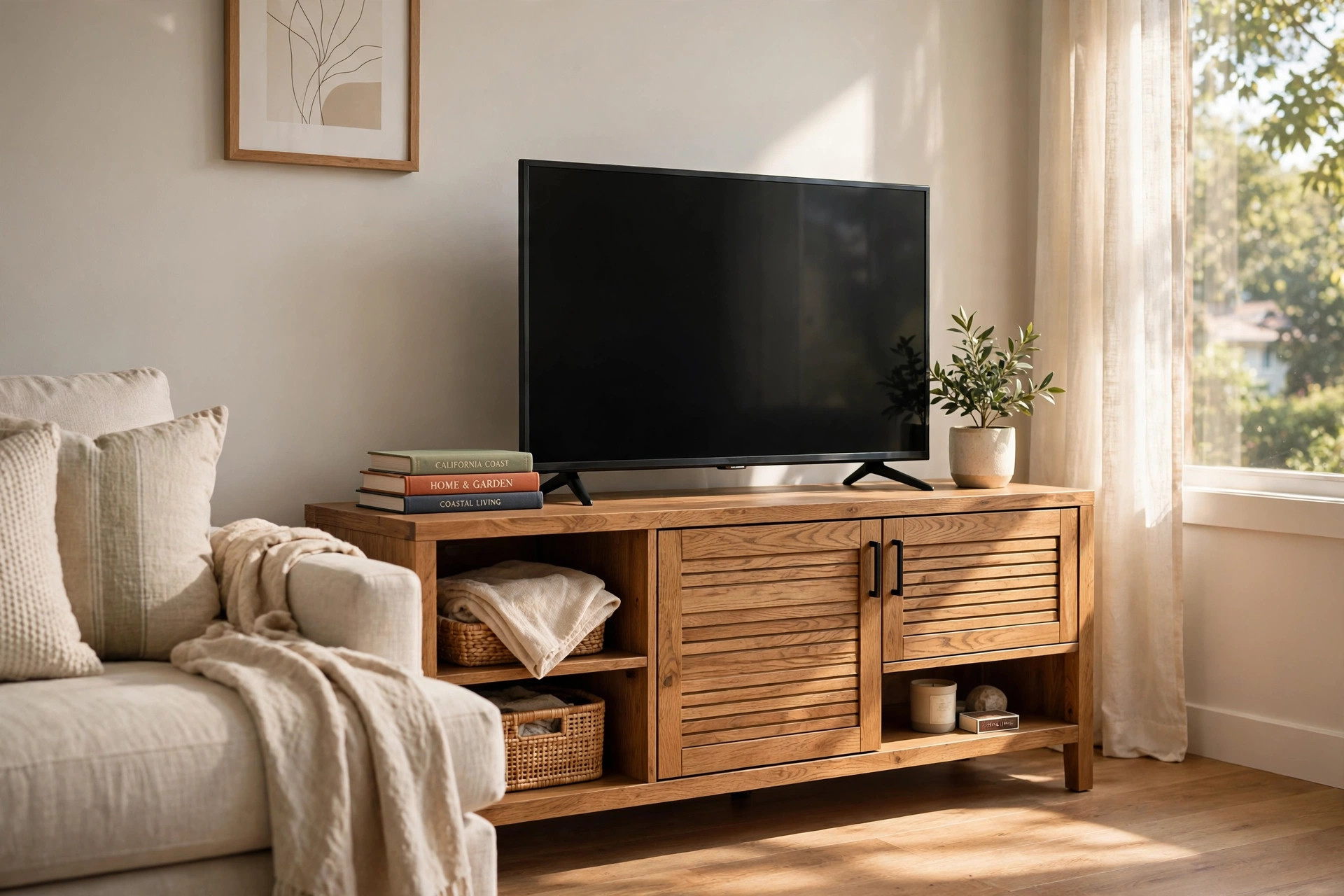
The living room is the heart of most American homes. It is where the family gathers after supper. It is where guests are received on a Sunday afternoon. And in almost every living room, one piece of furniture holds a place of honor: the TV stand. This living room tv stands american homes guide will walk you through the whole subject, from why the stand matters to how to buy one and how to keep it in good shape for years.
A TV stand does more than hold a television. It sets the tone of the room, gives a home for the cable box and game console, and can hide a tangle of wires. If it is the wrong size or style, it can also spoil the room. So it is worth a little thought.
Why the TV Stand Matters
The television is often the largest object in the living room. The stand sits under it, and the eye rests on it for hours each week. A good stand makes the whole room feel calm and finished. A poor one makes the room feel cluttered and cheap.
There is also a practical side. Modern sets are thin and light, but they still need a firm base. A 55-inch set can weigh forty pounds or more. A 75-inch set can weigh twice that. The stand must carry that weight day after day, year after year, without bowing or leaning.
Then there is storage. The average living room holds more than a TV: speakers, remotes, chargers, books. A stand with the right shelves keeps all of these out of sight and keeps the room livable.
How to Choose the Right Size: Living Room Tv Stands American Homes Guide
Size is the first rule, and the most common mistake. The stand should be at least as wide as the television, and a few inches wider is better. Measure the full width of the TV, not the screen size printed on the box. A 55-inch set may be 48 inches wide. The stand should be 50 to 58 inches wide for such a set.
Height matters too. Sit in your usual chair and look at the wall. The center of the screen should sit at about eye level. For most sofas, that puts the top of the stand between 18 and 24 inches off the floor. If the stand is too tall, you will crane your neck. If it is too low, the set looks sunken.
Depth is the third measure. Most modern sets are only two or three inches thick, but sound bars and consoles can be deep. Allow at least 15 to 18 inches of depth for the top surface, and check the shelves for the gear you plan to keep inside.
Before you shop, write down three numbers: the width of your TV, the width of your wall space, and the height of your eyes from the floor when seated. Take a tape measure to the store, or keep it by the phone when you order. Many good people buy a stand that is two inches too wide for the wall, and find out only at home.
Types of TV Stands
Console Stands
The console is the classic form. It is a low, wide cabinet with doors or shelves. Console stands suit almost any home, from a farmhouse in Ohio to a city apartment in Chicago. They hold a great deal, and they look settled and solid. If you want one style that never fails, the console is it. Shoppers who like this look may also enjoy reading about rustic console tables, which share the same sturdy spirit.
Open-Shelf Stands
These stands have shelves with no doors. They suit people with many boxes and consoles, because remotes work through the open front and heat escapes. The trade is dust. Open shelves gather dust, and every wire is on show. They are best for the tidy owner who does not mind a weekly wipe.
Corner Stands
A corner stand fits into the angle where two walls meet. It is a fine answer for a small room, turning dead space into useful space. It will not hold as much as a console, but it costs little space.
Floating and Wall-Mounted Stands
These attach to the wall and have no legs at all. The look is clean and modern, and the floor below stays clear for a robot vacuum. But they must be fixed to the studs in the wall, not just the drywall. This is not a job for a renter in most cases, and it takes more skill to hang than to set a stand on the floor.
Entertainment Centers and Media Walls
These are the large units, sometimes six or eight feet wide, with side towers and a bridge across the top. They suit big rooms and big sets. They cost the most and weigh the most. For a large family room with a 75-inch set and a sound system, they can be the right answer. For a small living room, they will eat the space alive.
Materials: Wood, Metal, and More
Solid wood is the king of materials. Oak, walnut, and maple are hard, heavy, and long-lived. A solid wood stand can serve for thirty years and be handed down. The price is high, but so is the value.
Engineered wood, such as MDF and particle board, is the common choice at the low end. It is pressed fibers and glue, covered with a printed skin. It looks fine in the store, but it chips at the edges, sags under weight, and dies quickly if it gets wet. Expect five to ten years, not thirty.
Metal and glass stands have a modern look. Steel frames with glass shelves are light and airy. But glass shows every fingerprint, and a glass top can crack if a heavy set is dropped on it. Tempered glass is a must; check the listing before you buy.
Veneer sits between the two. A thin layer of real wood over a stable core gives the look of solid wood at half the price. Good veneer lasts well if the edges are sealed.
Styles That Suit American Homes
American living rooms wear many styles. The farmhouse style is still strong, with weathered wood and black iron pulls. The mid-century style has tapered legs and clean lines, a nod to the 1950s and 60s. The modern style is flat, dark, and free of trim. The coastal style runs pale, with whitewash and light oak.
Pick a style that agrees with the rest of your room. A black lacquer stand in a warm farmhouse room will look like a visitor. If you are unsure, match the wood tones you already own. The stand does not have to match exactly, but it should speak the same language.
Color is part of style. Natural wood is warm and forgiving. Black is sharp but shows dust. White is fresh but shows marks. Gray is the middle road, and it suits many homes. Think about your light and your habits before you choose.
Cost and Price: What to Expect
Prices run wide. A simple open-shelf stand in engineered wood can cost 80 to 150 dollars. A solid console in the mid range runs 300 to 700 dollars. A large solid-wood entertainment center can run 1,000 to 2,500 dollars and up.
What drives the price? Material is first. Solid hardwood costs more than pressed board. Size is second. Joinery is third: dovetailed drawers and mortise joints cost more than screws and glue, and they last longer. Brand is last; a name on the box adds a little, but wood and work are what you pay for.
Set a budget before you shop. A stand is a ten-year purchase, so a little more money now can save a second purchase later. But a 400-dollar stand of honest build beats a 900-dollar stand of thin veneer every time. For current prices and a wide range of styles, shoppers often browse Wayfair and IKEA, which carry stands at many price points.
Features Worth Paying For
Cable management is the first feature to seek. Look for holes or channels in the back panel, so wires drop behind the stand instead of spilling over the top. Your room will look twice as neat.
Adjustable shelves are next. A shelf that moves up or down lets you fit a tall receiver today and a small streamer tomorrow. It costs little and helps a lot.
Soft-close doors and drawers are a quiet joy. They add a few dollars, and they stop the nightly slam. In a house with children, they are worth every cent.
Care and Upkeep
Wood stands ask for little. Dust them weekly with a soft cloth. Once a month, wipe with a cloth barely damp with water, then dry at once. Never soak the wood, and never use harsh sprays, which eat the finish.
Glass shelves need a glass cleaner and a lint-free cloth. Wipe in one direction to avoid streaks. Lift the gear off the glass once in a while to clean under it.
Check the screws twice a year. Wood moves with the seasons, and screws loosen. A five-minute turn with a screwdriver keeps the stand tight. If a joint wobbles and will not tighten, a drop of wood glue in the joint, clamped overnight, will fix most cases.
Keep the stand out of direct sun. Sunlight fades wood and can warp thin panels. A few feet from a sunny window is fine; right against it is not.
Safety in the Home
A TV stand must be safe before it is pretty. Modern sets are light, but a stand with a set on top is still top-heavy. Anchor the stand to the wall with the strap or bracket that comes in the box. This is not optional if you have children or live in earthquake country. The U.S. Consumer Product Safety Commission has long warned about tip-over accidents, and a simple strap prevents most of them.
Keep the back clear. Do not block vents on the TV or the boxes, and do not stuff the cabinet full of cloth or paper. Heat is the quiet enemy of electronics.
Where to Put It in the Room
The stand should face the main seating. The most common layout puts the stand on the long wall, facing the sofa. Keep eight to ten feet between the screen and the sofa for a 55-inch set; more for a larger set.
Avoid placing the stand where a window sits directly behind it. Glare on the screen will spoil the picture. A window to the side is better. If the room forces a window behind the set, hang curtains you can close during shows.
Leave a few inches between the stand and the wall for air and cords. But do not leave so much that the stand wobbles. A firm wall anchor handles both.
A Note on the Rest of the Room
A TV stand does not stand alone. The sofa, the rug, the lamps, and the wall art all share the room with it. A stand that matches the tone of your sofa will look twice as costly as it was. Readers planning a fuller refresh may like our pieces on velvet living sofas and living room floor lamps, which pair well with this guide.
Good design writing on these choices appears at Apartment Therapy, which covers real American living rooms in all their variety. For deeper furniture craft and styling ideas, Houzz and HGTV both keep large libraries of living room photos. The buying guides at The Spruce are written in plain words and worth a read before a big purchase.
Buying New or Used
A new stand gives you a warranty and a clean start. Stores such as Crate and Barrel, West Elm, CB2, and Article carry modern and mid-century styles with solid build quality, and their sites list true dimensions and materials.
A used stand can be a bargain. Solid wood stands from the 1970s and 80s are often better built than new ones at the same price. Check estate sales, thrift shops, and local listings. Look for heavy weight, dovetailed drawers, and solid backs. Pass on anything with a swollen bottom or a musty smell, which means water damage.
FAQ
What size TV stand do I need for a 55-inch TV? Measure the TV’s full width, usually about 48 inches. Choose a stand 50 to 58 inches wide. The center of the screen should sit at eye level when you are seated, which usually means a stand 18 to 24 inches tall.
Can a TV stand hold a 75-inch television? Yes, if the stand is wide enough and rated for the weight. A 75-inch set is often 66 inches wide and can weigh 60 to 80 pounds. Look for a stand at least 68 inches wide with a weight rating above the set’s weight.
Are open shelves or closed cabinets better? Open shelves suit heavy electronics users, since remotes work and heat escapes. Closed cabinets look neater and keep out dust. If you have children or pets, closed doors are the safer and cleaner choice.
How do I hide the wires behind my TV stand? Use the cable holes in the back panel, bundle cords with ties or sleeves, and run them straight down behind the stand to the outlet. A cord cover painted to match the wall makes the run nearly invisible.
Is it safe to put a TV stand in front of a window? It is safe, but the glare will hurt the picture. If you must, use blackout curtains for viewing time. Better to place the stand on a solid wall with the window to the side.
How long should a good TV stand last? A solid wood stand should last twenty years or more. A good veneer stand lasts ten to fifteen. A cheap pressed-board stand lasts three to seven. Care, sun, and moisture decide much of it.
A Final Word
The right TV stand is not the dearest one, nor the prettiest one in the store. It is the one that fits your set, fits your wall, holds your gear, and agrees with the room you live in. Measure twice, choose honest materials, anchor it to the wall, and it will serve your family for years. This living room tv stands american homes guide began with a simple truth: the living room is the heart of the home, and the stand beneath the screen deserves the same care as anything else in it.
References
Apartment Therapy. (n.d.). Home design ideas and inspiration. https://www.apartmenttherapy.com Article. (n.d.). Modern furniture. https://www.article.com CB2. (n.d.). Modern furniture and decor. https://www.cb2.com Crate and Barrel. (n.d.). Furniture and home decor. https://www.crateandbarrel.com HGTV. (n.d.). Home and garden ideas. https://www.hgtv.com Houzz. (n.d.). Home design and remodeling. https://www.houzz.com IKEA. (n.d.). Home furnishings. https://www.ikea.com The Spruce. (n.d.). Home and garden advice. https://www.thespruce.com Wayfair. (n.d.). Furniture and home goods. https://www.wayfair.com West Elm. (n.d.). Modern furniture and home decor. https://www.westelm.com
Was this guide helpful?

About James Carter
The My Garden US editorial team writes practical, in-depth home and garden guides for American homeowners — tested advice, no fluff.