
Introduction
Many people admire pretty handwriting on cards and signs. A calligraphy pen set for beginners lettering is the easiest way to start this craft. Such a set usually holds pens, nibs, ink, and a practice guide. You do not need talent to begin. You need a steady hand and a little patience. This guide explains what to buy, how much to spend, and how to keep your tools in good shape. It also answers the questions most new writers ask.
Lettering is slow at first. Your letters may look rough. That is normal. Every skilled writer began with shaky lines. A beginner hand lettering set gives you the right tools from day one. You will learn thick and thin strokes. You will learn spacing and slant. With daily practice, your letters will grow clean and even.
Why a Good Starter Set Matters: Calligraphy Pen Set for Beginners Lettering
A calligraphy pen set for beginners lettering matters more than most people think. The right tools make learning easy. The wrong tools make learning hard. A cheap pen that skips will annoy you. A dry nib will tear your paper. Many new writers quit because their tools fight them. A well made set removes these problems.
Beginner calligraphy pens are built for learners. Their nibs are forgiving. Their ink flows in a smooth way. Their guides show the basic strokes. A good hand lettering starter kit lets you focus on your hand, not on broken tools. You learn faster when the pen does its job.
A starter set also saves money. If you buy each item alone, you may pay more. Sets bundle the pen, nibs, ink, and paper guides at one price. Many craft stores carry them on the shelf. You can find them at craft stores such as Michaels or at fabric and craft shops such as Joann. Specialty pen shops such as JetPens also stock many fine options for new writers.
A set with a practice book is worth a little extra. The book shows stroke order and letter forms. You trace the lines until your hand knows the path. This is how writers built skill long before video lessons. A printed guide never runs out of battery. It sits flat on the desk and stays open to the right page. Many learners keep their first practice book as a record of progress.
What to Look for When You Choose
Not every set suits every learner. Keep these points in mind as you shop.
The Pen Body
The pen body is the part you hold. It should feel easy in your hand. Hold it for a minute before you buy if you can. A good grip keeps your hand loose. A bad grip brings cramps after ten minutes. Some pens have a thick foam grip. Others are slim wood or plastic. New writers often do well with a soft grip. It teaches light pressure. Heavy pens tire the wrist. Light pens give more control. Pick one that feels like an extension of your fingers.
The Nib
The nib is the metal tip that touches the paper. It shapes your line. Wide nibs make bold marks. Narrow nibs make fine marks. A calligraphy pen set for beginners lettering should hold at least two nib widths. That lets you try both styles. Some sets add a flex nib that bends with pressure. Flex nibs make thin upstrokes and thick downstrokes. They take time to master. Start with a simple chisel nib if you are unsure. Art suppliers such as Blick sell sets with clear nib charts, which help you see what each tip does.
The Ink
Ink is the lifeblood of lettering. Black ink is best for practice. It shows every flaw, which is good for learning. Some sets hold colored ink too. Colored ink is fun for cards and art. Check that the ink is smooth and free of clumps. Clumps clog the nib and break your lines. Water based ink cleans up with water. That is the best choice for a beginner. Oil based ink lasts longer but is harder to wash out. Pen retailers such as Goulet Pens explain the ink types in plain terms on their home page guides.
Types of Beginner Calligraphy Pens
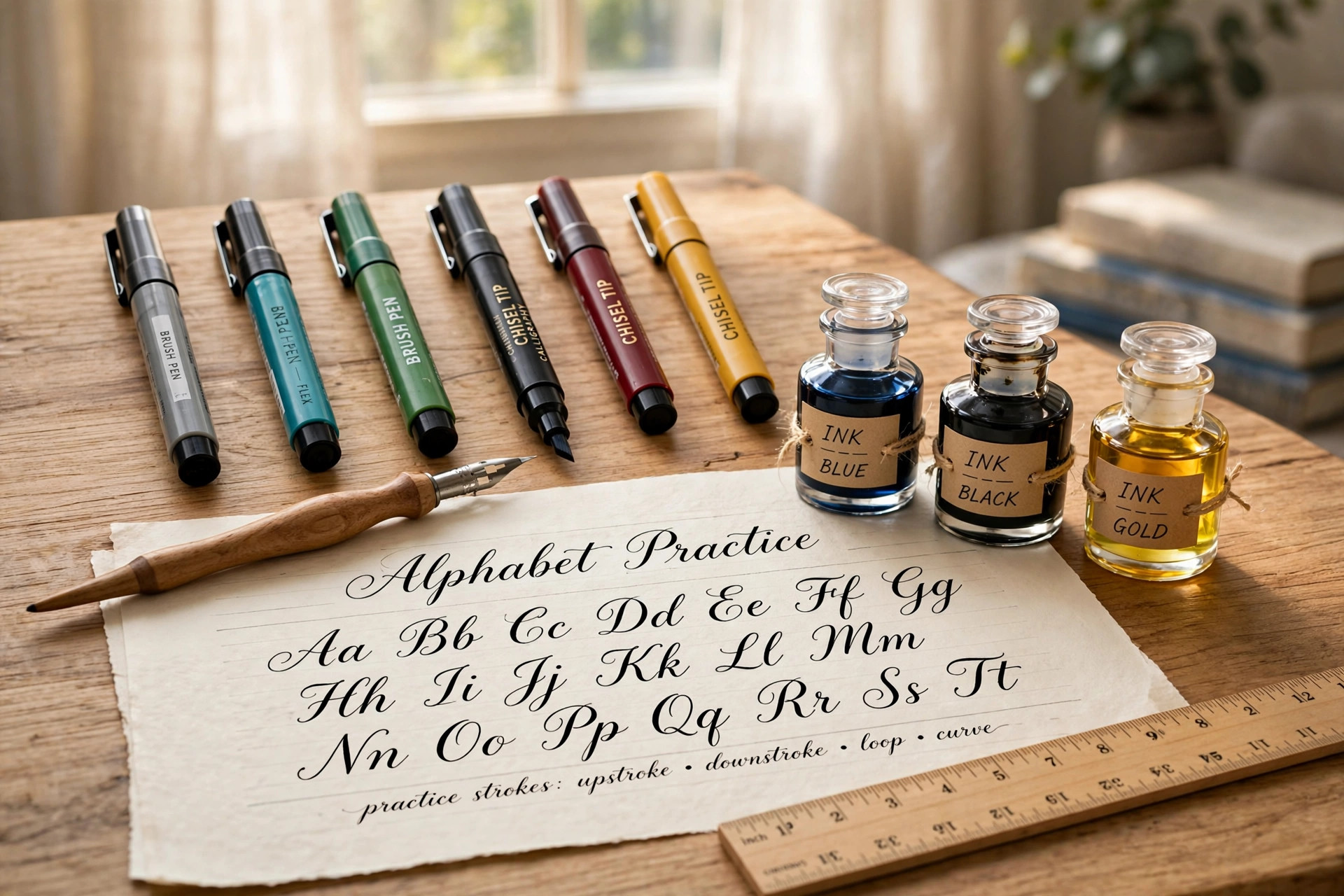
Sets come in four main styles. Each suits a different learner.
Brush Pens
Brush pens have a soft felt tip like a paintbrush. You press hard for thick lines and lift for thin ones. They need no ink bottle and make no mess. This makes them a favorite for first timers. Many calligraphy pens for beginners are brush pen sets. They work well for modern lettering and card making. The tip wears down with heavy use, so buy a set with spare tips if you can.
Chisel-Tip Markers
Chisel-tip markers have a flat slanted edge. You hold the pen at one fixed angle and the edge makes thick and thin strokes for you. They are the easiest to control. They suit gothic and block letter styles. The downside is less variety. Every letter has the same built in slant. Still, they teach the rhythm of thick and thin. A hand lettering starter kit often holds a row of chisel markers in different widths.
Dip Pens
A dip pen is a handle with a metal nib that you dip in ink. It gives the most control and the finest lines. It also takes the most care. You must load ink often and clean the nib after each use. Dip pens suit learners who love detail and old style scripts. If you choose a dip set, keep a rag nearby. You will need it. Your first lines may be rough, but dip pens reward patience.
Fountain Calligraphy Pens
These look like normal fountain pens but carry a flat calligraphy nib. You fill them with a cartridge or a converter. They are clean, portable, and easy to refill. Fountain calligraphy pens also make good gifts. They look fine on a desk and they write well for daily use. If you fall in love with the craft, a fountain pen grows with you. You can swap in finer or broader nibs as your skill grows.
Picking a First Style
New writers often ask which style to learn first. Italic is a kind choice. It uses one steady slant and clear thick and thin strokes. Modern brush script is looser and more free. Roman capitals teach spacing and form. Pick the style that matches what you want to make. Cards and gifts suit brush script. Formal signs suit italic. There is no wrong first step.
Cost and Price
A calligraphy pen set for beginners lettering fits most budgets. Simple marker sets start around eight to fifteen dollars. Mid range sets with extra nibs and ink run fifteen to thirty dollars. Full dip pen sets with guides and colored inks can reach forty to sixty dollars. Prices shift with the brand and the store.
Do not buy the priciest set as a first try. Start small. Learn the basic strokes. Then decide if you want to spend more. Many learners find a twelve dollar set plenty for the first month. Spend your money on good paper instead. Cheap paper bleeds and feathers. Good paper keeps lines crisp.
You will also want a flat work table. You do not need a fancy desk. A simple folding table from Home Depot works fine for practice. Keep the table clear and well lit. Good light shows the true shape of your letters.
Care and Upkeep
Calligraphy tools last long with simple care. Clean your nibs after each use. Rinse them in room temperature water. Dry them with a soft cloth. Never leave a nib soaking in water for hours. It can rust or lose its temper. Store pens flat or upright with the tip up. This stops ink from pooling in the nib.
Keep your ink bottles capped. Open ink dries out and forms a skin. That skin clogs the nib. If ink thickens, add one drop of clean water and stir. Do not flood it. Store paper flat in a dry place. Curled or damp paper ruins practice.
A small desktop organizer helps a lot. Guides at Family Handyman show how to build a simple wooden desk caddy for your pens and ink. Sites such as Bob Vila and This Old House offer more ideas for a tidy home craft corner. A neat space makes practice a habit.
Cut your practice sheets to size with a steady hand tool. A craft scissors for fabric cutting works well for trimming paper guides. When you move on to colored work, a watercolor paper pad for painting art gives you thick sheets that take ink without bleeding.
Safety
Calligraphy is a safe craft, but take a few care steps. Ink can stain skin and clothes. Wear old clothes while you practice. Wash your hands after long sessions. Keep ink away from your eyes and mouth. Some inks carry mild fumes. Work in a room with fresh air. This matters most with solvent based inks, though most beginner sets use water based ink.
Dip nibs have sharp points. Handle them with care. Do not press a nib into your palm to test it. Keep sharp tools away from small children. Store your set in a closed box when you are done. A closed box also keeps dust off the nibs. Dust makes ink flow uneven.
If you have pets, keep ink off the floor. Cats and dogs may step in a spill and track it. A stable table and capped bottles prevent most accidents. Simple habits keep the craft fun and safe.
Frequently Asked Questions
How long does it take to learn basic lettering?
Most people see clear progress in two to four weeks. Practice for twenty minutes each day. Work on one letter at a time. Speed comes later. Neat letters come first.
Which pen type is best for a total beginner?
Brush pens or chisel-tip markers are best. They are clean and easy to control. A best calligraphy kit for beginners often holds both. Try each style and see which feels right in your hand.
Why does my ink skip on the paper?
Skipping comes from three main causes. The nib may be dry, so clean it and reload ink. The paper may be too rough, so switch to smooth paper. Or you may press too hard, so lighten your grip and let the pen glide.
Can I use regular notebook paper for practice?
You can, but it is not ideal. Notebook paper is thin and may bleed. Smooth printer paper or a practice pad works better. Good paper shows your lines as they truly are.
How do I fix a bent nib?
A bent nib is hard to save. Try gentle pressure on a hard flat surface. If the tines no longer line up, replace the nib. Most sets sell spare nibs at low cost, so keep a few extras on hand.
Is calligraphy hard on the hands?
It should not hurt. Pain means your grip is too tight or your seat is wrong. Loosen your fingers. Sit tall. Rest your wrist on the table. Take short breaks every twenty minutes.
A Final Word
A calligraphy pen set for beginners lettering is a small buy that opens a rich craft. Start with simple tools. Practice a little each day. Keep your nibs clean and your paper smooth. Your letters will improve week by week. Lettering also pairs well with other paper crafts, such as a DIY book nook kit for bookshelf decor crafts. Pick up a pen today and write your first line.
References
Blick Art Materials. (n.d.). Art and craft supplies. https://www.dickblick.com Bob Vila. (n.d.). Home improvement advice. https://www.bobvila.com Family Handyman. (n.d.). DIY home repair and maintenance. https://www.familyhandyman.com Goulet Pens. (n.d.). Fine pens and ink. https://www.gouletpens.com JetPens. (n.d.). Pens and stationery. https://www.jetpens.com JOANN. (n.d.). Fabric and craft supplies. https://www.joann.com Michaels. (n.d.). Arts and crafts supplies. https://www.michaels.com The Home Depot. (n.d.). Home improvement products. https://www.homedepot.com This Old House. (n.d.). Home renovation guidance. https://www.thisoldhouse.com
Was this guide helpful?

About Robert Taylor
The My Garden US editorial team writes practical, in-depth home and garden guides for American homeowners — tested advice, no fluff.
You May Also Like
Needle Felting Kit for Beginners: Animals DIY
July 12, 2026 0 views
Wood Craft Sticks for Popsicle Art Projects: A Complete Guide
June 22, 2026 0 views
Quilling Paper Kit for Beginners Card Making: A Complete Guide
August 4, 2026 0 views