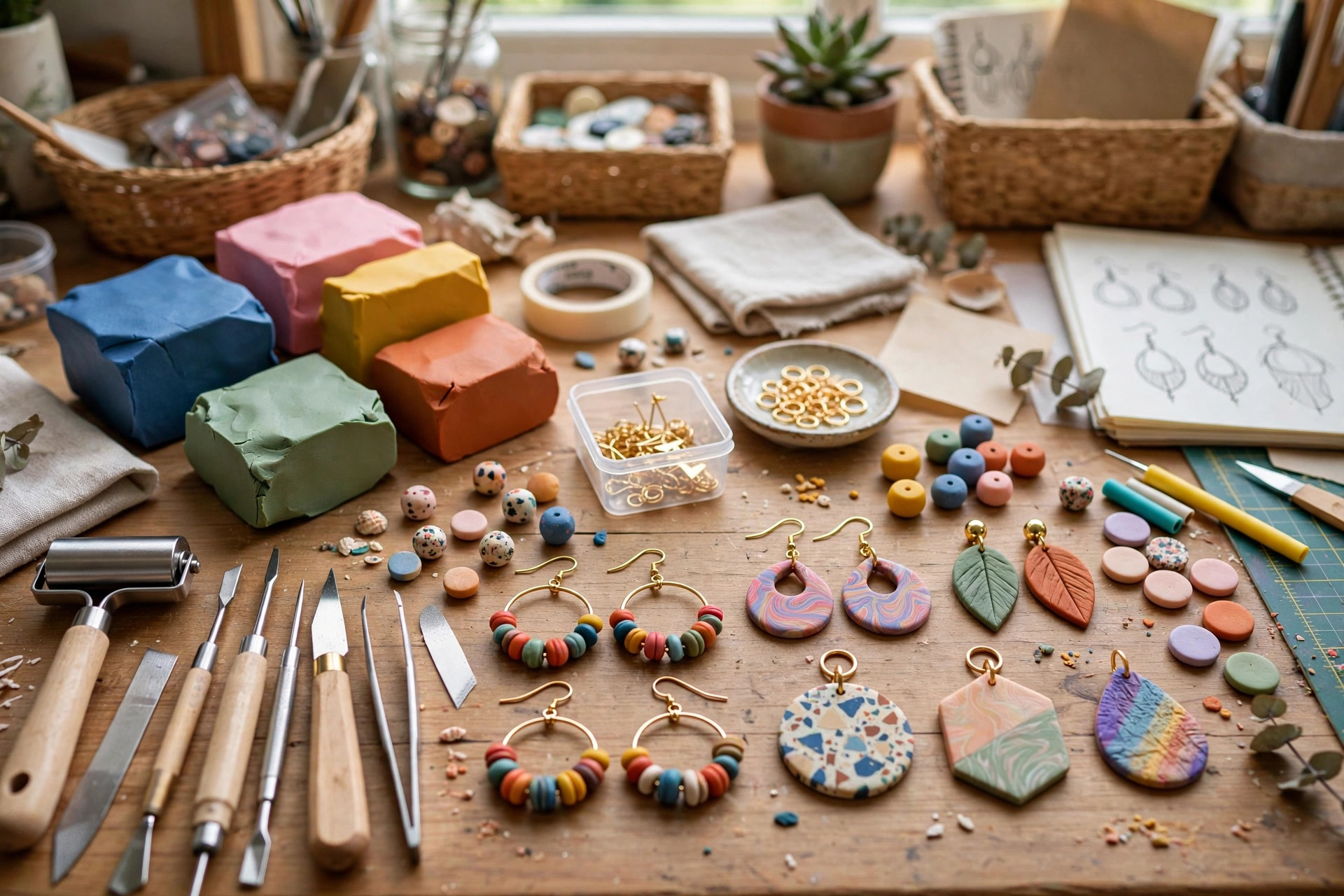

Shoppers who want the best polymer clay for jewelry making crafts face a crowded shelf. Dozens of brands sell blocks of colored clay in every craft store in the country. Prices range from a few dollars to premium import lines. Colors, firmness, and finish vary from one brand to the next. A good choice matters, because the clay you buy will decide how your earrings, pendants, and beads look, how long they last, and how pleasant the work feels in your hands.
Polymer clay is a man-made modeling material. It stays soft at room temperature. It hardens in a home oven at low heat. Once baked, it becomes a tough plastic that can be sanded, drilled, painted, and glued. Jewelry makers love it because it takes fine detail, holds bright color, and costs little. It also works well with the rest of a home craft setup, from a best craft apron with pockets for adults to keep clothes clean to a best sewing machine for quilting at home that many crafters keep in the same room.
Why the Right Clay Matters
Jewelry takes more wear than many crafts. Earrings swing all day. Pendants rub against sweaters. Beads knock together in a bag. A weak clay will chip or snap. A good clay survives daily use and still looks fine years later.
Color behavior matters too. Some clays keep their bright color after baking. Others darken or fade. If you blend custom shades, you want a brand that stays true. Strength matters most for thin pieces. A hoop earring or a fine leaf pendant needs a clay that bends a little instead of breaking.
Work time matters as well. Soft clay is kind to tired hands and quick for beginners. Firm clay holds sharp detail for canes and sculpted beads. The best clay for you depends on what you make and how you like to work.
What to Look for in Jewelry Clay: Best Polymer Clay for Jewelry Making Crafts
Firmness and Conditioning
Every block of polymer clay needs conditioning before use. You knead it, roll it, and fold it until it is smooth and warm. Some brands condition fast. Others take real effort. Beginners do better with a clay that softens in a few minutes. Advanced makers often prefer firmer clay because it holds crisp edges and fine patterns.
Strength After Baking
Bake a test strip and bend it. Good jewelry clay flexes without snapping. Thin earring posts, tiny beads, and wire-wrapped links all need this strength. Brands built for jewelry usually advertise flexibility. Cheaper craft clays may bake brittle, which is fine for a shelf decoration but poor for jewelry.
Color Range and Mixing
A wide color range saves money and time. You can use colors straight from the block instead of mixing every shade. Still, mixing is part of the fun. Choose a brand whose colors blend cleanly and whose whites stay white in the oven. Some makers keep notes on their custom blends in a craft journal, much as a quilter tracks fabric cuts for the best sewing machine for quilting at home.
Finish Options
Clay comes in finishes like matte, pearl, metallic, and translucent. Pearl and metallic clays give earrings a rich look without paint. Translucent clay works well for faux stone effects. You can also sand and buff plain clay to a soft shine after baking.
Price and Availability
A two-ounce block usually costs between two and five dollars at major craft retailers like Michaels or JOANN. Larger packs lower the per-ounce cost. Import brands may cost more and can be harder to find in small towns. For a beginner, a starter set of twelve to twenty-four colors is a smart first buy.
Types of Polymer Clay for Jewelry
Sculpey Premo
Premo, made by Polyform, is one of the most popular choices for jewelry in the United States. It is firm enough to hold detail yet soft enough to condition without a struggle. It bakes strong and flexible. The color line is wide, and the pearl and metallic shades are well liked by earring makers. Many tutorials use it, so help is easy to find. The official Sculpey site lists colors and project ideas.
Sculpey Soufflé
Soufflé is lighter and softer than Premo. It has a matte, suede-like finish after baking. It is very strong for its weight, which suits large statement earrings that must stay light on the ear. It blends well and takes a soft, modern look. Some makers find it almost too soft for fine cane work, but for beads and pendants it is excellent.
FIMO Professional and FIMO Soft
FIMO, made by Staedtler, is the long-time European standard. FIMO Professional is firm and holds very fine detail, which cane artists prefer. FIMO Soft is easier on the hands and good for beginners. Both bake to a strong finish. The Staedtler site shows the full range. FIMO costs a bit more than domestic brands in American stores, but many makers feel the quality justifies it.
Kato Polyclay
Kato is a firm clay favored by experienced makers. It holds the sharpest detail of any major brand and bakes extremely hard. Conditioning takes effort, and beginners may find it tiring. For precise geometric jewelry and fine canes, it is hard to beat.
Budget Craft Clays
Store brands and low-cost lines suit practice pieces and children. They condition easily and come in bright colors. They often bake less strong than the brands above. Use them to learn techniques, then move to a stronger clay for jewelry you plan to wear or sell.
How to Choose Step by Step
Start with your main project. For simple earrings and pendants, pick a medium-firm clay like Premo or FIMO Soft. For detailed cane beads, choose a firmer clay like FIMO Professional or Kato. For big, light statement pieces, try Soufflé.
Buy a small starter set first. Work with it for a few weeks. Notice what you like and what fights you. Then buy larger blocks of your favorite colors. Many makers end up with two brands on the shelf: a workhorse for daily pieces and a specialty clay for fine detail.
Check the bake temperature on the package. Most clays bake between 230 and 275 degrees Fahrenheit. Use an oven thermometer, because home ovens often run hot or cold. Wrong heat is the most common cause of weak or burned pieces.
Think about tools too. A pasta machine speeds conditioning. A craft knife, needle tool, and smooth tile round out the basics. Art supply stores like Blick carry tools made for clay work, and general guides at This Old House and Family Handyman cover setting up a safe home work space.
Cost and Price Guide
Expect to spend fifteen to forty dollars to start. A multi-color starter set covers most beginner projects. Single two-ounce blocks run two to five dollars each. Specialty finishes like metallics and translucents cost a bit more.
Ongoing costs stay low. A two-ounce block makes many pairs of earrings. Findings such as earring hooks, jump rings, and chains add a few dollars per piece. Many jewelry makers sell finished work at craft fairs, and some turn the hobby into a small business with tools like a best button maker machine for crafts business, which shares the same table at many craft shows.
Watch for sales. Major chains run frequent coupons on clay and tools. Buying during a sale can cut the starter cost in half. Online prices vary, so compare a few stores before you order.
Care and Upkeep of Your Clay and Finished Jewelry
Store unbaked clay in a cool, dry place away from sunlight. Keep it in its wrapper or in zip bags. Heat and light can partly cure it over time and make it crumbly. Do not store different colors touching each other for long, because colors can bleed.
Finished jewelry needs little care. Wipe pieces with a soft dry cloth. Keep them out of long soaks in water, since findings can tarnish even when the clay is fine. Store earrings so they do not press against each other, which avoids scratches on glossy finishes.
If a piece dulls, you can lightly buff it with a soft cloth. For a high shine, sand with fine wet sandpaper and buff again. A thin coat of water-based varnish made for polymer clay adds gloss and protection. Test the varnish on a scrap first, because some brands stay tacky.
Safety in the Home Studio
Polymer clay is safe for normal craft use when you follow the package directions. Always bake at the stated temperature and never overheat it. Burning clay can give off fumes that irritate eyes and lungs. If clay burns, turn off the oven, open windows, and leave the room until the air clears.
Use a dedicated oven thermometer. Never use a microwave to cure clay. Wash your hands after handling raw clay, and keep it away from food areas. Do not use kitchen tools for both food and clay. A separate toaster oven kept in the craft room is a common solution, and home guides from Bob Vila offer tips on setting up a ventilated craft corner.
Keep small beads and findings away from young children and pets. They are choking hazards. Store sharp tools out of reach. Good habits here are the same habits that keep any craft room safe, whether you sew, quilt, or work clay.
Frequently Asked Questions
What is the easiest polymer clay for a beginner making jewelry?
A medium-soft clay like Sculpey Premo or FIMO Soft is the easiest start. Both condition without much effort, hold shape well, and bake strong. A small starter set lets you learn color mixing and basic shapes before you spend more.
Which clay is strongest for thin earrings?
Premo and Kato bake the strongest for thin pieces. Both flex rather than snap when baked at the right temperature. Soufflé is also strong and lighter in weight, which helps large earrings feel comfortable all day.
Can I mix different brands of polymer clay?
Yes. Most major brands mix well together. Makers often blend brands to get a certain firmness or color. Bake mixed clay at the lower of the two stated temperatures and test a small piece first.
How long should I bake polymer clay jewelry?
Follow the package, but a common rule is thirty minutes per quarter inch of thickness at the stated temperature. Thin earrings still need a full cure, so do not shorten the time too much. An oven thermometer is the best tool for even baking.
Why did my clay come out brittle?
The most common causes are underbaking and baking too cool. Old or poorly stored clay can also turn brittle. Make sure your oven truly holds the stated temperature, condition the clay fully, and bake for the full time.
Where is the best place to buy polymer clay?
Craft chains like Michaels and JOANN stock the main brands and run frequent sales. Home Depot carries basic craft supplies in many locations. Art stores such as Blick offer a deeper range for serious makers.
A Short Final Word
The best polymer clay for jewelry making crafts is the one that fits your hands, your projects, and your budget. Start with a trusted medium-firm brand, learn the basics, and let your work guide your next purchase. With good clay, correct baking, and simple care, your handmade earrings, pendants, and beads will look fine and wear well for years. Keep a small notebook of your blends and bake times, and each new project will go faster than the last.
References
Blick Art Materials. (n.d.). Art and craft supplies. https://www.dickblick.com Bob Vila. (n.d.). Home improvement advice. https://www.bobvila.com Family Handyman. (n.d.). DIY home repair and maintenance. https://www.familyhandyman.com JOANN. (n.d.). Fabric and craft supplies. https://www.joann.com Michaels. (n.d.). Arts and crafts supplies. https://www.michaels.com Sculpey. (n.d.). Polymer clay for crafts and jewelry. https://www.sculpey.com Staedtler. (n.d.). FIMO polymer clay. https://www.staedtler.com The Home Depot. (n.d.). Home improvement products. https://www.homedepot.com This Old House. (n.d.). Home renovation guidance. https://www.thisoldhouse.com
Was this guide helpful?

About James Carter
The My Garden US editorial team writes practical, in-depth home and garden guides for American homeowners — tested advice, no fluff.
You May Also Like
DIY Slime Kit for Kids Crafts Safe USA: A Parent’s Guide
April 3, 2026 0 views
A DIY Book Nook Kit for Bookshelf Decor Crafts Turns a Plain Shelf Into a Tiny World
January 9, 2026 0 views
Knitting Machine for Home Sweater Making: A Complete Guide
July 7, 2026 0 views