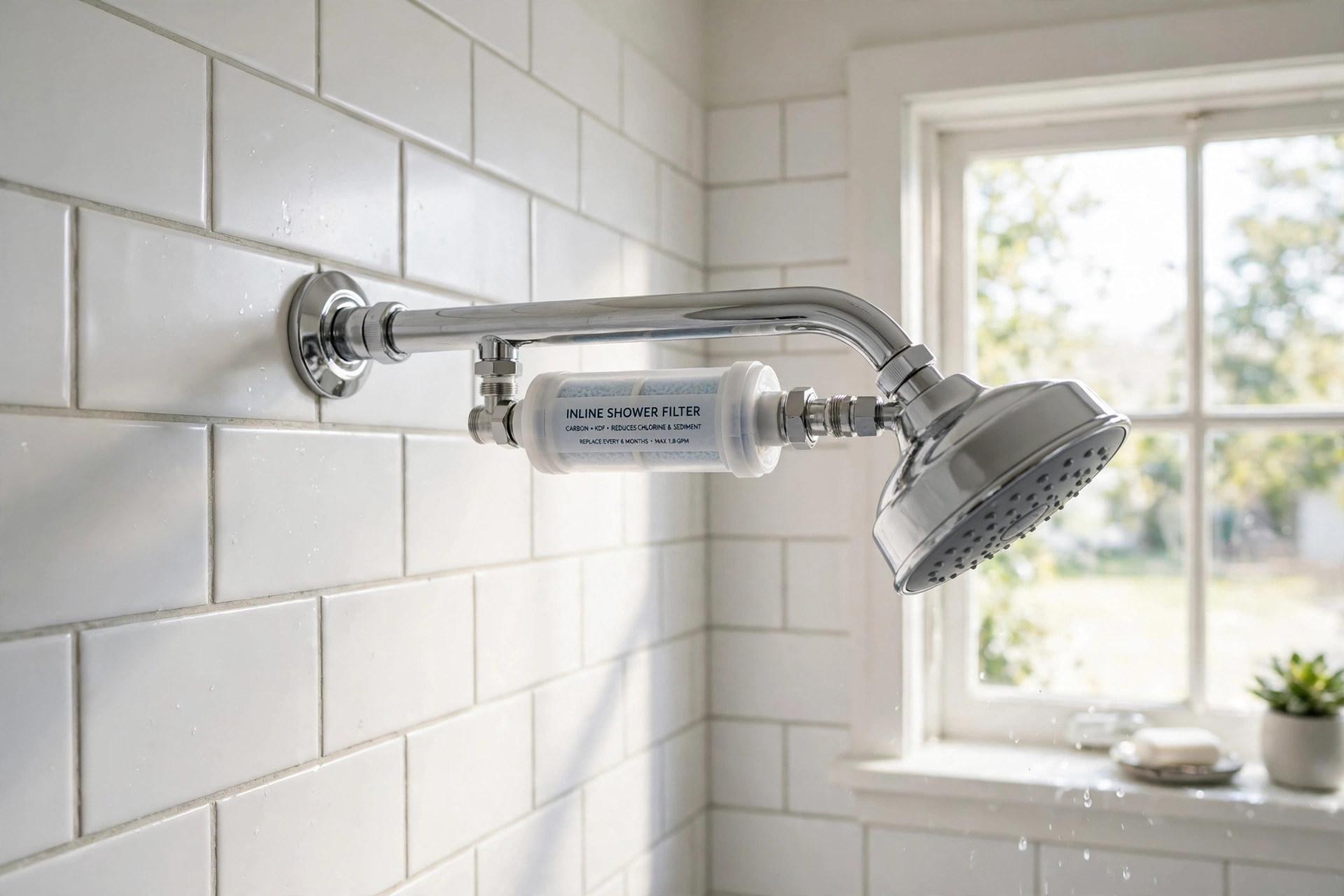

Many homes in the United States receive water treated with chlorine. Cities add chlorine to kill germs in the water supply. The practice keeps drinking water safe, yet it can leave skin dry and hair rough after a shower. A shower head filter for chlorine reviews usa readers look for a simple fix. The device screws between the shower arm and the shower head. It uses a filter medium to cut free chlorine before the water reaches the body.
Reviews from American buyers show that these filters do work. They do not remove every trace of chlorine. They lower the level enough that many people notice softer skin and hair. This article gathers what the reviews say. It covers what the filters are, how to choose one, the main types, prices, care, and safety.
Why It Matters
Chlorine in shower water is common. The Environmental Protection Agency sets rules for chlorine in public water systems. The agency allows a small residual level so the water stays clean all the way to the tap. That residual reaches the shower too. Warm water opens the pores. Some people find their skin itches after long showers. Others say their hair feels dry no matter what shampoo they use. A shower head filter for chlorine offers a low-cost answer to this complaint.
Reviewers often buy the filter for three reasons. First, they want softer water feel on skin. Second, they want to protect colored or treated hair. Third, they want less of the sharp pool smell in the bathroom. Buyers in areas with heavy chlorination report the strongest results. Homes on well water see less change, since well water rarely carries chlorine.
It is worth noting that a shower filter is not a full water treatment system. It treats only the shower stream. It does not soften water or remove lead, fluoride, or other minerals. Buyers who want those changes need larger systems. Homeowners who want softer water through the whole house can read a guide on the best water softener for well water usa.
What to Look for: Shower Head Filter for Chlorine Reviews Usa
Filter Medium
Most shower head filters use one of two media. The first is KDF-55, a mix of copper and zinc. It works through a redox reaction that changes chlorine into a harmless salt. It lasts long and handles hot water well. The second is calcium sulfite. It works faster than KDF but wears out sooner. Some filters blend the two. Reviews favor filters that name their medium plainly on the box.
Capacity and Cartridge Life
A filter should list how many gallons it can treat. Many small in-line filters handle 10,000 to 12,000 gallons. A family of four may reach that limit in four to six months. A single person may get a full year. Reviews warn that the label life is often longer than the real life in heavy-use homes. Buyers do well to mark the install date on a card and change the cartridge on time.
Flow Rate
Some filters cut water pressure. The canister adds length and resistance to the line. Low-flow filters can turn a strong shower into a weak one. Reviews praise models that keep the flow near 2.0 gallons per minute. Homes with low water pressure should pick a compact filter or one built into the shower head itself. Brand makers such as Delta, Moen, and Kohler publish flow data for their shower products, and shoppers can compare figures on retailer sites like Lowe’s and The Home Depot before they buy.
Certifications
Look for testing by an independent body. NSF International tests many water products. A filter that carries an NSF mark has passed claims about what it removes. Not every shower filter carries such a mark. Reviews treat certification as a strong trust signal when it is present.
Build and Fit
The filter must fit a standard half-inch pipe thread. Most American shower arms use this size. Brass or stainless housings last longer than plain plastic. Buyers also check that the housing has flat sides or a grip ring, since a smooth round canister is hard to unscrew during cartridge changes.
Types of Shower Head Filters
In-Line Canister Filters
These are the most reviewed type. A short canister screws onto the shower arm, and the shower head screws onto the canister. The housing opens so the cartridge inside can be swapped. They are cheap, easy to fit, and work with any head. Their main drawback is size. They push the head out by three to five inches.
Filtered Shower Heads
These are shower heads with the filter built in. They look neat and keep the original reach. The filter cartridges are small, so they need changing more often. Reviews say they suit renters who want one unit that does both jobs.
Multi-Stage Units
A few brands sell larger housings with two or three stages. They may add vitamin C, sediment screens, or a fine mesh. They cost more and hang further from the wall. Heavy chlorination areas give these models the best reviews. Makers focused on filtration, such as Aquasana, publish test data on their media, and buyers can check step-by-step fit guides at This Old House and Family Handyman before they choose a larger unit.
Shower Arm Extensions with Filters
A small group of products combines a curved arm with a filter section. They suit tall users who want the head raised. Fewer reviews exist for this style, so buyer feedback is thin.
What Reviews Say About Performance
Buyer reviews in the United States paint a steady picture. Most users say the harsh chlorine smell drops within the first week. Skin feels less tight after showers. Hair needs less conditioner. People with sensitive skin report fewer red patches.
Reviews also set honest limits. The filter will not turn hard water soft. It will not fix rust stains or sediment. A few reviewers complain that the housing adds too much drop to the head. A few report small leaks at the threads and fix them with fresh thread tape.
Users often note one useful sign of cartridge wear. The chlorine smell comes back. Water that smelled clean for months starts to smell sharp again. That is the time to change the cartridge. Guides on filter schedules, like one on how often to change ro filters usa guide, follow the same logic even for different filter types.
Cost and Price
Shower head filters are among the cheapest home water products. Prices in the United States fall into three bands.
– Basic in-line canister: 20 to 40 dollars. Includes the first cartridge. – Filtered shower head: 30 to 60 dollars. Costs more for brand names. – Multi-stage or premium units: 50 to 100 dollars.
Replacement cartridges run 10 to 25 dollars each. Over two years, a typical household spends 40 to 90 dollars on cartridges. That is far below the cost of a whole-house system. Buyer reviews across several sellers help set the right budget, since price and cartridge life vary widely.
Installation needs no plumber. The job takes ten minutes with a wrench and thread tape. Some reviewers with older pipes report that a tight filter can strain the shower arm. They solve this by holding the arm steady with one hand while they turn the filter with the other.
Care and Upkeep
Care is simple. The main task is changing the cartridge on schedule. Most makers suggest every six months. Hard-use homes may need a change every three to four months. When changing the cartridge, wipe the housing threads and lay fresh thread tape. Check the rubber washers. A cracked washer causes most drips.
Once a year, unscrew the whole filter and check the shower arm. Mineral scale can build at the joint. A short soak of the arm threads in white vinegar clears it. Rinse the head screen too. Some filters come with a small mesh screen that catches grit. Clean it when the flow drops.
Keep spare cartridges in a dry place. Heat and sun shorten their shelf life. Do not freeze them. Write the change date on the housing with a small label so no one forgets.
Many owners ask where to find honest feedback before they buy. Buyer forums and store review pages help, but they can run short on detail. Longer test reports and project guides, such as those from This Old House, fill the gap. A careful shopper compares three or four sources, checks the claimed gallon rating, and reads the one-star reviews first. The complaints often reveal the real weak points, such as thin threads or fast cartridge wear. A filter that survives the one-star test is usually a safe buy. When the new unit arrives, run the shower for two minutes before the first real use. This flush clears loose media dust from the cartridge. The water may look slightly gray for a few seconds. That is normal and it clears fast.
Safety
Shower head filters are safe for most homes. The media inside is non-toxic. KDF and calcium sulfite are used in food and water treatment at much higher doses. The housing should not leak hot water onto the floor. Tighten fittings firmly but do not force them. Over-tightening can crack plastic threads.
Two cautions matter. First, a shower filter does not make water safe to drink if the supply is not safe. It only cuts chlorine in the shower stream. Second, people on very low-sodium or mineral-managed diets should check with a doctor before they use vitamin C filters, since some models add small amounts of compounds to the water. The Environmental Protection Agency site holds the official rules on chlorine levels in public water.
Children and older adults use these filters the same as anyone else. No special guard is needed. The water stays at the same temperature as before.
Frequently Asked Questions
Do shower head filters really remove chlorine?
They remove most free chlorine in the shower stream. Reviews and lab tests agree on this. They do not remove combined chlorine, called chloramine, as well unless the filter says so. Cities that use chloramine need a filter rated for it.
How long does a cartridge last?
Most last four to six months in an average household. Single users may get eight to twelve months. When the chlorine smell returns, the cartridge is done.
Will the filter lower my water pressure?
Some do. Compact filters with good flow keep the loss small. If pressure matters, pick a model rated near 2.0 gallons per minute and check the head screen for scale.
Can I use one with a handheld shower?
Yes. The canister screws onto the shower arm, and the handheld hose screws onto the canister. Check that the extra length does not push the head too far out for short users.
Does a shower filter soften hard water?
No. It cuts chlorine only. Hard water needs a softener or a whole-house conditioner. The two products do different jobs.
Is installation hard for a beginner?
It is easy. Unscrew the old head, wrap thread tape on the arm threads, screw on the filter, then screw the head onto the filter. The whole job takes about ten minutes.
A Short Final Word
A shower head filter for chlorine is a small buy with a clear job. It cuts chlorine from the shower stream. Reviews across the United States say it softens the feel of the water on skin and hair. It costs little, fits in minutes, and needs only a cartridge swap twice a year. It will not fix every water problem. For buyers whose main complaint is chlorine smell and dry skin, it is one of the simplest upgrades in the home. Those dealing with other water issues, from septic care to minerals, may want to read broader guides such as best septic tank treatment reviews usa before they spend.
References
Aquasana. (n.d.). Water filtration systems. https://www.aquasana.com Delta Faucet. (n.d.). Kitchen and bathroom faucets. https://www.deltafaucet.com Family Handyman. (n.d.). DIY home repair and maintenance. https://www.familyhandyman.com Kohler. (n.d.). Bathroom and kitchen fixtures. https://www.kohler.com Lowe’s. (n.d.). Home improvement products. https://www.lowes.com Moen. (n.d.). Faucets and plumbing fixtures. https://www.moen.com The Home Depot. (n.d.). Home improvement products. https://www.homedepot.com This Old House. (n.d.). Home renovation guidance. https://www.thisoldhouse.com U.S. Environmental Protection Agency. (n.d.). Protecting human health and the environment. https://www.epa.gov
Was this guide helpful?

About James Carter
The My Garden US editorial team writes practical, in-depth home and garden guides for American homeowners — tested advice, no fluff.
You May Also Like

Sewer Camera Inspection Cost Near Me: A Plain Guide for Homeowners
August 15, 2026 0 views
Best Pipe Insulation for Cold Climates USA
May 9, 2026 0 views
How Much Water Softener Salt Per Month USA: A Plain Guide for Homeowners
January 4, 2026 0 views